restaurant embroidered beanies Bulk Order Planning looks straightforward until the order has to match real headcount, real shifts, and real wear patterns. That is usually where budgets drift. A restaurant rarely needs one beanie for every name on payroll; it needs enough for prep, line, expo, delivery handoffs, managers, and the replacements that disappear into lockers, cars, and wash cycles.
The best purchase is rarely the most ambitious one. It is the one that survives weekly use, keeps the logo readable, and does not create a pile of extras that never leave the box. For restaurants, that means buying with a practical buffer, not a fantasy count.
Why restaurant teams overbuy beanies in winter
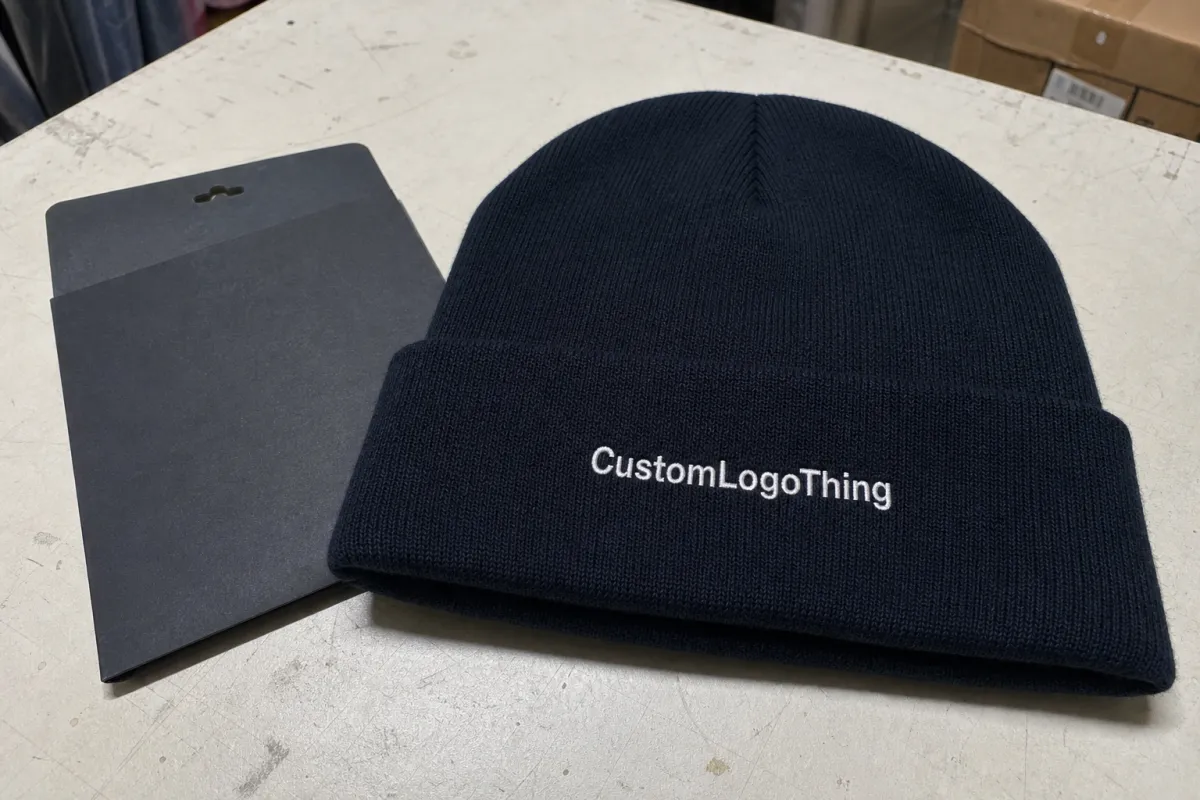
The first mistake is planning around headcount instead of rotation. A 30-person team may only need 20 to 24 beanies in circulation because not everyone works cold prep, not everyone wants a knit cap, and not every shift calls for one. Add a few spares for size swaps and missing items, and the order starts to make sense.
Embroidery turns the beanie into workwear, not merch. It keeps a crew warmer in cool prep rooms, gives delivery staff a cleaner look at the door, and keeps outdoor breaks from looking improvised. A logo on a knit cap says the team thought ahead. A plain cap from someone’s bag says the opposite.
Color choice usually decides whether the order feels cohesive or noisy. Black, charcoal, and navy remain the safest restaurant colors because they hide wear, pair with most uniforms, and keep embroidery legible. Lighter knits can look good in photos, but they show stains and pilling faster, which matters once the item moves into actual service.
Winter orders also tend to arrive late because buyers wait for the first cold snap. That is how rush fees show up on a product that could have been ordered calmly a week or two earlier. The most efficient order is the one tied to weather, opening dates, and staffing plans before the schedule gets tight.
For buyers, restaurant embroidered Beanies Bulk Order Planning is really about reducing avoidable variables: fewer approvals, fewer substitutions, fewer reorders, and less time spent fixing what should have been settled on the first proof.
Pick the beanie style and stitch method
Beanie style matters more than most quote sheets reveal. A cuffed beanie is the most practical option for restaurant uniforms because the cuff gives embroidery a stable, visible area and keeps the logo from wandering too far up or down the knit. Slouch styles feel more casual, but the decoration can sit lower on the head and disappear under hair or hoods. Waffle-knit beanies hold heat well and feel substantial, though the texture can make small lettering less crisp.
Acrylic and acrylic-blend knits are usually the workhorse choice. They cost less than wool, dry faster after washing, and hold shape well through repeated shifts. Wool blends feel warmer and more premium, which can be worth it for outdoor service, delivery drivers, or locations in colder climates. Heavier knits can look more substantial, but they also change the way embroidery sits on the cap.
The decoration method deserves the same attention as the base garment. Flat embroidery works well for simple logos, short names, and symbols with clean edges. Thick, dense designs can make the knit pucker if the stitch field is too large. In those cases, a patch often protects the artwork better than forcing the entire design directly into the fabric. The right choice is the one that keeps the mark readable without turning the beanie stiff.
A practical formula usually wins: soft fabric, clear logo, no scratchy backing, no odd forehead bulge, no embroidery that collapses after a few wears. If staff keeps the item in rotation, the spec was right. If it gets left in a locker after one shift, the unit cost was only part of the story.
| Style | Best use | Typical unit range | Notes |
|---|---|---|---|
| Cuffed acrylic | Most restaurants, clear logo visibility | $3.00-$6.50 blank, before embroidery | Reliable structure, broad color range, easy to keep consistent |
| Slouch knit | Casual brand look, lower-profile branding | $3.50-$7.50 blank, before embroidery | Relaxed fit, but logo placement is harder to control |
| Waffle-knit | Premium feel, colder environments | $4.50-$9.00 blank, before embroidery | Textured surface can reduce clarity on small details |
If the order includes folding, inserts, or special packaging by location, keep the garment spec simple. Every extra step adds the chance for cost drift. For teams that compare packaging practices across vendors, Packaging Association resources are useful for understanding how spec decisions affect consistency and labor.
Specs to confirm before you approve embroidery
Clean orders usually come from fewer open questions. Before any artwork approval, confirm the logo width, placement, thread colors, base color, size range, and whether the cuff must show the mark when folded. Those choices determine whether the final piece looks deliberate or slightly off. Slightly off is expensive, because it creates rework and slows delivery.
Artwork has to match the scale of the product. A knit beanie cannot carry the same amount of detail a larger garment can. Tiny text, thin rules, and gradients often need simplification before digitizing. That is not a compromise; it is a production adjustment. On a small surface, legibility matters more than fidelity to every line in the original file.
Use this approval checklist before production starts:
- Send vector artwork when possible, usually AI, EPS, or a clean PDF.
- Lock the thread count, often 1 to 4 colors for a restaurant logo.
- Choose placement, such as centered cuff, left cuff, or front body.
- Check contrast on the chosen base color under daylight and indoor lighting.
- Confirm whether one fit needs to cover all staff or whether a taller cuff and stretchier knit would work better.
That last step gets missed more often than it should. A one-size beanie can still fit awkwardly if the knit is too tight or the cuff is too short. Restaurants with varied head sizes and different hair volumes get better wear rates when the fit is tested before a bulk run.
A logoed beanie is working gear, not display stock. If it is uncomfortable, staff will quietly stop wearing it.
For the smoothest approval process, send the logo in its original vector form, provide color references in PMS or a clear hex value, and ask for a mockup before any production begins. That cuts down on revisions and keeps restaurant embroidered Beanies Bulk Order Planning from becoming a back-and-forth over details that should have been fixed on day one.
Pricing, MOQ, and unit cost drivers
Bulk pricing is mostly a matter of quantity, decoration complexity, and setup. The biggest cost drivers are how many units you buy, how many thread colors the design uses, whether the embroidery is dense or small, and whether the order needs custom labeling or special pack-outs. Split shipments, location sorting, and rush schedules all add cost faster than most buyers expect.
MOQ behavior follows a familiar pattern: lower quantities carry a higher unit cost because setup has to be recovered across fewer pieces. Once the order moves into a stronger bulk tier, the unit price usually drops enough that ordering a few extra makes sense. That is why buyers often request quotes at two quantities. A 100-piece run and a 150-piece run can be close enough that the larger tier becomes the smarter buy.
For restaurant buyers, practical tiers usually look like this:
- Small runs: 24 to 50 pieces for a single location, a pilot, or a holiday program.
- Mid-size bulk: 100 to 250 pieces for one brand or a small group of locations.
- Higher volume: 500 pieces and up for multi-location rollouts or recurring seasonal replenishment.
Typical embroidered beanie quotes often include a one-time digitizing fee of $35-$100, depending on the logo. Embroidery itself may add $1.10-$3.50 per piece. A decent knit cap can place the final landed unit in the $5.50-$9.50 range at moderate quantities, while smaller runs often sit higher. None of that is unusual; setup costs simply matter more when the order is small.
| Order size | Common unit cost | What affects it most | Best for |
|---|---|---|---|
| 24-50 pcs | $8.00-$14.00 each | Setup spread across fewer units | Small teams, test runs, quick openings |
| 100-250 pcs | $5.50-$9.50 each | Decoration complexity, knit style, thread count | Single-brand bulk orders, multi-shift teams |
| 500+ pcs | $3.75-$6.75 each | Material choice, reorders, shipping method | Multi-location groups, chain rollouts |
Watch the add-ons. Rush production can increase the order by 10% to 20%. A sample may be free, or it may run $25-$75 depending on how much setup is required. Freight to one destination is usually cheaper than sending cartons to multiple restaurants. For orders that may sit in a warehouse before distribution, ISTA shipping test standards are a useful reference for protecting cartons from damage and avoiding chargebacks.
Production process and timeline from proof to delivery
The production flow is usually simple: request review, receive a proof or mockup, approve the artwork, move into production, inspect the goods, and ship. The timeline depends on the logo, the knit style, and the quantity. Clean artwork moves faster. Dense designs, multiple thread changes, or a new beanie style all add time.
Most delays happen before the machines start running. Missing vector files slow digitizing. Late color decisions hold the proof. Changes after approval reset part of the schedule. Even address corrections at shipping can add a day or two if the order has to split across locations. A tidy spec sheet saves more time than an extra revision ever will.
A realistic schedule for restaurant embroidered Beanies Bulk Order Planning often looks like this:
- Day 1-2: Send logo, quantity, colors, and deadline.
- Day 2-4: Receive the mockup or digital proof.
- Day 4-7: Review and approve, or make one focused revision.
- Day 7-14: Production for a straightforward order, longer for dense embroidery or higher volume.
- Day 14-18: Inspection, packing, and transit for standard shipping.
That puts many clean orders in the 12-18 business day range after approval. More detailed orders can run 3 to 4 weeks, especially if they land near a seasonal rush or need to ship to several restaurants. A launch date should never be the first time anyone checks the thread color.
The practical lesson is simple: place the order before the schedule turns urgent. A little buffer protects the budget by keeping rush freight and emergency corrections off the invoice. For recurring apparel buys, our Wholesale Programs are designed for repeat orders without making every replenishment feel like a fresh sourcing project.
How we keep colors, sizing, and reorders consistent
Consistency is what makes the first order worth repeating. Keep a production record with the beanie style, knit weight, cuff height, thread colors, placement, digitized file version, and final approved proof. If a reorder happens months later, those records keep the replacement batch from drifting into a slightly different product.
Color matching works best when the brand palette is shared in a standard format. PMS is ideal, hex values are workable, and screenshots are a fallback. Thread is not paint, so exact visual matching is rarely possible. A close match is usually enough if the logo is small and the cap color is doing part of the visual work. Black and charcoal are forgiving. Bright red on heather gray may still work, but it needs to be checked in both daylight and warm restaurant lighting.
Sizing consistency matters more than many buyers expect. Restaurant crews often mix different head sizes, different hair volumes, and different comfort preferences. A beanie that feels tight will be ignored. A beanie that slouches too much can look sloppy on the line. Sampling the fit before a bulk run avoids those misses.
Quality control should check four things:
- Stitching: no skipped areas, loose threads, or puckering around the logo.
- Alignment: the embroidery sits in the same place from hat to hat.
- Count: the packed quantity matches the order and any location splits are labeled clearly.
- Finish: folding, tags, and packaging stay consistent when the box opens.
If sustainability is part of the buying decision, ask about recycled yarn content and the packaging material used around the order. The FSC system is useful for paper tags or inserts, though it does not change the garment itself. It simply gives the rest of the pack-out a clearer standard.
That is the real value of planning ahead. Once the first batch works, the reorder should look identical, not close enough for a casual glance. That consistency is the part teams remember, and it is usually the difference between a one-time purchase and a repeatable uniform item.
What to send now for a fast, accurate quote
A fast quote starts with a complete brief. Send the logo file, the preferred beanie style, estimated quantity, target colors, and delivery deadline in one message. The more complete that first note is, the fewer follow-up questions slow down the proof.
It also helps to break the order down by actual use:
- Front of house count
- Kitchen and prep count
- Management or supervisor count
- Any extras for seasonal hires or replacement stock
That breakdown keeps the quantity tied to how the beanies will be used. If one location needs 12 for the floor and 6 for the kitchen, a 30-piece order may be unnecessary unless turnover is high or an opening is near. If samples, split sizes, or multiple shipping addresses are required, include that up front. Those details affect both timeline and price.
A useful request also answers these three questions before anyone has to ask them:
- Do you want one colorway or different colors by department?
- Should embroidery go on the cuff, the body, or both?
- Is the deadline tied to a launch, staff rollout, or seasonal reset?
If those answers are clear, the job moves quickly. If they are not, the proof cycle tends to stretch. That is how a simple apparel buy becomes a long chain of revisions. Our FAQ covers common questions about artwork, minimums, and timing if you need a place to start organizing the order.
Keep the specs tight, keep the logo simple enough to stitch well, and size the order to the people who will actually wear it. That is the cleanest way to approach restaurant Embroidered Beanies Bulk Order Planning without paying for dead inventory or last-minute fixes.
How many restaurant embroidered beanies should I order for a small team?
Start with active staff plus a few extras for hires, replacements, and size swaps. A practical buffer is often 10% to 15% above headcount if turnover is common. If the order supports a launch or event, add more only when every person will actually wear one.
What is the usual MOQ for embroidered beanies in bulk?
MOQ depends on the decoration method, beanie style, and whether the design needs custom thread setup. Lower quantities are possible, but the unit cost usually rises because setup is spread over fewer pieces. If you are near a tier break, ask for pricing at both quantities before deciding.
Can you match restaurant brand colors on the embroidery?
Yes, but thread color matching works best when the brand palette is shared in a standard format such as PMS or a clear hex reference. Very detailed gradients and neon tones may need a close thread match rather than an exact copy. The beanie base color should also be chosen to keep the logo readable in daylight and under indoor lighting.
How long does a bulk order usually take to produce and ship?
Simple orders move faster, but proof approval, production, and transit can still take longer than expected if files are incomplete. Add time for revisions, sample review, peak-season bottlenecks, and freight to multiple locations. If the order is tied to an opening date, build in a buffer so the schedule is not dependent on a perfect-day shipment.
What artwork works best for restaurant embroidered beanies?
Clean logos with bold shapes, limited colors, and readable text usually stitch best on knit caps. Tiny taglines, thin lines, and photo-style artwork should be simplified before production. Vector files are the safest starting point because they keep edges clean when the design is digitized for embroidery.

