Pet treat ribbed winter Beanies Bulk Order Planning looks straightforward until the brim starts affecting logo placement and the quote begins to move. A ribbed beanie may seem like a simple knit accessory, yet once you factor in cuff depth, stretch recovery, decoration method, packaging, and ship timing, the order stops behaving like a basic promo item. It starts acting like a small production program.
That is where buyers lose money. They approve artwork late, leave packaging decisions open, or assume the supplier can absorb a schedule change without consequence. The result is usually some combination of extra revision rounds, split shipments, rushed freight, and a final invoice that no longer resembles the first quote. None of that is unusual. It is just what happens when a spec is vague.
The cheapest quote is often the one that forgot something. A missing label, a second proof, or a different pack-out method has a way of reappearing as an added charge.
For buyers comparing Wholesale Programs, the real difference rarely comes from the base beanie itself. It comes from the choices surrounding it, especially the ones made too late.
Pet Treat Ribbed Winter Beanies Bulk Order Planning: what changes the quote
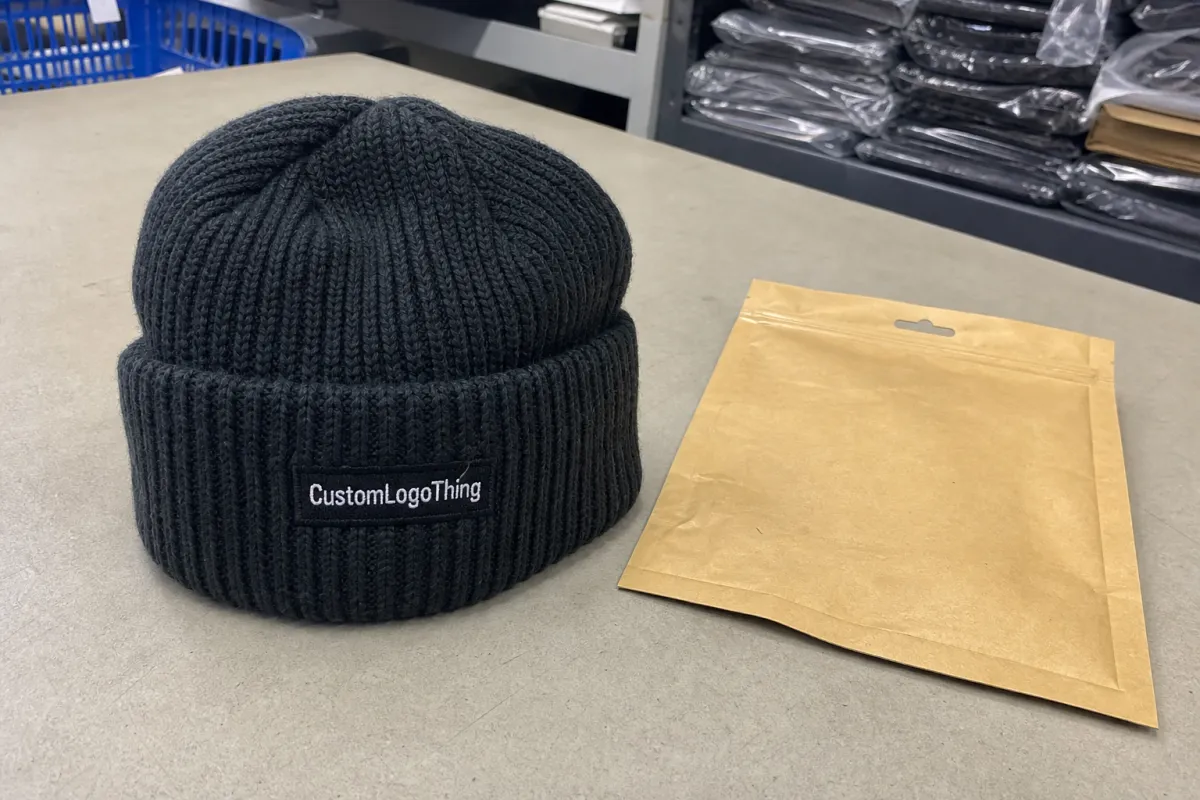
Ribbed knit behaves differently from flat knit or woven fabric. It stretches, rebounds, and changes how decoration sits on the surface. That is why pet treat ribbed winter Beanies Bulk Order Planning has to begin with structure, not artwork alone. A 1x1 rib with a shallow cuff will not price or present the same way as a 2x2 rib with a deeper fold and a softer crown.
Buyers often underestimate the impact of color and finishing. A black beanie with a simple white woven patch is one thing. A heather body, tonal badge, custom hang tag, and retail polybag is another. Each add-on takes labor and setup time, and setup time is where clean margins start to disappear. The factory is not reacting to your logo. It is reacting to every extra instruction attached to it.
For seasonal programs, the safest approach is to treat the beanie order like a small packaging project with apparel attached. You are not buying a blank cap with a logo slapped on later. You are buying a branded item that has to photograph well, survive handling, and arrive on time. That pushes the quote in ways that are easy to miss if you only compare base price.
Early planning protects margin in three practical ways. It reduces rush fees, it lowers the chance of split shipments, and it keeps proof cycles from multiplying. The buyer who confirms quantity, decoration, packaging, and delivery window before quoting usually gets the most accurate number. The buyer who changes the plan after proof approval pays for that indecision somewhere.
There is also a simple manufacturing reality here: ribbed winter beanies are not expensive because they are complex, but they are sensitive to variation. A small shift in cuff depth or label position can make the whole batch feel off. That is why the brief matters more than most people expect.
Fit, cuff depth, and finish choices for ribbed knit beanies
Fit is the first place a bulk beanie order can go sideways. Two beanies can look nearly identical in a product sheet and still wear very differently. Rib count, cuff height, crown shape, and yarn blend all affect the finished feel. A deeper cuff creates more branding space, but it also changes the silhouette. A tighter knit tends to hold shape better. A softer acrylic blend usually feels more comfortable and stretches more evenly.
Most bulk programs end up in one of a few common builds. A snug cuffed beanie gives broad logo visibility. A taller cuff supports larger embroidery or a patch. A slouchier profile feels more fashion-led, but it can make label placement trickier and increase the chance of visual inconsistency across the run. For pet treat promotions, staff gifting, and seasonal giveaways, consistency usually matters more than trendiness. Retail programs can afford a little more style, but the finish still has to look intentional from a few feet away.
Decoration choice matters just as much as the knit. On ribbed surfaces, these are the most practical options:
- Embroidery for simple logos, short text, and a durable finish.
- Woven patches for finer detail and a cleaner look on textured knit.
- Woven labels for low-profile branding at the cuff or side seam.
- Debossed or faux-leather badges for a more premium presentation when the brand supports that look.
Embroidery usually wins when the logo is bold and uncomplicated. Woven patches handle detail better and sit neatly on ribbed knit, but they add tooling and attachment steps. Labels are efficient and tidy. Badges can look sharp, though they are not a universal answer. From a buyer’s perspective, the right finish is the one that still looks good after shipping, unpacking, and repeated handling. Pretty matters. Consistent matters more.
Specs that affect decoration, packing, and unit consistency
If a bulk run is going to stay tight, the spec sheet has to be dull in the best possible way. Fiber content, yarn weight, stretch range, brim width, crown depth, and decoration location should all be written down before production starts. Not buried in a long email chain. Written down. That gives the supplier one target and gives the buyer one reference point when samples or photos come back for approval.
The most common drift points are small. A brim that shifts by half an inch can push the logo too high. A yarn blend swap can change hand feel and stretch recovery. A slightly different gauge can alter the visual density of the rib, which then affects how embroidery sits on the surface. On a simple beanie order, those details decide whether the result looks intentional or just close enough to pass.
Packing needs the same discipline. Decide early whether the order requires individual polybags, bulk carton packing, insert cards, hang tags, or retail barcodes. Store-bound orders need consistent label placement because a crooked tag can make a decent product look careless. Direct-to-consumer shipments need enough protection to preserve shape without overpacking the carton.
Two items should be settled before the factory starts the run:
- Label copy for fiber content, care instructions, and origin marking.
- Retail data such as SKU format, barcode type, and carton labeling.
For shipments that will travel far or enter retail channels, basic pack-out discipline matters more than most buyers expect. Some suppliers reference ISTA-style handling guidance for transit risk, which is useful even if the order is not formally tested. And if the tags or inserts are paper-based, FSC-certified stock from FSC is a straightforward option for buyers who need cleaner sourcing without overcomplicating the bill of materials.
The smoothest orders are the ones where decoration, packaging, and compliance are decided together. That is how pet treat ribbed winter Beanies Bulk Order Planning stays commercial instead of turning into a long sequence of revisions.
Cost, pricing, MOQ, and quote drivers that buyers need to watch
Unit cost moves in a fairly predictable pattern. Decoration method, stitch count, patch tooling, label setup, packaging, and quantity all matter. Blank beanies cost less because the factory is doing less handling. Embroidered or patch-decorated pieces cost more because every added step requires labor or setup. Retail packing pushes the number higher again because the components have to be sourced, inserted, and checked.
For standard ribbed knit beanies in bulk, with one logo location and normal production timing, buyers usually see something close to the following structure:
| Build type | Typical MOQ | Approx. unit cost | Best for | Watch-out |
|---|---|---|---|---|
| Blank ribbed beanie | 300-500 | $2.10-$3.20 | Fast promos, simple giveaways | Lower brand impact |
| Embroidered cuff logo | 500-1,000 | $3.25-$4.80 | Clean branding, durable wear | Fine detail may need simplification |
| Woven patch or label | 500-1,000 | $3.70-$5.40 | Texture-friendly branding | Tooling and placement need approval |
| Retail packed with tag and polybag | 1,000+ | $4.20-$7.20 | Store-ready or resale programs | More parts, more checks, more time |
Those ranges are practical, not guaranteed. Yarn choice, shipment route, origin, and packaging complexity can move the number. A quote that looks unusually low often means something was left out. The missing item is usually setup, packing, or freight handling.
MOQ deserves a separate conversation. Blank programs can sit lower. Once custom patches, branded labels, or retail packing enter the order, the minimum usually rises because the supplier has more setup and handling to absorb. That is normal. The useful question is not “What is the lowest number you can do?” It is “What is the MOQ for this exact decoration and pack-out combination?”
To get a useful quote the first time, send:
- Final or near-final artwork
- Pantone targets or color references
- Quantity split by color and decoration type
- Packaging requirements and label copy
- Ship-to locations and required delivery window
- Sample or photo approval expectations
That is the difference between a serious quote and a placeholder number attached to optimism.
Production steps and lead time from art approval to freight booking
The production flow should be easy to explain. Brief, artwork, proof, sample or photo approval, production, inspection, packing, and freight booking. If a supplier cannot walk through that order clearly, caution is warranted. Confusion in quoting usually becomes confusion on the floor, and the floor is where deadlines slip.
Lead time depends on the build. Stocked blank beanies can move faster because the base product already exists. Custom labeling adds time. Full decoration with patching or retail packing adds more. A sensible planning range is often 12-18 business days from proof approval for simpler builds, and 18-30 business days for more involved decorated or retail-packed runs. Freight is separate, of course, and ocean versus air changes the calendar completely.
Rush orders are not shortcuts. If the artwork is incomplete, the color list keeps changing, or the delivery address is still open, nobody is saving time. They are compressing work that should have been resolved earlier. The most common delay points are almost always ordinary:
- Late artwork or missing logo files
- Changing quantities after approval
- Unclear delivery data or split ship-to locations
- Waiting too long to confirm packaging copy
- Moving the ship date after production has started
One practical safeguard helps a lot: approve a sample or a detailed photo proof before the full run begins, especially for seasonal campaigns or retail deadlines. It looks like an extra step. It is an extra step. It also prevents a small issue from multiplying across hundreds or thousands of units.
If you are coordinating through a buyer portal or a rep, keep the approval chain short. One decision-maker. One final file. One written confirmation. That version of pet treat ribbed winter Beanies Bulk Order Planning is boring in exactly the right way.
Supplier controls that keep bulk beanie orders on spec
A good supplier does more than produce the beanie. They control the run. That means checking gauge consistency, stitch tension, patch placement, color matching, and carton count before anything leaves the floor. If those checks are weak, small errors usually show up after packing, when the buyer is already looking at freight and trying to preserve a launch date.
Communication control matters as much as factory control. One point of contact reduces spec drift. It keeps decoration files, label copy, and packing instructions from splitting into three slightly different versions of the truth. Bulk orders rarely fail because of one giant mistake. They fail because several small misunderstandings stack up.
That is why process control is really landed-cost control. Fewer revisions mean fewer delays. Fewer delays mean fewer emergency freight decisions. Fewer mistakes mean fewer replacement units. The base quote is only one line in the budget. The rest shows up later if the order is loose.
Before sign-off, ask direct questions:
- How is stretch and size consistency checked across the run?
- What happens if patch or embroidery placement drifts?
- How are color references matched against approval files?
- Is carton count checked before freight booking?
- Who confirms final label and pack-out details?
If the answers are specific, the order is probably in decent shape. If the answers are vague, the order may be vague too. That is not pessimism. It is pattern recognition.
Next steps to lock quantities, artwork, and ship dates
Before requesting pricing, gather the basics: target quantity, color options, decoration method, delivery window, and packaging needs. That sounds obvious until you see how many quotes start with “we are still deciding.” A half-decided brief almost always gets a half-accurate quote.
It helps to compare at least two or three build paths before committing. One blank version. One decorated version. One retail-ready version if the item is meant to be sold or displayed. That comparison shows where the money actually goes and makes it easier to decide whether embroidery, a woven patch, or a label gives the best value for the brand.
Then lock the manufacturing path early. Confirm MOQ, reserve production time, and approve a sample or proof before the full run starts. Seasonal orders need more breathing room than they usually get. Peak season eats slack quickly, and winter product delays tend to collide with the exact window when buyers need stock the most.
For buyers who need a quick reminder on sample and quoting basics, the FAQ is a useful checkpoint before sending files. More broadly, keep pet treat ribbed winter beanies Bulk Order Planning aligned with the rest of the promo calendar instead of treating it as a last-minute add-on. That is how you protect margin, keep production clean, and land the shipment without avoidable drama.
How early should I start pet treat ribbed winter beanie bulk order planning?
Start as soon as the quantity range and decoration style are roughly known. Proofing narrows lead time quickly, and seasonal orders leave little room for guesswork. Artwork and ship-to details should be ready before pricing requests go out, otherwise the first quote is only a placeholder.
What MOQ is normal for ribbed winter beanies with custom branding?
MOQ depends on whether the order is blank, embroidered, patch-decorated, or retail packed. Lower MOQs are possible, but they usually carry a higher unit cost. Ask for MOQ by decoration method and pack-out style. That is the only number that means much.
Which decoration method works best on pet treat winter beanies?
Embroidery is durable and clean for simple logos. Woven patches and labels are better when the knit is textured or the artwork has finer detail. The right choice depends on logo complexity, budget, and how polished the beanie needs to look at retail or in photos.
Can I mix colors or sizes in one bulk beanie order?
Yes, but mixed color runs can affect MOQ, setup, and price. More color splits usually mean more handling and a slower approval path. Confirm the exact split before quoting so the unit cost reflects reality rather than a best-case assumption.
What should I send to get a fast, accurate quote for pet treat ribbed winter beanies?
Send artwork, target quantity, preferred decoration method, color choices, and the required delivery date. Include packaging needs, label requirements, and any sample or proof expectations. The clearer the brief, the fewer quote revisions you will need.