Restaurant Groups Waterproof Apparel Mailers Bulk Order Planning
Restaurant Groups Waterproof Apparel Mailers Bulk Order Planning Starts With the Rollout Reality
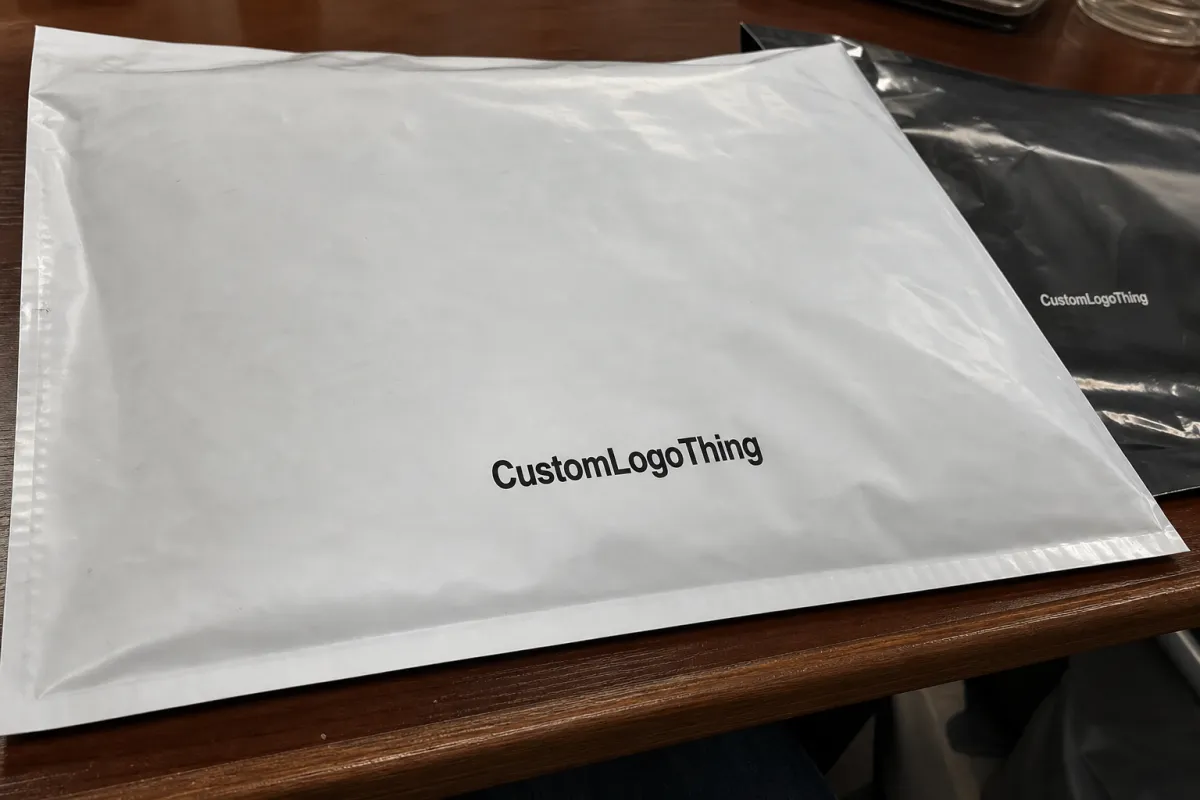
A restaurant group can spend months approving uniform fabrics, embroidery placement, staff merch, and seasonal apparel, then lose control in the last stretch of distribution. Restaurant groups Waterproof Apparel Mailers bulk order planning is about more than buying bags. It is the work of protecting garments, keeping shipments consistent by location, and avoiding the late-stage scramble where apparel is decorated but the packaging is short, mismatched, too flimsy, or awkward for the fulfillment team to use.
For multi-unit operators, apparel mailers are not just ecommerce packaging. They often become the internal logistics format for polos, aprons, caps, T-shirts, training garments, district manager kits, franchise support materials, and limited-run promotional wear. A 40-location rollout can easily involve 400 to 1,200 individual garment packs before consumer merch sales are even considered.
Waterproof protection matters in ordinary, practical conditions: rain on a delivery route, humidity in storage, a damp loading dock, a splash near a back entrance, or scuffing from carrier belts and mixed parcel handling. Polyethylene mailers handle those conditions better than paper envelopes. They are not puncture-proof, though; sharp hat brims, exposed zipper pulls, overstuffed seams, and heavy cartons stacked on top can still create failures if the bag is undersized or the film is too light for the contents.
Bulk planning also supports brand and inventory control. One approved mailer specification gives fulfillment partners, apparel decorators, headquarters teams, and regional offices the same logo, closure style, warning language, carton count, and presentation. That consistency helps purchasing teams track stock, helps receiving teams recognize the right supplies, and helps employees feel that the rollout was planned rather than patched together.
Practical packaging rule: choose the mailer around the folded garment and the handling path, not around the shirt size printed on the apparel order.
Custom Logo Things helps translate that rollout map into bag size, film gauge, print method, order quantity, carton packing, and delivery timing. The goal is not to push the thickest or most decorated option. The goal is to specify a custom poly mailer that fits how the apparel will be folded, shipped, stored, opened, and, in some programs, returned.
Waterproof Apparel Mailer Materials Built for Uniforms, Merch, and Staff Kits
Most custom Waterproof Apparel Mailers are made from LDPE or co-extruded polyethylene film. LDPE is flexible, moisture resistant, lightweight, and forgiving around soft goods. Co-extruded films can pair a clean white exterior with a gray or black inner layer, improving opacity so restaurant uniforms, employee sizes, or branded merchandise do not show through the package.
These mailers are different from thin garment sleeves or retail shopping bags. A true apparel mailer usually has stronger film, a permanent or tamper-evident adhesive closure, and construction intended for parcel movement. Common film thicknesses may run from about 2.0 mil for lighter single-garment packs to 3.0 mil or heavier for dense cotton garments, apron bundles, hoodies, jackets, or multi-piece staff kits. Availability depends on size, print method, material source, and production run.
Use cases vary more than many buyers expect. One group may need new-hire uniform packs with two polos and an apron. Another may ship staff appreciation T-shirts from a central office. A franchise support team may send catering team gear, caps, branded socks, or seasonal merch to dozens of operators. The same basic mailer format can support all of those jobs if the specification is disciplined enough.
Waterproof means the mailer resists normal exposure. It does not mean the package is a submersible dry bag. If paper inserts, training cards, gift notes, coupons, or compliance sheets must stay pristine, consider inner wrapping, a secondary document sleeve, or a layout that keeps paper from pressing against the mailer opening.
- Exterior options: white, black, gray, or custom film colors depending on run size and material availability.
- Interior options: gray or black inner layers for opacity and privacy.
- Finish choices: matte or gloss surfaces, with print compatibility checked before production.
- Print options: one-color logos, multi-color artwork, reorder codes, writable panels, handling notes, and recycling language.
- Closure styles: peel-and-seal adhesive strips, permanent outbound seals, or dual adhesive strips for returns and exchanges.
The closure decision should happen early. A permanent peel-and-seal works well for outbound uniform shipments and staff gifts. Dual adhesive strips cost more, but they can be useful for size exchanges, onboarding corrections, and franchise location returns where the same package may need to travel a second time.
Specification Decisions That Keep Bulk Mailer Orders Accurate
Size planning starts with folded dimensions, not garment labels. A single T-shirt may fit a small 10 x 13 inch mailer, depending on fold method and fabric weight. Polos and aprons often move into mid-size mailers around 12 x 15.5 inches or 14.5 x 19 inches. Hoodies, jackets, chef coats, or multi-piece employee kits may need larger formats, especially if the contents are already packed in inner poly bags.
Usable inside dimensions matter more than outside dimensions. Adhesive flaps, side seals, fold thickness, and the way the garment compresses all reduce the practical packing room. If a folded apron bundle measures 11 x 14 x 1.5 inches on the table, forcing it into a mailer with only a sliver of extra space can stress the side seals and make closure inconsistent across a long packing run.
Film thickness should match both weight and handling. A lighter gauge can work for one soft garment traveling a short parcel route. Heavier film is better for multi-piece kits, dense cotton apparel, uniforms moving through a decorator and then a 3PL, or packages that may be tossed into mixed cartons before final distribution. The whole handling chain matters more than the item sitting neatly on a sample table.
| Mailer Decision | Common Option | Best Fit | Buyer Watchout |
|---|---|---|---|
| Small size | Approx. 10 x 13 in. | Caps, socks, one T-shirt, light merch | Often too tight for folded polos with paperwork |
| Medium size | Approx. 12 x 15.5 in. or 14.5 x 19 in. | Polos, aprons, shirt-and-cap kits | Check thickness after folding and inner bagging |
| Large size | Approx. 19 x 24 in. or custom | Hoodies, jackets, multi-piece staff kits | May need heavier film to avoid seam strain |
| Film gauge | Approx. 2.0 to 3.0+ mil | Based on garment weight and shipping path | Lowest gauge is not always the lowest damage cost |
Opacity deserves a serious look. Opaque white, black, or co-extruded films help prevent employee names, apparel sizes, and branded merchandise from showing through. That supports privacy, reduces the chance of casual theft, and gives the shipment a cleaner appearance if the package is customer-facing.
Artwork has its own constraints. Logos need clear space from edges, adhesive strips, folds, vent holes, and side seals. Heavy ink coverage, flood backgrounds, simulated metallic effects, and tight multi-color registration can influence print method and unit cost. A simple one-color brand mark may be the cleanest and most economical choice for internal distribution, while consumer merch programs may justify a more designed exterior.
Operational markings can save real time. Suffocation warnings may be required based on bag size and jurisdiction. Recycling symbols should be used correctly; the EPA recycling resources are useful for general guidance, although local rules still vary. Location codes, SKU labels, carton labels, pack counts, and reorder codes can make receiving and replenishment much cleaner.
Standardizing two or three mailer sizes is usually smarter than creating a unique bag for every garment combination. Fewer SKUs can mean better pricing, simpler warehouse storage, easier cycle counts, and fewer fulfillment mistakes. Bulk order planning becomes much easier once the team agrees on core sizes and uses them consistently.
Pricing, MOQ, and Unit Cost Factors for Bulk Apparel Mailers
Pricing depends on film type, bag size, gauge, order quantity, print colors, ink coverage, closure style, carton packing, and delivery requirements. A plain stock mailer with a label will usually look cheaper at first glance than a Custom Printed Mailer. If staff must hand-apply 5,000 labels, though, the added labor, skewed placement, label waste, and inconsistent presentation may erase the savings.
Custom printed Waterproof Apparel Mailers normally require a minimum production run. Film setup, printing plates or digital setup, machine time, and converting setup all need to be spread across enough pieces to make the run practical. MOQ varies by specification, but buyers should expect higher thresholds for custom sizes, specialty film colors, heavier ink coverage, or multi-color artwork.
As volume rises, unit cost generally improves. A restaurant group that combines demand across multiple brands, seasonal campaigns, new-hire kits, franchise support, and uniform replenishment may reach a better pricing tier than a single department ordering alone. Centralized packaging planning can turn several scattered small buys into one more efficient production run.
Use the following as a planning structure rather than a fixed price sheet:
| Option | Typical Cost Behavior | Operational Impact |
|---|---|---|
| Plain stock mailer plus label | Lower packaging unit cost; added labor for labeling | Good for testing, weaker for brand consistency |
| One-color custom printed mailer | Often the best balance for bulk uniform programs | Clear branding with controlled print cost |
| Multi-color branded mailer | Higher setup and print cost, especially with large coverage | Stronger presentation for merch and customer-facing shipments |
| Dual-seal return mailer | Higher unit cost than single-seal styles | Useful for exchanges, returns, and re-shipping programs |
Budget planning should include artwork or setup charges, production unit cost, freight, storage space, reorder buffer, possible split shipments, and rush fees if the order is placed too close to rollout. Freight can be a larger line item than expected because empty mailers are light but bulky once cartoned, especially in larger sizes.
A reliable quote needs measurable facts. Provide exact size, gauge target if known, quantity by size, number of print colors, delivery ZIP codes, desired in-hand date, and whether the mailers ship to headquarters, a 3PL, an apparel decorator, or multiple regional sites. If you are still deciding between sizes, send folded garment samples or dimensions so the recommendation is based on the actual pack.
For broader procurement support, Custom Logo Things can align mailers with related branded packaging through Wholesale Programs and broader Custom Packaging Products. That matters for restaurant groups buying more than one package format across uniforms, merchandise, take-home promotions, recruiting events, and internal kits.
Process and Timeline From Artwork Approval to Bulk Delivery
The production path is straightforward, but each step protects the next one. A typical order moves through requirement review, size and gauge recommendation, quote, art template, artwork proof, proof approval, material scheduling, printing, converting, quality checks, packing, and shipment. Skipping proof review to save a day can cost far more time if the logo orientation, bag opening, or closure placement is wrong.
Before requesting pricing, gather vector logo files when possible, brand color references, desired mailer sizes, quantity by size, closure preference, shipping destination, and target delivery date. Vector artwork, usually AI, EPS, or a clean production PDF, helps keep logos sharp. Low-resolution PNG files may be acceptable for reference, but they are rarely ideal for final production art.
The proofing stage should be reviewed by purchasing, marketing, and operations. Check logo placement, print color notes, warning text, bag orientation, adhesive strip location, and whether the bag opens on the short side or long side. That last detail sounds minor until a fulfillment team has to pack 3,000 apron kits and the opening is less convenient than expected.
Lead time depends on volume, material availability, print complexity, size count, and shipping plan. Plain or simple printed runs may move faster. Custom film colors, heavier gauges, high-volume production, multi-color artwork, specialty closures, or split shipments can add time. A responsible planning window also includes time for cartons to be received, counted, staged, and moved to the people packing the apparel.
Build in buffer wherever the apparel deadline is fixed. Uniform counts change, HR teams revise onboarding lists, new stores get added, decorators may need extra time, and parcel networks can tighten during peak retail periods. The mailer approval should happen early enough that packaging is not the final constraint.
Quality checks for apparel mailers typically include seal strength, print registration, ink adhesion, film consistency, closure performance, carton count accuracy, and visible defects that could affect presentation. Some buyers also ask about transit testing. Formal test protocols from groups such as ISTA are more common for full packaging systems than individual poly mailers, but they are useful references when a shipment path is rough, high value, or unusually complex.
Receiving details should be confirmed before the order ships. Ask about carton dimensions, palletization, dock access, liftgate needs, appointment requirements, and whether inventory should be delivered to headquarters, a third-party logistics site, or an apparel decorator. A well-specified mailer can still create headaches if 80 cartons arrive at an office with no receiving area.
How Custom Logo Things Supports Multi-Location Apparel Programs
Custom Logo Things approaches these programs by starting with the distribution plan. How many locations are involved? How many garments go in each kit? Are the mailers being used by a decorator, a 3PL, a corporate office, or individual franchise teams? Those answers shape the bag more than a generic product listing can.
The team can help with polyethylene film choices, gauge recommendations, adhesive closure selection, brand artwork preparation, and bulk order planning for repeat programs. If a buyer is unsure whether to start with one core size or two optimized sizes, both options can be quoted so the decision reflects unit cost, carton count, storage space, and packing efficiency.
A packaging-focused supplier also helps reduce the patchwork effect that happens when mailers are treated as an afterthought. Generic office supply channels may be fine for emergency stock, but they often create mismatched colors, inconsistent closures, hand-applied labels, and limited control over reorder specs. Custom runs give purchasing teams a repeatable item, defined artwork, approved film, and predictable presentation.
Scalability matters. A restaurant group might start with a medium custom poly mailer for new-hire uniform kits, then add a larger hoodie mailer for seasonal staff appreciation drops or a dual-seal version for exchanges. The program does not need to be overbuilt on day one. It does need a clear enough foundation that future reorders are simple and specs do not drift.
Clear communication is part of the product. Purchasing teams need written specifications, quote transparency, proof approval before production, realistic timing, and guidance that reflects how bags are printed, converted, packed, and shipped. That is the difference between ordering “some branded bags” and building a repeatable apparel packaging supply plan.
Brand protection is practical. A properly printed mailer makes internal shipments look intentional, supports the employee experience, and helps customer-facing merch arrive in packaging that matches the restaurant group’s identity. For teams selling limited-run apparel, that packaging can contribute to perceived value without adding rigid boxes or excess weight.
If you are comparing formats, the Custom Poly Mailers page is a useful starting point. From there, Custom Logo Things can narrow the specification to the right film, size, seal, print method, and quantity for the way the apparel will actually move.
What to Prepare Before Requesting a Bulk Mailer Quote
Good quoting starts with good inputs. Gather the garment types, folded dimensions, average kit weight, number of locations, estimated launch quantity, reorder cadence, artwork files, and desired in-hand date. If there are two or three rollout waves, include that too, because split shipments and staged delivery may affect freight, carton planning, and production scheduling.
Physically measure folded samples instead of relying only on garment size charts. A folded hoodie, apron bundle, or polo-and-cap kit can need more room than expected once it includes inner packaging, paperwork, or a size label. Add enough space for the adhesive strip to close flat without pulling against the contents.
Decide whether the mailer is outbound-only or return-capable. A single permanent seal is usually enough for new uniforms, staff gifts, and merch drops. Dual-seal return mailers make sense if the group expects size exchanges, onboarding corrections, or franchise returns. They cost more, but they can reduce repacking labor and improve the return path.
Group quantities by size and shipping destination. For example, 10,000 medium mailers to one decorator and 5,000 large mailers to a 3PL is a different freight and packing plan than 15,000 mixed mailers going to headquarters. Clear quantity breaks help the supplier recommend MOQ paths and better production economics.
If the best specification is not obvious, ask for a good-better-best comparison. That might compare one-color print versus multi-color print, 2.0 mil versus 2.5 or 3.0 mil film, one standard size versus two optimized sizes, or single-seal versus dual-seal closure. A structured comparison keeps the decision grounded in cost, handling, and brand goals rather than guesswork.
Restaurant groups waterproof apparel Mailers Bulk Order Planning works best when the supplier sees the rollout map early, before apparel is decorated and deadlines get tight. Folded garment dimensions, artwork, quantity targets, shipping destinations, and in-hand dates give Custom Logo Things the information needed to recommend the right size, material, print method, MOQ path, and production timing.
FAQ
What information is needed for a restaurant group waterproof apparel mailers bulk order quote?
Provide mailer sizes or folded garment dimensions, estimated quantity by size, film thickness preference if known, artwork files, print colors, closure style, delivery ZIP code, and target in-hand date. If the order supports multiple locations, include the number of stores, whether shipments go to one warehouse or split destinations, and whether the mailers are for uniforms, merch, or mixed staff kits.
What MOQ should restaurant groups expect for custom waterproof apparel mailers?
MOQ depends on size, film, print method, and customization level, but custom Printed Poly Mailers normally require a production minimum so setup and machine time are economical. Restaurant groups can often improve unit cost by combining needs across locations, seasonal campaigns, onboarding kits, and expected replenishment orders.
Are waterproof apparel mailers strong enough for restaurant uniforms and aprons?
Yes, when the correct size and film gauge are selected for the garment weight and folding thickness. Single shirts may use a lighter gauge, while heavier uniforms, apron bundles, hoodies, or multi-piece kits generally benefit from thicker film and careful sizing to reduce seam stress.
How long does bulk waterproof apparel mailer production take after proof approval?
Timeline varies by order volume, material availability, print complexity, size count, and shipping plan. The safest approach is to approve artwork early, confirm specifications before apparel decoration is complete, and allow buffer time for packing, freight, and receiving.
Can waterproof apparel mailers be printed with restaurant group logos and location codes?
Yes, custom mailers can include logos, brand marks, handling notes, size indicators, reorder codes, and other operational markings within the printable area. Artwork should be reviewed on a proof so placement avoids seams, adhesive strips, folds, and areas that may distort during filling or sealing. For broader ordering questions, the Custom Logo Things FAQ can help purchasing teams prepare before requesting a quote.


