Poly Mailer Bags Factory Quote Request: Specs & Pricing sounds simple until the numbers start to move. A mailer that looks cheap on paper can get expensive once dimensional weight, seal failures, rework, or damage claims enter the picture. The smartest poly mailer bags factory quote request starts with shipping math, not a hunt for the lowest printed number.
Most packaging buyers are not trying to win a trivia contest about resin grades. They are trying to match bag size, closure style, print requirements, carton efficiency, and line speed to a shipping format that holds up in the real world. That is why factory pricing should be built around construction details and usage conditions, not a catalog number stripped of context.
A direct poly mailer bags Factory Quote Request also changes the quality of the conversation. Factory pricing depends on film gauge, finished dimensions, adhesive type, print coverage, and pack format. Give the supplier more precision and the quote sharpens. Give them a vague ask and the result is usually a wide range that looks useful but helps nobody compare landed cost.
“A low unit price is a poor bargain if the bag is too loose, the seal opens in transit, or the packing team loses time on every order.”
I have sat in enough packaging reviews to know the pattern: the cheapest-looking option is often the one that creates the most quiet pain later. A bag that runs a little slow on the line, tears at the flap, or arrives with weak opacity does not fail loudly. It fails in small, costly ways. That is why a careful quote request matters so much.
Why a Poly Mailer Bags Factory Quote Request Starts With Better Shipping Math
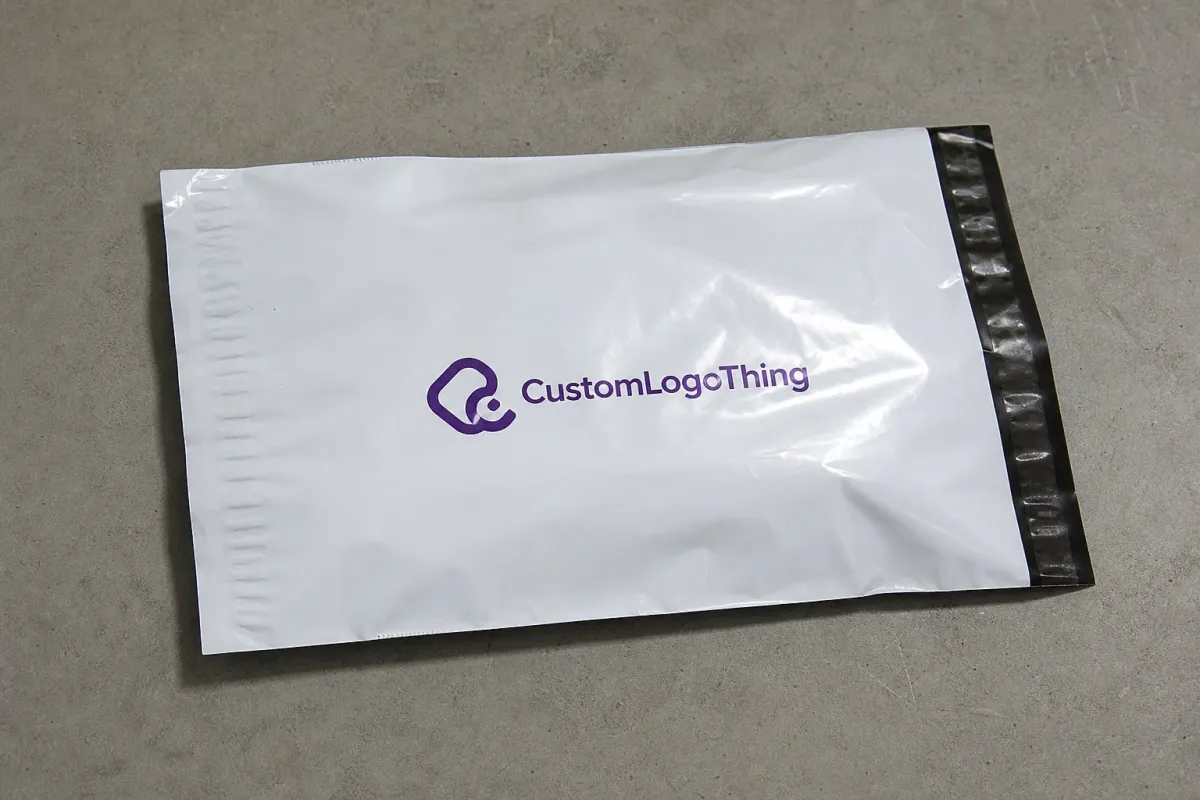
A poly mailer is not a universal commodity with one fair price. Two mailers can share a similar appearance and still behave very differently once they enter a parcel network. A slightly larger bag may push a shipment into a higher shipping band. Too much empty space can mean scuffed product, crushed corners, or higher return rates. The first job in a Poly Mailer Bags factory quote request is to define the shipment, not just the bag.
Apparel, soft goods, printed inserts, and other non-fragile products ask a mailer to do three things at once. It should keep out dirt and moisture, protect the contents through handling, and present the brand at the doorstep. Thin film, weak seals, or poor sizing erase the savings fast. Replacement costs are never limited to the replacement itself; labor, reshipping, and customer frustration usually join the bill.
Factory quoting helps because it exposes the real cost drivers. A supplier will usually ask for dimensions, thickness, closure style, print colors, and order volume before pricing. That is not friction for its own sake. It is the only way to quote accurately. Once the variables are clear, the buyer can compare options by construction and landed cost instead of by the lowest headline number.
The buyer mindset that avoids trouble is simple: compare fit, film strength, seal performance, and packing efficiency first, then compare price. The cheapest quote often comes from a thinner film, a looser size, or a simplified print process that does not match the product mix. A better quote is the one that fits the actual use case, whether that is a fashion e-commerce order, a subscription shipment, or a bulk B2B replenishment run.
For a Poly Mailer Bags factory quote request, the supplier needs enough detail to answer three questions cleanly: what are you shipping, how are you packing it, and what level of presentation do you need? Clear answers cut back-and-forth and usually shorten the quote cycle as well.
One small example: a client once asked for “a tougher bag” after two weeks of crushed returns. The bag was not the real issue. The mailer was too wide, so the product shifted inside it like a paperclip in a coffee mug. The fix was a narrower format with a stronger flap and a slightly thicker film, not just “more plastic.” That is the kind of distinction a factory can only make if the request includes the actual packing behavior.
Product Details: What Poly Mailer Bags Are Made To Do
Poly mailer bags are lightweight shipping mailers built for products that need basic protection from dust, scuffing, and moisture, but do not need the crush resistance of a box. They are common in apparel, accessories, folded textiles, printed inserts, and many other non-fragile goods. A good poly mailer bags factory quote request should reflect the actual use, because the right structure for a hoodie shipment is not always the right structure for a sample kit or retail replenishment order.
Common constructions include plain poly mailers, co-extruded films, gusseted bags, and printed mailers with peel-and-seal adhesive. Plain mailers tend to be the simplest and least expensive. Co-extruded options can offer better opacity, better puncture resistance, and a more refined hand feel. Gusseted bags work well when the product needs extra depth or a little more internal volume. Printed mailers support branding, warehouse sorting, and barcode readability when the design is handled carefully.
Material choice matters more than many buyers expect. LDPE is widely used because it is flexible and cost-effective. Co-extruded PE films can improve toughness and print presentation because the layers can be tuned for strength and surface finish. Recycled-content options are also common, but they need to be described clearly in the quote request. Performance, opacity, and appearance can shift depending on the resin blend and the target recycled percentage. If sustainability claims matter to your program, ask for documentation and clear definitions. The FSC site is useful if your packaging program also includes paper components, and the EPA recycling strategy gives a useful overview of materials and recovery considerations.
Closure style changes the user experience more than people admit. A peel-and-seal adhesive is standard for many shipments because it speeds pack-out and leaves a clean finish. Tamper-evident seals matter for retail or subscription programs that need visible first-open protection. Easy-open tear lines can improve the customer experience, but they need to be placed carefully so they do not weaken the bag in transit.
Branding should support the shipment, not fight it. A mailer print can carry the logo, return information, handling marks, or a simple visual system that makes the parcel easy to recognize. It can also help warehouse sorting if the printed area includes a code, color band, or fulfillment cue. A strong poly mailer bags factory quote request should explain what the print is meant to do, because a full-coverage design prices very differently from a one-color logo in the corner.
Specifications That Shape the Quote
If the request is vague, the quote will be vague too. The factory needs finished width, finished length, gusset if any, film thickness, closure style, print colors, and a rough estimate of annual or opening order volume. That list may look basic, but it is what turns a poly mailer bags factory quote request into a pricing exercise that can actually be compared.
Thickness deserves special attention. Buyers often say “thick enough” or “standard gauge,” but those phrases mean different things to different suppliers. It is better to specify thickness in microns or mils and, if possible, give an acceptable tolerance. A small difference can affect feel, puncture resistance, and price, especially once quantities rise. When comparing quotes, make sure the thickness is identical across each option.
Color and opacity are quiet cost drivers. Clear or translucent films may cost less, while a fully opaque white or black mailer can require more material or a different film structure. Large solid print areas, metallic effects, or multiple spot colors can also raise the price because they add ink usage, plate work, setup time, and rejection risk during printing. A modest two-color logo on one side is not the same job as a full-bleed graphic on both sides.
Compliance and handling details belong in the request too. If the buyer wants recycled content, retail-ready pack counts, custom labeling, lot coding, or special carton markings, those items need to be listed. So do shipping or warehouse constraints, because inner pack counts, master carton dimensions, and pallet configuration all affect freight cost and storage efficiency. Many quote delays come from missing logistics details, not from the bag itself.
A rough drawing can save time. A simple sketch showing width, length, flap area, and any gusset or tear notch often prevents several rounds of clarification. If there is already a bag in use, sending a photo or sample spec is usually the fastest path to a clear poly mailer bags factory quote request. For teams managing broader packaging needs, our Custom Packaging Products page helps frame the wider program, while Custom Poly Mailers gives a more focused view of the bag family.
The numbers below are planning ranges, not standing offers. Resin costs, print setup, shipment mode, and regional freight can move the final price more than people expect, so treat them as a working frame rather than a promise.
| Quote Scenario | Typical Spec | Indicative MOQ | Unit Price Range | Best Fit |
|---|---|---|---|---|
| Stock-style plain mailer | Standard size, 50-60 microns, peel-and-seal | 3,000-5,000 pcs | $0.04-$0.09 | Low-risk shipping, basic fulfillment |
| Printed brand mailer | Custom artwork, 1-3 colors, co-extruded film | 5,000-10,000 pcs | $0.08-$0.20 | DTC apparel, retail branding, returns-friendly presentation |
| Heavier-duty custom mailer | Thicker film, opaque finish, gusset or tear line | 10,000+ pcs | $0.12-$0.28 | Higher abrasion risk, larger soft goods, premium presentation |
Cost, Pricing, and MOQ: How Factory Quotes Are Built
Factory pricing comes from a small set of predictable variables: resin cost, bag size, film thickness, print method, order quantity, and whether the project needs tooling, plates, or setup time. A poly mailer bags factory quote request that skips any of those details leaves room for surprise charges later. Buyers usually want one number. Factories need enough detail to know what that number covers.
MOQ, or minimum order quantity, is often the pressure point. Higher quantities usually lower unit cost because setup costs are spread across more bags. That does not mean the lowest MOQ is always the smartest choice. A small run can be the right move for a launch program, but the per-bag price is usually higher and may include extra proofing or setup charges. Inventory space matters too. A larger MOQ only makes sense if the added quantity fits the shipment plan.
Comparing quotes requires discipline. Unit price matters, but total landed cost matters more. Freight, packaging, setup charges, sample cost, and import duties, where relevant, all belong in the math. A quote that looks higher at first glance may end up cheaper once pallet count, shipping mode, and lower damage rates are included. A bargain quote that leaves out freight or hides a setup fee is not a bargain for long.
Ask for price breaks at several volume levels. A quote at 5,000 pieces, 10,000 pieces, and 20,000 pieces can show exactly where the cost curve changes. Sometimes a modest increase in volume drops the unit cost enough to justify carrying more inventory. Sometimes the discount is too small to matter. The numbers should make that decision visible.
Do not compare a plain white sample quote with a fully printed production quote and assume the two are equivalent. Thickness, film structure, print coverage, pack counts, and carton configuration all need to match. A serious poly mailer bags factory quote request should ask the supplier to state what is included: MOQ, sample cost, production lead time, packaging format, and quote validity window. If those items are missing, the quote is incomplete.
The best quotes also spell out what happens if the spec changes. That sounds boring, but it is where a lot of procurement headaches start. If the art is revised, if the film thickness shifts, or if the carton count changes, the price should be revalidated instead of quietly carried forward. That kind of discipline keeps a project honest.
For buyers who want outside references on packaging and testing, the ISTA site is a useful benchmark. Transport testing standards help frame expectations for puncture resistance, seal performance, and parcel handling, which is where weak mailers usually expose themselves.
Process and Timeline: From Quote Request to Production Steps
The process is simple enough on paper. Inquiries go in, specs are reviewed, artwork is checked, samples or proofs are prepared, the order is confirmed, production starts, inspection happens, packing follows, and shipment closes the loop. A poly mailer bags factory quote request that arrives with dimensions, thickness, print files, and delivery details can move through that sequence much faster than one sent in three separate messages over several days.
Missing dimensions slow everything down. Artwork issues do the same. If the file is low-resolution, poorly separated, or not set up for the chosen print process, the team has to stop and clarify before production can begin. Late proof approvals are another common delay. Even a simple mailer design can lose days in proofing, and that lost time usually spreads into the rest of the schedule if the order is waiting on film or plate setup.
Lead time depends on the job type. Stock-style mailers are usually the fastest. Simple custom printing takes longer because the print setup must be approved and sometimes sampled. Fully custom specifications, especially those that require new film structures or multiple print passes, take longer again. Ask the factory to separate quote time, proof approval time, production time, and shipping time so there is no confusion about where the clock is actually running.
Samples are worth the time. A pre-production sample, digital proof, or blank prototype can catch fit issues before a full run is made. That matters because a mailer that is two centimeters short or too narrow at the flap creates packing friction every day for the life of the program. In a real operation, that kind of friction costs more than a modest increase in unit price.
Practical questions help reveal whether the factory is organized. When does production start? What inspection steps are included? How is shipment booked? Which milestone triggers payment or approval? Those answers tell you whether the offer in the poly mailer bags factory quote request is actually workable. If you want to send complete details in one message, our Contact Us page is the fastest route.
There is also a human side to timeline management. In my experience, projects move faster when the buyer names one decision-maker and one technical contact. If five people are sending revisions, even a clean spec can turn muddy. That is not a factory problem; it is just how packaging projects get noisy.
Why Choose Us for a Poly Mailer Bags Factory Quote Request
Buyers rarely want a sales script. They want accurate confirmation, stable production, and a team that understands the difference between a good-looking sample and a bag that runs well on the line. A strong poly mailer bags factory quote request should be answered with clear spec confirmation, realistic lead times, and practical feedback on film, size, and print setup.
A direct factory relationship makes that easier. Instead of being pushed toward unnecessary features, the buyer can get straightforward guidance on what actually improves performance. If the bag is for apparel, the factory can recommend a size that fits the fold method and reduces wasted air. If print coverage is heavy, the factory can explain the cost impact before approval. If the closure needs stronger hold, the adhesive and flap details can be adjusted before the order is locked in.
Consistency matters more than many teams expect. A mailer may be small, but it has to run smoothly on the packing line every day and stay uniform from batch to batch. A slight change in film slip, flap tack, or cut quality can slow fulfillment and frustrate the people who handle the bags all day. A manufacturer that watches those details is protecting labor as much as presentation.
B2B buyers also benefit from support around artwork files, carton planning, sampling, and documentation. A clean quote should tell you how the bags will be packed, how many pieces fit per carton, what pallet plan is expected, and how the artwork will be reviewed. That belongs in a well-run poly mailer bags factory quote request, not as an afterthought.
What separates a useful factory answer from a generic one is the willingness to say no to a bad spec. If a requested size will cost more in freight than it saves in material, that should be said plainly. If the print coverage will look muddy on a low-cost film, that should be said too. Honest friction up front beats expensive disappointment later.
The best packaging suppliers do not just quote a bag. They help the buyer land on a repeatable format that works at scale, with fewer surprises on the line and fewer surprises in transit. If you are comparing mailers against other packaging options, our Custom Packaging Products catalog helps keep the broader program organized, while Custom Poly Mailers gives you a direct view of the mailer format itself.
Next Steps Before You Send the Request
Before you send a poly mailer bags factory quote request, gather the essentials: product size, target mailer dimensions, thickness preference, closure type, print artwork, MOQ target, and delivery location. If you can add a reference sample, photo, or existing bag spec, do it. One clear attachment often saves several rounds of revision because the factory can see what you mean instead of guessing from a description.
If budget is the deciding factor, ask for two options. One can be a value-driven spec with standard film and simpler print. The other can be a higher-performance version with thicker film, stronger opacity, or a better closure. That side-by-side comparison shows the real price gap between “good enough” and a bag built for heavier use.
Decide whether you need plain stock, custom print, or a fully custom run before asking for pricing. Those are different jobs, and each one follows a different production path. A precise request gets a precise answer. A vague request gets a range too wide to plan with.
The cleanest way forward is to send everything in one message so the factory can return a usable quote, a realistic timeline, and a production path that fits the job. If you want a response that is actually comparable, include the finished bag size, film thickness, print count, closure style, pack-out, and destination together. That gives the supplier enough context to quote the bag you need, not the one they have to guess at.
FAQ
What information should I include in a poly mailer bags factory quote request?
Provide finished bag dimensions, thickness, material preference, closure style, print requirements, and target quantity. Include carton pack-out needs and the delivery destination so freight and packing are quoted correctly. If branding or replacement matching is part of the job, attach artwork or a sample photo.
How does MOQ affect poly mailer bags pricing?
Higher quantities usually lower unit cost because setup and print preparation are spread across more bags. Low MOQs can still work, but the per-bag price is often higher and may include extra setup charges. Ask for price breaks at several volume levels so you can see where the best landed cost begins.
How long does a factory quote and production cycle usually take?
A basic quote can often be turned around quickly once the specs are complete and clear. Production timing depends on whether the order is stock, printed, or fully custom, and artwork approval often affects the schedule most. Ask the factory to separate quote time, proof approval time, production time, and shipping time.
Can I request samples before placing a poly mailer bags factory order?
Yes, and it is often the best way to confirm size, seal strength, opacity, and print appearance. Samples may be stock samples, blank prototypes, or pre-production proofs depending on the order type. Use samples to verify pack-out speed and fit before approving the full run.
What is the best way to compare two factory quotes?
Compare the same dimensions, material, thickness, print method, and pack configuration on both quotes. Check whether freight, setup charges, and sample costs are included or listed separately. Review lead time, MOQ, and quote validity so a low price does not hide a slower or less workable offer.


