Poly Mailer Bags Material Thickness Guide for Smart Buyers
A thin mailer can look like a bargain on paper. Then the shipment leaves the warehouse, a seam splits, and the real cost shows up in reships, support tickets, and the kind of customer complaint that never mentions packaging but definitely came from packaging. A practical Poly Mailer Bags material thickness guide starts with that reality, not with the lowest line item.
Buyers usually start by asking for mil or micron, and that is the right place to begin. Those numbers tell you how much film sits in the wall of the bag, which affects puncture resistance, stiffness, seal behavior, and the feel of the package when it moves through a packing line.
But thickness is only part of the story. The product shape, the shipping lane, the closure style, and the pace of fulfillment all change the answer. A thicker bag is not automatically the better bag. Sometimes it is just a heavier one.
Poly Mailer Bags Material Thickness Guide: Why Thinner Bags Can Cost More
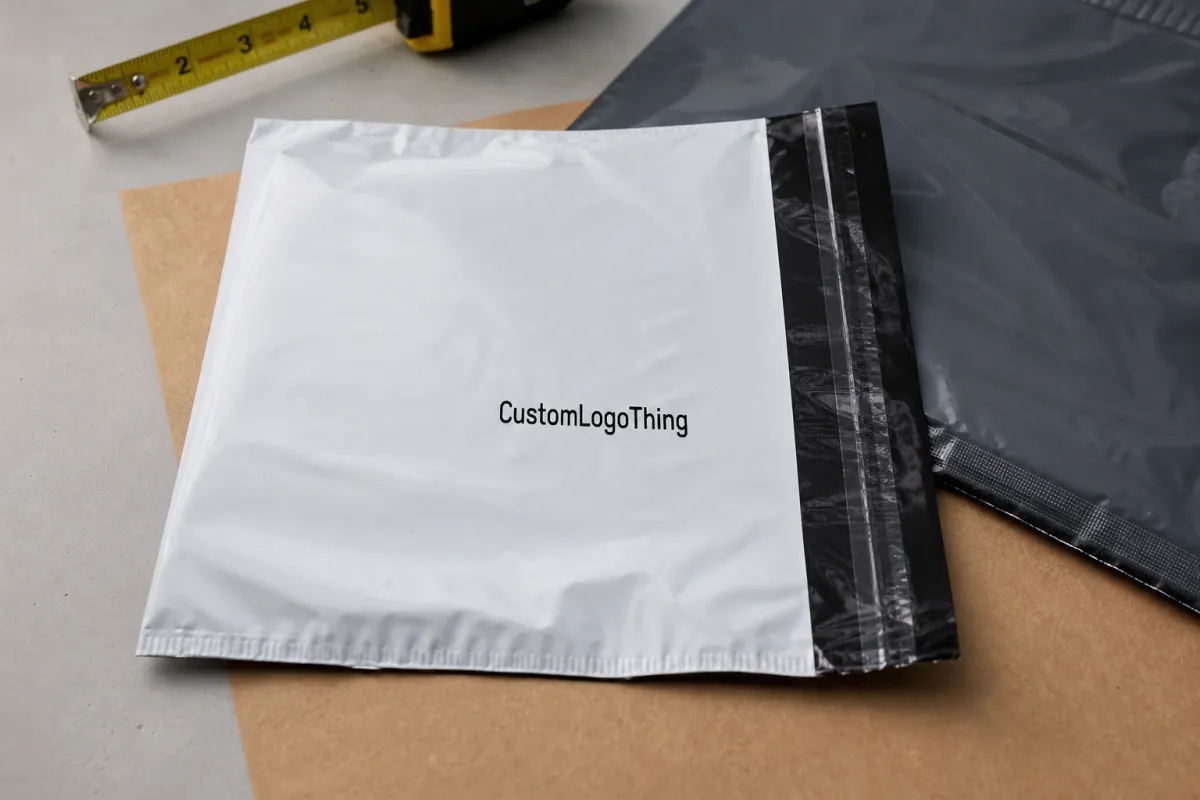
A thinner mailer often costs less to buy and more to use. That tradeoff catches buyers off guard because the quote sheet makes the savings look clean and obvious. Then one tear in transit turns the “cheap” bag into a replacement order, a second shipment, and a customer service case that eats up the margin you thought you saved.
Material thickness refers to the film itself, not the artwork, color, or bag size. In the U.S., thickness is usually described in mil; in many other markets, micron is the standard. The two measure the same thing in different units. One mil equals 25.4 microns, so a 2.0 mil mailer is roughly 51 microns.
Thickness changes more than strength. Thicker film usually feels stiffer, resists scuffing better, and gives the seal area more body. It can also make a package feel more premium in hand, which matters for brands that treat unboxing as part of the product experience rather than an afterthought.
That said, extra thickness has a ceiling. A heavy film can slow packing, make storage bulkier, and add cost without giving useful protection. A good spec protects the product without making the workflow awkward. If the bag is so rigid that operators fight it at the packing station, the packaging choice is working against the business.
In practice, I tend to think in three risk bands:
- Low risk: soft apparel, flat inserts, lightweight accessories, short or predictable transit lanes.
- Moderate risk: mixed merchandise, small boxes inside the mailer, longer carrier routes, frequent sortation.
- Higher risk: items with corners, zippers, clasps, hard edges, or repeated handling in fulfillment.
That framing keeps the discussion grounded. It pulls the conversation away from abstract film numbers and back toward what the packed product actually needs.
Poly Mailer Bags Material Thickness Guide: How Thickness Works in Real Use
Film thickness shows up in small, practical ways. A soft T-shirt slides into a 1.5 mil mailer with almost no resistance. A jacket with snaps, a bundle of catalogs, or a boxed accessory changes the stress profile fast, especially when corners rub against the inside of the bag during transit. That is why a Poly Mailer Bags material thickness guide has to be read alongside the product, not by itself.
One rule holds up across most packaging lines: thicker film usually improves durability, but the best mailer still has to pack cleanly. If the bag is too floppy, workers fight the opening. If it is too stiff, the adhesive flap may not close evenly or the seal area may not lay flat enough for a dependable bond. Either way, you are paying for material that is not giving you much back.
Seal performance deserves its own attention. A strong film does not rescue a weak closure. Pressure-sensitive adhesive flaps and heat seals both depend on the film structure and on the packing method used in the warehouse. A thicker coextruded film can support a better seal, but only if the line settings, dwell time, and pressure are dialed in correctly. That part is kinda unglamorous, but it matters more than most spec sheets admit.
Structure matters as much as gauge. Resin blend, film layering, and seal quality all shape the final result. A two-layer or three-layer film can outperform a single-layer film of the same nominal thickness because the outer layer can be tuned for abrasion resistance while the inner layer improves seal integrity. Two bags can both be “2.0 mil” and still behave differently in use.
That is why experienced buyers compare use cases, not just numbers. Apparel mailers often work well in a moderate gauge. Catalogs and soft goods with sharp corners need more abrasion resistance. Small accessories with rigid inserts may need a stronger film or a slightly larger bag so the contents are not pushed hard against the seam. Boxed products, especially those with clean corners, should be tested in the exact packed configuration before the order is approved.
Other packout materials matter too. Corrugated cardboard shippers, kraft paper wraps, and insert cards all change how the mailer behaves. A rigid carton inside a poly bag creates a different stress pattern than a flat garment. Heavy print coverage on the outer surface changes the feel as well. If sustainability is part of the brief, ask about recycled content, FSC certified paper components, and post-consumer waste content where those details fit the program. For paper sourcing and certification basics, the FSC certification site is a useful reference.
In sample runs I have reviewed, the bag that looked “fine” on a screen often failed the first real handling test because the packed item had one hard corner or one awkward zipper pull. That is the kind of detail a spec sheet misses if nobody checks the filled bag.
From a buyer’s perspective, the real question is not how much thickness you can add. The question is how much film your shipment needs before you start paying for protection you will never use. That is the point of a Poly Mailer Bags material thickness guide.
Choosing Thickness by Product Type and Shipping Conditions
The product should set the starting point. A soft cotton tee behaves differently from a folded hoodie, and both behave differently from a rigid box of cosmetics or a small electronics accessory. Weight matters, but shape often matters more. Corners, zippers, hard inserts, and embossed surfaces create pressure points that thin film handles poorly.
Shipping conditions change the recommendation too. Long carrier lanes, repeated sortation, humidity, rough handling, and return shipping all raise the risk of abrasion or puncture. A bag that needs to survive an exchange should usually move up one step in thickness so the film still holds together after the first trip. If you sell apparel with high return rates, the return leg can be more punishing than the outbound trip.
Closure design and print coverage also play a part. Heavy printed areas can change how the bag feels in hand, and wider adhesive flaps can improve closure confidence. Narrow flaps or inconsistent adhesive performance will not be fixed by extra thickness alone. If the seal is weak, a heavier film only makes the failure more expensive.
A mailer is only as strong as the weak point in the packout. If the fit is poor or the flap fails, more film just makes the mistake costlier.
Here is a practical way to think about common ranges:
- 1.5 mil / about 38 microns: light apparel, flat items, low-abrasion routes, price-sensitive programs.
- 2.0 mil / about 51 microns: a common fit for soft goods, most apparel, and moderate shipping risk.
- 2.5 mil / about 64 microns: mixed product lines, heavier garments, or items that need more puncture resistance.
- 3.0 mil / about 76 microns: higher-risk loads, rigid corners, or mailers that need extra stiffness and body.
If your catalog covers more than one product family, ask for side-by-side sample packs from Custom Poly Mailers and test them with the exact goods you ship most often. A product page can list a nominal gauge; a packed sample tells you whether the size, seal, and handling feel are right.
A useful test is simple. Load the product, close the flap, shake the bag gently, rub the corners against a clean surface, and check the seal after a few drops from a realistic packing height. If the package will travel by parcel carrier, a light internal test based on ISTA testing guidance gives a better read than squeezing an empty film in your hand.
That real-world testing step matters because thickness is only one variable. I have seen a lighter bag outperform a heavier one simply because the heavier sample was too tight around the product. The product fit was wrong, so the extra film never had a chance to help.
Cost, Pricing, MOQ, and Unit Cost: What Thickness Does to Your Quote
Thicker film raises material cost. That part is easy. The less obvious part is that the pricier bag can still lower total landed cost by reducing damage, replacement orders, and the time spent handling complaints. If a 2.0 mil mailer cuts your damage rate compared with 1.5 mil, the stronger film may pay for itself faster than the spreadsheet suggests.
Pricing depends on more than thickness. Resin usage, bag size, color count, print coverage, seal style, recycled content, and whether the film uses virgin, blended, or post-consumer waste resin all affect the quote. A simple one-color bag in a standard size will price very differently from a large full-bleed design with special adhesive and custom sizing.
MOQ changes the decision too. A supplier may offer a better unit price at a higher run size, but inventory risk rises with it. If the right gauge is still under review, a first run near a standard spec is usually safer than locking a large batch into an untested thickness. A cheap unit price does not help much if the inventory sits for months while the team argues about whether it packs well.
| Thickness | Typical Use | Approx. Unit Price at 5,000 pcs | Packing Feel | Risk Level |
|---|---|---|---|---|
| 1.5 mil / 38 micron | Light apparel, flat inserts | $0.07-$0.12 | Soft, flexible | Low to moderate |
| 2.0 mil / 51 micron | Most apparel and soft goods | $0.09-$0.16 | Balanced, easy to pack | Moderate |
| 2.5 mil / 64 micron | Mixed goods, heavier garments | $0.11-$0.20 | More body, better puncture resistance | Moderate to higher |
| 3.0 mil / 76 micron | Rigid corners, higher-risk loads | $0.13-$0.25 | Stiff, premium feel | Higher |
The table is directional. Resin markets move, freight moves, and the final quote can change with artwork complexity or film structure. Even so, the pattern stays consistent: the gap between gauges is often smaller than the cost of a damaged shipment once freight, replacements, and service labor are included.
Ask the supplier about thickness tolerance across the run. A bag sold as 2.0 mil is not very helpful if the line drifts too far from pallet to pallet. Consistency matters as much as the nominal number, especially if you are ordering for a fulfillment center that moves through a lot of volume.
If your packaging program is broader than mailers, compare the quote against other items in Custom Packaging Products. Sometimes the smarter move is a slightly lighter mailer paired with stronger inserts, a better carton, or a cleaner packout that reduces stress on the bag.
The most useful quote includes unit price, freight, setup charges, sample fees, and the likely damage rate. A headline number alone tells only part of the story, and that part is often the least useful part.
Process and Lead Time: From Spec Sheet to Finished Poly Mailers
A custom mailer run begins with a complete spec sheet. The supplier needs size, film thickness, print coverage, flap style, adhesive type, bag orientation, and any special requirements such as recycled content or a matte finish. Missing details slow the back-and-forth and make the first proof more likely to miss the mark.
The production path usually moves through a few stages: film extrusion, printing, sealing, slitting or bag forming, packing, and final inspection. Changing thickness can affect several of those steps because line settings, sealing parameters, and tension control may need to be adjusted to keep the film stable and the finished bag square.
Lead time stretches for predictable reasons. Artwork approval takes time. Color matching takes time. Sampling takes time. A move from a standard 1.5 mil bag to a 2.5 mil bag may also require a fresh setup to confirm seal behavior and bag feel before the run is released. In many custom programs, 12-18 business days after proof approval is a realistic window, though complex artwork or special materials can push that longer.
That is another place where a Poly Mailer Bags material thickness guide earns its keep. When the supplier knows the target gauge early, they can recommend the right film structure and avoid a false start. A clear request shortens the loop between quote, sample, and production, which is good for everyone involved.
Sustainability adds another layer to the process. If the program includes kraft paper inserts, FSC certified hang tags, or corrugated cardboard master cartons, those pieces should be confirmed with the mailer spec. If recycled content is part of the film, ask for the exact post-consumer waste percentage and whether appearance or seal performance changes at that level. Not every recycled-content film behaves the same way, and vague biodegradable packaging claims can create confusion instead of trust.
The supplier should also be able to explain how the product is checked. A good run may reference tensile and impact methods such as ASTM D882 or dart impact logic like ASTM D1709, even if those exact tests are not requested on every order. Buyers Should Know how the film strength is evaluated, not just trust a polished sample with glossy lighting and a nice photo.
If your business ships a standard assortment and wants one spec, test the product at the heaviest expected fill. That one extra sample can settle a lot of arguments later, especially if the line sees mixed SKUs or seasonal changes in product shape.
Common Mistakes and Expert Tips for Better Thickness Decisions
The biggest mistake is assuming thicker always means better. It does not. A bag can be too heavy for the product, too stiff for fast packing, or too costly for the service level you actually need. Buyers often chase a higher gauge because it sounds safer, then discover the extra film changes the packing experience without fixing the real issue.
Another common miss is focusing on film thickness while ignoring the closure. A strong film with a weak adhesive flap is still a weak mailer. Bad sizing causes trouble too. If the bag is too tight, seams take the load. If it is too loose, the contents move around and create abrasion on the inner walls. In other words, the gauge can be right and the package can still be wrong.
These sampling habits make the results more useful:
- Test the fully loaded bag, not the empty film.
- Use the heaviest or most awkward item as the sample case.
- Compare two nearby gauges so the tradeoff is obvious in hand.
- Check seal integrity after handling, not just right after closure.
- Look for scuffing, corner wear, and flap lift after a short transit simulation.
Sampling often reveals that the gap between “good enough” and “best fit” is smaller than expected. That is why comparing 2.0 mil with 2.5 mil, or 1.5 mil with 2.0 mil, tells you more than jumping far apart. The difference is easier to feel in packing behavior and transit performance than it is to spot in a product photo.
Packaging buyers get better results when they think in systems. If the mailer sits inside a kit that includes inserts, tissue, kraft paper wraps, or a master carton, the poly film does not carry the entire burden. A smart outer packout can keep the gauge sensible without sacrificing protection or presentation.
A mailer spec should survive real handling, not a sales sheet. If the packed sample passes your normal drop, rub, and close-test checks, you are much closer to a dependable order.
Marketing language can mislead here. Words like “premium,” “extra strong,” or “eco-friendly” are too vague to guide procurement. Ask for the actual gauge, resin type, film structure, adhesive details, and test sample, then decide from there. Clear specs beat pretty adjectives every time.
Next Steps: Build a Spec Before You Order
Before you request quotes, gather three things: the product dimensions and weight, the level of protection you want, and any branding or sustainability requirements. That turns a vague request into a spec the supplier can use, and it usually produces a better recommendation on the first pass.
Then test one sample in the real packing flow. Check whether the bag closes cleanly when full, whether the seal holds, whether the surface scuffs too easily, and whether the product shifts inside the film. If two gauges look possible, sample both and compare them side by side instead of guessing from price alone. That small bit of testing saves a lot of guessing later.
If sustainability matters to your buyers, ask directly about recycled content, post-consumer waste percentage, and whether the rest of the packout includes FSC certified paper components or other verified material choices. If your program uses biodegradable packaging claims, make sure the claim matches the disposal route and the standard behind it. Loose language here creates confusion fast, and sometimes a compliance headache too.
At this stage, the most useful quote is the one that compares options clearly. Ask for size, thickness, print details, film type, MOQ, unit price, and lead time in the same response. If the supplier can also suggest a second thickness option, you get a cleaner read on protection versus cost.
The practical takeaway is simple: start with the product shape, then match thickness to the handling risk, and only then compare prices. A good Poly Mailer Bags Material thickness guide does not push every buyer toward a heavier bag. It helps you choose the lightest bag that still survives real transit without turning the packout into a gamble.
What thickness works best for poly mailer bags for T-shirts and soft goods?
Most soft apparel performs well in a moderate thickness that balances flexibility, tear resistance, and easy packing. If the product has zippers, buttons, hangers, or anything that can scuff the film, move up one step and test a filled sample before committing to the full order.
Is a thicker poly mailer always stronger?
Thicker film usually improves puncture resistance and stiffness, but strength also depends on resin blend, film structure, and seal quality. A poorly sealed thick bag can fail faster than a well-made lighter bag, so always test the finished mailer, not just the film spec.
How does material thickness change poly mailer bag pricing?
Thicker bags typically use more material, which raises unit cost and can also affect freight weight. The better comparison includes damage reduction, replacement cost, and any MOQ or setup charges tied to the thicker spec.
What should I ask for in a poly mailer bags material thickness guide quote?
Ask for size, thickness, print details, film type, MOQ, unit price, and lead time so the quote is easy to compare. Request a sample or prototype option if you are deciding between two nearby thickness levels.
How do I choose the right thickness if my products vary in shape?
Use the heaviest or most awkwardly shaped item as the test case, then check how the bag behaves when fully loaded. If your lineup varies a lot, choose one standard spec for the light end and a stronger option for the items with edges or rigid corners.


