Pom Pom Beanies Material and Sizing Guide for Buyers
The fastest way to miss on a pom pom beanie order is to treat it like a simple accessory instead of a shaped knit product with a lot of moving parts. Fabric content, gauge, crown depth, cuff height, and pom construction all change the final fit. Two samples can share the same flat width and still wear very differently once a real head stretches the knit, pulls the cuff down, and adds the weight of the pom.
That is why the Pom Pom Beanies material and sizing guide that actually helps buyers is not a style trend roundup. It is a working checklist for sampling, cost control, and quality control. A beanie that looks generous on a table can feel short, tight, or lopsided on a person. A more modest-looking sample may fit better because the yarn recovers well and the crown shaping is balanced.
A beanie that passes the mirror test but fails the wear test is still a failed beanie.
Why pom pom beanies look right but fit wrong
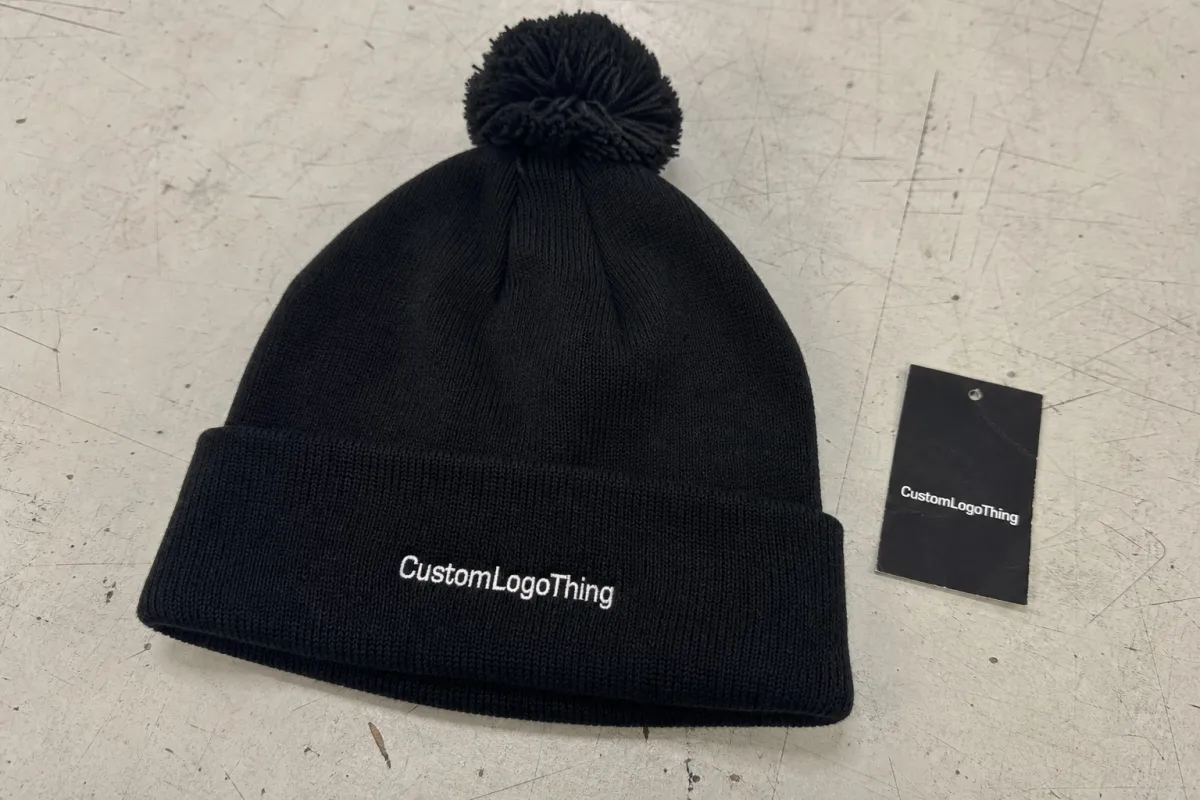
Most fit problems do not start with circumference. They start with vertical proportions. Buyers often focus on the opening width, then discover too late that the body lacks enough crown depth or the cuff consumes more space than planned. A style can measure correctly flat and still ride shallow on the forehead, which is usually what people mean when they say a beanie “doesn’t sit right.”
Knits are elastic, but they are not neutral. Rib structure, yarn thickness, and stitch density all affect how much the fabric opens under tension and how quickly it returns. A beanie built with generous stretch may feel forgiving at first, yet it can lose its shape if the recovery is weak. A tighter knit may hold its outline better, though it can feel less comfortable on larger heads if the spec is not controlled.
The pom adds another layer of distortion. A full yarn pom often reads softer and lighter, while a faux fur pom has more visual mass and pushes the eye upward. That makes the beanie look taller even if the body is unchanged. Detachable poms help with washing and packing, but they need a secure attachment point or the crown can feel bulky. Sewn-on poms keep the construction simpler, though they lock the style into one silhouette.
The most useful measurement is not the flat width alone. It is the relationship between opening size, body length, cuff height, and crown shaping. If those ratios are off, the beanie can feel cramped on a 23-inch head, loose on a smaller adult head, or oddly top-heavy on a youth fit. That is a proportion problem, not a decoration problem.
One more trap: buyers sometimes approve a sample after seeing it on a mannequin or packed flat. Those views hide the failure points. A realistic wear check on a human head gives better information than a perfect studio photo ever will.
Materials that change stretch, warmth, and drape
Material choice sets the tone for the whole product. Acrylic remains the most common option because it is cost-effective, color-consistent, and easier to source in large quantities. It also accepts a broad range of dye colors without the pricing swings that can come with specialty fibers. For many programs, especially promotional runs and retail basics, acrylic is the simplest route to predictable production.
Wool brings a different set of strengths. It offers warmer hand feel, a more natural drape, and better cold-weather performance. The tradeoff is cost and, in some cases, tighter control over shrinkage and skin feel. A wool beanie that looks perfect at approval can still change after finishing if the washing process is not stable. That is not a design flaw so much as a production risk that should be asked about early.
Wool blends are often the middle ground. They usually soften the hand feel, improve warmth, and reduce price pressure compared with a pure wool build. For a lot of buyers, that is where the balance lands: enough quality to justify the product, enough cost control to keep the margin intact.
Recycled yarns deserve a practical look, not a marketing gloss. They can work well, but they bring more variability in fiber length, hand feel, and shade matching. A recycled yarn may be the right material choice for a sustainability-led range, but it still needs the same checks as any other yarn: stretch, recovery, color stability, and pilling after handling. The recycled label does not protect the product from poor knitting or weak finishing.
Build matters as much as fiber content. A single-layer beanie feels lighter and breathes better, while a double-layer version gives a fuller shape and better warmth. Lined beanies sit in another category entirely. They are often more comfortable in cold weather, but the lining reduces internal give, so the opening can feel smaller than the flat measurement suggests. That is a common reason a spec passes on paper and feels snug in hand.
| Material or build | Stretch and recovery | Warmth and drape | Typical buyer use | Quote pressure |
|---|---|---|---|---|
| Acrylic | Good stretch, decent recovery | Medium warmth, clean drape | Promo programs, broad retail assortments | Lowest |
| Wool blend | Better recovery, softer hand | Warmer, richer drape | Cold-weather retail, mid-premium gifting | Mid to high |
| Recycled yarn | Depends on yarn source | Varies, sometimes less crisp | Sustainability-led collections | Mid |
| Single-layer knit | More flexible | Lighter, more breathable | Fall merch, indoor wear, mild climates | Lower |
| Double-layer or lined | More structured, less forgiving | Warmer, fuller shape | Cold climates, premium branding | Higher |
Gauge is the hidden variable that often explains why a sample feels “off.” Finer gauge usually gives a smoother surface, cleaner logo edges, and a less bulky crown. Thicker yarn creates more volume and warmth, but it can push the beanie upward and reduce the amount of usable stretch. If the crown seems too tall in sample photos, gauge may be the reason.
For buyers comparing packaging options at the same time, it helps to separate materials from presentation. If the shipment needs retail-ready outer packs, ask whether the carton is corrugated cardboard, whether the inner wrap uses kraft paper, and whether the board includes FSC certified content or other biodegradable packaging options. Material choices should protect the product and support the brand story without adding avoidable weight or cost. For transit testing references, the ISTA methods are a useful benchmark.
How the pom and crown shape affect sizing
The pom changes perception more than fit, but perception matters. A yarn pom usually feels traditional and lighter. Faux fur poms create a fuller silhouette and often read more premium from a distance. That extra volume can make a shallow crown look even shorter than it is, especially on smaller beanies. Detachable poms are practical for cleaning and packing, yet they add a connection point that needs to be tested for pressure and durability.
Crown shaping is where fit becomes visible. If the decreases are too abrupt, the top pulls into a pointed shape. If they are too gradual, the beanie can look flat or baggy around the crown. Neither look is ideal once the pom is attached. The top should support the pom without turning the whole hat into a cone.
Cuff height also changes the silhouette. A deep fold-over cuff creates a strong branding zone for embroidery or a patch, but it shortens the visible body and can make the beanie feel tighter if the knit is already close to the limit. A shorter cuff leaves more body height exposed, which can improve the shape on larger heads but reduce the visual space for decoration. There is no perfect universal ratio; there is only the ratio that fits the intended wearer.
Adult, youth, and unisex fits are not the same thing scaled up or down. A youth style can often sit slightly shallower without looking wrong. A larger adult fit usually needs more crown depth and a more forgiving opening or it will feel restrictive. The mistake is assuming one base spec will cover every audience. It rarely does.
Seam placement is another small detail with a big effect. A prominent back seam can twist the silhouette when worn. Aggressive crown shaping can create pressure points where the knit changes direction. These are the sort of details that are easy to miss in a photo review and obvious the moment a person puts the beanie on.
Pom pom beanies material and sizing guide: sample checks
The simplest sampling rule is also the most useful: measure the beanie as it will be worn, not as it looks on a table. The basic numbers are head circumference, crown depth, cuff height, overall body length, and pom diameter. If the factory can provide both flat and worn measurements, the buyer has a much clearer view of fit risk.
Flat width alone is not enough. A 9.5-inch flat opening in a stretchy acrylic knit can behave very differently from the same measurement in a denser wool blend. One may open easily and recover well; the other may feel secure but less forgiving. That is why the same width can produce two very different outcomes on the head.
A practical sample check is to test the beanie on at least two head sizes. One should be on the smaller side of the target range and one should be on the larger side. If both wear cleanly, with the cuff sitting where intended and the crown staying balanced, the spec is probably close. If only one head size works, the fit range is too narrow.
For stretch and recovery, a simple hold test helps. Stretch the knit to a worn state, hold it there for 20 to 30 minutes, then check how much it rebounds. That is not a substitute for a full lab test, but it will expose weak recovery before the bulk run begins. ASTM D2594 is a solid reference for knitted fabric stretch and recovery behavior if a supplier needs a standard to work from.
Reasonable tolerances should be written into the spec sheet before production starts. For straightforward knit programs, many buyers will allow about plus or minus 1/4 inch on cuff height and plus or minus 1/2 inch on total body length. Tighter tolerances are possible when yarn and gauge are stable, but they should be realistic. Pom diameter can vary a little more than the body, though not enough to change the silhouette from neat to oversized.
Useful sample questions include:
- Does the beanie hold its shape after stretch, or does it bag out?
- Does the cuff sit evenly, or does the seam pull the hat off center?
- Does the pom make the crown look too tall or too compressed?
- Does the beanie fit both smaller and larger heads within the target range?
If those answers are clear, approval becomes much easier.
Cost, pricing, MOQ, and unit cost drivers
Quoting gets messy when the brief is vague. The unit cost for custom Pom Pom Beanies usually reflects yarn, knitting labor, pom construction, decoration, finishing, inspection, and packaging. Change any one of those, and the price moves. That is normal manufacturing, not supplier drama.
For smaller or mid-size runs, a basic acrylic beanie with a simple yarn pom will usually sit below a wool blend with a custom faux fur pom, embroidery, and individual packaging. As a working range, simple custom programs often land around $3.50 to $6.00 per unit at workable volumes, while more premium builds can move into the $6.50 to $11.00 range or higher depending on quantity, material, and decoration complexity. Those numbers are not promises; they are a realistic planning frame.
| Cost driver | How it affects price | Buyer question to ask |
|---|---|---|
| MOQ | Lower quantities usually raise unit cost | Is the MOQ by color, size, or full design? |
| Yarn choice | Wool and specialty recycled yarns cost more | What fiber blend and yarn count are included? |
| Pom type | Custom faux fur and detachable hardware add labor | Is the pom stock, custom, sewn, or removable? |
| Decoration | Embroidery, woven patches, and labels change setup time | How many stitches, colors, or placement options? |
| Packaging | Retail folding, inserts, and custom cartons add cost | Are cartons, tissue, and inserts included? |
MOQ is where many first-time buyers get surprised. Setup time does not shrink just because the quantity is small. Custom yarn dyeing, specialty poms, multiple embroidery placements, and individual folding all create extra labor and more chances for variation. That is why simple stock-yarn designs tend to have lower minimums than fully custom builds.
Ask whether the minimum applies per color, per size, or per design version. Those are not the same thing, and mixing them up can make a quote look cheaper than it really is. A clear breakdown also helps compare suppliers without comparing apples to a product that is quietly carrying extra charges.
Low pricing can hide expensive problems. If a sample needs rework, if the fit is inconsistent, or if the yarn recovery is poor, the real cost rises fast. A slightly higher unit price is often easier to live with than a finished order that needs replacements.
Process and turnaround: from first sample to bulk shipment
A reliable process is straightforward: brief, spec sheet, sample development, revision, approval, bulk knitting, finishing, inspection, and packing. The reason timelines slip is usually not mystery. It is missing information, late approvals, or a sample that was judged on appearance alone. A clear brief shortens the entire chain.
For timing, a first sample often takes 7 to 14 business days after the spec is confirmed. Revisions may take another 5 to 10 business days, depending on how much needs to change. Bulk production commonly runs 12 to 25 business days for straightforward programs. Add more time if the yarn is custom-dyed, the pom is custom-made, or the decoration requires a second approval round.
The usual bottlenecks are easy to identify. Yarn sourcing can slow the start. Custom poms often need separate development. Embroidery approvals can sit in limbo if the artwork size is not fixed. Late spec changes are the most expensive of all because they force a new chain of checks across the sample and production stages.
Packaging can create its own delay. If the order includes retail folding, tissue wrap, inserts, and custom cartons, the packaging spec should be finalized before bulk begins. A simple system using kraft paper, corrugated cardboard, and a carton made with FSC certified board is often enough for many programs. If the brand claims recycled content, ask for documentation on the post-consumer waste percentage or other source details. General eco language is easy to print and hard to defend.
One practical habit saves more time than any rush request: put the measurement chart, material callout, pom type, decoration size, and packout instruction on one page. Long email threads tend to create version confusion. A single approved sheet makes it much easier for the supplier to repeat the same product across the run.
Common mistakes that cause bad fit or inflated quotes
The first mistake is approving from photos only. A fluffy beanie can look rich and roomy on a screen and still feel shallow when worn. The issue is not the photo. The issue is that the fit data was never checked in the first place.
The second mistake is ignoring stretch recovery. A knit that opens easily can still go baggy after a few hours of wear if the yarn does not bounce back. That problem shows up late, often after the buyer has already committed to the run. It is cheaper to test recovery in the sample stage than to discover a shape issue in finished inventory.
The third mistake is letting the pom and the body compete. A large pom on a short crown makes the beanie look top-heavy. A tiny pom on a bulky body can make the silhouette feel unfinished. Balance matters because the eye reads the full shape first, not the stitch count.
Quote creep usually comes from incomplete direction. If artwork sizes are missing, if the material is described loosely, or if the packaging requirements are unclear, the supplier has to make assumptions. Assumptions are rarely cheap. The cleanest quote usually comes from a clean spec sheet with exact dimensions and finish details.
Another issue is treating youth and adult fits as scaled copies. They are not. A ratio that feels comfortable on a smaller head can become awkward or too shallow on a larger one. If the product line needs multiple sizes, each size should be tested rather than reduced from a single master without review.
Next steps: build a spec sheet and order a fit sample
The best next move is a one-page spec sheet with the details that shape cost and fit: material, gauge, dimensions, pom type, decoration method, target price, quantity, packaging, and tolerance limits. Reference photos help, but a physical sample or a proven fit block helps even more. The more concrete the benchmark, the less room there is for interpretation.
A practical checklist before ordering a fit sample:
- Confirm head circumference, crown depth, cuff height, and overall body length.
- Choose the yarn: acrylic, wool blend, or recycled yarn.
- Decide on the pom: yarn, faux fur, detachable, or sewn-on.
- Set the decoration method and logo size.
- Specify packaging: retail fold, tissue, box, or mailer.
- Ask for sample cost, MOQ, turnaround, and tolerance range in writing.
It also helps to ask what happens after approval. Some suppliers treat approval as a hard lock. Others allow limited changes before bulk if the timeline and cost are reset. Knowing that before the order starts avoids unnecessary friction later.
For brands that care about presentation and shipping durability, it is reasonable to confirm whether the outer carton is made from corrugated cardboard and whether the inner wrap uses kraft paper rather than excess plastic. If sustainability claims are part of the product story, ask for source-backed language instead of vague green wording. FSC certified board and verified recycled materials are easier to defend than generic environmental claims.
Used well, this Pom Pom Beanies material and sizing guide cuts through the guesswork. It helps catch shallow crowns, weak stretch recovery, oversized poms, and hidden price drivers before the order goes into bulk. That is where the money is usually lost or saved.
What material works best if warmth and stretch both matter?
A wool-acrylic blend usually gives the best mix of warmth, recovery, and cost control. Pure acrylic is easier on budget and usually more consistent in color, but it can feel less premium. If softness is the main concern, a lined construction may help more than simply switching to a thicker yarn.
How should pom pom beanie sizes be set for adults, youth, and unisex fits?
Start with head circumference, then confirm crown depth and cuff height so the beanie does not sit too shallow. Adult fits generally need more vertical room than youth fits even when the opening size looks close on paper. Unisex styles should be tested on both smaller and larger heads before approval.
Does a faux fur pom change the fit?
It usually does not change the opening, but it changes the silhouette and can make the crown read taller. A larger faux fur pom often needs cleaner crown shaping so the beanie does not look top-heavy. If the pom is detachable, check the attachment point for pressure and durability.
What MOQ should I expect for custom pom pom beanies?
MOQ depends on the yarn, decoration, and whether the pom is stock or custom-made. Simple knit styles often allow lower minimums than custom yarn colors or specialty faux fur poms. Ask whether the MOQ is per color, per size, or per design before comparing quotes.
How long do sampling and production usually take?
A first sample often takes 7 to 14 business days once the spec is clear. Revisions may take another 5 to 10 business days, and bulk production commonly takes 12 to 25 business days for straightforward programs. Custom yarn, custom poms, or late changes can extend that timeline quickly.

