Pom Pom Beanies wholesale pricing is rarely a single clean number. The pom style, yarn blend, decoration method, packaging, and delivery route all tug the figure in different directions. A buyer who asks for a quote without a tight spec usually gets a moving target. Then the sample lands, the details change, and the real conversation starts. That is how a winter hat becomes a pricing puzzle.
Many buyers want the price first and the details later. That sequence works about as well as ordering tires before checking the car model. If you want reliable Pom Pom Beanies wholesale pricing, the style has to be defined early. Hat body, cuff, pom, logo placement, and pack-out plan all belong in the first brief. Anything less invites revisions, and revisions are never free. Usually, they are the expensive part.
Custom Logo Things works with retail buyers, ski shops, campus merch teams, corporate gift programs, charity drops, and sports clubs. Those orders can look similar from ten feet away, but up close they are different animals. A giveaway beanie for 500 volunteers does not need the same finish as a winter cap headed for a boutique wall. Pom pom Beanies Wholesale Pricing should reflect the actual job, not a generic catalog average.
The main cost drivers are quantity, yarn choice, pom construction, decoration method, packaging, and shipping destination. That is the short version. The long version is where margins are won or lost. A tidy quote on paper can unravel once the factory starts chasing missing details. The best buying decisions start with specifics, not hope.
Pom Pom Beanies Wholesale Pricing Starts With the Use Case
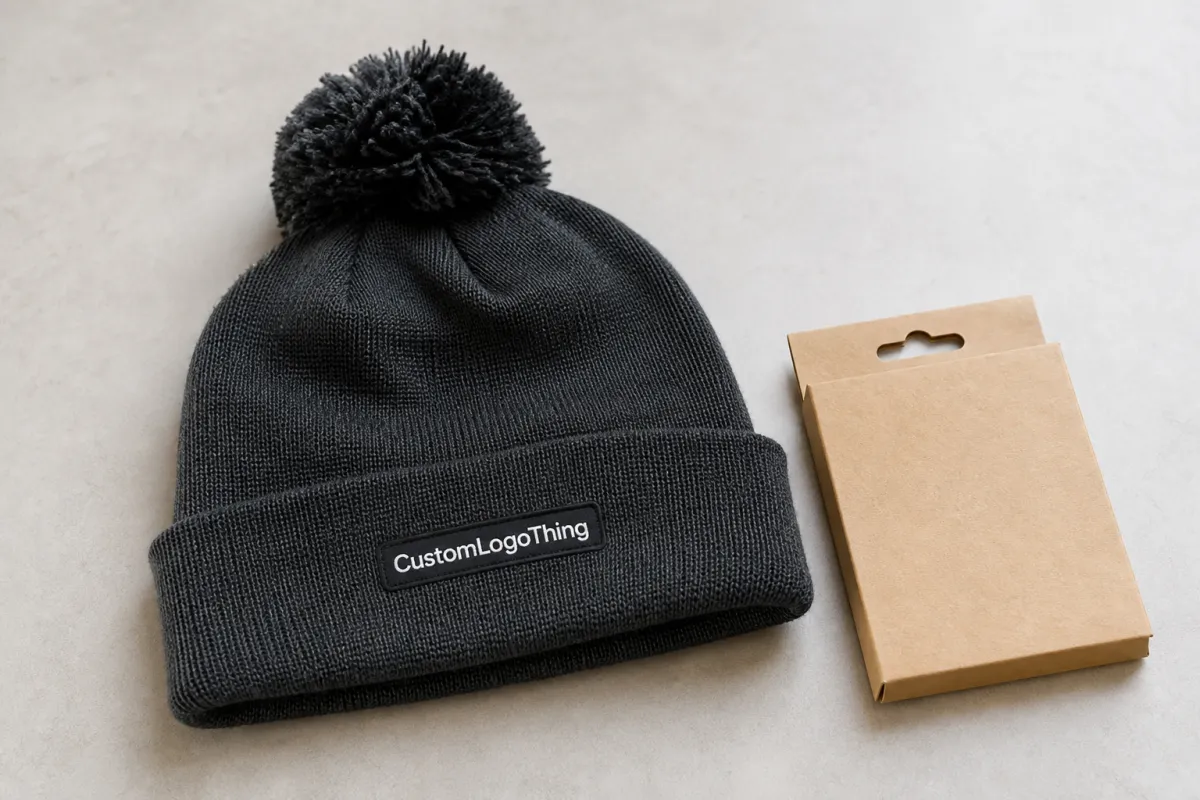
Pom Pom Beanies wholesale pricing changes because the hat has to do a different job in each program. A basic cuffed beanie with one-color embroidery sits in a different cost lane than a faux fur pom, double-knit crown, woven patch, and retail hangtag. The product is not just a hat. It is a delivery system for a brand, a fundraiser, or a store shelf.
Retail winter stock is the easiest category to price because the expectations are familiar. Even there, the priorities shift. A ski retailer may want a warmer yarn, bolder color blocking, and a premium finish that catches the eye on a hook. A campus shop may care more about fashion color and margin. A nonprofit may want the lowest landed cost possible while still avoiding a flimsy feel. Pom Pom Beanies wholesale pricing moves with those priorities.
Corporate gifting pushes the math again. A clean beanie with stitched branding and a simple belly band can work well if the goal is reach and budget control. Add a gift box, an insert card, or drop shipping to multiple addresses, and the cost structure shifts. The logo file matters, sure, but it is not the first lever. The use case gets there first.
Teamwear and spirit programs usually need repeatability more than novelty. That means stable sizing, dependable color, and a decoration method that holds up on reorder. In those orders, pom pom beanies wholesale pricing is partly about protecting the second run. A low first quote means very little if the next batch comes in a different shade of navy or with a softer knit than the sample.
The blunt truth is simple: a quote requested before the style is locked usually comes back vague. Then the pom changes. Then the yarn changes. Then the logo moves from embroidery to patch work. Each adjustment forces a new estimate. Buyers who send a complete brief get faster answers and fewer surprises. That is not theory. That is how production quoting behaves.
Use-case clarity also makes comparison possible. A ski shop order should not be measured against a fundraiser beanie that uses a basic woven label and bulk packaging. Those are different products, even if both have poms. Pom pom beanies wholesale pricing only becomes useful once you know whether the order is for resale, promo distribution, team issue, or seasonal inventory.
Three questions solve a lot of confusion: who is wearing it, where is it sold or handed out, and how polished does it need to look? Those answers matter more than marketing language ever will. A buyer who can answer them usually gets tighter pricing and fewer revisions. A buyer who cannot usually pays for the guessing process.
The destination matters too. Domestic freight, export shipping, split deliveries, warehouse labeling, and carton counts all affect landed cost. A beanie can look cheap at the factory and expensive after duties, freight, and local delivery. That is why smart buyers ask for both unit price and landed estimate when they can. Pom pom beanies wholesale pricing only means something if you know what is included.
Product Details That Change Pom Pom Beanies Wholesale Pricing
The product build is where pom pom beanies wholesale pricing starts to split into visible tiers. A cuffed beanie is common because it gives a stable decoration zone and a familiar fit. An uncuffed style may look more fashion-forward, but it does not automatically make production easier. Rib knit, gauge, stretch, and crown height all influence yarn use, machine time, and the final hand feel.
Pom type matters more than many buyers expect. A yarn pom is usually the most economical option. Faux fur adds a more premium look, though it also adds material cost and assembly labor. Detachable poms are useful for retail flexibility, but they introduce hardware and another failure point. Sewn-on poms are straightforward. Snap systems and button attachments are not. Pom pom beanies wholesale pricing responds to those choices immediately.
Material selection is another major lever. Acrylic remains the workhorse for most wholesale beanie programs because it balances cost, color range, and wearability. Wool blends can feel warmer or more premium, but they usually cost more and often need more care instructions. Softer blended yarns can make sense for a higher-end retail line, yet they can push pom pom beanies wholesale pricing up in smaller runs.
Fit changes cost too, and not just because of head size. Youth, adult, slouch, and low-profile shapes all use yarn differently. A taller crown needs more material. A thicker cuff changes both knit time and appearance. If the beanie has to stretch comfortably without looking loose, the spec needs to say so. That level of clarity keeps pom pom beanies wholesale pricing from drifting after sampling.
Decoration is where budgets often slip. Embroidery works well for logos with solid shapes and limited detail. Woven labels create a tidy retail look with less complexity on the body of the hat. Patches, whether leatherette, woven, or felt, often look more premium but may add application steps. Jacquard knitting builds the artwork into the fabric, which is excellent for patterns and more involved for setup. All of that affects pom pom beanies wholesale pricing.
Color count is another hidden cost driver. A one-color body knit is simpler than a multicolor pattern. Two or three accent colors are still manageable in many wholesale programs. Add more shades and the production line has more chances to slip, which usually shows up in sample time or unit cost. Pom pom beanies wholesale pricing tends to reward clean color plans and punish late palette changes.
The pom-to-body ratio matters as well. Oversized poms can look lively in a mockup, but they use more material and can alter the balance of the cap. A large faux fur pom on a lighter beanie creates a premium feel, though it can also make cartons bulkier if the pom does not compress well. That is a logistics issue, not just a style choice. Pom pom beanies wholesale pricing often reflects shipping math as much as appearance.
There is a real difference between a nice design and a production-friendly design. Skilled buyers learn to keep the look while trimming the trouble. A simple body knit, one pom style, and one sensible decoration method usually produce the strongest value. In practice, pom pom beanies wholesale pricing rewards clarity and punishes over-engineering.
Specifications Buyers Should Lock In Before Quoting
Before anyone can give reliable pom pom beanies wholesale pricing, the spec sheet has to answer the boring questions. Boring is useful. Boring is what keeps the quote from changing later. Start with yarn blend, gauge, stretch, hat length, brim style, pom size, and stitch density. If those details are floating, the price is floating too.
The minimum quote request should include body material, pom type, logo method, colors, quantity, and destination. That is the starting line, not the finish. If you already know the target retail price or giveaway budget, include that too. It gives the supplier a realistic frame instead of a fantasy one. Pom pom beanies wholesale pricing gets much cleaner when the budget target is visible from the first email.
- Yarn blend: acrylic, wool blend, recycled content, or a softer premium yarn.
- Gauge: tighter knit for a cleaner look or looser knit for a more casual finish.
- Fit: adult, youth, slouch, or low-profile.
- Pom size: standard, oversized, faux fur, or detachable.
- Decoration: embroidery, patch, woven label, jacquard pattern, or combo finish.
- Packing: bulk pack, individual poly bag, hangtag, belly band, or gift box.
Color count deserves special attention. Every extra yarn shade adds setup complexity, slows the line, and raises the chance of a mismatch between proof and bulk. Even one added color can change the production flow. That is why experienced buyers lock in color references early and stop drifting between shades of red, navy, or gray. Pom pom beanies wholesale pricing does not like indecision.
Branding details matter just as much as the knit. How large should the logo be? Where should it sit? How many thread colors are needed? Should there be a woven label on the cuff or a patch centered above the brim? Does every piece need a hangtag, and should it be matte or coated stock? These are not decorative extras. They are cost items. Pom pom beanies wholesale pricing gets sharper when branding rules are locked before sample work starts.
Proof control saves real money. A digital proof should show placement, size, thread colors, and any pattern changes. If the yarn color matters, ask for a lab dip or yarn-match reference before the bulk run. If the design is complex, request sample sign-off. Fixing one sample is cheaper than correcting 1,000 units after approval. That is not dramatic. It is just arithmetic.
A quote without a locked spec is just a placeholder with nicer formatting.
That line sounds sharp because it is accurate. If the factory still has to decide the pom style, knit gauge, or finish method, the quote is not final. Buyers who understand that usually get better service because they are easier to price accurately. Pom pom beanies wholesale pricing works best when the supplier is pricing a finished plan, not a guess.
Retail-ready orders need one more layer of clarity. If the beanies are headed to stores, say whether labels need UPC space, whether the pack must hang from a peg, and whether the carton count has to match a warehouse intake system. None of that is glamorous. All of it changes cost. Pom pom beanies wholesale pricing is not just about the hat; it is about how the hat arrives.
One habit pays off again and again: send one spec sheet, not a trail of scattered messages. When the color choice lives in one email, the logo size in another, and the packing note in a text, errors creep in. A single source of truth keeps the quoting process tight. It also keeps the factory from re-confirming the same detail three different ways.
Pom Pom Beanies Wholesale Pricing, MOQ, and Unit Cost
The link between pom pom beanies wholesale pricing and MOQ is straightforward. The larger the order, the more the setup cost gets spread out. That does not make every larger order cheap in every sense, but it usually improves the unit number. Samples are the most expensive on a per-piece basis. Small runs carry a setup premium. Larger orders bring the unit cost down because the line can keep moving without constant resets.
For planning, three bands are useful. Small programs often land around 100 to 299 pieces. Standard wholesale usually falls in the 300 to 999 range. Orders at 1,000 units and above often produce the sharpest unit pricing, especially if the decoration and packaging are simple. Those are not laws. They are practical buying patterns. Pom pom beanies wholesale pricing nearly always improves once the order leaves the tiny-run zone.
| Quantity Band | Typical Unit Range | Best For | Common Tradeoff |
|---|---|---|---|
| 100-299 pieces | $6.50-$11.00 | Pilot programs, small retail tests, fundraiser drops | Higher setup share, fewer decoration options |
| 300-999 pieces | $4.25-$7.50 | Campus merch, seasonal retail, corporate gifts | Better pricing, still some setup sensitivity |
| 1,000+ pieces | $2.95-$5.25 | Large retail buys, chain programs, reorders | Longer planning, more attention to consistency |
Those numbers are working ranges, not promises. A simple acrylic beanie with one-color embroidery can sit near the lower end. A faux fur pom, custom knit body, and multi-step packaging can sit near the top or above it. Pom pom beanies wholesale pricing changes quickly once premium yarn, more colors, or retail finishing enter the picture.
MOQ also changes with complexity. A stock-style body with a standard pom may be available at a lower minimum because the knit and attachment method already exist. A fully custom knit design with a unique color pattern or special pom attachment may need a higher MOQ because the setup is heavier. That is the tradeoff. If you want a custom look, the factory wants enough volume to justify the work. Pom pom beanies wholesale pricing follows that logic every time.
Quotes should say what is included and what is not. Buyers often assume the number covers sampling, labeling, packing, freight, customs, and rush handling. Sometimes it does. Often it does not. Ask first. Unit price alone is not the full story, and the lowest unit number can become the highest landed cost after the extras show up. Pom pom beanies wholesale pricing should always be checked against the total package.
Sampling deserves its own budget line. A single sample can be relatively expensive because the factory has to stop, set up, test, and sometimes repeat. That is normal. A good sample is cheaper than a bad bulk run. For many orders, the sample fee may be credited later or partially offset, but not always. Buyers should treat sampling as a decision tool, not as a freebie. Pom pom beanies wholesale pricing is more trustworthy when the sample cost is transparent.
The quote that looks too good usually hides something. Maybe it leaves out packaging. Maybe it assumes a stock pom. Maybe it drops one color from the mockup. Maybe freight is separate. Ask for line-by-line clarity. That is not rude. It is careful buying. Pom pom beanies wholesale pricing only matters if the number survives a close read.
If you are comparing suppliers, compare the same spec, the same packing, and the same delivery point. Otherwise you are comparing noise. One vendor may appear cheaper because they are using thinner yarn or a simpler attachment method. Another may look higher because they include full packing and carton labeling. Apples to apples keeps the purchasing team sane.
Custom Options, Packaging, and Retail Readiness
Customization can lift the product, but every extra finish item changes pom pom beanies wholesale pricing. Embroidery stays popular because it is visible, durable, and usually straightforward. Woven labels and branded patches create a more polished retail impression. Custom colorways can make a seasonal collection feel exclusive. The real skill is choosing one or two upgrades that support the channel instead of stacking every option because it sounds good in a meeting.
Packaging is where a little planning pays back quickly. A basic poly bag protects the product during handling and shipping. A belly band adds branding and helps the product stack neatly in a retail carton. A hangtag can communicate size, fiber content, and story in a way buyers actually read. A gift box raises perceived value, but it also raises cost and carton volume. That is why pom pom beanies wholesale pricing should be reviewed together with the packing plan, not afterward.
Material standards can also matter. If your hangtags, belly bands, or carton inserts are paper-based, ask about FSC-certified stock so the packaging story matches the brand story. For broader packaging terminology and practice, the Institute of Packaging Professionals is a solid reference. Responsible paper use is easier when the certification is clear. Transit protection still matters too, because a nice hangtag on a crushed beanie is still a crushed beanie.
Retail-ready finishing often takes more labor than buyers expect. Individual folding, size-card insertion, hangtag attachment, barcode placement, bag sealing, and carton labeling all add small touches that eat time in production. The beanie itself may be simple, but the pack-out can become the real labor cost. That is why pom pom beanies wholesale pricing should be judged with the finish spec in hand, not just the hat mockup.
Think about the channel before choosing the pack. For resale, a cleaner presentation and stronger shelf logic usually help. For giveaways, bulk packing may be enough, especially if the items will be handed out quickly. For team issue, size labeling and easy distribution matter more than premium carton presentation. Each channel has a different sweet spot, and the wrong finish can waste budget without improving sales. Pom pom beanies wholesale pricing should support the channel, not inflate it.
Overdone packaging creates another problem: the product starts to feel fussy. Winter apparel should feel practical and wearable. Too many layers can make the item look more expensive without making it more desirable. The best buyers know where to stop. They choose the finish that clarifies the product and protects it, then leave the rest alone.
If the order is going to retail stores, ask whether the buyer needs carton counts, UPC placement, or shelf-ready units. Those details affect more than packaging. They alter workflow. A 12-piece carton setup is different from a 24-piece carton setup. A print-on-label approach is different from a stitched-in label approach. None of this is glamorous. All of it influences pom pom beanies wholesale pricing.
One rule keeps projects sane: spend on the packaging features customers actually notice. If the brand story is seasonal and giftable, a neat band and a clean hangtag can do more than a fancy box. If the item is heading into a chain store, consistency and barcodes may matter more than decorative extras. Match the pack to the channel and the cost stays under control.
Production Process, Timeline, and Lead Time
Good pom pom beanies wholesale pricing should arrive with a realistic timeline, because production is more than “make hat, ship hat.” The usual sequence is inquiry, quote, proof, sample approval, bulk knitting, decoration, quality check, packing, and shipment. Each step has a purpose. Each step can also slow down if the buyer keeps changing the spec. That is why timeline control starts early.
Sampling usually takes about 1 to 2 weeks when the artwork is ready and the build is simple. More complex knit patterns, special pom structures, or color matching can add time. Bulk production commonly runs 3 to 6 weeks, depending on order size and complexity. Multiple colors, retail packaging, and repeated proof changes all stretch the calendar. Pom pom beanies wholesale pricing and lead time are tied together; you rarely move one without affecting the other.
- Inquiry: You send quantity, build details, artwork, and ship-to location.
- Quote: The supplier prices the exact spec, including setup and packaging assumptions.
- Proof: Placement, colors, and branding are shown for approval.
- Sample: A physical or pre-production sample confirms the look and feel.
- Bulk run: The factory produces the order after approval.
- QC and pack-out: Units are checked, packed, and cartonized.
- Shipment: Freight moves the order to the final destination.
Color matching is one of the most common schedule stretchers. If a buyer wants a very specific navy, heather gray, or seasonal shade, the yarn-match step can add time. The same goes for multicolor custom knit patterns. Each new shade increases the chance of revision. That is normal production behavior, not a warning sign. It only means the quote and schedule should reflect the real work. Pom pom beanies wholesale pricing becomes more predictable when color decisions are locked early.
Packaging changes can also slow things down without much warning. A switch from bulk pack to individual bagging, or from a simple poly bag to a retail hanging format, adds handling time even if the beanie itself stays the same. Buyers often underestimate that. The factory does not. If the pack-out team has to fold, insert, seal, label, and count each unit, labor grows. That is why pom pom beanies wholesale pricing should always be reviewed with the pack schedule attached.
Peak season congestion can push timelines out too. If you are ordering before the cold season hits hard, order early. Machine schedules, material sourcing, and freight lanes all get tighter as demand rises. A rush order may still work, but only when artwork is final, the spec is stable, and the sample is approved. If any of those pieces are missing, the rush premium becomes a false promise. Pom pom beanies wholesale pricing is usually better when you buy ahead of the crowd.
Testing standards have a place here as well. If the product needs transit protection, carton performance may matter. The International Safe Transit Association, at ISTA, publishes shipping test methods that help brands think about package durability, especially for e-commerce or retail replenishment. Not every beanie program needs formal transit testing, but the carton still has to hold up. A crushed carton can create rework, and rework is expensive in any language.
Rush orders are where pricing gets ugly quickly. If a buyer wants the order turned around fast, the supplier may need to resequence production, pay for faster freight, or limit the options to what is already available. That can work for a simple program. It gets messy for custom knit construction or complex decoration. In plain terms, rush jobs work best when the buyer has already done the homework. Pom pom beanies wholesale pricing can rise fast when the clock starts forcing decisions.
The cleanest schedule is the one that allows one proof cycle, one sample approval, and then production. Two or three revisions are possible, but each revision eats time. If the hats are tied to a campaign launch, a store opening, or a seasonal drop, build buffer into the calendar. That buffer is cheaper than overnight freight and a lot less stressful than explaining why the product missed the event.
Why Choose Us for Wholesale Pom Pom Beanies
For buyers comparing pom pom beanies wholesale pricing, the real value is not the lowest number on the sheet. It is the number that survives production without surprise add-ons. Custom Logo Things focuses on the part that matters most: clear quoting, clear proofs, and a spec process that keeps the order stable before anyone starts knitting. That saves time. It also prevents the awkward follow-up that says, “Actually, the price changed.”
When a quote is built from a locked spec, buyers can compare offers fairly. That matters whether the order is for a retail line, a corporate gift campaign, or a team program. A simple beanie with one decoration method should not be priced like a fully custom knit with premium finishing. Good process keeps those lanes separate. That is how pom pom beanies wholesale pricing stays honest.
Experience matters most when the order needs repeatability. Color consistency, pom attachment quality, knit density, and packaging accuracy all become more important on reorder business. If the first batch looks great but the second batch drifts, the savings were fake. Buyers who care about continuity need a supplier that thinks about the second order as seriously as the first. Process discipline pays for itself there.
We also keep the conversation practical. If a design is overbuilt for the budget, we say so. If a one-color embroidery lockup gets the same retail result for less money than a more complex patch system, we say that too. There is no prize for making the quote harder than it needs to be. The best pom pom beanies wholesale pricing is the one that fits the use case without padding the order with unnecessary extras.
For repeat buyers, our Wholesale Programs page is the cleanest place to start. It gives you a straightforward path to request the right tier of pricing, and it keeps the conversation focused on quantity, decoration, and delivery instead of rehashing the same details every time. That is useful if you are planning a seasonal program or a multi-drop merch schedule.
My practical advice is simple: choose a supplier that communicates like a production partner, not a sales script. You want exact answers, clear assumptions, and no drama over basic questions. A buyer can work with a slightly higher quote if the process is cleaner and the final product lands on spec. In real buying, that is often the smarter move. Pom pom beanies wholesale pricing should buy certainty, not just yarn.
There are times when the lowest quote is fine. If the order is simple, the schedule is loose, and the artwork is locked, you can push harder on cost. If the beanies are part of a retail launch or a branded campaign with no room for mistakes, a quote that includes enough control to avoid rework is worth more. Cheap rework is still rework. Nobody enjoys paying for that twice.
Next Steps: Send These Specs for an Accurate Quote
If you want accurate pom pom beanies wholesale pricing, send the basics in one clean package. Quantity, size, color references, yarn preference, decoration method, logo file, ship-to location, and target delivery date are the essentials. Add packaging needs if the order is going to retail display, and say plainly if you need individual bagging or gift-ready finishing. The more complete the request, the tighter the quote.
It also helps to include your target budget or target retail price. That tells the supplier which build options belong in the conversation and which ones should stay out. A buyer who says, “We need the lowest landed cost with decent presentation,” gets a different proposal than a buyer who says, “This has to look premium on a store wall.” Both are valid. They just lead to different pom pom beanies wholesale pricing.
If you are still comparing directions, ask for tiered pricing at 100, 300, 500, and 1,000 pieces. That gives you a useful view of where the unit cost starts to improve and where setup pressure starts to ease. It also helps you judge whether moving up in quantity is worth it for a better margin. That is how smart buyers handle pom pom beanies wholesale pricing without guessing.
Send the exact spec first. Then compare the quote. Then approve the sample. The order gets easier after that, not before.
That process is not fancy. It is just the fastest way to avoid rework. When the quote, proof, sample, and packing plan all line up, the production run usually behaves. That is the real job. Not making the spreadsheet look impressive. Actually getting the beanies delivered as promised.
So if you are ready to move, send the spec sheet, ask for tiered numbers, and confirm the finish before production starts. That is the cleanest route to useful pom pom beanies wholesale pricing. The more precise the brief, the better the quote. The better the quote, the fewer unpleasant surprises later. Funny how that works.
What affects pom pom beanies wholesale pricing the most?
Yarn blend, pom type, decoration method, and color count usually move pom pom beanies wholesale pricing the fastest. Quantity matters too, because setup cost gets spread across more units at higher volumes. Packaging, labeling, and shipping destination can change the final landed cost more than buyers expect.
What MOQ should I expect for wholesale pom pom beanies?
Simple stock-style programs can start lower, while fully custom knit designs usually need a higher minimum. A practical planning range is often 100 to 299 for small runs, 300 to 999 for standard wholesale, and 1,000 plus for the best unit cost. More complex decoration can push the MOQ higher. That is normal, not a surprise.
How long is the typical lead time for pom pom beanies?
Sampling often takes about 1 to 2 weeks when artwork and specs are ready. Bulk production commonly takes 3 to 6 weeks depending on order size, color matching, and packaging. Freight, customs, and approval delays can extend the calendar even if manufacturing stays on track. Pom pom beanies wholesale pricing and lead time usually move together.
How can I lower unit cost without cheapening the beanie?
Keep the knit design simple, reduce color changes, and use one standard pom style instead of stacking upgrades. Pick one decoration method that fits the brand instead of combining several. Increase quantity if the program allows it, and avoid late revisions after proof approval. That keeps pom pom beanies wholesale pricing under control without making the product feel weak.
What should I include when requesting pom pom beanies wholesale pricing?
Send quantity, size, color references, logo artwork, decoration method, ship date, and delivery destination. Add packaging needs, sample expectations, and whether you want tiered pricing at several volumes. If you have a target budget, say it plainly. That saves time and cuts out quotes that are dead on arrival.


