A Premium Cuffed Beanies material guide is less about a fiber name on a spec sheet and more about how the hat behaves on a real head. Two beanies can both be labeled acrylic, wool blend, or cotton blend and still land in very different quality tiers because yarn twist, stitch density, cuff construction, and finishing all shape the final result. From a buyer's point of view, premium usually means the beanie feels soft, recovers after stretch, holds its cuff, and still looks tidy after repeated wear instead of bagging out at the crown or curling at the edge.
That is why I push buyers to judge premium by performance, not only by raw material cost. A less expensive yarn can look excellent if the knit is balanced and the finishing is controlled, while a more expensive fiber can disappoint if the structure is too open or the cuff cannot support decoration. The right choice depends on use case, climate, decoration method, and budget. A retail style, an employee uniform, and a winter giveaway do not need the same fabric logic, even if they all start with the same silhouette.
Premium Cuffed Beanies Material Guide: What Premium Really Means
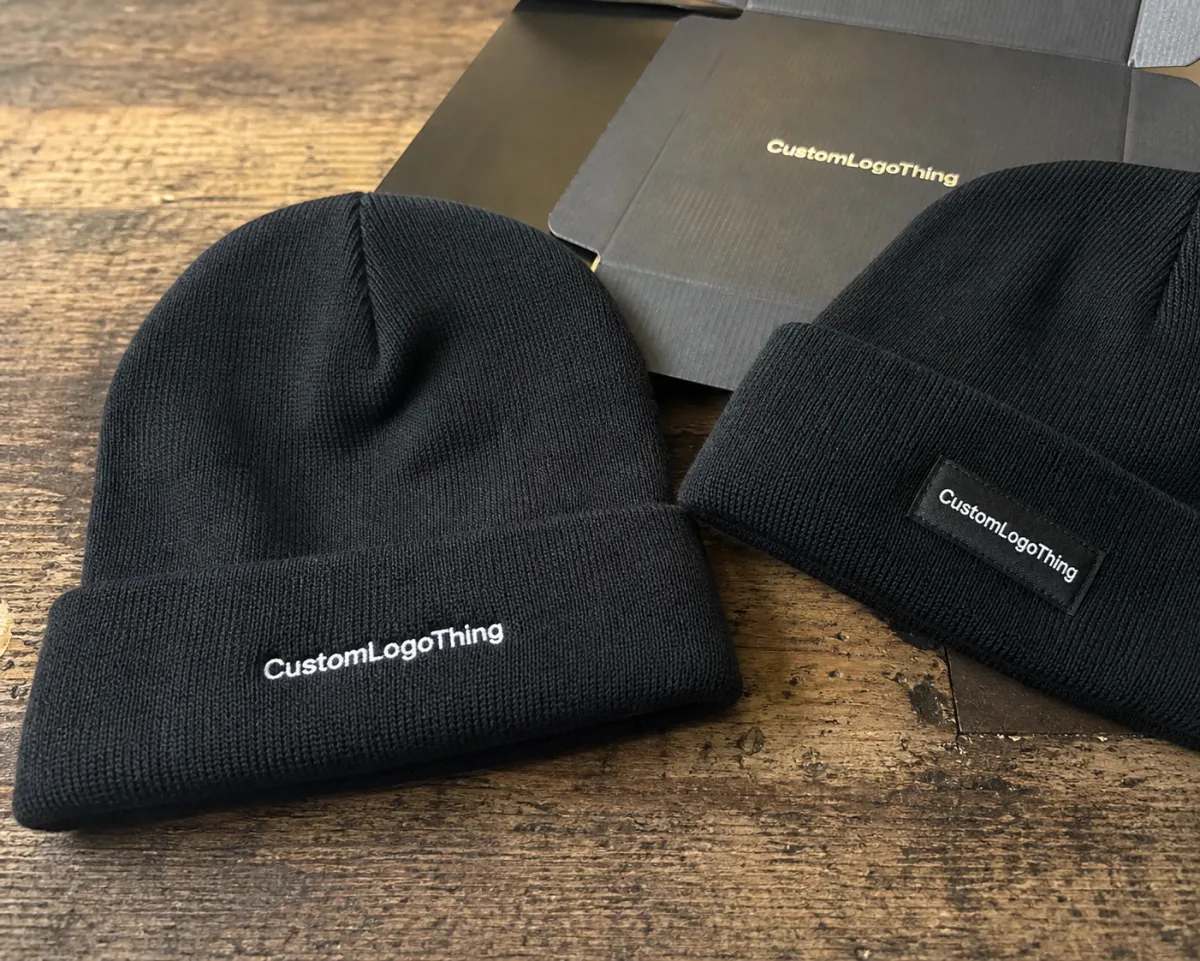
Most buyers say they want a premium beanie, but what they usually mean is a better experience on-head. They want a softer hand, cleaner seams, more reliable stretch recovery, and color that stays consistent across the run. They also want the cuff to fold neatly and stay put, because a cuffed beanie with a floppy fold looks unfinished no matter how expensive the yarn is.
In practice, premium starts with structure. A dense, well-balanced knit gives the beanie a smoother outer face, better logo presentation, and less tendency to grow loose with wear. That matters whether the piece is meant for retail, staff use, or a branded campaign. Fiber matters, yes, but the fabric behavior matters more. Buyers sometimes focus too heavily on the content label and not enough on the knit architecture that determines how the hat will actually age.
Premium is usually a structure decision first and a fiber decision second.
That lens is useful for any Premium Cuffed Beanies material guide conversation. If the beanie is going to live on a shelf, go on camera, or be worn repeatedly through cold weather, it needs to look composed after a few wears, not only on day one. Keep that in mind while comparing samples, because the best material is the one that matches the job instead of simply sounding expensive.
One practical marker: a better cuffed beanie usually has more consistent stitch tension from the first row to the last, a cuff that folds back without rippling, and a crown that closes cleanly instead of leaving a lumpy seam. Those details are small until they are on a display table or under bright retail lighting, where every flaw gets louder.
How the Fiber Blend Changes Warmth, Stretch, and Handfeel
Acrylic is still the workhorse for many cuffed beanies because it is warm, color-stable, and easy to knit consistently. It usually delivers a soft hand at a sensible price, which is why it appears so often in branded programs. Polyester can feel smoother and improve durability or color clarity in blended constructions, although pure polyester knit hats are not always as cozy as buyers expect. Wool adds natural warmth and a richer, more premium feel, but it can be scratchier, more expensive, and less forgiving if the customer base is sensitive to texture. Cotton is breathable and comfortable in mild climates, yet it does not trap heat as aggressively, so it is better for fashion use or transitional weather than deep winter utility.
The blend ratio matters as much as the fiber name. A 100% acrylic knit will behave differently from an acrylic-wool blend, and a cotton-rich beanie will drape differently from a wool-rich one. For cuffed styles, stretch and recovery have to be balanced carefully so the beanie hugs the head without feeling tight. If elastic memory is weak, the cuff can spread out and the body can loosen by the third or fourth wear.
Handfeel is often the first thing people judge. A brushed surface may feel plush, but if the knit is too open it can look fuzzy quickly. A tighter gauge can feel cleaner and more retail-ready, but may also feel warmer and slightly firmer on first touch. That is not a defect; it is a design choice. For winter merch, a midweight beanie around 80-120 grams can be a sweet spot, while heavier fashion pieces often land closer to 120-160 grams depending on yarn and gauge.
There is also a climate reality that gets missed in online sourcing: what feels luxurious in a quick sample check can feel too hot after 30 minutes in a store, at a conference, or on a subway platform. The fabric that wins in a cold outdoor activation does not always win for all-day wear indoors. That mismatch is one reason buyers should ask where, not just how, the beanie will be used.
Material Specs That Control Durability and Decoration Quality
The fiber blend is only the first layer of the decision. Yarn count, ply, knit gauge, and stitch structure all affect how the beanie wears and how well it takes decoration. A finer yarn with a tighter gauge can give you a cleaner face, better pill resistance, and a smoother base for embroidery. A looser knit may feel softer at first but can snag more easily and show distortion around seams or logo placement. Buyers often ask for “premium” and then get vague on these details, which is how inconsistent results sneak into production.
Cuff construction deserves special attention because the cuff does double duty: it frames the face and carries the brand. A stable cuff gives embroidery, woven labels, and patches a flat foundation. If the cuff is too soft or too stretchy, the logo can tilt, pucker, or look uneven once the beanie is folded and worn. That is why a simple embroidered mark often performs better on a firm cuff than on a very plush body knit.
Color control also matters more than many buyers expect. In a branded run, a small shade shift between lots can become obvious under retail lighting or in product photography. If the beanie is part of a coordinated kit, consistency matters even more. The same goes for shrinkage and wash behavior. A beanie that feels perfect on arrival but twists after washing is not premium, even if the yarn itself is expensive.
Good production teams look for a short list of quality-control checks before bulk knitting is approved:
- Stretch recovery: the cuff should return close to its original shape after repeated pull tests.
- Seam flatness: the crown closure and linking should not leave a ridge that prints through the cuff.
- Pilling behavior: loose fibers should be limited, especially on acrylic-heavy blends.
- Color consistency: lab dips or matched samples should stay within a narrow visual range across the run.
- Decoration stability: embroidery should sit flat without puckering the knit around it.
If you are checking compliance or durability expectations, it helps to think beyond the hat itself and consider packaging and transit. Shipping cartons made from corrugated cardboard protect shape better than loose packing, and carton inserts made with kraft paper can reduce scuffing during transit. If your brand uses FSC certified hangtags or recycled materials in packaging, that can support the story without changing the beanie spec. For transit testing and distribution planning, the guidance at ISTA is a useful reference point. For recycled content and recovery basics, EPA recycling guidance is a solid place to check terminology.
- Best for embroidery: tighter gauge, firmer cuff, clean surface
- Best for woven labels: balanced stretch with moderate thickness
- Best for patches: stable knit with enough structure to resist puckering
As a production rule of thumb, a smoother knit face usually improves logo clarity more than a slightly softer hand does. That trade-off matters in practice. A beanie that looks premium on a shelf but distorts the brand mark is rarely premium for long.
Process and Timeline for Turning Yarn Into Finished Cuffed Beanies
The path from yarn to finished beanie is straightforward, but every decision can affect lead time. It usually starts with material selection and yarn sourcing, then moves into sample knitting, fit review, decoration approval, bulk knitting, linking, washing or steaming, final inspection, folding, and packing. If the product includes custom labels or special packaging, those steps are added after the core knit is approved.
Where time gets lost is usually obvious in hindsight. A buyer changes yarn color after the first sample, the logo is moved a few millimeters, or the cuff length is revised because the first fit felt too shallow. None of those changes is unusual, but each one can add days or even a full production cycle if materials have already been committed. A blank cuffed beanie can move quickly; a fully branded run with custom labels and packaging inserts takes more coordination.
For planning, separate the timeline into three blocks: sample time, production time, and transit time. A simple sample may take about 5-10 business days if yarn is ready, while a bulk run often lands around 12-20 business days after approval, depending on order size and finishing. Freight can add another 3-15 days depending on route and method. If the launch date is fixed, build in a buffer for at least one sample revision. That buffer is cheap insurance, and it tends to cost less than rushing the wrong spec.
One practical tip: ask for sample photos in flat lay and on-head views. A beanie can look fine folded on a table and still sit awkwardly on a person. That one extra check often catches problems before bulk knitting starts. If possible, request a close-up of the cuff edge and the logo area as well; those are the two places where quality usually reveals itself fastest.
There is also a sequencing issue buyers underestimate. Decoration approvals should happen after fit approval, not before it. An embroidery file that looks good in isolation may need to shift once the cuff height and crown depth are finalized. Correcting that after the full run begins is expensive in both time and waste.
Cost, Pricing, and MOQ: What Moves the Unit Cost
Unit cost for cuffed beanies is shaped by a few predictable levers: fiber type, yarn quality, knit complexity, decoration method, finishing steps, and packaging. A basic acrylic knit with a small embroidery hit will usually cost less than a wool blend with woven labels, custom hangtags, and individual packaging. The material itself is only one part of the number.
MOQ matters a lot. Smaller orders carry more setup cost per piece because sampling, color matching, and machine setup are spread over fewer units. Larger orders usually bring the per-piece price down, sometimes dramatically. A run of 300 pieces may price very differently from 5,000 pieces even if the beanie shell is the same, because the setup burden is easier to absorb at higher volume.
For rough planning, these wholesale ranges are common starting points, though market conditions and decoration choices can move them quickly:
- Basic acrylic cuffed beanie: about $2.50-$4.50 per unit at higher volume.
- Acrylic-wool blend: about $4.00-$7.00 per unit depending on gauge and finish.
- Wool-rich or specialty knit: about $6.00-$10.00+ per unit.
- Small runs under MOQ: often add 20% to 60% because setup costs are spread across fewer units.
| Option | Typical feel | Cost impact | Best use |
|---|---|---|---|
| Acrylic basic knit | Soft, warm, consistent | Lowest | Promotions, large giveaways |
| Acrylic-wool blend | Warmer, more premium handfeel | Moderate | Retail, team wear |
| Wool-rich blend | Natural warmth, richer texture | Higher | Fashion, premium merch |
| Cotton blend | Breathable, lighter, less insulating | Moderate to higher | Transitional weather, lifestyle product |
Always ask what is included in the quote. Does it cover sampling, embroidery, labels, folding, polybagging, and freight, or only the knit shell? Does it include biodegradable packaging or just standard poly bags? Are cartons lined with kraft paper or packed loose? A quote that looks cheaper on paper can become expensive once the missing extras are added back in. I would rather see a slightly higher quote with clear inclusions than a low number that keeps growing.
That said, the cheapest line item can still be the right choice if the use case is simple and the expectations are clear. For a large promotional drop, a clean acrylic shell with controlled embroidery often beats a more expensive blend that is over-specified for the job. The point is not to spend more; it is to spend where the buyer will actually see value.
Common Mistakes When Choosing Cuffed Beanie Materials
The most common mistake is chasing the softest touch and forgetting structure. Very plush knits can feel great in hand, but they may stretch out, pill faster, or hold embroidery poorly. If the beanie is meant to be displayed folded, worn repeatedly, or photographed for retail, a little firmness usually helps more than buyers expect.
Another issue is choosing for winter warmth when the real use case is indoor wear or all-day retail styling. In that situation, breathability and lighter weight may matter more than maximum insulation. A heavy knit can be too hot on a shop floor, in an office, or at a conference, even if it feels luxurious during a five-second sample check.
The cuff is often treated as an afterthought, which is a mistake. Buyers approve the body fabric and then discover the cuff has to carry the logo, hold a crisp fold, and stay comfortable against the forehead. If the cuff is too soft, the logo can warp. If it is too stiff, the hat can feel bulky and sit awkwardly.
Skipping sample testing is probably the most expensive shortcut. Fit, stretch recovery, color, and logo behavior all change once a real person puts the beanie on. A product can look excellent in a still photo and still fail in use. A single pre-production sample is cheap compared with correcting a full run.
There is also a hidden mistake in over-specifying the material. Some buyers ask for multiple premium features that work against each other: very soft hand, very high warmth, ultra-crisp embroidery, light weight, and a low price. A knit can only do so much. Production is a series of trade-offs, not a wish list.
When buyers slow down for one sample round, they usually save time later because the final production spec is clearer and the approval chain is shorter.
Expert Tips and Next Steps for Specifying the Right Beanie
Start with the end use. Is this a promotional giveaway, a retail merch piece, team wear, or winter workwear? That answer should guide the fiber blend, knit weight, cuff size, and decoration method. A giveaway piece needs value and consistency. Retail needs stronger handfeel and presentation. Workwear may need durability and a more secure fit. One fabric rarely solves every use case cleanly.
Request physical swatches or, better yet, a pre-production sample. Screens hide too much. Real lighting tells you whether the yarn looks flat, glossy, or textured; whether the cuff sits neatly; and whether the decoration lands where you expected. If the beanie is going into a branded kit, check it beside the other components so the texture and color feel intentional together.
Write a concise spec sheet before requesting quotes. Include fiber blend, knit gauge, cuff height, decoration method, label type, packing preference, and target quantity. If you want the order packed in cartons with FSC certified inserts or wrapped in recycled materials, say so up front. Clear specs usually produce cleaner pricing and fewer revisions, which helps every buyer on the timeline.
- Confirm fit: ask for head-on samples or fit photos
- Confirm decoration: check embroidery density or patch edge behavior
- Confirm packing: decide between folded bulk packs, polybags, or eco-forward options
- Confirm timing: lock sample approval, bulk production, and freight separately
My practical recommendation is simple: compare one sample from each shortlisted option, confirm the production timeline, and then lock the final spec with confidence. That is the point of a Premium Cuffed Beanies material guide like this one: it helps you make a better decision with less guesswork, so the finished beanie feels right, looks right, and lands on time. The best result is usually not the most expensive yarn; it is the most disciplined combination of material, knit, and finishing.
FAQs
What is the best blend for premium cuffed beanies materials?
For most buyers, an acrylic or acrylic-rich blend gives the best mix of warmth, softness, color consistency, and value. Choose wool blends when natural fiber feel matters more, and choose cotton blends when breathability and a lighter hand are the priority. If the beanie will be decorated heavily, a firmer acrylic-rich knit often holds its shape better than a very soft natural blend.
How do I compare quotes for a premium cuffed beanies order?
Check whether the quote includes sampling, decoration, labels, packaging, and freight, not just the beanie shell price. Compare fiber content, knit gauge, MOQ, and Lead Time side by side so you are judging true value, not just the lowest number. If one quote is much cheaper, ask what was removed to get there.
Will a softer cuffed beanie always perform better in retail?
Not always, because ultra-soft knits can lose structure, stretch out, or make logos look less crisp after wear. The best retail beanie balances softness with recovery, shape retention, and a cuff that stays neat on display and on-head. A slightly firmer knit often photographs better and holds up longer on the sales floor.
How long does a custom cuffed beanie sample and production run take?
Sample timing depends on yarn availability, artwork approval, and knit complexity, while bulk timing depends on MOQ and finishing steps. Plan about 5-10 business days for a straightforward sample if materials are ready, and roughly 12-20 business days for production after approval, with freight added separately. Add buffer time if color matching or multiple revisions are likely.
Which decoration method works best on premium cuffed beanies?
Embroidery is usually the most durable and clean-looking choice on a stable cuff, especially for small logos and text. Woven labels and patches can also work well when the beanie fabric is soft or textured, as long as the base knit is firm enough to hold them. The cuff surface should be tested before production so the decoration does not distort the fit.


