The Premium Cuffed Beanies unit cost is not just a purchasing line. It is a practical measure of how much brand value you can place on a winter accessory without dragging the order into complicated sizing, fragile decoration choices, or slow approvals. A cuffed beanie usually gives buyers a cleaner silhouette, a visible branding zone, and a one-size format that travels well through merchandising, staff programs, and retail packing.
That combination changes the math. A slightly better yarn, a neater cuff, or a more disciplined embroidery spec can lift perceived value more than a heavy upgrade to the raw base. Buyers see this in the final sample: the same category can look basic in one build and polished in another. The difference is often less about flash and more about control.
There is also a procurement advantage. Cuffed beanies are easier to quote, easier to approve, and easier to repeat. Fewer size issues mean fewer surprises. Fewer decoration surfaces mean fewer opportunities for distortion. For teams that need a winter item to arrive on time and look coherent across dozens or thousands of units, that matters more than a dramatic product story.
Why Cuffed Beanies Often Outperform Higher-Priced Headwear
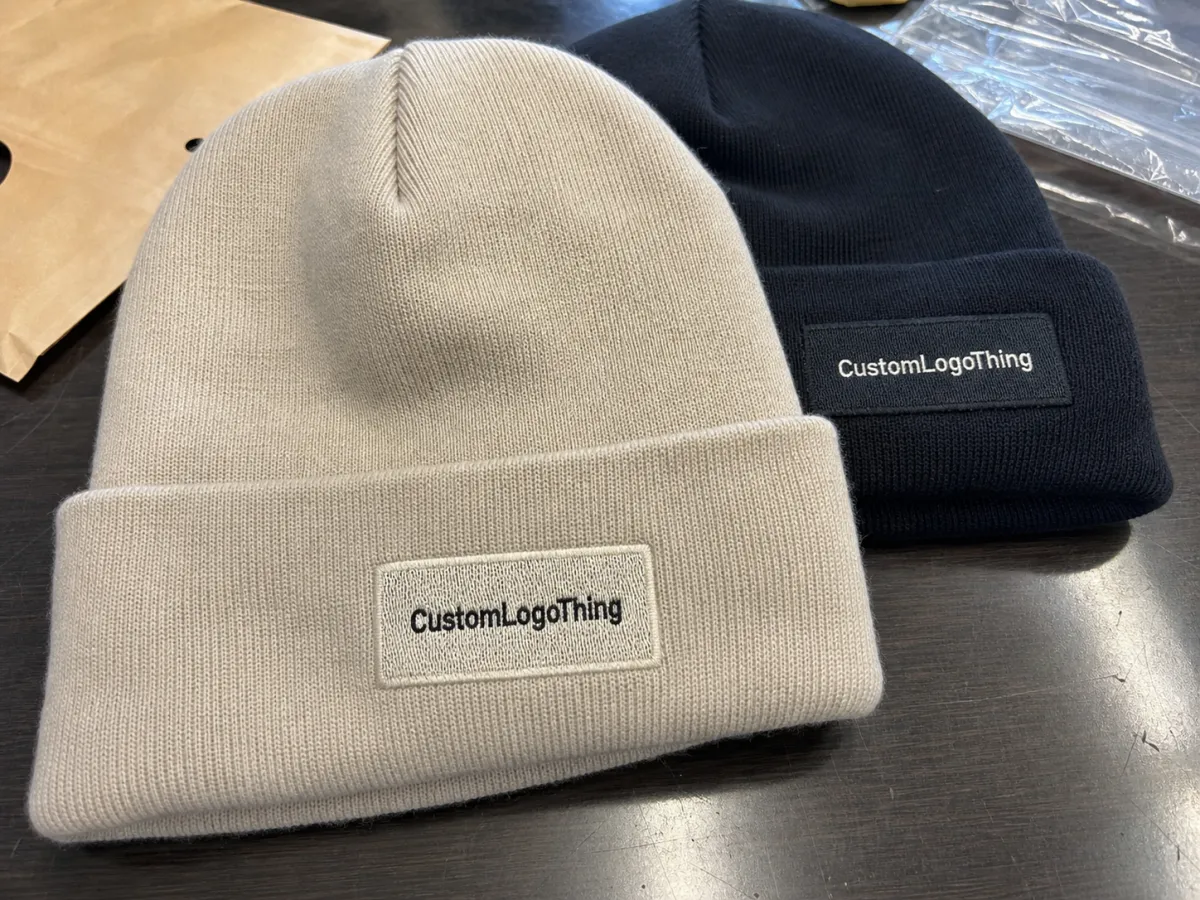
Many buyers compare cuffed beanies with more expensive cold-weather items and assume the higher-priced piece will automatically carry more value. That is not always how the market reads it. A scarf may cost more to source, but it does not always display a logo cleanly. Gloves bring fit questions. Outerwear can look premium, yet the price jumps quickly once you add size runs, trims, and packaging requirements.
A cuffed beanie avoids most of that friction. The cuff creates a flat, readable area for embroidery or a woven patch, which means the logo has a real chance to look intentional. The garment also reads consistently in a group setting. One person’s beanie is not tight while another's is loose, and no one is waiting for a replacement size. That simplicity is one reason buyers often get more visible brand impact per dollar from cuffed hats than from accessories that cost more on paper.
The other advantage is structure. A good cuffed beanie holds its shape, keeps the logo in the right place, and does not collapse into an unhelpful slouch after a few wears. That sounds minor until you see the difference across a full distribution. A beanie that sits well on the head is more likely to be worn, photographed, and kept. A soft, unstructured one can feel cheap even if the yarn cost is decent.
In retail and staff programs, the item has to do several jobs at once. It needs to look credible on a shelf, survive shipping, and still feel comfortable in real weather. That is why buyers should think less about headline price and more about what the price buys: logo clarity, fit consistency, and a predictable delivery window. Those are the features that justify the Premium Cuffed Beanies unit cost.
Product Details That Change Fit, Warmth, and Branding Area
Small specification choices can change the final result more than the sales sheet suggests. Knit gauge is one of the biggest. A tighter gauge tends to look cleaner and gives embroidery a steadier base. A looser knit can feel softer, but it may allow more distortion around the logo or stretch out faster under repeated wear. If the goal is a crisp presentation, the gauge matters as much as the color.
Cuff depth matters too. Around 2.5 to 3 inches is often enough to create a visible branding area without making the front look crowded. Too shallow, and the logo sits awkwardly near the edge. Too deep, and the beanie can look bottom-heavy. Crown height, seam finish, and yarn twist also affect how finished the piece looks before decoration is even added.
Material choice should match the use case. Common premium builds include 100% acrylic, acrylic-wool blends, and recycled polyester with a denser knit. Acrylic is usually the most cost-stable and easy to reproduce. Wool blends can feel more refined, but they may need more careful handling and can raise the unit cost. Recycled polyester can help with sustainability goals, though the handfeel and stretch behavior should be checked in a sample, not assumed from a spec sheet.
Color influences perceived quality in ways buyers sometimes underestimate. Deep neutrals usually make embroidery look sharper because they reduce visual noise. Heathered yarns add texture, but they can blur fine marks from a distance. Lighter colors can feel more retail-ready if the knit is clean and the cuff keeps its shape. The best choice is not always the most expensive dye lot; it is the one that supports the logo and the season.
Most orders fall into a few practical buckets:
- Winter promotions: the beanie needs to ship efficiently and photograph well in bulk.
- Employee programs: comfort and repeatability matter more than novelty.
- Retail add-ons: the finish has to look deliberate at shelf level.
- Team use: color matching and logo placement need to remain consistent across reorders.
One useful rule: premium does not always mean more decoration. A structured cuff, a clean stitch pattern, and one controlled logo placement usually beat a crowded design with multiple treatments. Buyers who keep the build focused often get a better-looking result and a more stable quote.
Specs Buyers Should Confirm Before They Approve Artwork
Before artwork is approved, the technical details should already be settled. That includes yarn blend, knit gauge, finished dimensions, cuff height, decoration method, and label placement. If those points are vague, the quote tends to drift and the sample round becomes harder to control. If they are clear, the order usually moves faster and with fewer surprises.
Decoration method is one of the biggest cost and quality variables. Embroidery is often the most efficient choice for a controlled Premium Cuffed Beanies unit cost because it is widely supported, easy to proof, and durable in everyday use. Woven patches can deliver finer detail and a more retail-oriented finish, but they may introduce tooling or setup fees. Heat-applied graphics can work for some artwork, though they should be checked carefully for wear, wash performance, and edge durability.
Ask for approval points in writing. That should include Pantone targets where color matters, logo size measured from the cuff edge, stitch density if embroidery is used, and whether the approval is based on a digital mockup, strike-off, or sewn sample. Even a small shift in placement can make the mark look off-center once the beanie is worn and stretched. A clean proof is useful, but a physical sample is what shows how the piece will actually behave.
Fit deserves the same attention. “One size fits most” is useful shorthand, but buyers should still ask what that means in practical terms. A deeper cuff can improve comfort and styling, while a shallow crown can pull awkwardly or sit too high. If the audience is mixed, ask for relaxed dimensions and expected stretch range so the sample can be judged against real wear, not just flat measurements.
Packaging and labeling also affect the final experience. Retail programs may need hangtags, size stickers, barcodes, or individual polybags. Distribution programs may need carton counts that align with store allocations or warehouse receiving rules. If the shipment will pass through a fulfillment center, ask whether the carton profile matches the transit expectations used by ISTA. If printed inserts or paper labels are part of the package, FSC-certified materials may be relevant to internal sourcing standards.
That level of detail is not excessive. It is what keeps the quote honest.
Premium Cuffed Beanies Unit Cost, MOQ, and Quote Variables
The pricing picture becomes clearer once the major drivers are separated. Quantity is the most obvious one, because setup gets spread across more units as the order grows. Decoration complexity comes next, followed by yarn choice, sample requirements, and shipping. MOQ matters, but only if the order stays stable. Change the color, the logo position, or the decoration method, and the savings can shrink quickly.
Bulk pricing usually drops in steps rather than in a straight line. A 250-piece order may carry a noticeably higher unit rate than a 1,000-piece order because the same setup work is divided across fewer hats. Once the order reaches a larger run, the base cost per piece falls, but extra embellishment can bring it back up again. Simple embroidery usually keeps pricing tighter than a multi-layer patch or a custom knit with special finishing.
These ranges are a practical reference point, not a guarantee:
| Option | Typical MOQ | Approx. unit cost | Best fit | Main trade-off |
|---|---|---|---|---|
| Stock acrylic cuffed beanie + embroidery | 100-300 | $3.90-$6.50 | Staff kits, promos, internal events | Efficient, but less retail depth |
| Acrylic-wool blend + woven patch | 250-500 | $5.10-$8.75 | Retail merch, premium gifts | Patch tooling fees may apply |
| Custom knit cuffed beanie + embroidery | 300-1,000 | $6.25-$11.50 | Brand launches, higher-visibility programs | Longer lead time and more approvals |
| Retail-ready packout with labels and inserts | 200+ | + $0.15-$0.60 per unit | E-commerce, gifting, store shelves | Extra handling and more QC steps |
Some costs sit outside the base garment price and need to be named separately. Digitizing for embroidery, patch tooling, special thread matching, and pre-production samples can each add to the total. A setup fee of roughly $25-$180 is common depending on method and artwork complexity. Samples may run $40-$120 or more if the piece is highly customized or the yarn color has to be matched closely. Freight should also be shown clearly; a quote that looks low before shipping is not a real comparison.
Good buyers compare landed cost, not just base unit cost. That means the beanie, decoration, sample, setup, and freight all belong in the same conversation. It also means the quote should state whether the sample is credited back on the bulk order and whether freight is prepaid or billed separately. Those details matter more than a polished sales note.
A reliable quote lists the body, decoration, sample cost, setup charges, and freight side by side. Missing line items usually mean missing control.
Consistency is another pricing factor that gets overlooked. If the order keeps one body, one logo placement, and one decoration method, the vendor can plan the run with fewer interruptions. That stability often protects the Premium Cuffed Beanies unit cost better than any negotiation tactic. Simplicity is not glamorous, but it saves money.
Production Steps, Lead Time, and Approval Milestones
The production sequence is usually straightforward. First comes quote confirmation. Then mockup review. If the order needs it, the vendor produces a sample or strike-off. After that, production begins, followed by decoration, inspection, packing, and dispatch. Each stage has a point where delay can enter, and most delays come from approval gaps rather than the actual manufacturing step.
- Artwork review: file quality, logo size, and placement are checked.
- Mockup approval: color, proportions, and branding position are confirmed.
- Sample or strike-off: the first physical version is reviewed for fit and finish.
- Production run: knitting, decoration, and finishing take place.
- Inspection and packout: counts, stitching, and labels are checked before shipment.
Lead time depends on decoration type, order size, yarn availability, and current factory workload. A straightforward embroidered order may ship in roughly 12-18 business days after final approval. More customized programs, especially custom-knit styles or orders that require multiple proof rounds, can need several additional weeks. Peak season can stretch those windows without warning, so buyers should ask whether the quoted date assumes immediate approval or includes time for revisions.
Two things shorten turnaround more than almost anything else: sending vector art upfront and confirming the final quantity before production is locked. If the vendor has to chase a clean file, recheck a color target, or wait for an internal decision, the calendar slips. That is not a manufacturing fault. It is a process fault.
Approval speed affects quality too. A quick reply on a strike-off does not mean rushing the job. It means the buyer has already aligned internally and can sign off without a second round of uncertainty. That is usually the difference between a clean schedule and a shipment that sits idle for days.
For larger runs, carton planning should be decided before the final stage begins. Carton counts, palletization, and label placement should match the receiving requirements of the warehouse or store network. If a third-party logistics provider will handle the goods, ask how the cartons should be marked and whether the packout follows the intake rules. That kind of detail is tedious, and it prevents expensive mistakes.
How to Reduce Risk When Ordering at Scale
The suppliers that make large orders easier tend to be the ones that explain the order cleanly. They show what is included, what is excluded, and where the risk sits. They also answer the unglamorous questions: Is digitizing included? Is the sample credited back? Is freight separate? Is the beanie stock-based or custom-knit? Those are the questions that shape the real outcome.
Quality control should be part of the order, not an afterthought. Check color consistency across the run, inspect stitch density, confirm logo placement on random units, and verify final counts against the purchase order. If the order includes packaging, confirm that hangtags, inserts, and labels match the approved proof. For shipments that need to survive warehouse handling, ask for transit assumptions that reflect a standard test profile such as those used by ISTA. If paper components are included, FSC-certified stock may help satisfy procurement or sustainability reviews.
Repeat orders should get easier over time, not harder. Approved artwork, color references, sample photos, and final specs ought to be stored in a way that can be retrieved quickly. That reduces re-approval time and lowers the chance of small variations between runs. Even a minor shift in cuff height or logo scale can create a mismatch when the next batch arrives.
There is also a management issue that often decides whether the order stays calm or turns noisy: one person needs final sign-off authority. Multiple reviewers with different preferences can turn a simple order into a moving target. Clear ownership keeps the order consistent and keeps the Premium Cuffed Beanies unit cost tied to a spec, not to debate.
Disciplined ordering is rarely dramatic. It is a stack of small controls: dated approvals, fixed measurements, named packaging requirements, and a realistic timeline. That is what keeps the beanie program from becoming expensive for reasons that had nothing to do with the product itself.
What to Send for an Accurate Quote and Faster Next Steps
A useful quote starts with useful input. Quantity comes first, followed by color count, artwork file, decoration method, target delivery date, and shipping destination. If the order needs individual polybags, retail tags, carton labels, or kitting, that should be included from the beginning. The more complete the request, the less time gets wasted on clarification.
Ask for line-item pricing rather than a bundled number. You want the base beanie cost, setup fees, sample cost, freight, and any add-ons shown separately. That makes it easier to compare one vendor against another and easier to see why a cheaper quote is cheaper. Sometimes it is because the product is simpler. Sometimes it is because key charges have been pushed into later stages.
- Quantity: final count and any split by color or packout.
- Artwork: vector logo file, preferred placement, and Pantone targets if needed.
- Decoration: embroidery, woven patch, label, or mixed treatment.
- Deadline: required in-hand date, not just order date.
- Packout: retail labels, cartons, inserts, or kitting requirements.
Confirm MOQ, production window, and approval checkpoints before the order is released. If the vendor needs a sample approval, ask how long that step typically takes and whether it can be skipped for a repeat design. If the order is time-sensitive, say so plainly. A realistic schedule is better than a hopeful one that slips later.
The cleaner the intake, the cleaner the quote. Buyers who send complete specs usually get a faster answer and a more reliable timeline. That is how premium cuffed beanies unit cost stops being a rough estimate and starts becoming a number that can actually support budgeting, campaign planning, or retail margin.
What affects premium cuffed beanies unit cost the most?
Quantity is usually the biggest driver because setup gets spread across more units at higher volume. Decoration complexity, yarn choice, sample requirements, and shipping also move the price in noticeable ways.
Does MOQ lower the unit cost on custom cuffed beanies?
Yes. A larger MOQ usually lowers the unit cost because production setup is divided across more pieces. The savings are strongest when the order stays consistent in color, artwork, and decoration method.
Which decoration method is best for a lower cuffed beanie price?
Simple embroidery or a single patch location usually keeps pricing more predictable than multi-location decoration. The best option depends on the artwork, durability needs, and the finish you want.
How long does custom cuffed beanie production usually take?
Lead time depends on sampling, artwork approval, decoration type, and current capacity. Submitting final specs early usually shortens the process because fewer revisions are needed before production starts.
Can I review a sample before placing a bulk order?
Yes. A sample or strike-off is the safest way to confirm fit, color, logo placement, and overall finish. Approving the sample first reduces revision risk and helps keep the final order on schedule.
For the cleanest quote, send quantity, artwork, decoration choice, and delivery window in one message; that is the fastest path to an accurate premium cuffed beanies unit cost.


