A customer buys a $160 silk blouse, opens the parcel, and the first thing they touch is a cloudy sleeve that looks borrowed from a warehouse supply shelf. That moment matters. It is one reason custom Custom Plastic Garment Bags for boutique brands deserve real attention rather than a last-minute spec sheet.
For boutique labels, garment bags sit between presentation and utility. They need to protect the garment, hold up through packing and shipping, and still feel intentional enough to support the brand. Push too hard on appearance and the cost climbs. Cut too far on material and the bag starts working against the product. The useful middle ground is usually where boutique packaging lives.
That balance is practical, not poetic. A $0.18 sleeve can be the right call for a basic folded top. A $0.90 bag for a low-margin item can quietly wreck the economics of an order. The right answer depends on garment value, handling conditions, and how much the bag needs to do beyond covering the item.
What Custom Custom Plastic Garment Bags for Boutique Brands Actually Do
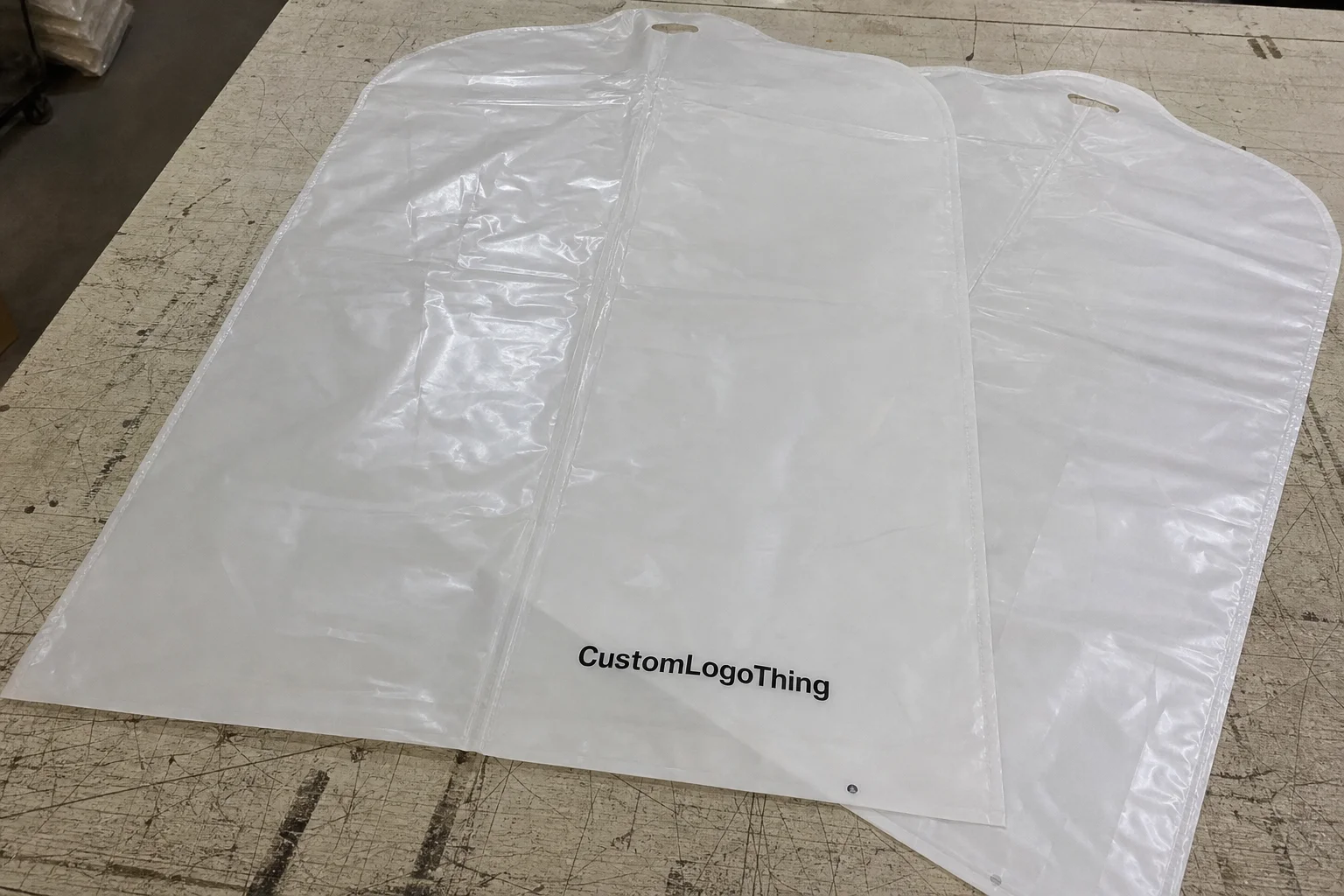
Custom Plastic Garment Bags are clear, frosted, tinted, or opaque poly sleeves made for apparel protection and presentation. Most are produced from LDPE, PP, HDPE, or recycled-content film, then printed with a logo, care message, size marker, warning copy, QR code, or repeat pattern.
In practice, these bags do more than keep dust off. They become the first branded layer around the product after fulfillment, wholesale packing, or in-store wrapping. That makes them part of the customer experience and part of the packing workflow at the same time.
Common uses include folded apparel bags, hanging garment bags, swimwear pouches, intimates packaging, dust covers, seasonal collection sleeves, and warehouse protection. Some boutiques also use them inside mailers or alongside Custom Packaging Products such as tissue, rigid boxes, or custom printed boxes.
The physical job is straightforward. Keep the garment clean. Reduce snagging. Limit moisture exposure during handling. Prevent warehouse marks. Make the item look organized instead of rushed. Plastic will not turn a weak product into a premium one, but bad plastic can make a good garment feel cheaper than it is.
Packaging buyer rule: if the garment is delicate, dark-colored, embellished, satin, silk, swimwear, or sold as a giftable item, the bag needs to do more than simply cover it.
The branding job is quieter. A frosted sleeve with a one-color logo signals that someone thought through the handoff. That is often enough. Boutique brands rarely need a loud package; they need one that feels consistent, clean, and easy to repeat across SKUs.
Most buyers land on a middle path: better than generic stock sleeves, lighter than luxury overkill, and consistent enough that packing staff can use it at speed. That tradeoff matters more than chasing the thickest film or the most complex print.
How Printed Plastic Garment Bags Are Made
The manufacturing flow is usually simple: choose the material, extrude or source the film, print the artwork, cut the film to size, seal the edges, add closures or hanger holes if needed, pack cartons, then ship. Each step affects cost, lead time, and minimum order quantity.
LDPE is common for soft, flexible folded garment bags. It has a smoother hand feel and a little give, which helps when the product is folded with tissue or tags. PP is crisper and clearer, so it can look sharper on retail shelves. HDPE is thinner and more economical, often used when price matters more than presentation. Recycled-content blends can support sustainability goals, but only if the material claim is accurate and supportable.
Finish changes the look more than many buyers expect. Crystal-clear film shows fabric color and texture. Frosted film softens the appearance and hides minor wrinkles. Tinted film can suit a seasonal drop or a more directional brand palette. Opaque film is useful for privacy, color blocking, or a cleaner printed surface.
Most custom printed garment bags use flexographic printing because it scales well and keeps unit costs reasonable once volumes rise. Gravure can deliver very fine detail at high volume, but the setup cost usually pushes it beyond typical boutique runs. Digital methods may work for small tests or short runs, though the economics shift quickly once quantities increase.
Print choices are where a lot of small brands overcomplicate the order. A centered logo, a repeat mark, a size panel, a QR code, or a simple care line often does the job. Hairline details can disappear. Pale ink can vanish on clear film. Metallic effects and full-coverage printing cost more than most first-time buyers expect.
Typical constructions include flat open-end bags, self-seal flap bags, wicketed bags for faster packing, hanger garment bags, gusseted bags, and resealable zip-style bags. Extra features are not free. They affect labor, carton size, proofing time, and the overall feel of the package.
Key Specs Boutique Buyers Should Decide Before Quoting
A good quote starts with specs, not assumptions. If the supplier does not know the bag size, film thickness, print count, and closure style, the pricing will only be a guess. Guesswork is expensive once production starts.
Before requesting pricing for custom Custom Plastic Garment Bags for boutique brands, prepare the core details: bag width, bag length, thickness, material, finish, print colors, print coverage, closure style, quantity, packing method, and shipping destination. Missing one or two of those can change the quote enough to make comparison useless.
| Spec | Common Range or Option | Practical Buying Advice |
|---|---|---|
| Film thickness | 1.0 to 4.0 mil | Use 1.5 to 2.5 mil for most boutique folded apparel; go heavier for coats, gowns, or reusable dust-cover styles. |
| Material | LDPE, PP, HDPE, recycled-content plastic | LDPE feels softer; PP looks clearer; HDPE is economical; recycled content needs verified claims. |
| Closure | Open-end, adhesive flap, zipper, hanger opening | Adhesive flaps look neat for e-commerce, but open-end bags are faster for production packing. |
| 1 to 3 spot colors, repeat pattern, logo mark | One-color printing often gives the best cost-to-branding ratio for boutiques. | |
| MOQ | Often a few thousand pieces and up | Better pricing usually begins around 10,000 to 25,000 pieces, depending on size and print. |
Thickness should match the garment and the handling environment. Lightweight folded apparel often works at 1.0 to 1.5 mil. A more polished boutique presentation usually sits around 1.5 to 2.5 mil. Heavier garments, reusable dust covers, or hanger bag styles may need 2.5 to 4.0 mil.
Sizing is where many brands lose money. Measure the folded garment stack as it will actually ship, then add enough room for easy insertion and closure. Too tight looks cramped and slows packing. Too loose looks sloppy and wastes material. A top that folds to 10 x 12 inches may need a bag closer to 11 x 14 inches, depending on thickness and closure style.
Closure choice affects both presentation and labor. Open-end bags are fast. Adhesive flaps look polished for e-commerce. Zipper styles add reusable value but raise cost. Hanger openings make sense for dresses, coats, suits, and wholesale racks. None of these is automatically better; the right one depends on how the product moves through your workflow.
Print colors deserve restraint. One-color printing can look clean and expensive if the layout is sharp. Two or three colors add polish. Full-coverage printing increases ink cost, proofing scrutiny, and the risk of visible defects. That does not mean avoid it. It means budget for it correctly.
Also confirm required copy. Depending on the selling market and bag dimensions, you may need suffocation warnings, recycling symbols, material markings, country-specific compliance language, or brand care instructions. Standards from groups such as ASTM International may be relevant for material performance, while shipping tests from ISTA can matter when the bag is part of a larger e-commerce packout.
Always request a dieline or layout proof before production, especially if the logo must land in a precise spot on folded garments. A logo that looks centered on a flat proof can sit awkwardly once the garment is inserted and the flap is closed.
Cost, MOQ, and Unit Cost: What Changes the Price
Pricing depends less on the word custom and more on size, material weight, print coverage, quantity, and finishing details. “Custom” is not magic. It is math with ink on it.
Thicker film uses more resin. Larger bags use more material. Extra print colors require more plates or setup. Specialty finishes add handling. Resealable closures cost more than open-end bags. A frosted 2.0 mil self-seal bag with a two-color logo will not price like a thin clear sleeve with a single black mark.
Small custom garment bag orders may start around a few thousand pieces, though that depends on the supplier, print method, and film availability. Better unit pricing often begins at 10,000 to 25,000 pieces. For a simple folded apparel bag, a boutique might see rough ranges such as $0.12 to $0.28 per unit at mid-volume, while larger, thicker, printed, or specialty-closure bags may run $0.30 to $0.75 or more. Freight, setup, and carton volume can shift the landed cost materially.
Setup costs may include printing plates, digital proofing, physical samples, special packing, freight, or tooling for unusual constructions. Freight deserves attention because plastic bags are light but bulky. A carton full of film still occupies space, and that space gets billed somewhere in the chain.
Many boutiques overpay for custom Custom Plastic Garment Bags for boutique brands because they split orders into too many sizes and too many small runs. Another common mistake is using full-color artwork where one ink would do the job. A third is choosing a heavy bag for a lightweight product because “premium” has become shorthand for “use more material.”
If the budget is tight, reduce print colors before reducing film quality. A thin bag with a clean logo still feels intentional. A flimsy sleeve with expensive artwork still feels flimsy.
Ask suppliers for pricing at three quantities, such as 5,000, 10,000, and 25,000 pieces. That gives a real price curve. Sometimes the jump from 5,000 to 10,000 pieces saves enough per unit to justify the inventory. Sometimes it does not. The quote will show it clearly.
Process and Timeline From Artwork to Delivery
The buying process usually follows a clear sequence: define specs, request a quote, approve artwork, review a proof, approve a sample if needed, start production, inspect cartons, arrange shipment, and receive inventory. Skip a step, and the fix usually costs more later.
Quoting may take 1 to 3 business days when the specs are clear. Artwork proofing may take 1 to 5 days, depending on revisions. Sampling can add 5 to 14 days. Production often takes 2 to 5 weeks after approval, depending on order size, print complexity, material availability, and factory load. Shipping time sits on top of that.
Rush timelines are possible, but they are limited by print setup, material availability, curing time, carton packing, and freight schedules. Custom printing is not a microwave job. Pushing too hard can mean fewer proofing checks, higher freight costs, or a bag that arrives technically on time but wrong in a very annoying way.
Before contacting a supplier, gather the logo file in vector format, PMS or CMYK color targets, bag dimensions, desired thickness, quantity, product photos, and packing workflow notes. If the bag will sit inside a mailer, ship in a box, or be used for wholesale presentation, say that upfront. Those details affect construction and pricing.
A digital proof checks layout, placement, scale, warning copy, and color references. A physical sample checks material feel, size, closure behavior, print opacity, and how the packed garment actually looks. For first-time Custom Plastic Garment bags for boutique brands, a sample is usually worth the time.
Approval bottlenecks are predictable: blurry logo files, last-minute color changes, missing compliance copy, no confirmed bag size, or no one on the brand side willing to approve the proof. One decision-maker helps. Packaging by committee has a habit of burning calendar days without improving the result.
Build in buffer time before product launches, wholesale ship dates, pop-ups, and seasonal drops. If the garments launch Friday and the bags land Tuesday, the packaging is not late in theory. It is late in practice.
Common Mistakes That Make Garment Bags Look Cheap
Most weak garment bags are not ruined by the factory. They are ruined by vague specs and optimistic assumptions.
Film too thin for the garment. A 1.0 mil bag can work for light tees, but it may wrinkle badly around structured tops, embellished pieces, or heavier knits. Move to 1.5 to 2.5 mil when the garment value or handling needs justify it.
Bag sized exactly to the folded garment. That sounds efficient until packing slows down and the item bulges at the corners. Add insertion allowance. Test with real garments, not just flat measurements on a spec sheet.
Artwork too delicate for plastic film. Tiny type, hairline details, and low-contrast ink often look fine on screen and weak on film. Simplify the logo, increase stroke weight, and test light inks before committing to production.
Too many sizes at low quantity. Five bag sizes across 2,000 total units can create setup costs, storage clutter, and ordering headaches. One or two standard sizes usually cover most boutique SKUs. Save specialty sizes for coats, gowns, bulky sets, or hanger items.
Ignoring fulfillment workflow. A resealable flap may look polished until the packing team has to close 800 bags for a drop. Ask how the bag will be opened, filled, sealed, stacked, labeled, and shipped. Pretty packaging that slows labor by 20 seconds per unit becomes expensive very quickly.
Forgetting compliance copy. Poly bags may need suffocation warnings or recycling marks depending on size, distribution channel, and market. If you sell through wholesale, marketplace, or larger retail partners, ask for their packaging requirements before printing.
Loose sustainability claims. Recyclable, compostable, biodegradable, and recycled-content claims are not interchangeable. The U.S. Environmental Protection Agency has guidance on recycling and waste reduction at epa.gov/recycle, and suppliers should provide material details before those claims appear on the packaging.
The fix is not complicated. Test sizes with real garments. Standardize where possible. Use production-friendly artwork. Confirm compliance language. Approve a sample before full production when the bag is new, expensive, or tied to a launch.
Next Steps Before You Place a Boutique Bag Order
Use a practical pre-order checklist before spending money. It usually saves more than a clever negotiation line.
- Pull three real garments from the line. Fold them exactly as they will ship, including tissue, tags, hangtags, inserts, or size stickers.
- Measure the packed footprint. Use the folded width, length, and stack thickness, then add room for insertion and sealing.
- Choose one or two standard bag sizes. Cover 70% to 90% of SKUs with standard sizes, then reserve special sizes for coats, gowns, or bulky sets.
- Pick material and thickness based on product value. A $24 basic tee does not need the same film as a $280 silk dress. That sounds obvious, but it gets ignored constantly.
- Simplify artwork. Provide a vector logo, one to two ink colors, clear placement, and readable compliance copy.
- Request price breaks. Ask for 5,000, 10,000, and 25,000 units, plus any changes that would lower cost without hurting presentation.
- Approve the proof and sample. Use the proof for layout and the sample for material, closure, print behavior, and fit.
- Confirm cartons and freight. Ask carton quantity, carton dimensions, total weight, freight method, and delivery date before production starts.
For brands comparing garment bags with mailers, tissue, inserts, or custom printed boxes, reviewing real packaging examples can help. The Case Studies page shows how different packaging choices affect presentation and cost across product types.
The best custom custom plastic garment bags for boutique brands work as a system: size, material, print, compliance, unit cost, packing speed, and delivery timing all have to agree. Get those pieces aligned, and the bag does its job quietly. Clean product. Better presentation. Fewer packing headaches.
FAQ
What are custom plastic garment bags for boutique brands usually made from?
Most are made from LDPE, PP, HDPE, or recycled-content plastic, depending on the desired softness, clarity, thickness, and price point. LDPE is common for soft flexible garment bags, while PP gives a crisper, clearer look for retail presentation. Recycled-content options can support sustainability goals, but the claim should be verified before printing it on the bag.
What thickness should boutique brands choose for custom garment bags?
Lightweight folded apparel often works in the 1.0 to 1.5 mil range, while premium boutique packaging usually feels better around 1.5 to 2.5 mil. Heavier garments, reusable dust covers, and hanger bags may need 2.5 to 4 mil film. The right thickness depends on garment weight, handling, shipping distance, and the level of presentation the brand wants.
How much do custom plastic garment bags cost for boutique orders?
Cost depends on bag size, film thickness, material, print colors, print coverage, closure type, quantity, setup charges, and freight. Unit cost usually drops meaningfully at higher quantities, so buyers should request price breaks at several order levels. To reduce cost, simplify print colors, standardize bag sizes, and avoid unnecessary specialty closures.
What MOQ should I expect for custom printed garment bags?
Many custom printed garment bag orders start at a few thousand pieces, but the best unit pricing often appears around 10,000 to 25,000 pieces. MOQ varies by supplier, bag size, print method, and material availability. Boutiques with smaller runs can sometimes use simpler artwork, stock bag sizes, or fewer SKUs to keep the order practical.
How long does production take for custom garment bags?
A typical project may take 2 to 5 weeks for production after artwork approval, with extra time for sampling, revisions, and shipping. Quoting and proofing usually move faster when the buyer provides clear specs, vector artwork, and quantity targets upfront. For launches or seasonal drops, build in buffer time so packaging does not become the reason finished garments sit unpacked.


