Buyer Fit Snapshot
| Best fit | Printed Food Packaging Pouches projects where brand print, material claims, artwork control, MOQ, and repeat-order consistency need to be specified before quoting. |
|---|---|
| Quote inputs | Share finished size, material target, print colors, finish, packing count, annual reorder estimate, ship-to region, and any compliance wording. |
| Proofing check | Approve dieline scale, logo placement, barcode or warning zones, color tolerance, closure strength, and carton packing before bulk production. |
| Main risk | Vague material claims, crowded artwork, missing packing details, or unclear freight terms can make a low unit price expensive after revisions. |
Fast answer: Printed Food Packaging Pouches: Film, Print, MOQ, and Carton Packing should be specified like a repeatable production item. The safest quote records material, print method, finish, artwork proof, packing count, and reorder notes in one written spec.
Production checks before approval
Compare the actual filled-product size with the drawing, then confirm tolerance on folds, seals, hang holes, label areas, and retail display edges. Reserve space for logos, QR codes, warning copy, and material claims before decorative graphics fill the panel.
Quote comparison points
Review material grade, print process, finish, sampling route, tooling charges, carton quantity, and freight assumptions side by side. A quote is only useful when the supplier can repeat the same color, closure quality, and packing count on the next order.
Printed Food Packaging Pouches: Costs, Process, and Tips
Printed food packaging pouches can influence shelf life, freight Cost, and Shelf appeal in one move, which is why the cheapest option often becomes the priciest mistake later. A pouch that looks polished on a screen but leaks in transit, fails at the filler, or eats into margin is not a bargain. It is an expensive problem with graphics on top. For brands that want branded packaging, package branding, and retail packaging to pull in the same direction, printed food packaging pouches remain one of the most practical formats on the table.
These are flexible, custom-Printed Barrier Pouches used for snacks, coffee, frozen foods, powders, pet food, and ready-to-eat products that need protection and branding together. Compared with rigid containers, they usually weigh less, take up less shelf space, and make design changes easier to manage. Compared with plain labels, they give more room for packaging design and a cleaner brand story. Growing product lines also benefit from the format because SKU expansion is usually less painful than rebuilding custom printed boxes or redesigning a carton system every time a flavor is added.
I have seen buyers treat pouches like a purely creative decision, and that is where the trouble starts. The truth is more mechanical. The film structure, seal window, closure type, and print method do more damage or more good than the artwork ever will. That is not glamorous, but it is the part that decides whether the pack works on a shelf, on a line, and in a warehouse.
This article breaks down how printed food packaging pouches are made, what drives cost, where timelines slip, and how to check suppliers without guessing. If you are also looking at broader Custom Packaging Products, the same buying logic applies: define the product spec first, then price the format around it. That order protects budgets. Reversing it usually does not.
Printed food packaging pouches: what they are and why they sell
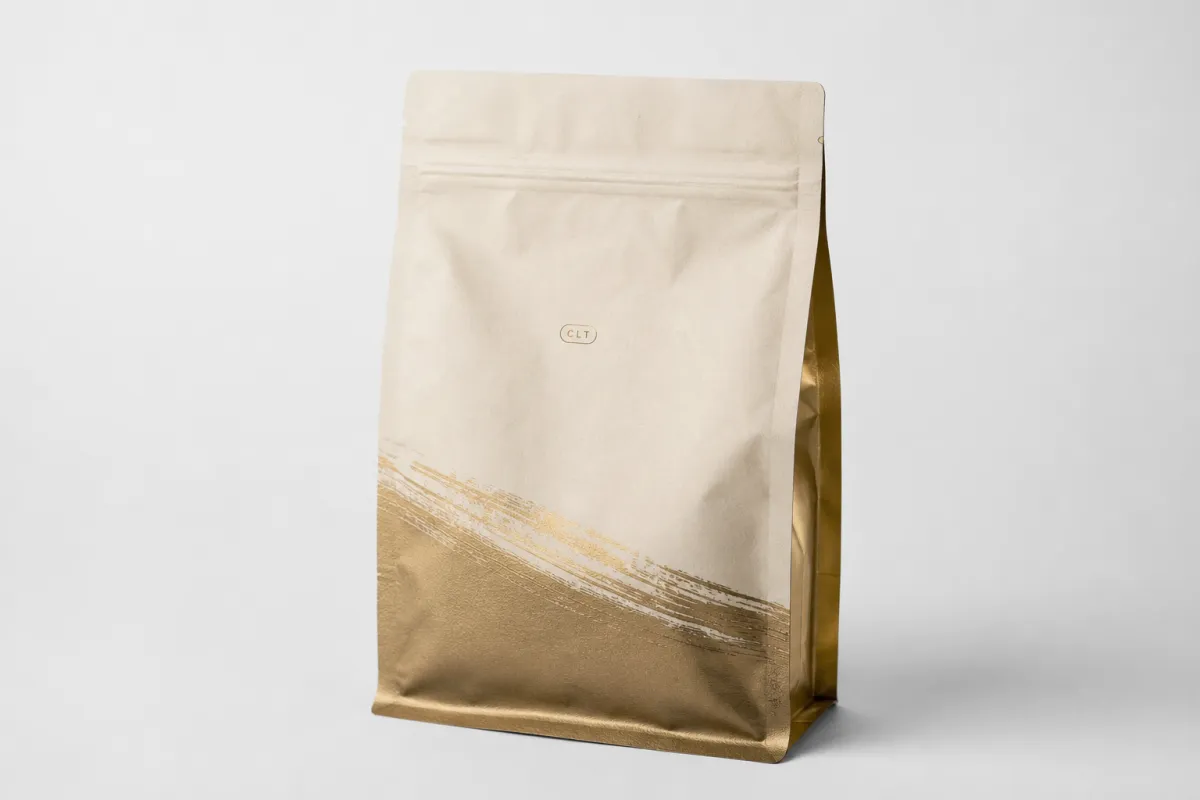
Printed food packaging pouches are flexible packs built from one or more film layers, then printed with brand graphics, legal copy, and product details. In practice, the structure matters more than the artwork. A strong front panel does not matter if the pouch cannot hold flavor, resist punctures, or keep moisture out long enough for the product to move through the channel. That is why printed food packaging pouches sit in three categories at once: product packaging, logistics tool, and branding asset. Miss one of those roles and the whole package gets shaky.
Brands keep choosing printed food packaging pouches because the format does several jobs at once. It protects product quality, reduces shipping weight, and offers a larger canvas for shelf presence than a small label can provide. It also makes design updates easier. If a snack line needs a seasonal SKU or a coffee brand wants a limited roast, printed food packaging pouches can usually adapt faster than rigid tubs or complex cartons. That flexibility is one reason many teams use them alongside other branded packaging systems instead of replacing every format.
There is a straightforward economics reason too. A pouch often uses less material than a jar or clamshell, and less material usually means lower freight cost and less storage pressure. More units fit into a case. More cases fit on a pallet. Fewer pallets mean less warehouse space tied up for the same sales volume. It is not glamorous, but it is how margins stay alive.
From a packaging buyer's point of view, the format works best when the product itself fits the structure. Printed food packaging pouches are well suited to dry snacks, roasted coffee, granola, trail mix, powdered blends, frozen vegetables, pet treats, and shelf-stable foods. They can also work for higher-risk products if the structure is selected carefully, though that is not the place to improvise. If the product has oil, sharp edges, odor sensitivity, or a long shelf-life target, the barrier spec needs to be deliberate, not decorative.
A pretty pouch that leaks is not packaging. It is an expensive apology.
One mistake buyers make is assuming all printed food packaging pouches are interchangeable. They are not. A matte pouch with a zipper, an oil-resistant food pouch, and a frozen-food pouch are different engineering choices, even when the artwork looks similar. A good supplier will ask about fill weight, sealing temperature, storage conditions, and distribution method before quoting. That is a useful sign, not a delay tactic. It means the supplier is thinking like a converter, not a brochure.
The stronger brands use printed food packaging pouches as part of a broader visual system. The logo, color palette, typography, and product hierarchy should sit comfortably beside other retail packaging and packaging design decisions. If the pouch sits next to custom printed boxes, labels, or multi-pack cartons, the whole shelf story should still feel like one brand. That consistency matters. Consumers pick up on it faster than most teams expect. They may not say why, but they feel it immediately.
How the process and lead time work for printed food packaging pouches
The process for printed food packaging pouches usually moves in a fixed order: product brief, pouch structure, dieline, artwork, proofing, production, inspection, and shipping. Buyers run into trouble when they jump straight to artwork before the first three steps are settled. Then the pouch size changes, the closure spec changes, the barcode moves, and everyone acts surprised when the timeline slips. That is not a supply chain mystery. It is a planning problem.
Start with the product brief. Define fill weight, product texture, shelf life target, storage conditions, and whether the pouch needs a zipper, tear notch, valve, spout, or hang hole. If the product is oily or abrasive, mention that early. If it needs freezer performance, say so. If the pouch has to run on a high-speed line, say that too. Printed food packaging pouches are not only a graphic surface. They have to behave on equipment and in real distribution, which means the brief should be practical, not poetic.
Then the supplier will usually propose a structure and send a dieline. That is where dimensions, seal area, and panel layout get locked. This is also where lead time can be won or lost. A clean dieline with print-ready files and one decision-maker on the buyer side can shave days off the schedule. A team that sends five versions to three departments and waits a week for comments does the opposite. I have watched that add ten days to a simple job, and nobody enjoyed it.
Print method matters too. Digital printing is usually faster for short runs and artwork changes. Flexographic and gravure production usually take longer to set up, but they make more sense at higher volumes. The choice affects not just schedule, but also how many samples and approvals you will need before production starts. For printed food packaging pouches, the quickest job is usually the one with fewer surprises, not the one with the loudest urgency email.
- Digital printing: often 2-4 weeks for shorter runs once artwork is approved, especially when the design is stable.
- Flexographic printing: often 4-6 weeks, sometimes longer if plates, color matching, or special finishes are involved.
- Gravure printing: often 6-8 weeks or more, especially when cylinders, tooling, and larger run planning are part of the job.
The most common delay points are boring, which is exactly why they keep happening. Color matching takes longer than expected. Barcode artwork needs fixing. Material availability shifts. Someone asks for a last-minute size tweak after approval. A closure spec changes from zipper to tear notch or from zipper to slider. None of that is rare. It is normal production friction, and printed food packaging pouches are sensitive to it because one small change can affect the whole build.
If you need to shorten lead time, lock the pouch size early, send print-ready files, approve one decision-maker, and finalize all components before requesting quotes. That includes barrier level, finish, closure, and any special features. Also, do not make the supplier chase your team for the basics. The fastest projects are usually the ones where the buyer behaves like a buyer and the supplier behaves like a converter. Miracles rarely enter the picture.
For teams comparing suppliers, ask about production flow, not just promised delivery dates. A supplier that has a clear proofing path, documented inspection, and realistic buffer time is usually easier to work with than one that says yes to everything. Printed food packaging pouches are a repeatable product, but repeatable does not mean automatic.
Printed food packaging pouches cost, MOQ, and quote breakdown
Printed food packaging pouches pricing depends on more than size. The main cost drivers are pouch dimensions, film structure, barrier level, print coverage, special finishes, zippers, spouts, tear notches, and whether the pouch needs matte, gloss, or soft-touch lamination. A large pouch with full-coverage graphics and a zipper will not price like a small plain pouch, and pretending otherwise is how buyers end up frustrated. The quote needs to reflect the actual build, not a wish list.
Minimum order quantity matters just as much. Digital printing can support smaller runs, while flexo and gravure usually need higher quantities before the unit cost starts to make sense. Low MOQ sounds attractive until the math shows up. Short runs often carry higher per-unit pricing because setup costs are spread across fewer pouches. That is not a trick. It is how production works. Printed food packaging pouches become cheaper per unit as the run gets larger, but only if the product spec stays stable enough to justify the volume.
Here is a practical comparison for buyers who want the tradeoff instead of marketing language about "affordable" anything.
| Print Method | Typical MOQ | Typical Unit Price | Setup / Tooling | Best Fit |
|---|---|---|---|---|
| Digital | 500-5,000 units | $0.28-$0.70 | Low prepress, often minimal plate cost | Short runs, testing, fast artwork changes |
| Flexographic | 5,000-20,000+ units | $0.08-$0.22 | Moderate plate cost, more setup time | Mid-volume retail packaging, stable SKUs |
| Gravure | 20,000+ units | $0.06-$0.18 | Higher cylinder/tooling cost | Large-volume programs with repeat orders |
These are not universal numbers. They move with print coverage, bag size, film structure, and finish. A simple two-color pouch and a full-bleed metallic design will not land in the same place. The table still helps because it shows the real break point. Digital can make sense when flexibility matters. Flexo usually wins when the brand has a stable line and enough volume. Gravure can be cost-effective at scale, but the upfront tooling is the part many teams underestimate.
Do not judge a quote by unit price alone. A lower-price pouch can still be more expensive once you add rejects, freight, inventory carrying cost, and the risk of reordering too late. I have seen buyers save a few cents per unit and then lose the savings because they had to air freight a rush replacement. That is not a win. That is a very costly lesson with a tracking number.
A real quote for printed food packaging pouches should include exact construction, run quantity, tooling or plate fees, sample charges, shipping terms, food-safe material notes, and whether special components are included. If the quote leaves those items vague, you are not looking at a real comparison. You are looking at a rough number that will probably move later. This is one of those places where "close enough" costs real money.
One smarter move is to request pricing at two or three volume levels in the same quote request. For example, ask for 5,000, 10,000, and 25,000 units. That makes the break point visible. Then you can decide whether to buy a little more now and lower the unit cost, or stay tight on inventory and accept the higher short-run price. Printed food packaging pouches reward this kind of disciplined comparison.
Also ask whether the supplier is quoting the same material family on every line. A quote for a high-barrier laminated pouch is not comparable to a quote for a basic film pouch, even if both are printed well. If the structures differ, the prices do too. Obvious, yes. Still ignored often.
Key factors that decide performance, shelf life, and sell-through
The right printed food packaging pouches structure depends on the product, not the mockup. Snacks need oxygen and moisture protection. Coffee needs aroma retention. Frozen food needs cold-temperature seal performance. Sharp or dense products often need better puncture resistance. A pouch that looks premium but cannot protect the product is just an expensive way to hurt sell-through. Performance comes first. Shelf appeal comes second. Good packaging manages both.
Barrier choices are where many buyers either overspend or under-spec. Common structures include PET/PE, BOPP/CPP, foil laminates, and newer recyclable mono-material options. Foil-backed laminated structures usually bring strong barrier performance. Clear windows can help sales, but they may weaken the barrier if used carelessly. Matte finishes can feel premium. Gloss can pop under store lights. Soft-touch lamination can improve the hand feel. Each choice changes cost and performance in different ways. Printed food packaging pouches should be chosen like an engineering spec, not like wallpaper samples.
Seal integrity is another area where pretty design hides ugly reality. The top seal has to hold. The zipper, if used, has to survive repeated openings. The pouch needs enough seal strength to survive pallet pressure, drops, temperature swings, and normal handling. If the product is oily or dusty, sealing can be harder. If the line runs hot, seal windows matter. If the pouch will be frozen, cold-crack behavior matters. Real-world handling is harsher than a mockup table, and the packaging needs to survive that abuse without drama.
Food-contact and regulatory checks should happen before production, not after the first shipment is already moving. Ask for documentation on food-safe materials, ink migration controls, and market-specific compliance. Depending on the material system, you may also want traceability or sourcing documentation, especially if paper components are part of the structure and responsible sourcing matters. For third-party logistics testing, standards such as ISTA are worth reviewing because distribution testing is where a lot of packaging claims meet reality.
If sustainability is part of the buying brief, do not stop at the word "eco." Ask whether the pouch is recyclable in your target market, whether the structure is mono-material, and whether the claims match the actual recovery system. For paper-based or fiber-linked components, look at FSC guidance so the sourcing story is not just decorative. Buyers who care about package branding and retail packaging should care about proof, not just language. A claim that sounds clean but cannot be verified is usually the first thing a retailer or regulator will question.
Shelf appeal still matters. The pouch has to sell. Matte black with metallic accents may work for premium coffee. Bright color blocks may work better for snacks. Clear windows can help trial if the product itself is visually appealing. Every visual choice should earn its place. Printed food packaging pouches are one of the few formats where structure, graphics, and retail behavior collide all at once. That makes them powerful. It also makes sloppy decisions expensive.
Step-by-step sourcing guide for printed food packaging pouches
Start with the product, not the art. That sounds basic, but many projects go sideways because the design team leads and the production spec follows too late. Define fill weight, product texture, shelf life target, storage conditions, and closure needs first. If the product is oily, sharp, fragile, or freezer-bound, say so. Printed food packaging pouches should be sourced from a product brief, not from a mood board.
- Define the brief: list fill weight, dimensions, barrier target, finish, and closure type before asking for quotes.
- Choose the format: stand-up pouch, flat pouch, side gusset, or another structure based on how the product actually behaves.
- Request samples: ask for material swatches, digital proofs, and where possible a preproduction proof before final approval.
- Compare apples to apples: make sure every supplier is quoting the same film, finish, closure, and print coverage.
- Run a pilot: test the first cartons on real filling equipment and in real shipping conditions before scaling up.
That last step matters more than people admit. A pouch can pass a pretty mockup test and still fail on the line because the seal area is too narrow, the zipper sits wrong, or the film behaves badly with the fill temperature. Printed food packaging pouches are unforgiving that way. The only safe test is the one that uses your actual product and your actual process.
Ask for samples early. Material feel matters. Color accuracy matters. Film clarity matters if you are using a window. If you are comparing suppliers, use the same artwork file and the same target specs so the difference between quotes is real. If one supplier is quoting a premium barrier structure and another is quoting a lighter-duty film, the numbers are not useful together. That is comparison theater, not sourcing. The goal is not a pretty spreadsheet. The goal is a pouch that actually ships.
For buyers who also need other Custom Packaging Products, it helps to standardize across formats. If the pouch, carton, and label all share the same brand system, package branding gets easier and approval cycles get shorter. You do not need the same material everywhere. You do need the same logic. That keeps product packaging coherent across launches.
Lock the spec before the artwork gets precious. The prettiest file in the folder is useless if the pouch cannot be made.
Also ask the supplier to confirm what is included in the quote. Some will include plates or prepress. Some will not. Some will quote freight separately. Some will not. Some will bundle food-contact documentation. Some will expect you to chase it after deposit. None of that is unusual. It just needs to be clear. Printed food packaging pouches sourced with clean assumptions usually go smoother than the ones built on optimism and follow-up emails.
Finally, create a simple approval trail. Save the final dieline, artwork, color targets, material spec, and approved sample photos in one place. Then any reorder becomes easier. Buyers who treat printed food packaging pouches like a repeatable system, not a one-time art project, usually get better pricing and fewer mistakes on future runs.
Common mistakes buyers make with printed food packaging pouches
The biggest mistake is buying on price alone and finding out too late that the low-cost pouch fails seal, shelf-life, or handling tests. A unit price that looks great on paper can disappear fast once you account for rejects, freight, and rework. Printed food packaging pouches are a functional purchase. Treat them like one.
Another common mistake is waiting to check MOQ and lead time until after artwork approval. That wastes time and creates unnecessary compromises. If the supplier needs a higher quantity to hit the right price, you want to know before the brand team spends a week polishing copy and debating shade names. Otherwise the project ends up trapped between a launch date and a production minimum, which is a boring place to be but very common.
Artwork problems are also predictable. Low-resolution files, missing bleed, cramped copy, and no safe space for barcodes or lot codes can all delay production. Printed food packaging pouches need clear technical files, not just a nice rendering. If the barcode will be scanned in retail, it should be tested. If legal copy is crowded, fix it before print. Small mistakes on a pouch are not small once they are multiplied by thousands.
Ignoring actual fill conditions is another classic. A product with oil behaves differently from a dry product. Sharp edges need puncture resistance. Frozen products need seal performance that holds under cold stress. A pouch that works for granola may be a poor choice for soup mix, and a pouch that looks premium may still fail under real production conditions. There is no shortcut around product behavior. Printed food packaging pouches have to be matched to the thing inside them.
- Wrong structure: the barrier layer does not match the product shelf-life target.
- Wrong file prep: the artwork is not set up for print, trimming, or barcode placement.
- Wrong timing: inventory is ordered too late to cover lead time and shipping delays.
- Wrong test: a sample is approved without being filled, sealed, and shipped.
- Wrong comparison: quotes are compared even though the materials and components are different.
Testing is where smart buyers separate themselves from hopeful ones. Fill the pouch with the real product. Seal it. Ship it. Stack it. Drop it. Check whether the graphics scuff, the seals hold, and the zipper still feels right after handling. If the product is meant to live in a freezer, test that too. Printed food packaging pouches need to survive the route, not just the studio.
One more mistake: ordering too much before you know how the product performs in market conditions. If the flavor changes, the label claim changes, or the distribution route changes, a large inventory of printed food packaging pouches can become awkward fast. Better to run a pilot, confirm the market response, then scale. That sounds slower. It is usually cheaper.
Expert tips and next steps for printed food packaging pouches
Start with a one-page sourcing brief. It sounds boring because it is. It also works. List pouch size, material structure, finish, closure, print coverage, shelf life target, and order quantity range. That one page helps suppliers quote the same thing instead of forcing you to compare random apples and oranges. Printed food packaging pouches are easier to buy when the buyer gives everyone the same instructions.
Ask for at least two production options. One can be optimized for lower setup cost and smaller volume. The other can be optimized for a better unit price at scale. Then compare unit cost against total landed cost, not just factory price. Freight, customs, sampling, and inventory carrying cost all matter. A quote that looks cheapest on paper is often the least useful one in the warehouse.
Test samples in the real world. Fill them, seal them, ship them, stack them, and check how they look under store lighting. If the pouch is matte, look at it under strong retail lights. If it has a window, check whether the product still looks clean after handling. If it uses a zipper, open and close it several times. Printed food packaging pouches have a way of exposing weak assumptions very quickly.
Keep a reorder rule tied to sales velocity and lead time. For example, if current stock covers six weeks and production takes four to six weeks, you are already operating close to the edge. That margin is thinner than most teams think. If a promotion hits or a shipment slips, you can go from comfortable to scrambling almost overnight. Good printed food packaging pouches planning includes buffer. Not endless buffer. Enough buffer.
Here is the part that gets ignored until it turns annoying: save the final approved file and the approved sample reference in one place. Not in three inboxes. Not in a photo album with vague filenames. One place. Then the next order is faster, cleaner, and less likely to go sideways because somebody "updated" the art and forgot the seal area. Repeat orders should feel easier, not like rebuilding the project from scratch.
For brands building a broader packaging system, it also helps to align printed food packaging pouches with your other Custom Packaging Products. If the pouch, carton, and label all carry the same visual logic, your product packaging looks deliberate instead of patched together. That is the difference between branded Packaging That Sells and branded packaging that just occupies shelf space.
My practical rule is simple: choose the structure first, confirm the process second, and treat artwork as the final layer rather than the starting point. Do that, and printed food packaging pouches become a reliable part of your retail packaging plan instead of a recurring problem. Skip it, and the cheapest quote will probably turn into the most expensive lesson. That is the cleanest takeaway I can give: build the spec before you build the design, then verify with real product tests before you place volume orders.
What do printed food packaging pouches usually cost?
Cost depends on size, barrier level, print coverage, closures, and MOQ, so there is no honest one-price answer. Short runs of printed food packaging pouches often land around $0.28-$0.70 per unit, while larger flexo or gravure runs can drop lower once setup is spread out. Ask for quotes at two or three volume levels so you can see the real break point instead of guessing.
How long does it take to make printed food packaging pouches?
Simpler digital jobs can move in roughly 2-4 weeks after artwork approval, while custom higher-volume builds often take 4-8 weeks or more depending on tooling and component availability. The biggest schedule risks are artwork approval, material availability, and last-minute changes. If you have a launch date, lock specs early and leave buffer time for fixes.
Which pouch structure is best for snacks, coffee, or frozen food?
Snacks usually need oxygen and moisture protection, coffee needs aroma retention, and frozen food needs cold-temperature seal performance. Sharp or dense products often need stronger puncture resistance than soft dry goods. Choose printed food packaging pouches based on product behavior first, then decide whether the best structure is a foil laminate, a mono-material option, or another barrier build.
What should I ask a supplier before ordering printed food packaging pouches?
Ask for exact materials, barrier values, MOQ, Lead Time, tooling fees, and whether freight is included. Request samples or a proof with barcodes and color targets before you approve production. Also confirm food-contact compliance for your market before you pay a deposit, because nobody enjoys discovering a missing document after the shipment is already in motion.
How can I avoid mistakes with printed food packaging pouches?
Test the pouch with the real product, not a placeholder fill. Approve dielines, copy, and barcode placement before production starts. Keep a safety stock plan so one delay does not stop your shipments. If you want the shortest version of the answer, treat printed food packaging pouches like a functional supply item first and a branding asset second. That order keeps the product moving and the packaging looking intentional.


