Buyer Fit Snapshot
| Best fit | Printed Hang Tags for Jewelry projects where brand print, material claims, artwork control, MOQ, and repeat-order consistency need to be specified before quoting. |
|---|---|
| Quote inputs | Share finished size, material target, print colors, finish, packing count, annual reorder estimate, ship-to region, and any compliance wording. |
| Proofing check | Approve dieline scale, logo placement, barcode or warning zones, color tolerance, closure strength, and carton packing before bulk production. |
| Main risk | Vague material claims, crowded artwork, missing packing details, or unclear freight terms can make a low unit price expensive after revisions. |
Fast answer: Printed Hang Tags for Jewelry: Design, Cost, and Process should be specified like a repeatable production item. The safest quote records material, print method, finish, artwork proof, packing count, and reorder notes in one written spec.
Production checks before approval
Compare the actual filled-product size with the drawing, then confirm tolerance on folds, seals, hang holes, label areas, and retail display edges. Reserve space for logos, QR codes, warning copy, and material claims before decorative graphics fill the panel.
Quote comparison points
Review material grade, print process, finish, sampling route, tooling charges, carton quantity, and freight assumptions side by side. A quote is only useful when the supplier can repeat the same color, closure quality, and packing count on the next order.
Printed Hang Tags for jewelry are small pieces of paperboard, but they can shift the entire feel of a sale. A modest pair of earrings can look like a thoughtful, premium purchase when the tag carries the right stock, the right finish, and the right amount of restraint. Put that same product beside a plain sticker or a flimsy card, and the difference shows immediately. Printed hang tags for jewelry carry brand name, pricing, SKU data, collection details, and a little bit of confidence all at once, which is why they matter more than many buyers expect.
From the packaging side, the tag often speaks before the customer even lifts the piece. It shapes the first impression in a display case, inside a gift box, or on a shipped order waiting to be opened. Printed Hang Tags for jewelry also help retail staff sort styles fast, confirm pricing, and keep small variations from getting mixed together. Four things decide whether the tag pulls its weight: appearance, durability, Cost, and Timing. Miss one of them and the whole system feels less polished, even if the artwork itself looks good on a screen.
Why Printed Hang Tags for Jewelry Change the Sale
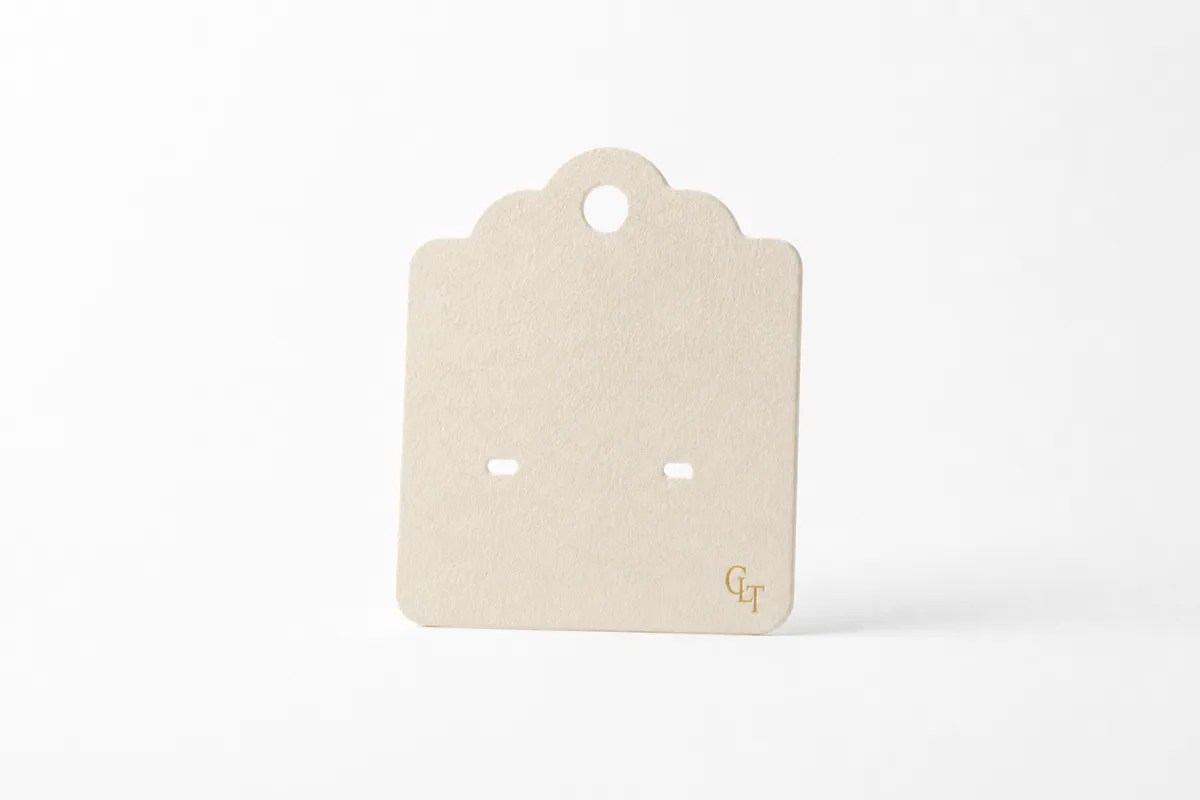
Printed Hang Tags for jewelry do more than hold a logo. They organize the presentation. They tell shoppers the line was planned with care, priced with intention, and packaged with a clear point of view. That is merchandising in a very small format. When the tag matches the metal tone, typography, and box or pouch, it nudges perceived value upward without needing to say much at all.
The practical side matters just as much. A tag identifies the brand, shows the price or collection name, carries care instructions when needed, and helps staff keep track of which chain belongs with which card. In a display case, printed hang tags for jewelry can separate sizes, finishes, or metal types before mistakes happen. That kind of clarity saves time and avoids the awkwardness of fixing a mix-up after the customer notices. I have seen a clean tag system rescue a display that otherwise felt a little random; the jewelry had not changed, but the presentation finally looked under control.
For online orders, printed hang tags for jewelry make the unboxing feel deliberate. Even if the customer removes the tag before wearing the piece, the tag still signals that someone handled the product with discipline. For gift-ready packaging, the tag can stand in as a mini brand card, especially for handmade lines, bridal collections, seasonal drops, and boutique assortments where presentation does a lot of the selling.
Some products need that level of finish more than others. A simple stud set may be fine with a basic card. A pendant collection, a limited release, or a line sold through a curated shop usually benefits from printed hang tags for jewelry because the presentation stays cleaner and the brand feels steadier. Customers notice those cues even when they never mention them out loud. They might not say, "This tag feels premium," but they absolutely feel the difference.
Trust plays into it too. A clean SKU, a barcode, or a care note shows that a process sits behind the product. Retail and wholesale buyers both respond to that. A lot of brands skip this step and then wonder why their line feels less complete than a competitor’s. Packaging is a stack of small signals, and printed hang tags for jewelry send several of them at once.
Printed Hang Tags for Jewelry: How the Print Process Works
The process begins with the dieline. That flat template defines the tag size, hole placement, bleed, safe area, and any fold lines. If the dieline is off, everything downstream gets harder. Good suppliers ask for artwork built to the actual size. Better suppliers check the file before printing starts. Printed hang tags for jewelry need that review because tiny logos and fine text can disappear fast if the setup is careless.
Proofing comes next. A digital proof works for layout and text checks. A press proof, or a stronger color reference, makes more sense when spot colors, metallic inks, or delicate gradients are part of the design. Jewelry tags often include thin type, small legal copy, or tiny graphic details, and those elements are less forgiving than a large apparel tag. Printed hang tags for jewelry do not need a complicated design to fail; they only need a sloppy file, and that is the truth of it.
After the proof stage, the print method is chosen. Digital printing is usually the right fit for short runs, fast changes, and sets with multiple versions for different prices or collections. Offset printing becomes more cost-effective as quantity rises. In simple terms, digital gives flexibility, offset rewards volume. If the design uses heavy ink coverage, exact brand colors, or specialty finishes, the supplier may steer the job one way or the other.
Finishing is where the tag starts to feel real. Cutting, rounding corners, punching holes, adding eyelets, scoring, foil stamping, embossing, spot UV, and lamination all change the final result. Some printed hang tags for jewelry ship as flat pre-punched cards. Others arrive fully assembled with cords, ribbon, elastic loops, or pin fasteners. Assembly can quietly add time and labor, so it belongs in the plan before artwork is approved. Otherwise the price looks fine on paper and then kind of sneaks up on you later.
Color management deserves careful attention. Small tags sit close to the product, so mismatches stand out. If a warm gold tag leans green, the effect feels off. If black type is too thin, it disappears. Fine lines need enough weight. Reverse type needs enough contrast. Metallic inks can look elegant, but only when the rest of the layout stays controlled. Too much shine on a small tag often reads as noise instead of polish.
Printed hang tags for jewelry work best when the tag is treated as part of the product, not a last-minute label. Stock, cord, cut, and finish all need to match the price point. When they do not, the customer still feels the mismatch, even without naming it.
Brands that also need inserts, stickers, or barcoded labels usually save time by coordinating printed hang tags for jewelry with the rest of the packaging set in the same order cycle. Color stays tighter, and rework drops. If you are comparing tag options alongside broader packaging needs, the Custom Labels & Tags page is a useful place to line up the visual system before the full print order goes out.
Materials, Finish Options, and Design Factors
Material choice changes the conversation immediately. A thin card that bends in the hand suggests budget, even when the logo is well drawn. A rigid stock with a clean cut edge suggests control. For printed hang tags for jewelry, the stock should feel considered without overpowering the piece. That usually points toward premium paper or board in the 300gsm to 400gsm range, though some brands go thicker depending on the product and attachment style.
Paper stock is the natural starting point. It prints well, keeps cost manageable, and can be finished in matte, soft-touch, gloss, or uncoated textures. Cotton stock brings a softer, more crafted look and fits artisanal or bridal lines nicely. Kraft can support natural branding, though it needs disciplined design or it can drift into messy territory fast. Coated board works well when crisp color, strong contrast, and a polished retail feel matter more than texture. Synthetic stock also has a place, especially where moisture, abrasion, or heavy handling could be a problem.
Finish choice should follow the story the brand is trying to tell. Matte and soft-touch are often the safest options for luxury-leaning printed hang tags for jewelry because they calm the surface and let the piece feel refined. Foil can work when used sparingly on a logo or border. Embossing adds tactile depth that reads nicely in the hand. Spot UV can create a controlled flash, though on small tags it gets fussy if the layout already feels crowded. A useful rule: if the tag is smaller than a business card, every finish should justify its presence.
Design is where buyers get into trouble. The tag starts carrying too much information because they assume more content means more usefulness. It does not. You need room for the logo, collection name, price, barcode or SKU if needed, and a clean writing zone when store staff has to add notes. Small text should stay legible at arm’s length. Line weights need enough strength to survive cutting. Open space matters. Printed hang tags for jewelry look better when the layout leaves the product room to breathe.
Attachment details deserve as much attention as the face of the tag. Drill holes should sit far enough from the edge to avoid tearing. Eyelets help when the tag is heavier. Twine, ribbon, elastic loops, and security seals all change the final read. A satin ribbon can make delicate earrings feel gift-ready. A black cord can sharpen a minimalist look. A clear loop can fade into the background when the product should stay dominant. These are small choices, and printed hang tags for jewelry depend on small choices.
Sustainability comes up more often now, and for good reason. If it matters to your brand, FSC-certified paper is a sensible place to start when the design and budget allow it. You can check certification standards through the FSC site. Certification does not make a weak tag premium, though. A flimsy FSC stock is still a flimsy stock. The material story matters only when the paper choice and the construction support it.
Printed Hang Tags for Jewelry Cost, Pricing, and MOQ
Cost usually depends on five levers: quantity, stock, print method, finishing, and assembly. Once those five are clear, the quote becomes easier to predict. Leave them vague and the supplier has to guess, which is how orders get priced poorly. Printed hang tags for jewelry are not expensive on their own, but the unit cost moves quickly once the spec gets more elaborate.
Think about it this way: lower quantity raises the unit cost, while larger volume generally brings it down. Specialty finishes change the math fast. Foil stamping, embossing, custom die cuts, and multi-step assembly add labor. Packing tags with cords, pins, or loops adds more. A small run may look inexpensive because the total spend is low, yet the per-piece price can stay stubbornly high. That is normal, and it is why a quote should always be read with the spec in hand.
MOQ means minimum order quantity. Some suppliers can produce printed hang tags for jewelry in low minimums, often around 250 to 500 pieces for straightforward digital work. Others make more sense at 1,000 to 2,500 pieces, especially if offset printing or custom tooling is involved. The lowest MOQ is not always the best answer. If a reorder is likely, a slightly larger batch often produces a better unit cost and fewer stock headaches later. I have watched brands save a few dollars upfront only to pay more in repeat setup later, which is a pretty familiar story in packaging.
For a practical pricing framework, these are common ranges for standard custom runs:
| Order Type | Typical Quantity | Common Features | Approximate Unit Cost |
|---|---|---|---|
| Simple digital run | 250-500 pieces | Single or two-color print, standard paper, punched hole | $0.28-$0.60 |
| Mid-size retail batch | 1,000-2,500 pieces | Better board, matte finish, custom shape or rounded corners | $0.14-$0.32 |
| Premium branded run | 2,500-5,000 pieces | Foil, soft-touch, eyelet, ribbon or cord assembly | $0.22-$0.48 |
| High-volume wholesale batch | 5,000+ pieces | Offset print, optimized layout, repeatable finishing | $0.08-$0.22 |
Those numbers are guides, not promises. A simple tag with heavy ink coverage can cost more than a minimal luxury tag if the luxury version is laid out efficiently. A custom die-cut shape can add enough setup cost to erase savings at low quantity. Printed hang tags for jewelry are one of those categories where the spec matters far more than the headline price. Comparing quotes without matching specs is a waste of time.
When you request pricing, make the comparison clean. Give the supplier size, quantity, stock, coating, print sides, number of colors, shape, hole size, attachment type, and whether assembly is needed. Ask whether proofs are included. Ask whether shipping is separate. Ask whether the quote assumes a one-time run or a reorderable file. If the quote is for printed hang tags for jewelry and the spec is vague, you are not comparing suppliers. You are comparing assumptions.
Assembly labor often hides in plain sight. A tag that is printed flat is one cost. A tag that is printed, punched, eyeleted, tied, bundled, and packed is another. For many brands, the added labor is worth it because internal time is valuable elsewhere. For others, receiving flat tags and assembling in-house makes more sense. There is no universal answer, only the answer that fits the way your operation actually runs.
If the quote looks unusually low, ask what is missing. With printed hang tags for jewelry, the missing pieces are usually finishing, proofing, assembly, or freight. Cheap quotes are often incomplete quotes dressed up to look final.
Production Process and Timeline for Printed Hang Tags for Jewelry
Once artwork is approved, the job moves through a predictable production chain. Prepress checks the file for size, bleed, font issues, and image resolution. Then the printer sets up the job, which may mean plates for offset work or file preparation for digital output. Printing follows, then drying or curing, finishing, cutting, assembly, and packing. Printed hang tags for jewelry may be small, but they still pass through a real production sequence, and each step can add time when the spec is complex.
For a basic order, a workable timeline often falls between 7 and 12 business days after proof approval. That assumes the artwork is ready, the stock is standard, and the finish stays simple. More complex printed hang tags for jewelry with foil, embossing, custom shapes, eyelets, or ribbon assembly often need 12 to 18 business days, sometimes longer if materials need to be sourced first. Rush production is possible in some cases, though it usually costs more because the schedule gets reshuffled across the line.
The most common delays are not mysterious. They usually come from late artwork revisions, missing dielines, unclear Pantone targets, or a proof that sits unanswered in an inbox for three days. Variable data, such as prices or SKUs, adds another review layer. Printed hang tags for jewelry stay simple only when the decision-making stays simple. Once the file turns into a moving target, the timeline moves with it.
Logistics matters too. If the order includes special cord colors or custom hardware, the supplier may need time to source components. If the tag stock is imported or the coating is specialty, the schedule stretches as well. Smart brands leave buffer time before a launch, trade show, holiday drop, or store reset. Printed hang tags for jewelry should not be the last item on the production list. They should be one of the first items to lock down.
Brands that care about transit durability can benefit from thinking like a packaging engineer for a minute. If the tags will ship to multiple stores or get folded into a fulfillment workflow, the assembly and carton packing matter. Some teams ask suppliers about shipping carton tests or standards that relate to distribution. The ISTA resources are useful when you want a better read on transit stress, especially if tags are being bundled with other retail materials.
In practice, the safest move is to approve a sample before committing to a full batch, especially when metallic ink, tiny type, or a custom cut is involved. A sample reveals more than a PDF ever will. Printed hang tags for jewelry live in the physical world, not on a screen. The physical world includes fingerprints, glare, folds, cords, and store lighting that never behaves quite the way a design mockup suggests.
Step-by-Step Guide to Ordering the Right Tag
Start with the use case. Are the printed hang tags for jewelry going on retail display, tucked into a gift box, attached to shipped orders, or used as in-store pricing tags? That answer sets the direction for the rest of the spec. A display tag may need a barcode and price field. A gift box insert may need less data and more visual polish. An e-commerce tag may need to tell the brand story without crowding the reverse side.
Next, choose size and shape. Standard rectangles and squares are cheaper and usually faster to produce. Custom silhouettes can look beautiful, but they add die cost and extra setup complexity. Think about the amount of copy that has to fit. If the tag needs a logo, SKU, barcode, care line, and collection name, do not shrink everything to fit a tiny surface. That is how printed hang tags for jewelry end up feeling cramped and hard to read.
Then pick the material and finish. A matte or soft-touch board is often the safest choice for a clean, contemporary brand. Cotton or uncoated stock can feel more natural for artisanal work. If the goal is stronger retail impact, foil or embossing can earn its place, but only when the rest of the design can support it. Printed hang tags for jewelry do not improve because a brand piles on effects. They improve when the effect fits the price point.
Prepare the artwork properly. Use vector logos whenever possible. Keep small text readable. Leave safe margins around the hole, edge, and any fold. Make barcode contrast strong if the tag carries retail data. Give the supplier exact bleed and trim information instead of making them guess. Then allow one proof cycle before production, because one round of corrections is usually cheaper than fixing a full run.
Test the tag against the actual jewelry piece and the actual packaging. That sounds obvious, but it gets skipped all the time. A tag that looks balanced on screen may overpower a delicate chain, or the hole may sit awkwardly once the cord is attached. Printed hang tags for jewelry should sit comfortably next to the item, not compete with it. If the attachment method, scale, or color looks wrong in hand, it is wrong enough to matter.
If you want a simple buying checklist, use this:
- Define the use case and retail setting.
- Lock the size, shape, and hole placement.
- Choose the stock and finish based on price point.
- Confirm the exact copy, barcode, and SKU data.
- Request a proof and review it on a real product.
- Approve only after the tag passes the real-world test.
That workflow keeps printed hang tags for jewelry from turning into a guessing exercise. It also helps your supplier quote more accurately because the spec stays clear. If other branding components are moving at the same time, coordinate them as a set. A tag that clashes with labels, inserts, or outer packaging looks unplanned. A broader packaging order, including Custom Labels & Tags, can help keep the system consistent instead of pieced together.
Common Mistakes, Expert Tips, and Next Steps
The most common mistake is cramming too much text onto a small tag. Buyers often think they are being efficient. In reality, they are making the tag harder to read. Another mistake is choosing flimsy stock because it saves a few cents. For printed hang tags for jewelry, flimsy usually reads as cheap even when the printing itself is excellent. Weak stock bends, curls, and looks tired before it reaches the display case.
Barcode issues show up often too. Low contrast, tiny quiet zones, and busy backgrounds all make scanning harder. If the tag needs a barcode, protect that area. Do not place foil under the code. Do not crowd text too close to it. Do not assume a pretty layout will scan just because the file looked tidy on screen. Printed hang tags for jewelry need to work on the retail floor, not only in a design review.
Assembly time is easy to underestimate. A flat tag is one thing. A tag with a cord, a knot, an eyelet, and packing into labeled bundles is another. If your team handles assembly in-house, count the labor honestly. Sometimes paying the supplier to assemble the order makes more sense because staff time can shift to fulfillment or sales. Printed hang tags for jewelry should reduce friction, not create a new pile of manual work.
My strongest practical advice is simple: treat the tag like part of the product story from the start. The finishing details do a lot of the heavy lifting. A disciplined layout, a solid stock, and a clean attachment system can make even a modest jewelry line feel more established. That is why printed hang tags for jewelry deserve real attention. They are small, yes. They are also one of the first brand pieces a customer sees before buying.
If the design is new, order a sample or a short pilot run before committing to a larger batch. That gives you time to check color, scale, readability, and attachment behavior in real use. It also tells you whether the design belongs on a 14mm stud card or a larger pendant tag. Printed hang tags for jewelry are much easier to refine before quantity increases. Once a full run starts, changes get expensive and awkward.
For next steps, gather your logo files, final copy, quantity range, size idea, finish preference, and deadline before requesting quotes. Compare at least two or three suppliers using the same spec. Review the proof against the actual jewelry piece. Then place a reorderable batch instead of a one-off emergency order. That keeps the brand consistent and saves you from the usual scramble when inventory starts moving.
Custom Logo Things works well for brands that need packaging to look deliberate without becoming overdesigned. The goal is straightforward: get printed hang tags for jewelry that fit the product, support the sale, and stay within a sane budget. Do that, and the tags carry their share of the work. Miss it, and the whole display feels a little undercooked.
Printed hang tags for jewelry are not just labels. They belong to the buying experience, the retail system, and the brand impression. Get the stock right, get the finish right, get the timing right, and the tag does its job without drawing attention to itself. That is usually the best outcome. If you are deciding where to start, begin with the physical sample, not the mockup, because the sample tells the truth.
FAQ
What stock works best for printed hang tags for jewelry?
Choose a rigid stock that still cuts cleanly, such as premium paper, cotton, or a coated board, so the tag feels intentional instead of flimsy. For delicate or high-end pieces, matte or soft-touch finishes usually look calmer and more premium than glossy surfaces. Printed hang tags for jewelry also benefit from stock that does not fray at the edge after punching and assembly.
How much do printed hang tags for jewelry usually cost?
Pricing depends mostly on quantity, print method, stock, finishing, and whether the tag needs assembly. Simple short runs can cost more per piece, while larger runs usually drop the unit cost fast; custom foil, embossing, or die cuts push the price up. For printed hang tags for jewelry, the cleanest quotes always list size, paper, coating, and assembly separately.
What is the typical turnaround for printed hang tags for jewelry?
A basic order can move quickly if the artwork is ready and the finish is simple. Complex jobs with special coatings, custom shapes, or assembly need more time, and late proof approvals are the usual delay. In practice, printed hang tags for jewelry often land in the 7 to 12 business day range for simple work and 12 to 18 business days for more involved runs.
Can printed hang tags for jewelry include barcodes or care instructions?
Yes, and they often should if the tag needs to support retail checkout or product care. Keep the barcode area clean, use strong contrast, and leave enough open space so the printed data stays readable. Printed hang tags for jewelry can handle care notes, SKU codes, and pricing without issue as long as the layout is planned before print.
Do I need a custom shape for jewelry hang tags?
Not always; standard rectangles or squares are cheaper and faster to produce. Custom shapes make sense when the brand wants a stronger shelf presence or the piece needs a very specific visual fit, but they usually raise cost and lead time. For printed hang tags for jewelry, a smart standard shape often beats a fancy cut that eats budget without adding real value.