Buyer Fit Snapshot
| Best fit | Printed Kraft Shipping Boxes projects where brand print, material claims, artwork control, MOQ, and repeat-order consistency need to be specified before quoting. |
|---|---|
| Quote inputs | Share finished size, material target, print colors, finish, packing count, annual reorder estimate, ship-to region, and any compliance wording. |
| Proofing check | Approve dieline scale, logo placement, barcode or warning zones, color tolerance, closure strength, and carton packing before bulk production. |
| Main risk | Vague material claims, crowded artwork, missing packing details, or unclear freight terms can make a low unit price expensive after revisions. |
Fast answer: Printed Kraft Shipping Boxes: Board, Finish, Dieline, and Unit Cost should be specified like a repeatable production item. The safest quote records material, print method, finish, artwork proof, packing count, and reorder notes in one written spec.
Production checks before approval
Compare the actual filled-product size with the drawing, then confirm tolerance on folds, seals, hang holes, label areas, and retail display edges. Reserve space for logos, QR codes, warning copy, and material claims before decorative graphics fill the panel.
Quote comparison points
Review material grade, print process, finish, sampling route, tooling charges, carton quantity, and freight assumptions side by side. A quote is only useful when the supplier can repeat the same color, closure quality, and packing count on the next order.
Printed Kraft Shipping Boxes: Smart Buying Guide for Brands
A plain kraft carton can disappear in a pile of warehouse brown. Add the right logo, handling marks, and structure, and the same box starts doing brand work before the customer even opens it. That is why Printed Kraft Shipping boxes matter more than they look at first glance: they can improve package protection, sharpen brand recall, and make order fulfillment easier without forcing you to add stickers to every shipment.
The tricky part is that not every printed kraft shipping box is built for the same job. A lightweight mailer for a DTC beauty brand, a retail replenishment shipper, and a sample pack for a B2B sales team all have different needs. The real buying question is not whether the box looks good. It is how the board grade, print method, and lead time line up with your shipping materials, your launch schedule, and your dimensional weight targets.
What printed kraft shipping boxes are and why they matter
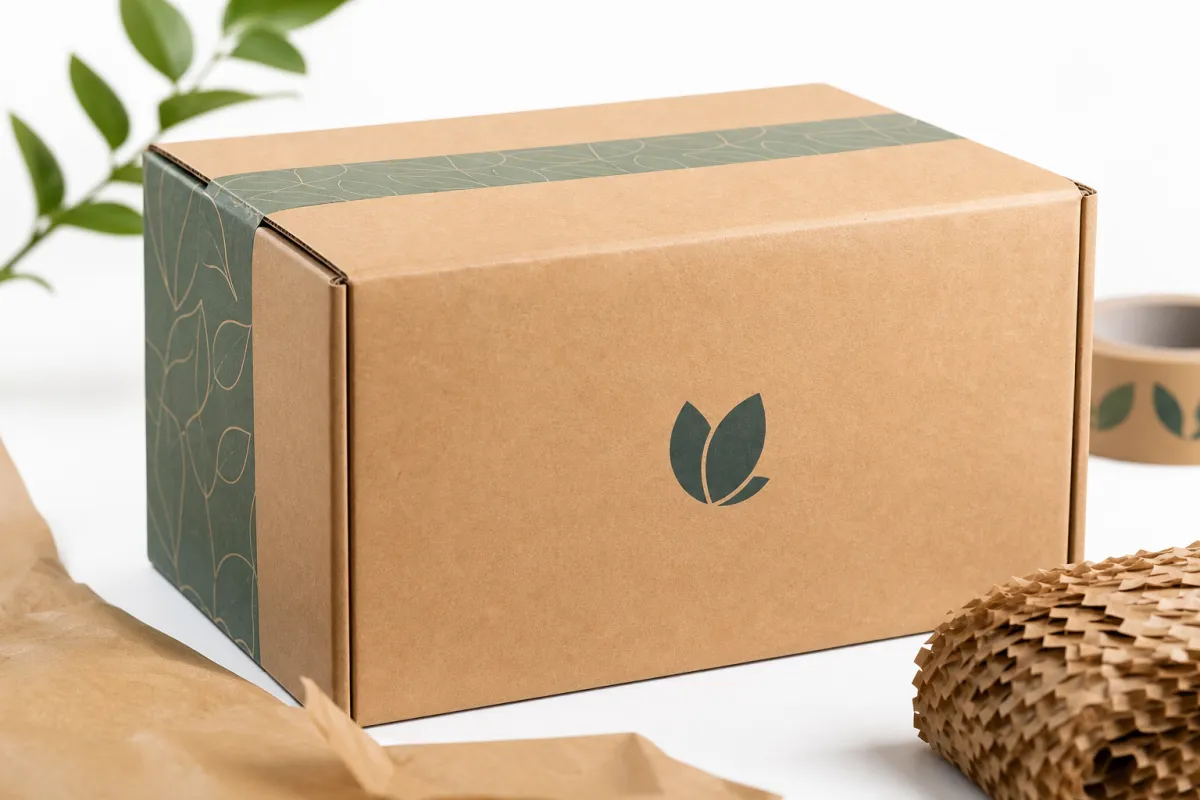
Printed kraft shipping boxes are corrugated Cartons Made From kraft-colored fiber stock and customized with logos, graphics, copy, handling marks, or routing information. In plain English, they are the brown boxes your product ships in, except they are designed on purpose rather than left blank. That difference sounds small until a customer opens the parcel and immediately sees a package that feels considered instead of anonymous.
For packaging buyers, printed kraft shipping boxes sit in a very practical middle ground. They bring more branding than a plain box-and-label setup, yet they usually cost less and move faster than more elaborate cartons with specialty coatings or full retail-grade conversion. They fit e-commerce shipping, subscription programs, retail replenishment, promo kits, and B2B sample packs. They can also replace a separate insert by carrying messaging directly on the outer shipper, which keeps the pack simpler and the line easier to run.
That matters because the shipping box is often the first physical touchpoint after checkout. If the box looks generic, the brand can feel generic. If the box communicates clearly, the shipment feels like part of the product experience. That is one reason brands keep moving toward printed kraft shipping boxes instead of relying on labels stuck to brown stock or a white box with a logo in one corner.
Compared with white cartons, kraft boxes read more natural and less clinical. Compared with poly mailers, they offer better package protection for rigid or fragile goods. Compared with labels-on-brown-box setups, they make the branding feel built in rather than added later. There is also a practical side: printing can reduce the number of stickers and loose inserts the warehouse needs to manage. Fewer touchpoints often means fewer mistakes in order fulfillment.
Sustainability claims need a careful eye. Kraft usually signals recycled fiber or a lower-ink look, and that can be true. The actual environmental story still depends on the board grade, recovered content, coatings, adhesives, and the documentation the supplier can provide. If a carton is labeled as recyclable, recycled, or FSC-related, ask for proof, not just a sales claim. For fiber sourcing and chain-of-custody context, the FSC site is a useful reference: FSC.
The main buying question is simple, even if the answer is not. How do you balance cost, print quality, protection, and lead time when choosing printed kraft shipping boxes? That thread runs through every section below.
A box that looks better but fails in transit is not a branding win. It is a repackaging problem with a prettier surface.
How printed kraft shipping boxes work in fulfillment
The life of printed kraft shipping boxes usually starts long before the first carton is folded. Artwork is checked, the dieline is approved, board is specified, and the supplier decides how the print will sit on the kraft surface. After that, the board is printed, die-cut or creased, folded, glued, packed, and shipped to the brand or the fulfillment center. Each step changes the visual result and the shipping performance, which is why small decisions at the start can prevent larger problems later.
The print method changes the outcome more than many buyers expect. Flexographic printing is often the workhorse for larger runs because it is efficient and consistent at scale. Digital printing tends to work better for shorter runs, quicker art changes, and lower setup overhead. Litho-lam or specialty presentation methods may be worth it for more premium packs, but they add cost and process complexity. If the shipment needs to move quickly through order fulfillment, the simplest workable method is often the smartest one.
Kraft itself changes how ink behaves. The brown base can mute some tones, warm others, and create a natural finish that becomes part of the identity. Black, deep green, navy, and red often hold up better than pale pastels on kraft stock. A buyer who understands that behavior can design for it instead of fighting it. In practice, that saves disappointment between a PDF proof and the real carton. Kraft gets kinda picky about contrast, so a design that looks soft and elegant on white stock may need stronger linework on brown fiber.
Printed kraft shipping boxes also interact with structure. A mailer box has flaps, folds, and a visible front panel that is usually ideal for branding. A regular slotted carton gives you more top-surface space but may expose seams in awkward places. A product sleeve can be elegant, but it does not replace a full transit package. The best layout depends on seam visibility, fold lines, and how the carton will be stacked, loaded, and opened.
There is a logistics angle here that gets overlooked. A box that saves 10 seconds at pack-out across 20,000 shipments can matter more than a slightly richer ink coverage. Labor, not cardboard, often drives the hidden cost in ecommerce shipping. If the carton fits better, uses less dunnage, and cartonizes efficiently, the whole line gets easier to run. That is where smart packaging design earns its keep.
Many teams also use the box as an operations surface, not just a branding surface. Barcodes, SKU codes, recycling icons, tamper cues, and pack instructions can all live on the same carton. That reduces the need for extra labels and separate handling sheets. It also makes the carton more useful for warehouse staff, which is a benefit buyers sometimes underprice when comparing printed kraft shipping boxes to more generic shipping materials.
If your packaging stack includes multiple formats, it helps to think in categories. A lightweight order might be better served by Custom Poly Mailers. A heavier or more fragile shipment may need Custom Shipping Boxes. Brands building a larger packaging system often pair those with broader Custom Packaging Products so the visual identity stays consistent across channels.
For shipping performance, a few standards help anchor the conversation. Many brands ask suppliers to reference ISTA-style testing for drop and vibration resistance, and they may request internal compression checks or corner-crush tests as well. The point is not to turn packaging into a lab project. The point is to make sure the carton survives real transit packaging conditions, not just a nice-looking desk sample. You can review the organization here: ISTA.
Printed kraft shipping boxes cost, pricing, and MOQ factors
Pricing for printed kraft shipping boxes usually comes down to five levers: size, board strength, print coverage, number of colors, and order quantity. Add structural complexity and the quote starts moving again. A simple one-color shipper is one thing. A large carton with heavy ink coverage, custom inserts, and tight tolerances is something else entirely. That is why two cartons that look similar on paper can land at very different unit costs.
MOQ changes the math fast. Short runs usually cost more per box because setup time is spread across fewer units. Larger runs can bring the unit cost down because plates, dies, and press time are amortized across volume. That is the trade-off every buyer has to weigh. If your demand is uncertain, it may be better to pay a little more per box than to sit on dead inventory for months.
Print method matters too. Digital printing often wins for smaller quantities, frequent artwork revisions, or seasonal campaigns. Flexo can become more cost-effective as volume rises. Litho-lam or specialty presentation options can deliver sharper visuals, but they are not usually the cheapest path for everyday printed kraft shipping boxes. Here is a practical comparison:
| Print method | Best fit | Typical MOQ behavior | Illustrative unit cost trend | Notes |
|---|---|---|---|---|
| Digital | Short runs, frequent art changes, test launches | Lower MOQ | Higher at scale, lower on small orders | Fast setup; good for rapid iteration on printed kraft shipping boxes |
| Flexographic | Steady SKUs, larger replenishment orders | Moderate to high MOQ | Often drops as volume rises | Efficient for repeat production and simple color builds |
| Litho-lam / specialty | Premium presentation, brand-heavy launches | Usually higher MOQ | Highest among common options | Sharper presentation, but more setup and process complexity |
Illustrative pricing for printed kraft shipping boxes can vary widely, so numbers should be treated as planning ranges rather than quotes. For a mid-sized order around 5,000 pieces, a simple digitally printed box might land roughly around $0.55-$1.10 per unit depending on size and coverage. A flexo run might fall closer to $0.35-$0.70 per unit when the quantity is high enough. Premium laminated or highly converted cartons can push above that. If a quote looks too cheap, check what is missing.
Hidden costs are where a lot of packaging budgets drift. Die charges, plate costs, proofing, freight, palletization, storage, and rush fees all change the total. So do revisions after artwork approval. A supplier may offer a low box price and then recover margin through setup or freight. That is why the right comparison is not box price alone, but landed cost per shipment. A carton that reduces damage claims, inserts, and repacking labor can still be the cheaper option overall.
Here is a useful way to think about the economics: cost per shipment, cost per impression, and cost per damage claim prevented. Those are far better metrics than the sticker price on a carton. Printed kraft shipping boxes should earn their place by lowering friction across the shipment lifecycle, not just by looking good on a line item.
Printed kraft shipping boxes production process and timeline
The production path for printed kraft shipping boxes is straightforward on paper and surprisingly fragile in practice. It usually begins with brief intake and structural review. Then the supplier checks the dieline, prepares artwork, builds proofs, and moves to sample approval. Once the job is locked, production starts, quality checks happen during or after print, and the cartons are packed for shipment. Every one of those steps can hold the schedule if something is missing.
The most common delay is artwork. Low-resolution files, unapproved copy, missing bleed, or a logo sitting too close to a fold can stall the run. Color revisions are another time sink, especially when the design expects the kraft substrate to behave like white stock. Coatings and finishes can also add time if the team changes its mind late. A buyer who leaves artwork until the last minute is gonna pay for it in rush fees, and sometimes in a less precise final print.
Timeline depends on the production route. Digital printed kraft shipping boxes can move quickly because setup is lighter. Plate-based or die-heavy jobs usually take longer because there is more preparation upfront. Then there is the travel time that people forget to model: freight transit, customs, warehouse receiving, and staging at the fulfillment center. A “two-week factory job” can become a month by the time it reaches a dock and gets checked in.
If the box is custom, a pre-production sample is worth serious attention. A white sample or structure-only sample can catch fit issues before print money is spent. A printed sample can reveal contrast problems, panel layout errors, and how the design reads on kraft brown rather than on a screen. That extra step is often cheaper than reworking a full run.
Most brands that handle order fulfillment seriously try to lock three things early: dimensions, print plan, and ship date. If those drift, the whole launch can drift with them. That is especially true for seasonal promotions and subscription refreshes, where the packaging and the product have to land together. A delay in printed kraft shipping boxes does not just delay cartons. It can delay revenue.
For buyers who want to validate durability, the better tests are practical: stack a filled carton for a few days, perform basic drop tests, and ask warehouse staff what slows them down at pack-out. That kind of feedback often tells you more than a polished render ever will. The carton should survive the route, not just the presentation meeting.
Step-by-step guide to ordering printed kraft shipping boxes
If you want the order to go well, start with the use case. Is this carton for e-commerce shipping, retail replenishment, subscriptions, or promotional fulfillment? Each one changes the priorities. A subscription box may need a memorable unboxing sequence. A replenishment shipper may need stronger corners and cleaner pallet stacking. A promo kit may need more branding and less void fill. Printed kraft shipping boxes work best when the buyer chooses the job first and the style second.
- Define the use case. Identify the channel, product weight, and handling environment before comparing suppliers.
- Gather product specs. Measure the item, inserts, protective wraps, and finished pack-out so the carton fits without crushing or excessive dunnage.
- Choose structure and board. Decide between mailer, RSC, sleeve, or another format, then match the flute and grade to the transit load.
- Build the artwork on the dieline. Respect safe zones, seam placement, and bleed so logos and copy do not land across folds.
- Request samples. Compare a physical sample with the digital proof because kraft changes the way color and contrast behave.
- Confirm logistics. Ask how many cartons per bundle, how many bundles per pallet, what freight method is used, and whether inventory can be staged for replenishment.
- Order with buffer. Leave room for damage, growth, and forecast miss, because packaging shortages often show up right when demand spikes.
That process sounds basic, but it prevents a surprising number of expensive mistakes. If a supplier cannot explain the dieline clearly, that is a warning sign. If they cannot tell you how the printed kraft shipping boxes will be packed on a pallet, that is another. Packaging is not just a graphics decision. It is a supply-chain decision.
One more buyer move helps: write a one-page brief before requesting quotes. Include dimensions, board preference, target quantity, artwork needs, budget band, and timing. That makes supplier comparisons far cleaner. It also improves the odds that the first quoted version of the printed kraft shipping boxes is actually the version you need, not a guess that has to be revised twice.
Common mistakes with printed kraft shipping boxes
The first mistake is treating kraft like a blank canvas. It is not. The brown base changes how color reads, and it can make delicate gradients or pale tones look muddy. A design that looks sharp on white stock can look underpowered on kraft. The fix is simple: design with contrast in mind and proof on the real substrate.
The second mistake is under-specifying board strength. A carton that looks perfect on a screen can still fail under stacking pressure, carrier handling, or rough transit. If the product is heavy, tall, or oddly balanced, board grade matters more than print polish. Printed kraft shipping boxes should protect the product first and sell the brand second.
The third mistake is ignoring seam placement and panel layout. Logos can get cut by folds, QR codes can land across glue seams, and legal copy can end up on an awkward panel. That is why dieline review matters. A thoughtful print layout saves you from a package that looks fine until someone turns it in their hands.
The fourth mistake is leaving the packaging decision too late. A lot of teams approve products, ship dates, and marketing plans before they lock the cartons. Then they try to order printed kraft shipping boxes with almost no room for proofing or reprints. The result is usually stress, premium freight, or a compromise on print quality.
The fifth mistake is chasing the lowest quote without comparing the full landed cost. A cheap box may come with higher freight, a slower schedule, more setup charges, or a weaker structure. That can create more damage claims and repacking labor later. I would rather see a buyer spend an extra few cents per carton on the right spec than save a few cents and pay for it twice.
The sixth mistake is ordering too few extras. Packaging damage happens. Forecasts change. A few boxes get crushed in receiving. A campaign performs better than expected. If the warehouse has no buffer, one missing pallet can turn into a fulfillment problem fast. Printed kraft shipping boxes are too operationally important to run with zero spare inventory.
The seventh mistake is skipping real-world testing. A PDF cannot tell you how a carton stacks, how a shelf-ready display looks, or whether a label scanner catches the code cleanly. That is why a real test pack matters. If the carton will sit in a warehouse, ride in a truck, or survive a conveyor, it deserves to be tested in those conditions.
Expert tips and next steps for printed kraft shipping boxes
My first tip is to design for the journey, not just the unboxing moment. A carton that photographs well but collapses under vibration is a false economy. The outer shell should survive drops, pressure, and long transit before anyone evaluates the print. That balance is what separates attractive transit packaging from expensive theater.
Second, use restraint with ink coverage. On kraft, selective printing can look more premium than flooding the surface with color. That restrained style often works better with the natural paper tone and can preserve the brand’s sustainability signal. In other words, the empty space is not wasted space. It is part of the design language for printed kraft shipping boxes.
Third, let the box do real operational work. Add orientation marks, handling icons, or internal pack instructions that help staff move faster and make fewer mistakes. The best packaging teams do not see graphics and logistics as separate disciplines. They treat them as two parts of the same shipment.
Fourth, match the print method to forecast reality. If your order volume is unstable, a flexible method may be smarter than a cheaper unit price that requires a large commitment. That trade-off matters a lot for brands with seasonal spikes or product launches that may change after a few weeks. A good carton plan can adapt without forcing a full redesign every time the SKU mix shifts.
Fifth, request samples that tell you more than one story. Ask for a flat sample, a folded sample, and if possible a packed sample. One opened carton, one stacked carton, and one shipped carton can reveal different weaknesses. That is how you judge appearance and performance together, which is the only way to judge printed kraft shipping boxes properly.
If you want a practical next step, start with a one-page packaging brief and compare at least two suppliers on four things: unit cost, proofing process, lead time, and print quality. If you need a broader packaging mix, pair those quotes with other Custom Packaging Products so you can keep branding consistent across channels. For lightweight SKUs that do not need a carton, a Custom Poly Mailers option may be more efficient. For heavier shipments, a Custom Shipping Boxes setup is often the safer route.
Before final approval, ask for one last check against a practical testing standard. ISTA guidance is a strong reference point, especially if you want to compare your current pack against a more disciplined drop and vibration plan. You do not need a lab for every shipment, but you do need enough evidence to trust the carton in transit. That is especially true for printed kraft shipping boxes that will carry both product and brand promise.
One helpful external reference for packaging and material context is the Sustainable Packaging Coalition at the Packaging Organization. It is a useful place to ground broader packaging choices in material and recovery realities rather than assumptions. For buyers trying to balance brand presentation with shipping performance, that context is worth having.
Frequently asked questions
How much do printed kraft shipping boxes usually cost?
Pricing depends on size, board strength, print colors, quantity, and printing method, so unit cost can vary widely. Short runs usually cost more per box because setup is spread across fewer units. Ask for a quote that separates box cost, freight, tooling, and proofing fees so you can compare suppliers fairly.
What is the typical lead time for printed kraft shipping boxes?
Lead time depends on artwork readiness, sample approval, print method, and shipping distance. Digital jobs can move faster than plate-based production, but approval delays often matter more than factory speed. Build in extra time for freight, receiving, and warehouse setup if the boxes need to arrive at a fulfillment center.
Are printed kraft shipping boxes strong enough for e-commerce shipping?
Yes, if the board grade and box style are matched to the product weight and carrier conditions. A printed surface does not weaken the carton by itself; the structure and corrugation spec matter more. Test the final packed box for stacking, drop resistance, and corner crush before scaling up.
Can I print full-color graphics on kraft shipping boxes?
You can, but kraft changes how colors read because the brown substrate absorbs and dulls some tones. High-contrast designs, bold linework, and limited palettes often look cleaner than subtle gradients on kraft. If color accuracy is critical, request a printed sample before approving production.
What should I ask for in a printed kraft shipping boxes quote?
Confirm dimensions, material grade, print method, color count, MOQ, setup charges, and freight terms. Ask whether revisions, samples, and die or plate costs are included or billed separately. Make sure the quote states lead time, payment terms, and what happens if artwork changes after approval.
For brands that want a box that does more than move product, printed kraft shipping boxes are a smart place to spend attention. They can improve package protection, simplify fulfillment, and make the shipment feel branded without turning the process into a costly custom project. If you Choose the Right board, print method, and supplier, printed kraft shipping boxes can carry both the product and the story with a lot less friction than most teams expect.
The most useful takeaway is also the simplest: lock the structure first, proof on real kraft, and compare landed cost instead of box price alone. Do that, and the packaging stops being a guess and starts acting like a dependable part of the operation.


