Printed padded mailers for ecommerce fulfillment Unit Cost Breakdown only becomes useful when the full shipment path is visible. A mailer quote is not just a carton of envelopes with padding attached. It includes material choice, print method, setup, freight, approval time, and the labor saved or lost on the packing line. Ignore those pieces and the lowest quote can become the most expensive decision in the month-end report.
For apparel, cosmetics, supplements, stationery, and other light goods, a padded mailer often earns its place because it protects the product without adding a second box, extra filler, or a longer packing cycle. That can matter as much as the printed look. A brand-facing mailer is also part of the unboxing experience, so the purchase has to satisfy both operations and marketing without forcing either side to accept a weak spec. A lot of packaging programs begin with Custom Packaging Products, then narrow the format after the shipping profile is clear.
Why a Printed Mailer Can Reduce Total Fulfillment Spend
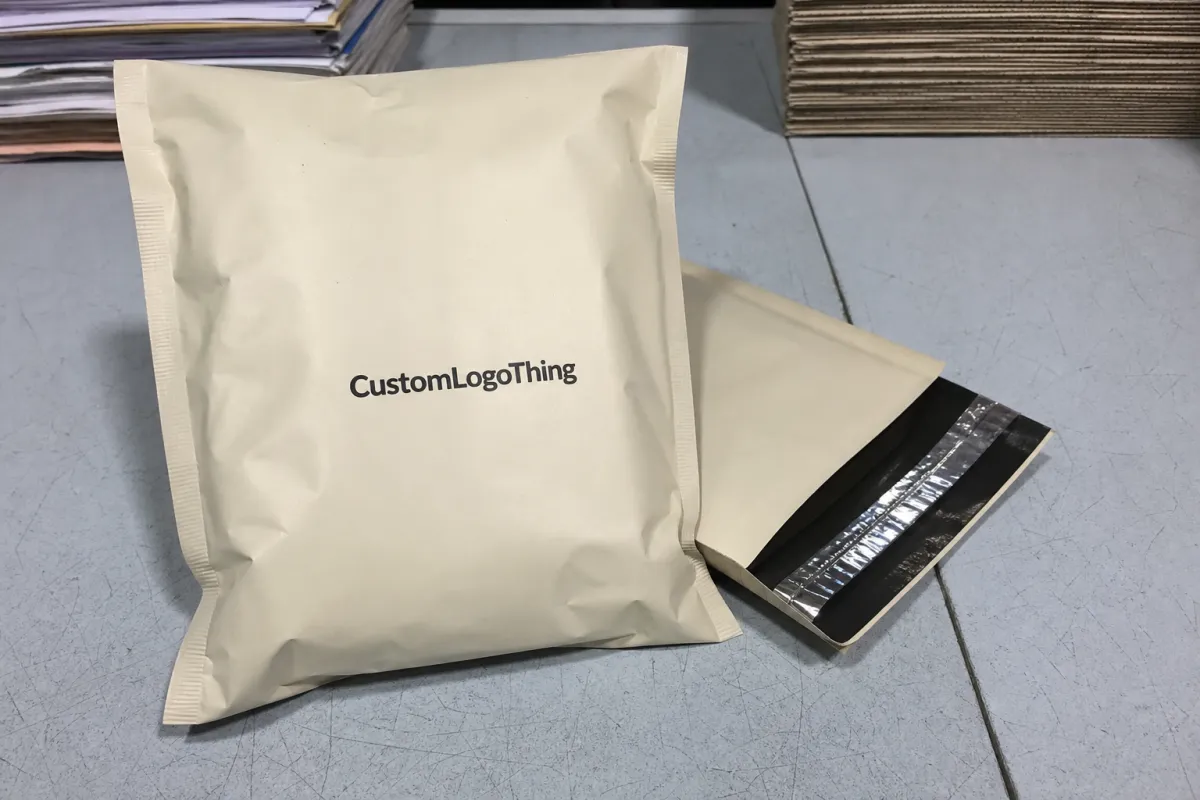
Unit price is only one line in the ledger. A better comparison is cost per shipped order. If a printed padded mailer replaces a carton, void fill, tape, and a few seconds of manual handling, the higher piece price can disappear quickly. Multiply that by 10,000 or 50,000 orders and the math changes faster than most procurement teams expect.
Stock mailers still make sense for commodity shipments, short tests, and low-visibility programs. Printed versions become more compelling when the package must do three jobs at once: protect the item, reduce packing touches, and carry the brand from warehouse to doorstep. That is why buyers looking at printed padded mailers for ecommerce fulfillment Unit Cost Breakdown usually end up comparing more than one format before they sign off.
- Labor: fewer steps than a box-and-fill assembly.
- Freight: less empty space can reduce dimensional charges.
- Presentation: the outside of the package becomes a brand asset.
- Damage control: correct padding can reduce returns and reships.
The damage point deserves more attention than it usually gets. A two-cent improvement in mailer price can be erased by one extra replacement shipment. In categories with thin margins, even a small uptick in customer service tickets has a measurable cost. The right question is not “what is the cheapest mailer?” It is “what keeps the total landed cost per order in line while still surviving the route?”
There is also a practical branding effect. A printed mailer lands in the consumer’s hands before the product is opened. For ecommerce, that is a real touchpoint. Not soft value. Not decoration. A piece of packaging that travels through the entire fulfillment chain and still arrives looking intentional has earned its keep.
Material, Padding, and Closure Choices That Affect Performance
The outside layer does a lot of the visible work. Paper-based mailers tend to print cleanly and feel more premium, while film-based structures usually offer better moisture resistance and tear strength. Inside, the cushioning can be bubble, fiber-based padding, or another engineered layer. Those choices affect puncture resistance, thickness, shelf appeal, and shipping durability. The wrong combination can look fine in an artwork proof and fail after one trip through a carrier network.
Closure design matters almost as much as the body material. Peel-and-seal strips are standard because they are fast and repeatable. Reseal features help in return-heavy apparel programs or subscription shipments. Tamper-evident closures can make sense for regulated or security-sensitive goods. Each one adds or removes cost, but the real issue is workflow. If the closure slows the line or fails in cold storage, the cheapest-looking spec stops being cheap.
Moisture resistance should be based on the actual route. Parcels that sit in depots, ride through humid regions, or move in rainy seasons need a different outer layer than a local shipment handed off quickly. Tear resistance should track the product, too. Hard edges, corners, rigid inserts, and boxy items create a different risk profile from soft goods. A soft-touch finish may look better in a sample room, but it should never outrun the transit test.
Buyers often ask for a mailer that is “premium” without defining what premium means. In packaging, that word can point to print quality, surface feel, structural stiffness, or moisture protection. Those are not interchangeable. A clear spec avoids that confusion and keeps the order from drifting into a prettier but weaker version of the original plan.
Buyer reality: the best mailer is not the one with the longest spec sheet. It is the one that prints cleanly, survives the lane it actually travels, and fits the warehouse process without adding handwork.
If the product mix is broad, it helps to sample multiple structures rather than approving one “recommended” build. A sample can reveal things a PDF cannot: how the closure behaves under pressure, whether the face stock scuffs during handling, and whether the print window leaves enough room for labels and barcodes.
Sizing, Print Coverage, and Spec Limits to Lock Down First
Before anyone quotes a price, the dimensions need to be exact. Internal usable size matters more than the outer dimension on the carton. So does flap length, seal clearance, and the thickness of the packed item. If the buyer measures only the product and forgets the insert, hang tag, dust sleeve, or label, the mailer that looked perfect on paper may be too tight on the line.
Print coverage changes the economics in a quiet but real way. A small logo in one corner is a different job from full-bleed coverage across the front and back. More ink, tighter registration, extra setup, and special finishing all add cost. That does not mean branding should be minimized. It means the print plan should reflect how the package will be used. Front panel, back panel, repeated pattern, or limited branding at the flap are all legitimate options, but they do not price the same.
A few spec mistakes show up over and over:
- Measuring the item without its protective layer or retail insert.
- Ignoring how much room the closure strip consumes at the seal.
- Choosing a size that fits the product but not the warehouse handling process.
- Ordering to a carton count instead of a real usage rate.
Specification discipline can move freight and labor more than ink savings can. A half-inch reduction in one dimension may allow more units per master carton, lower cubic shipping cost, and reduce storage space at the fulfillment center. The reverse is also true. A mailer that is too large may cost more in material, more in shipping, and more in packing time. That is why printed Padded Mailers for Ecommerce fulfillment unit cost breakdown should be reviewed with operations and purchasing in the same conversation.
When the program will scale, ask for one standard size and one exception size. The standard size should cover the bulk of orders. The exception size can absorb outliers without forcing the entire inventory system to carry a larger, more expensive mailer than it really needs.
Printed Padded Mailers for Ecommerce Fulfillment Unit Cost Breakdown
A proper breakdown starts with the obvious pieces: raw material, cushioning, printing, setup, finishing, packaging, quality control, freight, and any import or warehouse charges. Some of those costs repeat every run. Some are fixed once and spread across volume. If they are blended together, the quote can look cheaper than it is. If they are separated clearly, the buyer can see which lever actually changes the price.
Setup charges usually matter most on short runs. Custom sizes may require tooling or additional converting steps. Print method matters too. One-color or two-color graphics usually stay closer to the target unit price, while full coverage, tight registration, and specialty finishes increase cost faster than many teams expect. MOQ affects the curve as well. Small quantities carry a heavy setup burden; larger quantities absorb it.
| Order Level | Typical Use Case | Indicative Unit Cost | Main Cost Pressure |
|---|---|---|---|
| 1,000 pieces | Test launch, seasonal drop, limited SKU | $0.62-$0.95 each | Setup charges and freight per unit |
| 5,000 pieces | Growing ecommerce program | $0.28-$0.45 each | Print coverage and material grade |
| 20,000 pieces | Established fulfillment volume | $0.16-$0.30 each | Specification discipline and freight efficiency |
Those ranges are not promises. They show the shape of the pricing curve. A low MOQ can be the right choice when demand is uncertain, but it should be treated as a test cost, not a benchmark for future bulk pricing. Once volume stabilizes, the unit cost usually drops and the gap between suppliers becomes easier to judge.
Here is the part buyers sometimes miss: two quotes can both be “competitive” and still describe very different products. One may include heavier material, stronger padding, and a better closure. Another may save a few cents by using a thinner structure that fails more often in shipping. Unit cost only tells the truth after the specs are normalized. Same size. Same print coverage. Same delivery point. Same packing assumptions. Otherwise the lowest price is just the one missing a line item.
For teams comparing formats across a wider packaging program, it can help to benchmark against Custom Poly Mailers or a plain padded option first. The point is not to switch materials for the sake of it. The point is to understand where the extra spend is going and whether the finished shipment actually earns that spend back.
Proofing, Production Steps, and Lead Time Planning
A clean order follows a familiar path: inquiry, quote, artwork review, proof approval, production, inspection, and shipping. The schedule moves fastest when the buyer sends complete information the first time. Delays usually come from missing dielines, vague color targets, or dimension changes after the quote has already been accepted. Each revision adds time, and in packaging, time is money in more than one direction.
Proofing is not paperwork for its own sake. It catches logo placement errors, color drift, barcode issues, and dimension mismatches before production starts. A digital proof can confirm layout and copy. A physical sample is better when the mailer uses a precise brand color, a special coating, or a close-fit structure. High-volume ecommerce programs cannot afford to discover a problem after thousands of units are already in motion.
Lead times vary by material, print method, and the complexity of the finish, but many programs land in the 10-18 business day range after proof approval. Shipping time sits on top of that. The distinction matters. A quote that looks fast can still miss the warehouse release date if transit is ignored in the schedule.
- Fastest step: proof approval, if artwork is final and the dieline is correct.
- Common delay: incomplete files or late changes to color, size, or print coverage.
- Planning rule: build extra time before seasonal peaks and campaign launches.
Reorder timing deserves the same attention. Waiting until inventory is nearly gone forces rushed production, expedited freight, or last-minute substitution. None of those are cheap. A better habit is to set a reorder trigger based on weekly usage, transit time, and the time needed to approve a proof if the order changes.
For a packaging buyer, lead time is not a calendar note. It is a cost variable. A supplier that can explain each step clearly usually has a better grip on the order. A supplier that cannot usually leaves hidden risk in the queue.
What a Dependable Packaging Supplier Delivers at Scale
Scale changes the standard. At small volume, a sample can look good enough and still pass. At larger volume, the buyer needs repeatability: the same size, the same color drift tolerance, the same closure behavior, the same seal strength, run after run. A low quote that misses those tolerances can create reprints, chargebacks, and customer complaints. The savings disappear quickly.
A dependable supplier helps with artwork checks, freight planning, documentation, and spec clarification before the run starts. That matters most when one packaging program serves multiple SKUs or more than one fulfillment node. Clean spec sheets, quick samples, and early issue spotting are not extras. They are how the order stays controlled.
Testing references also matter. For ship testing, ISTA methods from ISTA provide a useful framework for transit validation. If the mailer uses fiber-based content or paperboard components, FSC certification can support sourcing documentation and sustainability claims. Those references do not replace real-world fit tests, but they help separate a disciplined packaging program from a casual guess.
At scale, good service shows up in fewer surprises. The supplier confirms dimensions before production. The artwork proof matches the actual layout. The cartons arrive labeled correctly. The master carton pack count lines up with the warehouse plan. That is the kind of quiet reliability operations teams notice first.
- Fewer reprints because the proof process is precise.
- Fewer packing delays because the mailer fits the product and the line.
- Fewer complaints because the package survives the route it actually takes.
Sometimes the right answer is a family of mailers, not one SKU for everything. Soft goods, boxed goods, and fragile accessories do not need the same structure. A supplier that can discuss that split honestly is usually more useful than one that pushes a single “best” option for every order.
Mistakes That Drive Up Freight, Damage, and Reorder Costs
Oversizing is a slow budget leak. A mailer that is too large wastes material and increases dimensional freight charges. It can also slow down packing because the product moves around inside the structure. Undersizing is just as costly. A tight fit can crush corners, scrape surfaces, or force operators to slow the line to avoid damage.
Weak cushioning is another common trap. Teams sometimes trim a few cents from the unit price and then pay it back through returns and replacement shipments. Packaging has to match the product and the route, not just the spreadsheet. A sample that looks acceptable on a desk can fail once it is stacked, slid, compressed, and dropped in real transit.
Reorder timing creates its own losses. If stock runs low, the brand loses negotiating room, and the warehouse may be forced to substitute another package that does not match the standard. That creates inconsistency at the moment the customer is judging the brand. It also invites rush freight and partial shipments, both of which are expensive and avoidable.
A short checklist helps spot the usual problems before they become costly:
- Artwork files are incomplete or the dieline is missing.
- Final measurements do not include inserts, sleeves, or labels.
- Quantity targets are vague, so MOQ pricing cannot be read correctly.
- Quotes use different ship-to assumptions.
- No safety buffer exists for seasonality or demand spikes.
That is the real value of a Printed Padded Mailers for ecommerce fulfillment unit cost breakdown review. It shows where cost leaks out of the system before the product reaches the customer. Packaging can hide a lot of waste if nobody forces the numbers into the same frame.
Approval Checklist Before You Release the Order
Fast approvals usually come from clean inputs. Send finished dimensions, product weight, artwork files, quantity targets, and the delivery ZIP code. If an existing mailer or sample is available, include it. A physical reference helps confirm structure, feel, and print area in a way a written description cannot.
Ask for a tiered price ladder. One number is not enough to make a decision. Three tiers usually show whether the smart move is a small test, a mid-size rollout, or a larger commitment. It also reveals where the cost per piece starts to flatten and where freight becomes less visible in the total.
Before approval, confirm four things: the size matches the product plus any insert, the print coverage matches the design intent, the freight assumption matches the delivery route, and the lead time includes both proofing and transit. Those checks sound basic. They are also the ones most likely to prevent a costly rework.
If the order will run through a high-volume fulfillment center, request a digital proof and, when the schedule allows, a sample. The cost is small compared with the cost of reprinting an entire run because one edge dimension was off by a few millimeters.
Good packaging orders are usually boring in the right way. The specs match. The proof matches. The cartons arrive when promised. No drama. That is usually the sign that the process was handled correctly from the start.
FAQ
How do you calculate the unit cost for printed padded mailers in ecommerce fulfillment?
Start with material, padding, print, and finishing costs, then add setup, freight, and any import or warehouse charges. Divide the full run cost by the order quantity. Keep size, artwork coverage, and delivery assumptions identical across quotes, or the comparison will be misleading.
What MOQ should I expect for custom printed padded mailers?
MOQ varies by material, print method, and size. Smaller runs usually carry a much higher unit cost because setup is spread across fewer pieces. Ask for tiered pricing so you can see where volume begins to improve the number in a meaningful way.
Can I lower cost without changing the mailer format?
Yes. Standardizing size, simplifying print coverage, and refining closure or padding specs can reduce cost. Dimensional freight often saves more than trimming a small amount of ink. A good quote should show which change moves the price most.
How long does proofing and production usually take?
Timing depends on artwork readiness, proof revisions, and order size. Many runs fall in the 10-18 business day range after proof approval, plus transit time. The cleanest files usually move fastest because they avoid back-and-forth during the proof stage.
What files do I need to request a quote for printed padded mailers?
Provide product dimensions, target quantity, artwork files, and any print color requirements. Include the ship-from and ship-to locations so freight can be estimated accurately. If you have a sample or current mailer, send that too so the spec can be matched more closely.
For a real launch, the strongest move is usually the simplest one: lock the dimensions, compare the quoted tiers, and review the proof against the actual shipping requirements before production begins. That keeps the unit cost visible and the packaging choice tied to how the order really moves through fulfillment.


