Buyer Fit Snapshot
| Best fit | Printed Padded Mailers for Sample Kits projects where brand print, material claims, artwork control, MOQ, and repeat-order consistency need to be specified before quoting. |
|---|---|
| Quote inputs | Share finished size, material target, print colors, finish, packing count, annual reorder estimate, ship-to region, and any compliance wording. |
| Proofing check | Approve dieline scale, logo placement, barcode or warning zones, color tolerance, closure strength, and carton packing before bulk production. |
| Main risk | Vague material claims, crowded artwork, missing packing details, or unclear freight terms can make a low unit price expensive after revisions. |
Fast answer: Printed Padded Mailers for Sample Kits: Finish Comparison should be specified like a repeatable production item. The safest quote records material, print method, finish, artwork proof, packing count, and reorder notes in one written spec.
Production checks before approval
Compare the actual filled-product size with the drawing, then confirm tolerance on folds, seals, hang holes, label areas, and retail display edges. Reserve space for logos, QR codes, warning copy, and material claims before decorative graphics fill the panel.
Quote comparison points
Review material grade, print process, finish, sampling route, tooling charges, carton quantity, and freight assumptions side by side. A quote is only useful when the supplier can repeat the same color, closure quality, and packing count on the next order.
Printed Padded Mailers for Sample kits get judged fast. Before anyone checks the swatches, product cards, or inserts, they touch the outside. They see the sheen. They notice the color. They decide whether the package feels premium or cheap in about two seconds, which is rude but very real. That is why Printed Padded Mailers for sample kits print finish comparison matters more than most teams expect: gloss, matte, satin, and soft-touch can make the same artwork feel loud, quiet, polished, or expensive without changing a single word on the design.
The finish is not decoration sitting on top of the job. It changes how a logo catches light, how fingerprints show up, how rub marks read after a rough delivery route, and how the mailer behaves once it has bounced through sorting belts and delivery vans. For sample kits carrying cards, fabric swatches, product vials, printed sheets, or small flat parts, the mailer is part protection, part presentation, and part brand cue. Ignore it and the kit feels half-built. Pick the wrong stock or finish and the mailer starts looking tired before the customer even opens it.
If you are comparing Custom Packaging Products, or deciding whether a lighter mailer format can still protect the contents, separate the artwork decision from the finish decision. Artwork tells people who you are. Finish tells them how you want the package to feel in their hands. Small difference on paper. Big difference in the room. The same logo on a 350gsm C1S artboard mailer with a satin coat reads very differently from the same artwork on a kraft face with a matte seal.
Why Finish Matters for Sample Kits
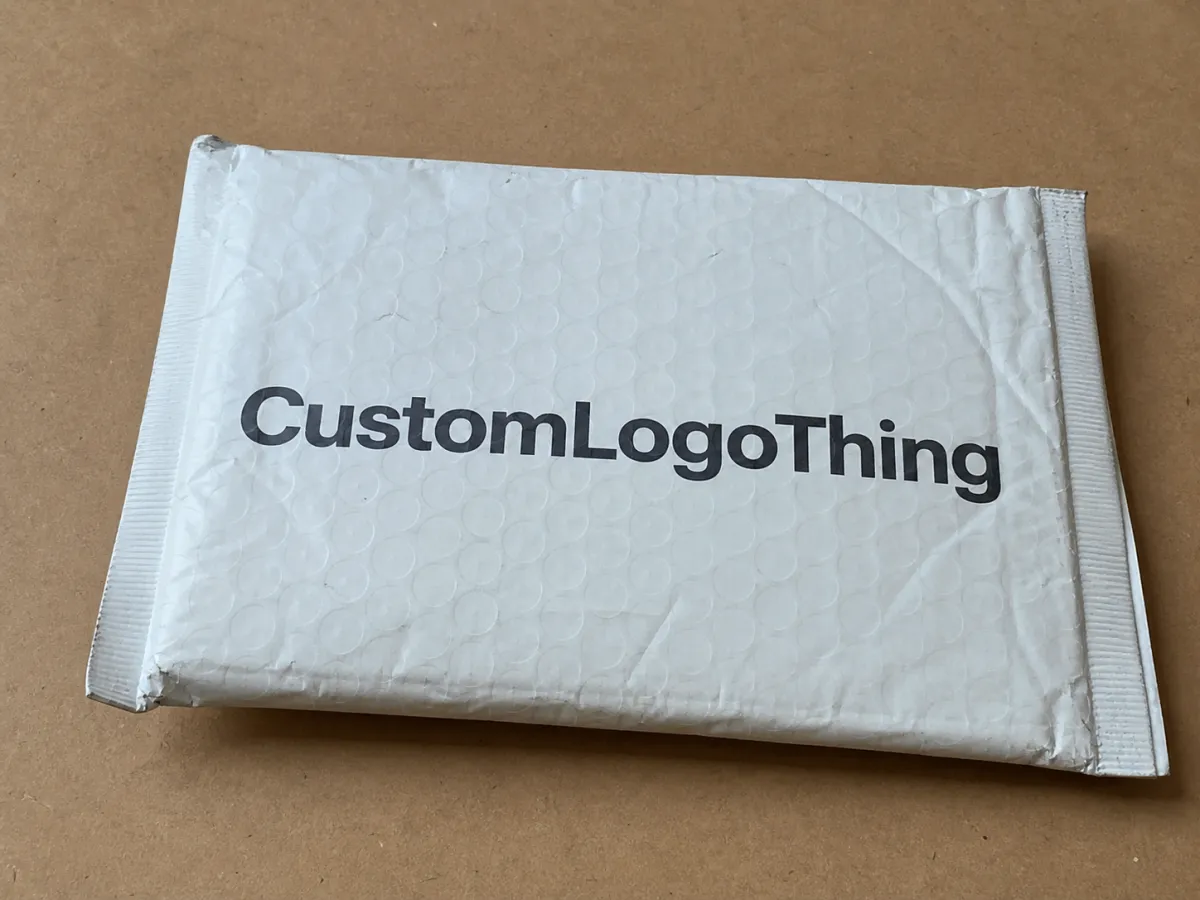
A sample kit usually gets handled before anyone studies the contents. That changes the packaging brief. The outer mailer has to protect what is inside and set expectations for what comes next. A plain shipping envelope says delivery. A printed padded mailer with the right finish says somebody planned this. Buyers notice that. So do sales teams, procurement, and the person taking the photo for the internal deck.
Gloss pushes energy. Bright graphics get sharper, saturated colors feel hotter, and black can look deeper under the right light. Matte pulls the whole thing back a step. It calms the layout and gives technical kits a more measured tone. Soft-touch adds the tactile punch. The surface feels velvety instead of slick, and that alone can make a package read as more considered. Satin sits in the middle. Clean. Polished. Less showy than gloss, less muted than matte. On a simple one-color logo, satin often feels like the safest premium choice without drifting into shiny territory.
There is a practical layer too. Finish affects how a mailer ages on its way to the recipient. A glossy surface can show scuffs faster. Matte and soft-touch often hide light rubbing better, especially on busy shipping routes. Fingerprints are another headache. Dark fields and solid panels love to collect them. Under warehouse lights, a surface that looked perfect on screen can suddenly look busy, flat, or overworked in real life. Screens lie. Material does not. A 9 x 12 mailer with a dark flood coat and gloss varnish will tell on every bad handling step.
That is why the decision should account for the whole use case: the sample itself, the shipping route, the budget, and the unboxing moment. A cosmetics sample kit, a textile swatch set, a technical evaluation pack, and a client welcome kit all ask for different levels of shine, grip, and durability. Same family of mailer. Different answer. A 12 x 15.5 kit shipping one folded garment sample does not need the same finish logic as a rigid card deck with spot color charts and dense copy.
A finish should survive the trip, not only the proof.
Printed Padded Mailers for Sample Kits Print Finish Comparison
To compare printed Padded Mailers for Sample kits properly, separate the finish from the structure. Most padded mailers have three moving parts: an outer printable layer, a cushioning layer, and a closure system. The outer layer may be paper, kraft, film, or a coated composite. The inner layer may use paper padding, bubble, or another cushioning build. The finish usually lives on the outside, but it shapes the whole perception of the mailer once someone picks it up.
The same artwork can look wildly different depending on whether the surface is natural, aqueous-coated, laminated, or treated with a tactile finish. A smooth coated substrate keeps edges crisp and color dense. A fibrous kraft face softens the graphics and makes the package feel more earthy, more handmade, and less polished in a good way if that is the point. When the finish matches the substrate, the two work together instead of fighting for attention. When they clash, you get a package that looks confused. Nobody wants that.
Sample kits make this more obvious because the exterior has to do several jobs at once. It may carry a logo, a product line name, a short descriptor, compliance text, a return address, and a promo message. Gloss helps high-contrast blocks jump out. Matte improves legibility when the layout is text-heavy. Satin preserves detail without turning harsh. Soft-touch cuts glare, which matters if the kit gets photographed under mixed light or opened on a desk full of reflections. A layout with small copy set in 6.5 pt type is much happier on matte than on a high-gloss flood.
Print method matters too. Offset printing gives precise detail and tighter color control, which helps on larger runs with detailed graphics. Digital printing is a better fit for shorter runs and versioned artwork, especially when sample kits need a faster turnaround or variable copy. Flexographic printing often suits certain mailer constructions and higher-volume work where strong spot colors or simpler graphics do the heavy lifting. Each method reacts differently to the chosen finish, so the finish is never a standalone decision.
A full-coverage black panel printed in CMYK may look richer under gloss, but it can also show fingerprints faster. A spot color logo on a matte mailer may look refined and restrained, but if the line weight is too thin or the contrast is weak, the design can sink into the background. Small type, line art, and legal copy deserve actual-size review, not guesswork from a PDF on a laptop. Guessing is how teams end up reprinting boxes they already paid for. That mistake gets expensive fast on runs above 5,000 pieces.
If the project sits inside a wider packaging refresh, compare the mailer against related formats such as Custom Poly Mailers. Not every sample kit needs the same construction, and a different substrate can change the finish result more than people expect. Sometimes the mailer is the hero. Sometimes it just needs to do its job and get out of the way.
For common sample-kit builds, buyers often start with 350gsm C1S artboard for a rigid printed insert or sleeve, then pair it with a padded outer mailer in a 60 to 120 gsm paper face plus recycled paper or bubble cushioning. For a more presentation-driven kit, a 4.5 to 6 mil laminated film face can hold color better and resist moisture during transit. The finish choice should match that construction, not fight it. That sounds obvious. It still gets missed.
Print Finish Comparison: Gloss, Matte, Satin, and Soft-Touch
Each finish creates a different relationship between light, ink, and touch. That relationship is what the customer notices, even if they never use the right terminology. The comparison below gives a practical view of how the main finishes behave on printed Padded Mailers for Sample kits.
| Finish | Visual Effect | Handling Behavior | Typical Add-On Cost at 5,000 Pieces | Best Fit |
|---|---|---|---|---|
| Gloss | High shine, strong color pop, sharp contrast | Shows fingerprints and scuffs more easily; reflective under bright light | $0.00-$0.05 per unit | Retail-facing samples, bold promotional kits, high-energy branding |
| Matte | Low sheen, calm appearance, even light reflection | Hides minor rub marks better; easier to photograph without glare | $0.02-$0.07 per unit | Technical kits, premium minimalist branding, text-heavy layouts |
| Satin | Controlled reflection, balanced clarity, polished but not flashy | More forgiving than gloss, more lively than matte | $0.03-$0.08 per unit | Brands that want a middle ground between clarity and restraint |
| Soft-touch | Muted reflection, velvety feel, premium tactile effect | Memorable in hand; may need care in heavy-rub environments | $0.06-$0.18 per unit | Luxury sample kits, design-led launches, presentation-driven mailers |
Gloss is the loudest option. It gives the package shine, pulls color forward, and makes contrast hit harder. On bold CMYK artwork, gloss can make reds, blues, and blacks look richer. It is the easiest finish to spot from across a room. The catch is wear. Small rub marks show up faster, especially on dark blocks and smooth gradients. Great for energy. Less great for hiding abuse. If the kit is shipping through a route with lots of conveyor contact, that matters.
Matte goes the other direction. It lowers glare, softens reflections, and usually improves readability under office lighting. For sample kits that carry specifications, swatches, or dense messaging, matte often feels calmer and more serious. It handles stacking and handling better too. Minor scuffs tend to disappear into the surface instead of shouting from it. Matte also tends to be the easier choice for photography, since it avoids hot spots when a buyer snaps a phone picture on a desk.
Satin is the middle lane that does not feel like a compromise. It keeps enough reflection for the artwork to stay crisp, but stops short of the mirror effect that can make gloss feel noisy. Brand teams like satin because it plays nicely with typography, photographs cleanly, and works well with both digital printing and offset printing. If you want polished without showing off, satin usually behaves. On a mailer with dense brand colors and a few lines of type, it is often the most balanced answer.
Soft-touch is the finish people remember because of how it feels. The surface has a velvety hand feel, lower glare, and a muted visual tone. That can make a kit feel deliberate, especially when the opening moment matters as much as the printed design. The tradeoff is cost and care. Soft-touch often sits higher on the price ladder, and depending on the substrate, it may need a little more attention during packing and transport. If the packaging is expected to sit on a showroom shelf or be photographed in a controlled environment, that tradeoff can be worth it.
The real question is not which finish looks best in isolation. It is which finish performs best for the exact job. A bright launch item with bold color fields may want gloss. A precision-driven kit may need matte or satin. A campaign built around the unboxing moment may justify soft-touch because the outside package becomes part of the experience, not just the shell around it. If the job is a monthly sample mailer with a 5,000-piece run and a target landed cost around $0.15-$0.24 per unit, finish choice can be the difference between staying on budget and missing it.
For teams weighing sustainability alongside appearance, check whether the paper components carry verified chain-of-custody certification such as FSC. If the kit is shipping through parcel networks, the test approach published by ISTA is useful for thinking about drop, vibration, compression, and transit abuse without pretending shipping is gentle. It is not. A finish that survives ISTA-style handling is usually the one that holds up best in real use too.
Cost, Pricing, MOQ, and Quote Considerations
Finish changes price because finish changes process. A coated or laminated surface can add a production step. A soft-touch treatment may require extra material or tighter press control. Even when the raw materials stay similar, the time needed to produce, inspect, and pack the order can shift the quote. That is not a sales trick. It is just how manufacturing works when the surface matters.
MOQ matters too. Standard sizes with custom graphics are easier to quote at lower quantities, especially when the supplier uses digital printing. Once the project moves into unusual dimensions, special closure systems, or heavier finish treatments, the minimum order often rises. In many programs, a short-run digital job may start around 500 to 1,000 units, while offset printing or flexographic printing tends to make more sense at 3,000 units and above. That is not a rule carved in stone. It is a decent planning anchor. If the mailer uses a custom die cut or an unusual insert pocket, expect the MOQ to move up again.
As volume increases, the finish premium usually gets easier to justify. The difference between matte and soft-touch at 500 units can feel chunky on a per-piece basis. At 10,000 units, that same delta may shrink enough that the brand team can buy the tactile upgrade without blowing the budget. That is why it helps to ask for quotes at two or three quantity tiers instead of locking onto one number and hoping the math behaves. A quote for 2,500, 5,000, and 10,000 pieces will usually tell the real story faster than one line item ever could.
The most common pricing variables are simple:
- Artwork coverage - full-bleed graphics usually cost more than a simple logo and one-color message.
- Color method - CMYK builds, spot color matching, and specialty inks can affect setup and press time.
- Mailer size - larger formats use more material and may require more cushioning.
- Finish type - gloss is often the least expensive premium option, while soft-touch usually lands at the top.
- Run length - longer runs reduce unit cost, especially with offset printing and flexographic printing.
- Freight weight - the mailer itself may be light, but pallet count, carton pack, and destination still matter.
For a standard 10 x 13 printed padded mailer with moderate coverage, buyers often see pricing in the neighborhood of $0.15-$0.24 per unit at 5,000 pieces, depending on size, finish, and print coverage. A simpler one-color satin or matte build can land toward the low end. Full-coverage art, special coating, or soft-touch can move the number up. If the piece is larger or has heavier padding, expect that range to climb. That is normal. Paper and finish do not care about wishful thinking.
Ask suppliers for a quote that compares at least two finishes at the same quantity. That gives you a clean read on the actual unit difference. A good supplier should be able to show how the numbers move between a coated matte build, a gloss build, and a soft-touch version so you can choose from facts instead of hunches. Ask for landed cost too, not just unit price. Freight, carton packing, and pallet counts can change the real number more than the finish does.
Value matters more than sticker price. If a premium finish improves response rate, protects a dark brand color, or makes the sample kit feel more deliberate, the extra cents per unit can be easy to defend. If the kit is an internal sample, a one-off kit, or a lower-priority fulfillment piece, a simpler finish may be the smarter move. Good packaging spends money where people will actually notice it. There is no prize for choosing the prettiest option if it burns through margin for no real gain.
Process and Timeline: From Artwork to Production Steps
The process starts long before ink hits the substrate. First comes the dieline review. Then bleed, safe zone, barcode placement, return address placement, and finish selection. If the artwork needs to hold a strict brand color, that should be discussed before proofing, not after. Small corrections here prevent expensive delays later. Packaging teams learn that lesson the painful way more often than they should.
Proofing is where many projects gain or lose time. A digital mockup can show layout and proportion, but it cannot show texture, sheen, or the way light moves across the surface. That is why physical samples matter when the finish is part of the pitch. A matte proof may look flat on screen and feel dead right in hand. A gloss proof may seem too loud in a file and land perfectly once the inserts are inside and the kit has weight. If the job uses a 350gsm C1S artboard insert, a real sample will also show whether the finish makes the insert feel heavier or lighter than expected.
Once approved, production usually follows a simple path: print, cure or coat, inspect, pack, and ship. The exact sequence depends on the construction and the press line. Digital printing can move quickly for shorter runs with less setup. Offset printing is often better for dense graphics and larger quantities, but it adds more setup time. Flexographic printing can be efficient for simple high-volume builds, especially when spot colors or repeat patterns are doing most of the work.
Finish selection can stretch the schedule. Soft-touch, laminate treatments, specialty varnishes, and complex spot effects usually need more checks. That does not make them slow by default. It means they deserve more calendar room, especially when the job has to land with a product launch, mailing date, or trade show deadline. Nobody wants to discover that after the venue has already been booked.
A realistic planning window for a custom padded mailer project is often 12 to 15 business days from proof approval for a straightforward run, with longer lead times if the order needs samples, revisions, custom sizing, or unusual finishing. Simple digital runs may move faster. Larger offset or flexographic programs usually need more time for press setup and quality checks. Freight adds its own delay, and that matters more than people think if the kit ships to multiple distribution points. If the job includes a custom insert, a window closer to 15 to 20 business days is common.
If the launch date is fixed, lock the finish decision earlier than you think you need to. That one choice can affect artwork prep, sampling, ink selection, and the final production path. Delays usually happen because the team waited until the end to compare tactile options that should have been tested sooner. The package was never the hard part. The timing was. The calendar usually gets the final say.
Step-by-Step Guide to Choosing the Right Finish
Start with the role of the kit. A sales sample kit, a PR send, an onboarding pack, and a replacement shipment all carry different expectations. A sales kit may need to look polished enough to survive a conference room table full of competitors. A PR kit may need to feel memorable the moment it opens on camera. An onboarding pack may need to feel organized and reassuring. A replacement shipment should feel efficient and reliable rather than luxurious. Same basic format. Different job.
Then match the finish to the message. Gloss brings energy and visibility. Matte gives restraint, calm, and a more technical feel. Satin sits between them and keeps the visual noise down. Soft-touch is the strongest tactile move when the opening moment matters as much as the printed design. There is no universal winner. The best finish is the one that supports the brand story without shouting over it. If the visual direction uses a lot of white space and one strong accent color, matte or satin usually gives the design room to breathe.
Test the package in real handling conditions. Put the packed kit in a carton. Add the inserts. Apply the labels. Stack it with others. Move it across a desk, a shelf, and a shipping tote. Look for rub marks, glare, and readability at each stage. A finish that looks excellent in a design room may act differently once the mailer has been packed and handled three or four times. Packaging has a way of revealing the truth. A simple touch test with clean hands and dusty hands can tell you more than a long meeting.
Review artwork at actual size. That sounds obvious. It still gets skipped. Fine typography, thin rules, small compliance copy, and dark color blocks all react differently to finish. Gloss can make color blocks look richer and imperfections louder. Matte can make small text easier to read because the glare drops. Soft-touch can mute the surface enough that some colors feel less intense than they do on screen, which is not a flaw. It is just material reality, and material reality usually wins. If the copy must remain readable at arm's length, do not assume the finish will rescue it.
A simple decision checklist usually gets the job moving:
- Define the sample kit purpose.
- Decide how tactile the unboxing moment should feel.
- Compare the artwork under matte, gloss, satin, and soft-touch samples.
- Check scuff resistance and fingerprint visibility.
- Confirm the pricing at two or more quantity tiers.
- Approve a fully packed test sample before release.
This sequence looks basic because it is. Basic is good. It saves money and prevents the common mistake of choosing a finish because it looked nice on a flat screen rather than because it performs on the actual mailer shape. The package is a system, not a single print layer. Treat it like one. If the insert, outer mailer, and closure do not agree, the customer feels the mismatch even if they cannot name it.
Common Mistakes to Avoid with Sample Kit Mailers
The first mistake is choosing from a monitor mockup alone. Screens cannot show sheen, texture, or fingerprint behavior. A package that looks rich on a phone can turn too reflective under overhead lighting. A design that seems flat on screen might look elegant once it has a real finish and a real sample inside it. If finish matters, request a physical reference. No shortcut there.
The second mistake is ignoring transit wear. Sample kits do not sit on presentation tables. They move through sorting equipment, delivery vans, porch drops, and desk handling. If the finish cannot tolerate light rub, the mailer may arrive with dull patches or scuff lines that were invisible in the sample room. Dark colors and large open fields of ink are especially unforgiving. They expose every lazy decision. A mailer that leaves the warehouse looking perfect is not useful if it arrives looking tired.
The third mistake is stuffing too much copy onto the exterior. When the outside is overloaded with product claims, addresses, icons, and promotional language, the finish loses room to do its job. A strong satin or soft-touch finish works best when the layout is disciplined. Clean spacing gives the material more authority. The surface needs room to breathe. So does the eye. One strong headline and a clear logo often outperform a wall of text.
The fourth mistake is not checking how small elements behave. Fine lines can vanish into glossy reflections. Small type can disappear into a busy background. Deep black panels can show every mark if the finish is too reflective. That is why print finishing and substrate choice need to be reviewed together, not in separate meetings. A design file is only part of the result. The mailer is the result. A 1 pt rule that looks fine in a PDF can become a tiny disaster after coating.
The fifth mistake is waiting too long to order. Proofing, sampling, and production all take time. If the sample kit launch date is fixed, the finish decision should happen early enough to allow for at least one physical check. Rushing usually means accepting a compromise that nobody wanted in the first place. If the schedule only leaves a week, the project is already behind.
For buyers comparing finish options across multiple mailer styles, it helps to compare the mailer against the full packaging family, not just against its own proof. A finish that looks premium on a padded mailer may need to echo the inserts, outer cartons, and printed collateral to feel intentional. When the whole kit is aligned, the result feels more expensive without always costing more. That is the sweet spot. It also makes the customer think the brand noticed the details, which usually matters more than the actual gloss level.
Expert Tips and Next Steps
One of the cleanest ways to make a good choice is to sample two finishes side by side on a fully packed mailer. Put the same artwork on gloss and matte, or matte and soft-touch, then inspect them under the lighting where the kit will actually be used. A finish that looks great on a bright design bench may be too shiny for office lighting. A finish that seems understated under a warm lamp may be exactly right in a warehouse or retail setting. If you can, compare them with the exact insert weight the final kit will use.
Keep the exterior message simple. Let the finish carry some of the visual weight. A restrained layout with one strong logo, a short line of supporting copy, and enough white space often feels more confident than a dense layout trying to say everything at once. That is especially true for premium sample kits, where the outer package should suggest care instead of screaming for attention. A clean outside also reduces the chance that a finish choice gets buried under too much ink.
Align the finish with the inserts. A technical kit with precision-printed cards, clean dielines, and measured information usually pairs well with matte or satin. A beauty, lifestyle, or design-led kit may welcome gloss or soft-touch depending on whether the brand wants shine or touch. If the inside pieces are muted and minimal, a hyper-energetic exterior can feel disconnected. The outside and inside should sound like the same brand. The materials should agree on the first read.
Use a final review under real-world conditions. Check the packed kit on a desk, under warehouse light, and through a phone camera. Read the text at arm's length. Tilt the package. Run a finger across the surface. If the finish holds up in those conditions, it is probably the right one. If it falls apart there, it was never the right one. Do the check before the shipment leaves, not after a customer sends a photo.
For teams building a new packaging program, a wider product view helps. The details of the outer mailer, the insert set, and the shipping structure all affect the customer experience. That is why it can be smart to review both Custom Packaging Products and the relevant mailer format before final approval. The right answer usually appears once the package is treated as a complete system rather than a single printed component.
For printed padded mailers for sample kits print finish comparison, compare two or three finish options, request tiered pricing, and approve a packed test sample before production so the final result feels right in hand and in transit. That last check is usually where the smartest packaging decisions get made.
Which print finish is best for printed padded mailers for sample kits?
Gloss works well when the goal is strong color pop and a lively, high-visibility look. Matte is a strong choice when you want a calmer premium feel and better scuff hiding. Soft-touch is usually the most tactile option when the unboxing moment matters as much as the printed design. For most sample kits, satin ends up being the most flexible middle ground.
Do matte and soft-touch finishes cost more on sample kit mailers?
They often do, because the finish step can add material, coating, or processing cost. The exact difference depends on quantity, artwork complexity, and whether the mailer is standard or custom sized. On a run of 5,000 pieces, a finish upgrade may land anywhere from about $0.02 to $0.18 per unit depending on the spec. Ask for quotes at more than one volume so you can compare actual unit cost instead of assuming one finish is always too expensive.
How do I compare printed padded mailer finishes before placing an order?
Request physical samples whenever possible, since real finish texture is hard to judge from a screen. Check each sample under normal office and warehouse lighting to see how sheen, contrast, and fingerprints behave. Test a packed kit in transit conditions so you can evaluate the finish after handling and shipping, not just before. If the artwork uses a 350gsm C1S artboard insert or a dark full-bleed design, check both at once.
Will a soft-touch finish make sample kit mailers less durable?
Not necessarily; durability depends on the base material, print method, and how the finish is built. Soft-touch can still perform well if the substrate and closure are suitable for shipping and handling. Confirm rub resistance and seal strength before approving a large run, especially for repeated touch points. For parcel shipping, ask for a sample that has been packed, stacked, and rubbed so you can see how it behaves outside the sample room.
How long does production usually take for custom printed padded mailers?
Timeline depends on artwork approval, sample review, finish selection, and the amount of customization involved. Straightforward digital jobs are often 12-15 business days from proof approval, while more complex offset or flexographic runs can take longer. Build in time for revisions and shipping so the mailers are ready before the sample kit launch date. If you need special coating or a custom insert, plan for the longer end of that window.
Takeaway: choose the finish after you know the kit’s real job, not before. Compare gloss, matte, satin, and soft-touch on a packed sample, check it under the lighting and handling conditions it will actually face, and use the quote to confirm the cost difference at your real order size. That is the fastest way to pick a finish that looks right, ships well, and does not create a problem you have to explain later.