If you are comparing a printed Poly Mailer Bags quote for apparel, you are probably past the stage of guessing and into the stage where the small details start driving the decision: film thickness, bag size, artwork coverage, minimum order quantity, and how quickly the packaging can move from approval to the packing line. That is exactly where buyers should be, because apparel mailers are not just shipping supplies; they affect brand presentation, labor time, and how consistently orders leave the warehouse.
The best quote is rarely the lowest number in isolation. It is the one that matches the garment, the order profile, and the way your team actually packs. A mailer that looks inexpensive on paper can become expensive if it is oversized, weak at the seal, or difficult to run on a busy table. Clear specifications tend to improve both pricing and performance.
For apparel brands, printed poly mailers usually make sense once the order flow becomes predictable enough to standardize. At that point, the packaging can do three jobs at once: protect the item, present the brand, and keep the packing process moving without adding a lot of handling steps.
Why apparel brands switch to printed mailers after the first few orders
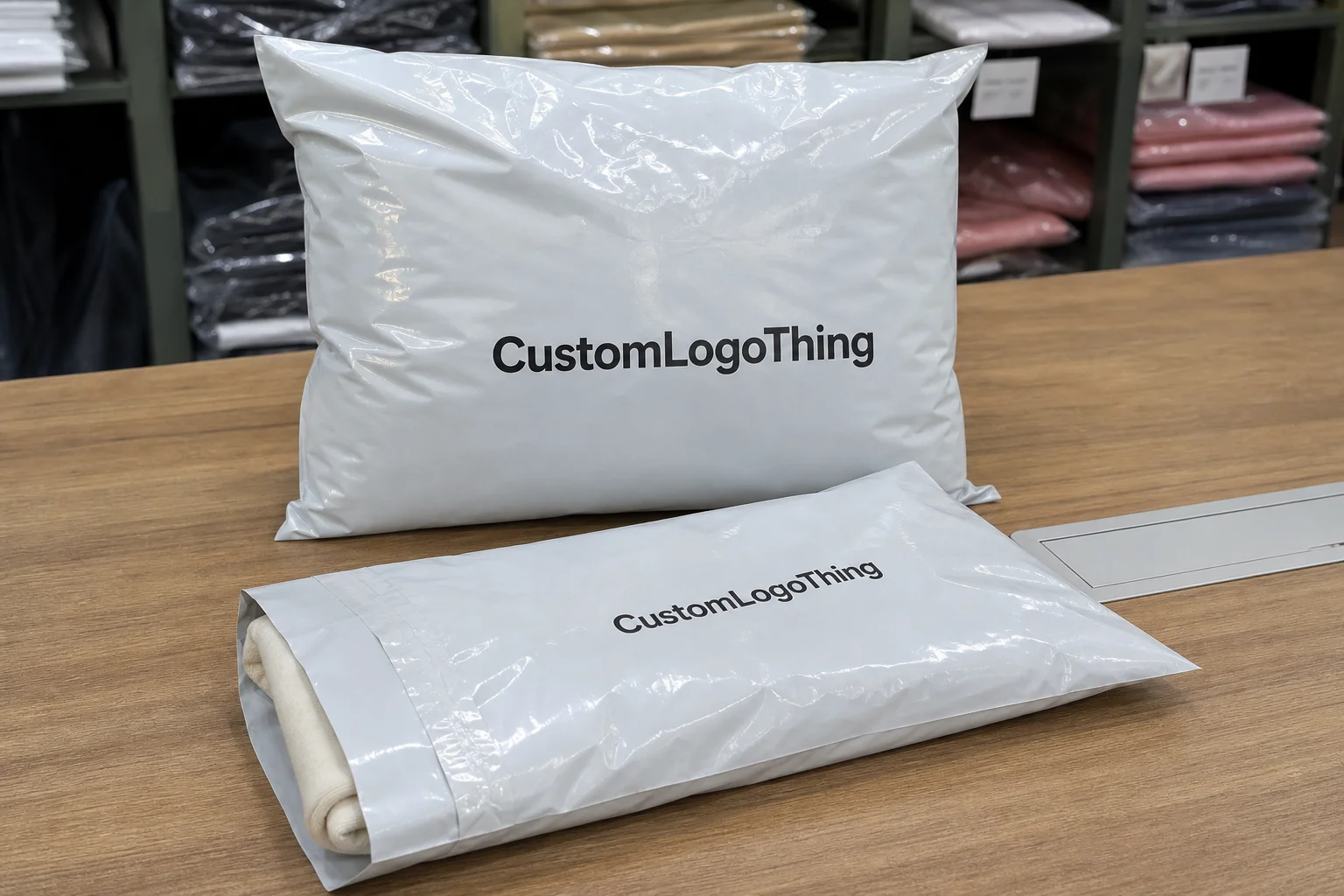
Apparel shipping gets judged quickly. Before the customer feels the fabric, they see the outside of the parcel, and that first physical touchpoint shapes the impression of the brand more than many buyers expect. A plain bag may protect the product, but a printed mailer adds recognition and consistency with very little added weight.
That is why many brands move to printed mailers after the initial launch rush settles down. A branded poly mailer can replace plain packaging, reduce the need for extra outer cartons on lightweight orders, and help a small packing team keep output steady. It is not decorative excess. It is a practical packaging choice that supports speed and presentation at the same time.
These mailers are especially useful for direct-to-consumer tees, activewear, socks, knit tops, seasonal drops, and subscription apparel. In those categories, the outer package is often the main package, so the buyer wants something sized to the SKU, easy to seal, and strong enough for normal parcel handling.
One operational benefit is easy to miss until the team is actually packing. When the mailer is already branded and correctly sized, packers spend less time folding excess film, searching for the right carton, or adding filler just to make the shipment look finished. On a busy table, that kind of consistency matters more than most people realize.
“The goal is not to overpackage a shirt. The goal is to protect it, present it well, and keep packing speed predictable.”
Printed poly mailer bag constructions that work best for apparel
Most apparel mailers are made from LDPE co-extruded film, which offers a good balance of flexibility, tear resistance, and seal performance. Buyers usually choose between matte and glossy finishes, and between opaque white, black, or tinted base colors depending on the visual style they want and the privacy they need in transit.
Film thickness is where a lot of buying decisions go right or wrong. Lightweight tees may ship comfortably in thinner construction, often around the 2.5 to 3 mil range depending on bag design and route length, while hoodies, denim, and bulkier knitwear usually need more body, more puncture resistance, and a stronger seal area. A bag that feels flimsy on the table usually feels flimsy once it enters the parcel network.
Print method matters as well. For apparel mailers, flexographic printing is common because it supports efficient production runs and repeat artwork well. Spot colors are usually the most economical route, especially when the logo is clean and the brand does not need full photographic coverage. Complex artwork, heavy gradients, and very fine line detail can be printed, but they usually increase setup requirements and unit cost.
Closures deserve real attention. A permanent adhesive strip saves time at packing, and a tamper-evident seal gives the customer a cleaner sense that the package has not been opened in transit. On the floor, a reliable closure also reduces rework. If the seal is weak or inconsistent, staff end up double-checking every bag, and that hidden labor cost adds up quickly.
Sizing should be based on the folded garment package, not the flat product alone. That is a common mistake. A folded hoodie may need a much wider bag than a folded tee because the volume stacks differently once it is polybagged or tissue-wrapped. Good sizing avoids oversized bags, wasted material, and a parcel that shifts too much inside the mailer.
For buyers comparing options, the table below gives a simple practical view of how common constructions tend to stack up:
| Construction | Typical use | Strength level | Visual finish | Typical price impact |
|---|---|---|---|---|
| Thin LDPE, single-color print | Tees, socks, light tops | Basic to moderate | Clean, simple branding | Lower |
| Mid-gauge co-ex film, 1-2 colors | Mixed apparel, DTC basics | Moderate to strong | Good opacity and better hand feel | Mid-range |
| Thicker opaque mailer, full coverage print | Hoodies, bundles, premium presentation | Strong | More premium, more privacy | Higher |
If you want a current price target, ask for a printed Poly Mailer Bags quote for apparel based on the actual garment profile, not a generic size. That one change usually improves accuracy immediately.
For packaging standards and testing references, buyers often compare durability expectations against sources like ISTA for transit testing and packaging guidance, especially when the shipment needs to survive rough parcel handling.
Specifications apparel buyers should confirm before requesting a quote
Quotes move faster and come back cleaner when the buyer gives a complete spec set. The core inputs are straightforward: bag size, film thickness, color count, print coverage, finish, adhesive type, and order quantity. If one of those is missing, the supplier usually has to make assumptions, and assumptions create quote noise.
Artwork also affects pricing and production. A logo with a simple one-color lockup is much easier to run than a design that wraps full coverage around both sides, uses multiple PMS matches, and requires exact alignment on a matte film surface. If the artwork needs bleed, a safe area, or repeated print placement on both sides, those details should be stated up front.
Apparel shipping has its own balancing act. The bag needs to look branded, but it also needs to fit parcel requirements and not waste dimensional space. That is why a well-sized mailer usually beats an oversized one, even if the larger bag seems safer at first glance. More size can mean more material, more freight, and more empty space around the garment.
Functional specs are equally important. Buyers should confirm whether they need opacity for privacy, moisture protection for weather exposure, tear resistance for heavier garments, and gussets or extra volume for bulkier SKUs. If a line includes both tees and hoodies, the size logic may need to change by product family instead of by brand alone.
A simple spec sheet saves time and helps you compare quotes apples-to-apples. Include the following:
- Finished bag dimensions
- Material type and thickness target
- Print colors and side coverage
- Finish preference, such as matte or gloss
- Adhesive style and seal requirements
- Artwork file format
- Quantity by SKU or by total annual usage
That way, you are not comparing one supplier’s 2.5 mil bag to another supplier’s 3.5 mil bag and treating them like equals. They are not equal, and the pricing will not behave the same way.
Cost, pricing, and MOQ factors that change the unit price
The biggest pricing drivers are usually easy to predict once you know the structure of the order. Quantity is the first one. Number of print colors is the second. After that come film thickness, bag size, total print coverage, and whether the job requires custom PMS matching. A larger bag with heavier film and more ink coverage will almost always cost more than a small, simple mailer.
Setup costs are another reason small orders carry a higher unit price. Plates, prepress, and press setup do not disappear just because the order size is small. When those fixed costs are spread across 2,000 bags, the unit cost is naturally higher than when the same setup is spread across 20,000 bags. That is not a sales tactic; it is how converting and print production works.
Minimum order quantities exist for a reason. Press efficiency, material yield, and plate setup all need enough volume to make the run practical. If a supplier offers a very low MOQ, the price per unit usually reflects that smaller scale. Sometimes that is fine, especially for testing. Sometimes it is not the right fit for a brand that knows it will reorder every month.
Here is a realistic way to think about pricing, using common apparel-mailer scenarios rather than theoretical numbers:
| Run size | Typical spec example | Pricing tendency | Best for |
|---|---|---|---|
| 1,000-2,000 pcs | Simple print, standard size | Highest unit cost | Testing, small launches |
| 5,000 pcs | Mid-gauge film, 1-2 colors | Balanced unit cost | Growing DTC brands |
| 10,000+ pcs | Custom size, repeated production | Lower unit cost | Established apparel programs |
It also helps to think in total landed cost instead of bag price alone. Freight, proofing, setup, packaging requirements, and timeline pressure all belong in the real cost picture. A quote that looks cheaper but carries a slow lead time or expensive shipping can become the more expensive option once you count everything.
If you want pricing to come back cleanly, send the artwork, estimated annual usage, target bag size, and the ship-to timeline together. That gives the supplier enough information to build a serious quote instead of a placeholder.
For buyers managing sustainability targets, material and freight choices can also affect environmental impact. The EPA’s packaging and waste resources are a useful reference point for reduction and recycling considerations: EPA recycling guidance.
Process and lead time: from artwork review to shipping cartons
The production path is usually straightforward, but only if the buyer feeds it accurate information. A normal run starts with inquiry and quote review, then moves to artwork check, proof approval, film and plate preparation, print run, curing or inspection, packing, and shipment. Each step is standard manufacturing, and each step depends on the one before it.
Delays usually show up in the same places. Artwork that is not print-ready slows down prepress. Missing dimensions cause back-and-forth on bag size. Color matching revisions add time, especially when the brand expects the print to match a specific logo standard exactly. If there are multiple SKUs or side-specific designs, the proofing stage becomes even more important.
Lead time depends on quantity, print complexity, and seasonal demand. A simple run may move faster than a more complex one, but custom packaging should still be treated as planned manufacturing, not off-the-shelf fulfillment. If the bag needs special tooling, an approval sample, or a revised size, the schedule should reflect that from the start.
Fast approvals matter more than many buyers realize. A supplier cannot move a job into production until the proof is approved, and every day spent waiting on artwork feedback is a day lost on the calendar. Clean files, clear instructions, and one decision-maker on the buyer side help keep the timeline on track.
For buyers shipping through standard parcel services, it also pays to think about transit abuse. Poly mailers do not need to survive pallet impact, but they should handle sorting belts, conveyor contact, and general handling without the seal failing. That is where decent film quality and proper sizing make a real difference.
From a process standpoint, the quote is only step one. The real win is when the approved spec runs the same way each reorder, with no surprise changes in feel, color, or closure performance.
Why Custom Logo Things is a practical source for apparel mailers
Custom Logo Things is a strong Fit for Apparel buyers who want a straightforward packaging conversation: usable specifications, consistent print quality, and clear guidance on what can be produced efficiently. That matters because a good supplier does more than send a number. They help you avoid spec mistakes that cause delays or raise cost later.
For apparel packaging, the real value is in matching the bag to the job. That means helping with size selection, finish choice, artwork preparation, and quantity planning so the final quote reflects the actual production requirements instead of a rough guess. A brand that ships folded tees has very different needs from one shipping thick hoodies or mixed bundles, and the quote should reflect that difference.
Buyers should expect honest guidance on tradeoffs. Thicker film improves protection and usually feels more premium, but it costs more. Full-coverage print looks stronger on the shelf, but it adds ink and setup complexity. A matte finish can look refined, but gloss may be more cost-effective on some runs. Those are real choices, not marketing slogans.
If you are also comparing other branded packaging formats, Custom Poly Mailers and broader Custom Packaging Products can help you line up the right fit for your apparel program without overbuying material you do not need.
Most apparel brands do best with a supplier that keeps the conversation grounded: what size will fit the folded garment, how many colors will run cleanly, what MOQ makes sense, and what the lead time really looks like once artwork is approved. That practical style is what turns a quote into a production plan.
How to request a printed poly mailer bag quote for apparel
Start with the basics. Choose the bag size, estimate monthly or annual volume, select the finish and base color, and prepare your logo artwork in a print-friendly format. If the line includes tees, sweatshirts, boutique apparel, or mixed SKUs, say so clearly. That is how the supplier knows whether one size can cover the line or whether you need a few different bag dimensions.
Next, include your target ship date and destination. Freight and scheduling can affect the final proposal, and no serious quote should ignore them. If you are comparing suppliers, ask each one to quote the same spec sheet so the numbers are actually comparable.
If you are undecided between two constructions, ask for a sample or a written spec confirmation before production. That step can save a lot of time if you need to verify print placement, film feel, or closure behavior. It is better to settle those details before the press starts.
And if you are ready to move, send the full request in one shot. The more complete the request, the faster the quote. The cleaner the quote, the fewer revisions. The fewer revisions, the easier it is to move from approval to production without wasting a week on avoidable back-and-forth.
If you need a printed Poly Mailer Bags quote for apparel, the smartest move is to give the supplier enough information to price the real job, not an abstract version of it. That is how you get a number you can trust and a bag your packing team can actually use.
If you want help getting started, you can Contact Us with your size, quantity, artwork, and timeline in one message.
FAQs
What details do I need for a printed poly mailer bags quote for apparel?
Provide bag size, quantity, print colors, artwork file, film thickness preference, and the type of apparel being shipped. Add your target timeline and shipping destination so the quote reflects production and freight realities.
What is the typical MOQ for custom printed apparel mailers?
MOQ depends on print method, size, and number of colors, but custom runs usually start at a production quantity that covers setup efficiency. Larger quantities generally lower the unit cost because setup costs are distributed across more bags.
How long does production usually take after artwork approval?
Lead time depends on order complexity, quantity, and print requirements, but production begins only after the proof is approved. Clean, print-ready artwork and fast approvals help shorten the turnaround significantly.
Can I print both sides of the mailer bag?
Yes, many apparel mailers can be printed on one or both sides depending on the artwork and production setup. Double-sided printing may affect cost, so it should be specified when requesting the quote.
Are poly mailer bags strong enough for folded apparel shipments?
For tees, leggings, socks, and many lightweight garments, properly sized poly mailers offer solid moisture protection and shipment durability. Heavier apparel may need thicker film or a larger bag to reduce stress at the seal and corners.


