For housekeeping teams, valet staff, and laundry operations, a missing garment cover can slow handoffs, expose items to dust or moisture, and make storage look disorganized. That is why many buyers start looking for a printed PVC Zipper Garment Bags quote for hotel use once uniforms, guest garments, and cleaned items begin moving through different departments every day.
The appeal is practical. A reusable PVC garment bag usually lasts longer than a lightweight disposable cover in a hotel environment where items are handled repeatedly, carried on carts, and returned to rooms or storage. Clear PVC lets staff identify contents without opening the bag. A zipper keeps garments enclosed during transport. Printed branding or a department label turns the bag into part of the workflow, not just a cover.
Printed bags also help keep departments visually consistent. Housekeeping may use one layout for uniforms, while laundry returns or valet items use another label or color code. That small detail saves time and reduces confusion when multiple garment types move through the same facility.
“A garment bag that looks fine in a sample photo can still fail in daily use if the seam line is weak, the zipper tracks poorly, or the material is too thin for repeated handling.”
Material, zipper, and print options that affect performance
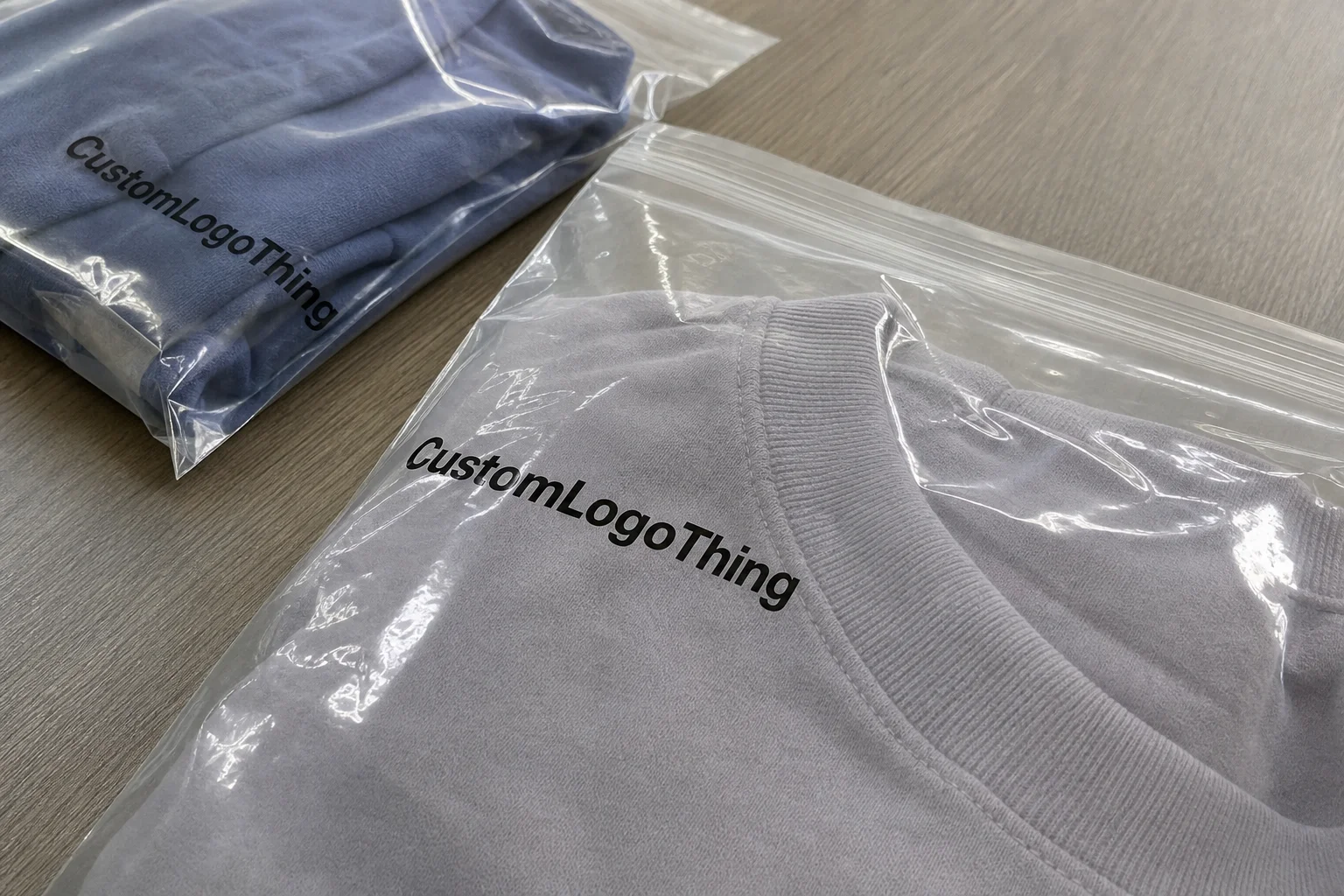
PVC thickness is usually the first specification that affects service life. Common custom runs often fall between 0.10 mm and 0.20 mm. Thinner material lowers the unit price and keeps the bag light, but it is less forgiving under repeated folding and cart movement. Thicker material costs more and feels stiffer, but it usually resists tearing better and holds its shape more reliably.
Clarity matters as well. Some properties want a highly transparent bag so staff can identify the garment immediately. Others prefer a slightly frosted or tinted finish, especially if the bag may contain guest garments or items that should not be fully visible in public-facing areas. A fully clear bag is not always the best choice, and a tinted one is not automatically lower quality.
Zipper selection affects daily use more than many buyers expect. A smooth coil zipper is often a practical choice for frequent use, while metal zippers can feel stronger but are not always the best fit for humid laundry rooms or high-volume handling. Larger pulls or ring tabs can help staff open the bag quickly while wearing gloves. If the zipper snags, the bag starts causing problems instead of preventing them.
Print method affects both appearance and durability. Screen printing is commonly used for solid logos, department names, and simple one- or two-color branding. It is often the most efficient route when the hotel wants a clean mark without a complicated graphic. Large full-coverage artwork is possible, but it usually raises cost without improving function. In hospitality, a clear department label or modest logo near the top is often more useful than heavy branding across the full panel.
Bag size needs to match the actual garments. A short cover for shirts or jackets will not work for long dresses or coats, and a single universal length often creates more compromise than convenience. Hotels frequently need two or three formats instead of one all-purpose bag. Once the bag sizes are matched to the wardrobe, the program becomes easier to manage.
Construction details matter too. Heat-sealed edges, reinforced hanging holes, and clean welded seams tend to improve durability. These features also help the bag hold up visually, since edge splitting and uneven stress can make clear PVC look worn before the material has truly reached the end of its useful life.
Common material choices hotel buyers compare
| Option | Typical benefit | Typical trade-off | Best use case |
|---|---|---|---|
| 0.10 mm PVC | Lower cost, lighter weight | Less durable over repeated handling | Shorter-term or lower-volume use |
| 0.14 mm PVC | Balanced clarity and durability | Moderate price increase | Most hotel uniform programs |
| 0.18 mm to 0.20 mm PVC | Better tear resistance and longer service life | Heavier feel, higher unit cost | High-use housekeeping and valet handling |
| Printed front panel only | Lower print cost, clean appearance | Less branding visibility | Functional hotel storage |
| Front and back print | Stronger brand presence | Higher print cost | Guest-facing or premium positioning |
For teams that want a reference point beyond the supplier quote, the ISTA testing framework can help frame durability questions for shipping and handling, while the EPA recycling guidance is useful when a property is thinking about material recovery and waste handling.
Specifications hotel buyers should confirm before requesting a quote
Quotes move faster when the request is complete. The teams that get cleaner pricing usually send dimensions, PVC thickness, zipper style, print colors, artwork files, and estimated quantity up front. If those details are missing, the supplier has to fill in the gaps, and that leads to slow back-and-forth and revised proofs.
One of the most common mistakes is asking for one size and hoping it works for every garment. It rarely does. A hotel may need a 24 x 40 inch bag for shirts and jackets, a 24 x 48 inch bag for dresses or long uniforms, and a larger format for coats or seasonal outerwear. The better approach is usually a small set of sizes matched to real use cases.
Artwork requirements matter too. A clean vector file is the safest starting point for logos, especially if the print is small or uses fine lines. If the supplier has to clean up a low-resolution image, the quote may change. If the logo is altered after proof approval, more revisions may be needed and the production schedule can slip.
Packaging details should not be left until the end. Buyers should ask whether the bags ship flat or pre-assembled, how many units go into each carton, and what the carton dimensions are. Those details affect storage, receiving, and freight. A property with one central warehouse has different needs than a hotel group with multiple receiving points across several locations.
A practical checklist before sending a Printed PVC Zipper Garment Bags quote for hotel request:
- Exact bag dimensions in inches or millimeters
- PVC thickness target
- Zipper style and pull preference
- Handle or hanging hole requirement
- Logo file and print colors
- Estimated quantity by size
- Use case: guest garments, staff uniforms, laundry returns, or valet
- Packaging preference: bulk packed or inner-packed
- Delivery location and required date
That checklist shortens the quote cycle and makes supplier comparisons fairer. Without it, one quote may include thicker material, better printing, or more careful packaging than another, and the unit price alone will not tell the whole story.
Cost, pricing, and MOQ factors in a hotel quote
Unit price is usually shaped by a few predictable inputs. Material thickness is the biggest one. After that come size, zipper quality, print coverage, and order quantity. Larger runs generally lower the per-unit cost because setup expenses are spread over more bags, but they also increase inventory commitment.
For planning purposes, custom printed PVC Zipper Garment Bags can often land around $0.18 to $0.28 per unit at 5,000 pieces for simpler specifications. Thicker material, larger dimensions, more print coverage, or special finishing can push the price higher. Smaller runs often sit above that range because setup costs are carried by fewer units.
Minimum order quantity matters because tooling, setup, and print preparation create fixed cost. Some suppliers can make a small run at a workable price, while others need 1,000, 3,000, or 5,000 pieces before the numbers make sense. It is also possible that one supplier can combine multiple sizes on the same order while another requires separate production runs.
There are also one-time charges to ask about. Typical extras include artwork setup, plate fees, proofing costs, rush production, and custom carton labeling. Freight can be another major variable if the goods are shipping internationally or to multiple hotel properties. A quote that seems low at first can become expensive once shipping and packaging are included, so buyers should ask for itemized pricing whenever possible.
Seasonal timing can influence the numbers too. If a hotel needs the bags for a property opening, a uniform refresh, or a peak occupancy period, rush requirements may narrow the supplier list and raise the cost. Custom dimensions can also increase price if the size falls outside a supplier’s standard cutting pattern.
That is why total landed cost matters more than a headline number. A slightly higher quote may include better zipper hardware, stronger seams, cleaner printing, and more careful quality checks. If those details reduce reject rates or replacement orders, the higher price can be the more economical choice.
For multi-property hotel groups, reorder consistency is another factor that affects the final result. A bag that matches the original run in opacity, size, print location, and carton count reduces friction when the next order is placed. The first order is only part of the story.
Process, lead time, and approval steps from artwork to shipment
The usual workflow is straightforward: inquiry, spec confirmation, artwork review, proof or sample approval, production, quality check, and shipment. The shorter the delay at the beginning, the less chance there is of rework later.
Lead time depends on order size, print complexity, and material availability. A simple one-color run using a standard size can move faster than a custom size with more print layers or special packaging. Typical production often falls in the range of 12 to 15 business days after proof approval, though that can stretch if the material needs to be sourced or the order is unusually large. International freight can add more time depending on the route and customs process.
Digital proofs are useful for checking logo placement, artwork size, and general layout. Physical samples are better when the hotel wants to evaluate zipper feel, material clarity, seam quality, and how the bag hangs with an actual garment inside. If the bags will be used repeatedly, a sample is worth the effort.
Communication during the order matters more than many teams expect. Buyers should know when the first proof will arrive, who approves it, when production begins, and what shipping terms are being used. If the hotel group has multiple receiving points, those instructions should be confirmed early.
International buyers also need to think about documentation. If the order ships across borders, carton labels, commercial invoice details, and pallet configuration can affect how quickly the goods are received and checked in. A bag order sounds simple until the freight paperwork is wrong.
How to compare suppliers on durability, consistency, and service
Price alone is a weak filter. A cheaper bag that clouds in storage, tears near the zipper line, or prints off-register can cost more once replacement and rework are counted. The better comparison is total landed value: product quality, service quality, and repeatability.
When reviewing samples, look for evidence of control. Do the sample bags match the quoted spec? Are the seams straight? Is the zipper aligned and easy to pull? Does the logo sit where it should? Do the cartons arrive with the expected count? Those details tell you far more about the supplier than a low number on the first line of the quote.
Service matters for the same reason. A hotel buyer needs a supplier who can repeat the spec on a reorder, answer questions clearly, and flag problems before production starts. If a logo needs correction or the size must be adjusted, the response should be direct and documented.
A simple scoring framework helps procurement teams compare options without getting lost in sales language:
- Product quality: clarity, seam strength, zipper performance
- Print quality: alignment, sharpness, color consistency
- Specification control: exact sizing and carton counts
- Lead time reliability: proof-to-shipment consistency
- Service response: speed, clarity, and reorder support
The best supplier is usually not the cheapest or the biggest. It is the one that can deliver the same result twice. Hotel operations reward consistency far more than polished promises. If the first order lands well but the reorder drifts in size or finish, the savings disappear fast.
Another useful check is how the supplier handles minor defects. No production run is perfect, but a competent supplier should have a clear inspection process for print position, zipper function, seam quality, and carton count. If those checks are missing, the buyer ends up doing the inspection work after delivery.
What to send now to get an accurate hotel bag quote
If the goal is a reliable quote, send the details that actually shape production. Start with logo artwork, target dimensions, preferred PVC thickness, zipper preference, and estimated quantity. Then add the use case. A bag for guest garments is not the same as a bag for staff uniforms or laundry returns, and the supplier needs to know which handling pattern to design around.
Delivery location matters too, as does the deadline. If the hotel needs the bags for a property opening, a seasonal uniform rollout, or a central laundry changeover, timing affects pricing and production planning. Packaging preferences should be included as well, especially if the bags will move through a warehouse or between multiple properties.
A complete request usually includes:
- Bag size and quantity by size
- Artwork file and print instructions
- Material thickness target
- Zipper and handle preference
- Required delivery date
- Shipping destination
- Packaging and carton requirements
From there, the next steps are usually proof review, sample approval if needed, production, and shipment confirmation. That sequence keeps the order moving and reduces avoidable surprises.
For hotel buyers comparing printed PVC Zipper Garment Bags quote for hotel options, the real advantage comes from complete specifications, not from asking for the cheapest number first. A good quote should be precise enough to compare, and specific enough to repeat on the next order without rework.
Frequently asked questions
What details do I need to request a printed PVC zipper garment bags quote for hotel use?
Provide bag size, PVC thickness, print artwork, zipper style, estimated quantity, and delivery location. Also state whether the bags are for uniforms, guest garments, or laundry return handling, because the use case changes the recommendation.
What affects the unit price of printed PVC zipper garment bags for hotels?
Material gauge, bag dimensions, number of print colors, zipper quality, and order volume are the biggest drivers. Rush timing, custom packaging, and special finishing can also raise the quote.
What MOQ should hotel buyers expect for custom printed zipper garment bags?
MOQ varies by supplier and print method, but custom runs usually price better at higher quantities. Ask whether multiple sizes can be combined under one production run.
How long does production usually take after approval?
Lead time depends on order size, artwork complexity, and stock availability. Most suppliers quote faster once the proof is approved and all specs are confirmed.
Can I order samples before placing a full hotel run?
Yes, samples or digital proofs are the best way to verify size, clarity, print placement, and zipper function. Use sample review to avoid costly corrections in full production.


