Buyer Fit Snapshot
| Best fit | Printed Shipping Envelopes Wholesale for Fast Brands projects where brand print, material claims, artwork control, MOQ, and repeat-order consistency need to be specified before quoting. |
|---|---|
| Quote inputs | Share finished size, material target, print colors, finish, packing count, annual reorder estimate, ship-to region, and any compliance wording. |
| Proofing check | Approve dieline scale, logo placement, barcode or warning zones, color tolerance, closure strength, and carton packing before bulk production. |
| Main risk | Vague material claims, crowded artwork, missing packing details, or unclear freight terms can make a low unit price expensive after revisions. |
Fast answer: Printed Shipping Envelopes Wholesale for Fast Brands should be specified like a repeatable production item. The safest quote records material, print method, finish, artwork proof, packing count, and reorder notes in one written spec.
Production checks before approval
Compare the actual filled-product size with the drawing, then confirm tolerance on folds, seals, hang holes, label areas, and retail display edges. Reserve space for logos, QR codes, warning copy, and material claims before decorative graphics fill the panel.
Quote comparison points
Review material grade, print process, finish, sampling route, tooling charges, carton quantity, and freight assumptions side by side. A quote is only useful when the supplier can repeat the same color, closure quality, and packing count on the next order.
Printed Shipping Envelopes Wholesale for Fast Brands
Printed Shipping Envelopes Wholesale can look like a tiny purchase until the first bad delivery lands on the desk. A corner tears. A seal pops open. A rain-slick carton leaves the mailer stained and soft. Suddenly the “cheap” option is not cheap at all, because the cost has moved downstream into replacements, refund requests, and time spent explaining what went wrong. Buyers remember the damage long after they forget the quote.
From a packaging buyer’s angle, the best envelope does two things at once. It protects the contents and carries the brand through the last mile. That last mile is a strange little gauntlet: conveyor belts, sorting hubs, delivery bags, porch drops, and whatever weather decides to show up that day. A good printed mailer survives that route and still arrives looking intentional. That matters more than many teams admit, especially in ecommerce, where the package is often the first physical contact a customer has with the brand.
At Custom Logo Things, I usually start with the product before I start with the print. Material, size, adhesive, print method, and transit risk shape the purchase more than the artwork does. I have seen plenty of teams get hypnotized by a mockup and miss the part that actually controls performance. The lowest printed shipping envelopes wholesale quote is not always the wisest choice. The right mailer is the one that fits the item, packs quickly, and keeps the order out of the damage pile.
Printed shipping envelopes wholesale: why the cheapest mailer can cost more
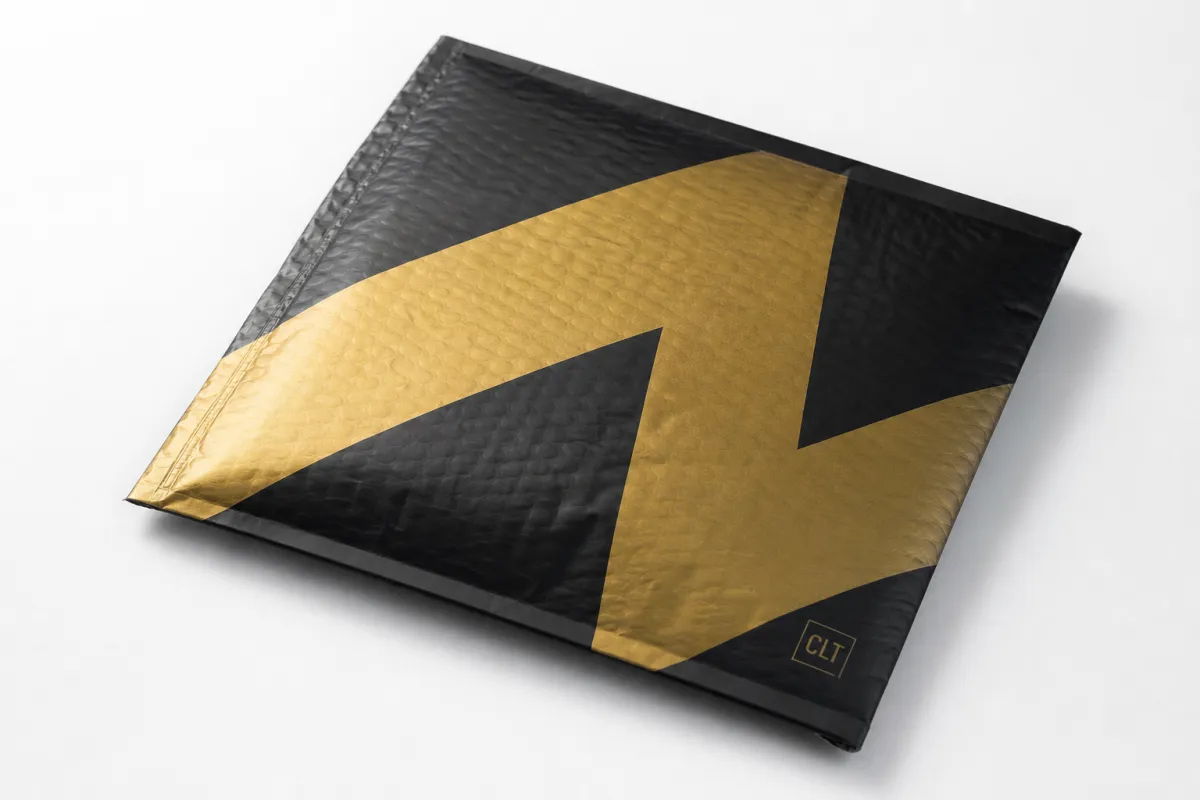
A low-cost mailer can look brilliant on paper and still create a mess in the warehouse. A flap opens under pressure. A seam splits near the corner. A thin surface scuffs so badly that the package looks old before anyone touches it. Then a replacement ships, service gets involved, and the original “savings” disappear. That is not savings. That is delayed pain with a discount sticker on it.
Printed shipping envelopes wholesale works best as a volume and risk decision, not a decoration decision. Once a brand knows monthly order count, average parcel weight, product fragility, and return rate, the spec gets much easier to narrow down. A slightly higher unit price can lower the true cost per order if it reduces damage, speeds packing, or keeps freight weight from creeping upward. I have watched teams save a few cents on the envelope and lose dollars on labor. It happens more than people want to admit.
Brand perception is part of the math too. A clean printed envelope signals care. A flimsy one signals haste. Customers may not be able to name the difference in packaging terms, but they feel it. They may not say, “this mailer had poor caliper strength,” but they do notice when an order shows up bruised, damp, or awkwardly repackaged. Small cue, large effect.
“The cheapest shipper is expensive if it fails in transit. The invoice is small; the cleanup is not.”
Hidden costs are where printed shipping envelopes wholesale proves its value:
- Damaged goods: burst seams, bent inserts, moisture exposure, and torn corners create replacement costs.
- Customer service time: every complaint adds follow-up work that pulls staff away from revenue tasks.
- Replacement shipments: a second dispatch can erase the margin from the original sale.
- Packing inefficiency: a poor-fitting envelope slows fulfillment and increases mistakes on the line.
- Brand drag: weak transit packaging makes even strong products feel less valuable.
Volume changes the answer. A brand shipping 3,000 units a month needs a different spec than one shipping 30,000. The smaller company may be fine with a stock-size poly mailer and one-color branding. The larger one may want a custom printed security envelope with a stronger adhesive, tighter sizing, and a layout that cuts wasted space. Neither is automatically better. The right choice depends on the lane, the contents, and how much damage the business can tolerate before the numbers stop working.
Some brands begin with labels, sleeves, or inserts and move into full mailers once order volume justifies the jump. That path is usually safer than committing to a big custom program too early. A well-run Wholesale Programs option makes that progression easier because packaging can grow with the business instead of forcing a large buy before demand is steady.
Product details for printed shipping envelopes wholesale
Four envelope categories show up most often in printed shipping envelopes wholesale: poly mailers, paper mailers, padded envelopes, and security envelopes. Each solves a different problem, and each behaves differently in production. Pick the wrong one and the quote looks cheap right up until the orders start moving through fulfillment.
Poly mailers are the workhorse for lightweight apparel, soft goods, and moisture-sensitive products. They are light, durable, and usually the lowest-cost path for branded ecommerce shipping. When the goal is simple logo recognition, decent weather resistance, and a smooth packing run, poly is often the cleanest option. It is not fancy, but it gets the job done, which is kinda the point.
Paper mailers fit brands that want a kraft look or a more fiber-forward presentation. They tend to suit flat goods and products that do not need much cushioning. Their weak point is moisture resistance. Rough sorting can also leave them scuffed sooner than many teams expect, especially if the outer layer is a soft matte finish without added protection.
Padded envelopes suit cosmetics, accessories, small kits, and Fragile Items That need more protection than a thin sleeve can provide. They cost more, but they reduce breakage and can cut down on extra packing materials. If the product can dent, scratch, or bend, the added layer usually earns its keep. The savings show up later, after the shipment has survived the route.
Security envelopes focus on opacity and tamper resistance. Retail, pharmaceuticals, and privacy-sensitive shipments use them often. In printed shipping envelopes wholesale, adhesive strength and seal integrity matter more here than decorative finish. Privacy fails quickly if the envelope is easy to open and reseal without a trace.
The print itself has several meaningful choices, not just marketing language:
- One-color logo marks: practical, clean, and easy to reproduce.
- Full-surface branding: useful for bold launches, though it adds print complexity.
- Inside printing: helpful for surprise messaging, reminders, or anti-counterfeit details.
- Spot-color branding: a middle-ground option that keeps the design sharp without pushing cost too high.
Finish affects both look and handling. Matte hides scuffs and feels quieter in hand. Gloss adds shine and makes color pop, though it also shows fingerprints and shipping wear more easily. White gives the strongest contrast. Kraft creates a warmer, more utilitarian tone. Opaque materials improve privacy and often strengthen the sense that the shipment belongs to a serious brand rather than a throwaway storefront.
Closure style is one of those details that seems minor until the packing line starts moving. Peel-and-seal is common because it is quick. Self-seal options work well for repetitive fulfillment. Zip closures help with returns or multi-use shipments. Tamper-evident strips matter when a package should not be opened and closed again without visible evidence. A bad closure choice can slow packing just enough to make the whole line feel clumsy.
| Mailer type | Best for | Typical price range | Strengths | Tradeoffs |
|---|---|---|---|---|
| Poly mailer | Apparel, soft goods, flat items | $0.10-$0.28 per unit at volume | Lightweight, moisture resistant, low freight cost | Less premium feel than paper or padded options |
| Paper mailer | Flat products, eco-positioned brands | $0.14-$0.35 per unit at volume | Kraft look, recyclable feel, easy brand styling | Lower moisture resistance, can scuff sooner |
| Padded envelope | Fragile small items, cosmetics, kits | $0.18-$0.42 per unit at volume | Better package protection, less internal damage | Higher material cost and shipping weight |
| Security envelope | Private, high-value, or sensitive shipments | $0.16-$0.38 per unit at volume | Opacity, tamper resistance, stronger trust signal | Can be more expensive to customize |
Sample orders are worth the time. A small run reveals how the printed shipping envelopes wholesale spec feels in hand, how the seal behaves, and whether the print looks right under real warehouse lighting. Buyers who need broader packaging support can pair envelope work with Custom Packaging Products so the outer shipper and the interior presentation feel like parts of the same system.
If the choice is between an envelope and a box, compare the packed profile rather than the catalog category. A flat tee in a paper mailer behaves very differently from a rigid accessory in a carton. That is one of the moments where Custom Shipping Boxes may be the smarter answer. Packaging should fit the product, the transit lane, and the way the customer expects the item to arrive.
Printed shipping envelopes wholesale specs that matter
A quote only makes sense once the buyer knows the basics. Printed shipping envelopes wholesale depends on finished size, material thickness, print coverage, closure type, and the amount of transit abuse the mailer must survive. Leave those out and everyone is guessing, including the supplier.
Size should come from the packed dimensions, not the hope that the product will “probably fit.” Measure the item in its final shipping form, then leave room for the seal and any insert. A few millimeters can change the seal quality and affect dimensional weight, which often matters more than buyers expect. I have seen a half-inch of extra space become the difference between a tidy packout and a boxy, wasteful bundle.
Thickness has to match the shipment. Light poly works for apparel and soft flat items. Heavier or multi-layer mailers suit books, cosmetics, and small kits that need more structure. If the product bends, punctures, or has a sharp corner, the envelope needs extra resistance or an internal pad. Otherwise the package is basically betting that the sort line will be gentle. That is not a great bet.
Print coverage is one of the fastest cost drivers. A small logo in one location is easy. Full-wrap art, multiple colors, or inside printing adds setup time, registration checks, and a higher chance of waste. Metallic ink, gradients, and specialty finishes also raise the quote because they complicate production. Designers often love these touches. Production teams love them less.
Closure should match the actual workflow rather than the mockup on a screen. A peel-and-seal flap speeds packing. A tamper-evident strip supports security. A resealable closure helps with returns or subscription programs. In a fast fulfillment environment, the wrong seal style can slow the whole line. If it makes the packer pause, it is probably too fussy.
Transit safety is not vague brand language. It means the envelope survives compression, vibration, rough sorting, and moisture exposure without failing. Buyers should ask about adhesive strength, tear resistance, and opacity. International lanes and climate swings make those questions non-negotiable. The testing groups have already handled some of the heavy lifting, so use them. The ISTA methods are useful for understanding rough handling, and the FSC system matters if the brand wants verified fiber sourcing for paper-based packaging.
The blunt truth is simple: better performance costs more. A stronger printed shipping envelopes wholesale spec can still save money overall if it reduces damage and keeps fulfillment moving. A cheap mailer only looks cheap when the product arrives intact.
Color control deserves its own review. Brands that care about exact tones should ask how the supplier manages reorders, proof matching, and shade variation. The first run may look perfect. The second run is where weak control starts showing. A small shift in black, navy, or red can make a brand look inconsistent even when the print file never changed.
Oversized packaging causes more trouble than many teams realize. Too much empty space makes the shipment look sloppy and adds freight waste. Too little space stresses the seam and increases the risk of tearing. The best fit is snug without being forced, with enough room for a clean seal and a stable stack in the fulfillment area.
Printed shipping envelopes wholesale is not about slapping a logo on a bag and calling it brand strategy. The spec shapes the customer experience before the customer sees the product.
Cost, pricing, and MOQ for printed shipping envelopes wholesale
Pricing for printed shipping envelopes wholesale usually breaks down the same way: material cost, size, print setup, color count, finishing, and quantity. Shift any one of those and the quote changes. That is why one single price tells you almost nothing about whether a run is actually affordable.
Small orders almost always carry the highest unit cost because setup fees are spread across fewer pieces. Larger orders lower the per-piece price. That part is simple. The useful question is where the break point lands for your volume. A brand shipping 5,000 units a month may save money by ordering a few months at once. A smaller shop may prefer tighter replenishment so cash does not sit in storage.
MOQ depends on the print method and the level of complexity. Standard sizes with simple branding often allow lower minimums. Custom sizing, extra colors, and unusual closures usually push the minimum up. Printed shipping envelopes wholesale quotes should include tiered pricing so the buyer can see the starter run, the middle range, and the reorder range without guessing where the savings begin.
| Order size | Typical use case | Unit cost trend | What to watch |
|---|---|---|---|
| 1,000-2,500 units | Testing a new design or smaller launch | Highest | Setup fees weigh heavily; fewer design options may be economical |
| 5,000-10,000 units | Stable ecommerce shipping volume | Middle | Often the first range where the unit price starts to make sense |
| 15,000+ units | Repeat purchase, multi-channel fulfillment | Lowest | Storage space, cash flow, and reorder timing matter more than print cost |
Custom shapes, heavy material, multiple spot colors, rush production, large print coverage, and specialty coatings all raise the price. None of those are inherently bad. They just carry a cost. If the design needs premium packaging behavior, printed shipping envelopes wholesale will show that in the quote.
There are practical ways to control cost without sacrificing performance. Standard sizes tend to be cheaper than fully custom dimensions. One- or two-color print usually costs less than full-wrap illustration. Matte and non-specialty finishes are easier to produce. If the product can tolerate a simpler build, a plain envelope may perform just as well as a highly engineered one.
Landed cost matters more than the invoice alone. Freight, storage, and damaged goods belong in the same math. A lighter mailer with the right strength can beat a heavier option even if the print price is slightly higher. A mailer that looks plain but lowers freight waste can still be the better financial choice. That kind of comparison is where the real savings hide.
For teams still early in the process, buying printed shipping envelopes wholesale in a volume that covers current demand plus a small buffer is usually safer than chasing a very large order just because the unit price looks attractive. Packaging closets fill quickly. Budgets notice even faster.
Process, timeline, and lead time for printed shipping envelopes wholesale
The workflow usually follows a familiar chain: quote request, artwork review, proof approval, production, quality check, packing, and shipment. The steps are simple. Delays usually show up in the parts buyers rush through, especially artwork cleanup and proof review. Those two stages are where the nice ideas meet the actual factory.
Artwork is the place where printed shipping envelopes wholesale jobs slow down. Low-resolution logos, unconfirmed colors, and missing bleed or safe zones stretch the proof cycle. Clean vector files speed things up. So do brand color references, dielines, and a clear print-area specification. A file that is tidy from the start saves days later, and a few headaches too.
Lead time depends on quantity, print complexity, seasonal demand, and whether the order uses a stock size or a custom size. Many standard runs ship within 12-15 business days after proof approval, though that still depends on the factory schedule and the exact spec. Custom constructions or busy periods can push the timeline longer. Buyers who need a firm in-hand date should raise it early, not after launch is already close.
Rush options can help, but they almost always cost more and reduce flexibility. Prioritizing a job means labor and material choices get tighter. Rush can rescue a timeline. It does not make a complicated print cheap.
Here is the prep list I want in the first email for printed shipping envelopes wholesale:
- Finished size of the packed product.
- Target quantity for the first run and the repeat run.
- Artwork files in vector format if possible.
- Brand color references such as PMS or confirmed CMYK values.
- Shipping destination and delivery deadline.
- Mailing environment such as domestic, regional, or international lanes.
That list cuts back-and-forth and helps the supplier decide whether the job should be quoted as a stock-size print run, a semi-custom order, or a fully custom packaging program. Good pricing comes from specifics. Vague requests create vague quotes. That is not a judgment. It is manufacturing.
One detail that saves time later: name the final approver before the proof goes out. In many teams, shipping, marketing, and operations all care about the envelope. Only one person should have the final sign-off. Otherwise the order sits while everyone debates the exact shade of black.
Why choose us for printed shipping envelopes wholesale
Buyers do not need a speech. They need a partner who can help them Choose the Right spec, stay inside budget, and avoid the usual mistakes. That is the practical value of printed shipping envelopes wholesale from Custom Logo Things. Less drama. Better fit. Fewer surprises on the invoice.
Consistency matters most in a wholesale packaging partner. Print registration needs to hold from one run to the next. Adhesive performance has to survive transit. Color should stay close enough on reorder that the brand does not look like it changed suppliers overnight. Ecommerce shipping makes those details visible because the envelope often arrives before the product itself is even seen.
Repetition matters too. Anyone can make one good proof. The useful partner can repeat the same result without turning every reorder into a brand-new fire drill. Predictable output keeps order fulfillment steady and gives the operations team fewer headaches. Nobody needs a packaging surprise at 7:45 a.m.
Samples and testing tell the real story. A sample pack reveals more than a polished mockup. It shows feel, seal strength, opacity, fold behavior, and how the printed shipping envelopes wholesale spec performs in the hands of the people who will actually pack the orders. If a mailer is slippery, weak, or awkward to close, the warehouse will find out quickly. Usually loudly.
“The right envelope should disappear into the workflow. It should protect the product, carry the brand, and stay out of the packing team’s way.”
Clear communication, proofs before production, direct pricing, realistic lead times, and a spec that fits the product all matter. That is why buyers come back for repeat runs. Packaging works better when the supplier gives straight answers instead of polished confusion.
Printed shipping envelopes wholesale also fits neatly into a broader packaging system. A brand may start with mailers, then add inserts, labels, mailer boxes, or retail cartons later. That is easier when the supplier understands the whole stack instead of treating each piece like an isolated purchase.
From a brand standpoint, the best result is simple. The customer receives a shipment that feels intentional, the product arrives in good condition, and the cost per order stays controlled. Printed shipping envelopes wholesale does that job well when the spec, volume, and delivery lane all line up.
If a buyer wants to compare packaging paths, start with the outer shipper and work inward. Sometimes printed shipping envelopes wholesale is the right answer. Sometimes a bag plus branded insert performs better. Sometimes a box is the smarter play. Strong packaging buyers do not choose a format by habit. They choose the one that matches the product and the risk.
Next steps for printed shipping envelopes wholesale buyers
Start with a short audit. Measure the packed product. Count monthly volume. Write down the top shipping problems that need fixing. Damage, speed, Cost, and Branding all create different packaging requirements. Once those are clear, printed shipping envelopes wholesale becomes much easier to specify.
Ask for at least two options. One should be the baseline version that does the job. The other should be the upgraded version with stronger material, better print coverage, or a more premium finish. That comparison is where the useful decision lives. A single quote is just a number without context.
Request a sample pack or pre-production proof before approving the full order. If color accuracy, seal strength, or material feel matters, do not skip this step. A proof catches problems before they become expensive. A sample reduces rework. Both save time, and both are cheaper than fixing a mistake after the run is finished.
Use a short internal checklist before approval:
- Fit test: does the product sit correctly without forcing the seam?
- Drop test: does the envelope hold up to rough handling?
- Brand check: does the logo read clearly and match the look you want?
- Fulfillment test: can the packing team seal it quickly without fumbling?
That checklist sounds basic because it is basic. Basic is useful. Basic keeps people from paying twice for the same mistake.
If you already know your repeat volume, ask for tiered pricing before placing the order. If you do not, start smaller and prove the spec. Printed shipping envelopes wholesale should support the business, not trap it in inventory that sits too long.
For a practical next move, gather the measurements, brand assets, target quantity, and shipping lane, then send a quote request with a starter volume and a replenishment volume. Review the sample. Confirm the seal. Check the print. Then place the order. Printed shipping envelopes wholesale works best when the decision is based on facts, not guesses.
Done well, printed shipping envelopes wholesale protects the product, reinforces the brand, and keeps shipping costs under control. That is the point. Not flashy. Effective. And if the spec is chosen well the first time, the whole operation gets a little less noisy.
FAQ
How much do printed shipping envelopes wholesale orders usually cost per unit?
Unit cost depends on size, material, print coverage, and quantity. Smaller orders usually carry the highest per-piece price because setup costs are spread across fewer units. For printed shipping envelopes wholesale, ask for tiered pricing so you can see the break point where the price drops in a way that actually matters. Freight and storage can change the picture too, so do not stop at the envelope price alone.
What is the typical MOQ for printed shipping envelopes wholesale?
MOQ varies by print method and whether the size is standard or custom. Simpler designs and standard dimensions usually allow lower minimums. If you want the lowest unit cost, plan on ordering enough volume to cover at least a few months of shipping. That is usually where printed shipping envelopes wholesale starts to make financial sense. Smaller businesses can still test with a lower run if the spec is straightforward.
Which material is best for printed shipping envelopes wholesale?
Choose by product weight, transit risk, and brand look. Poly works well for lightweight, moisture-sensitive shipments; paper is better when you want a kraft or eco-forward look. Use padded or reinforced options when the contents can bend, scratch, or burst through a thinner mailer. Printed shipping envelopes wholesale should match the product, not the mood board. A nice render does not keep a corner from poking through.
How long is lead time for printed shipping envelopes wholesale production?
Lead time includes proofing, approval, production, quality control, and shipping. Artwork approval is the most common delay, so send clean files early. Rush options may be available, but they usually reduce material flexibility and raise cost. For printed shipping envelopes wholesale, a clean approval process is the fastest path to a usable delivery date. Standard runs often move faster than custom builds, though factory schedules can change that.
What files do I need for a printed shipping envelopes wholesale quote?
Send your logo in vector format when possible, plus any brand colors or PMS references. Include the finished size, target quantity, print area, and shipping destination. If you already have a dieline or artwork layout, that speeds up proofing and reduces back-and-forth. The cleaner the input, the cleaner the printed shipping envelopes wholesale quote. A complete brief also helps the supplier spot issues before they turn into revisions.


