Clear Zip Lock Bags With Logo custom logo can make a product look considered in one glance, or disposable in the same amount of time. That is the strange power of packaging: a transparent pouch, a clean closure, and a logo placed with restraint often do more to sell the item than a box covered in decoration but weak on structure.
For buyers, the question is rarely whether clear bags work. They do. The real question is whether the bag behaves like part of the product presentation or like a temporary wrapper. The answer depends on the film, the zipper, the print method, and whether the packaging supports the item inside instead of fighting it.
That is especially true with clear zip lock Bags with Logo custom logo, where the product remains visible from the first touch. If the bag is wrong, the flaw is obvious. If it is right, the package feels effortless even though there is a lot of discipline behind it.
Why a plain pouch looks cheap the moment it hits retail
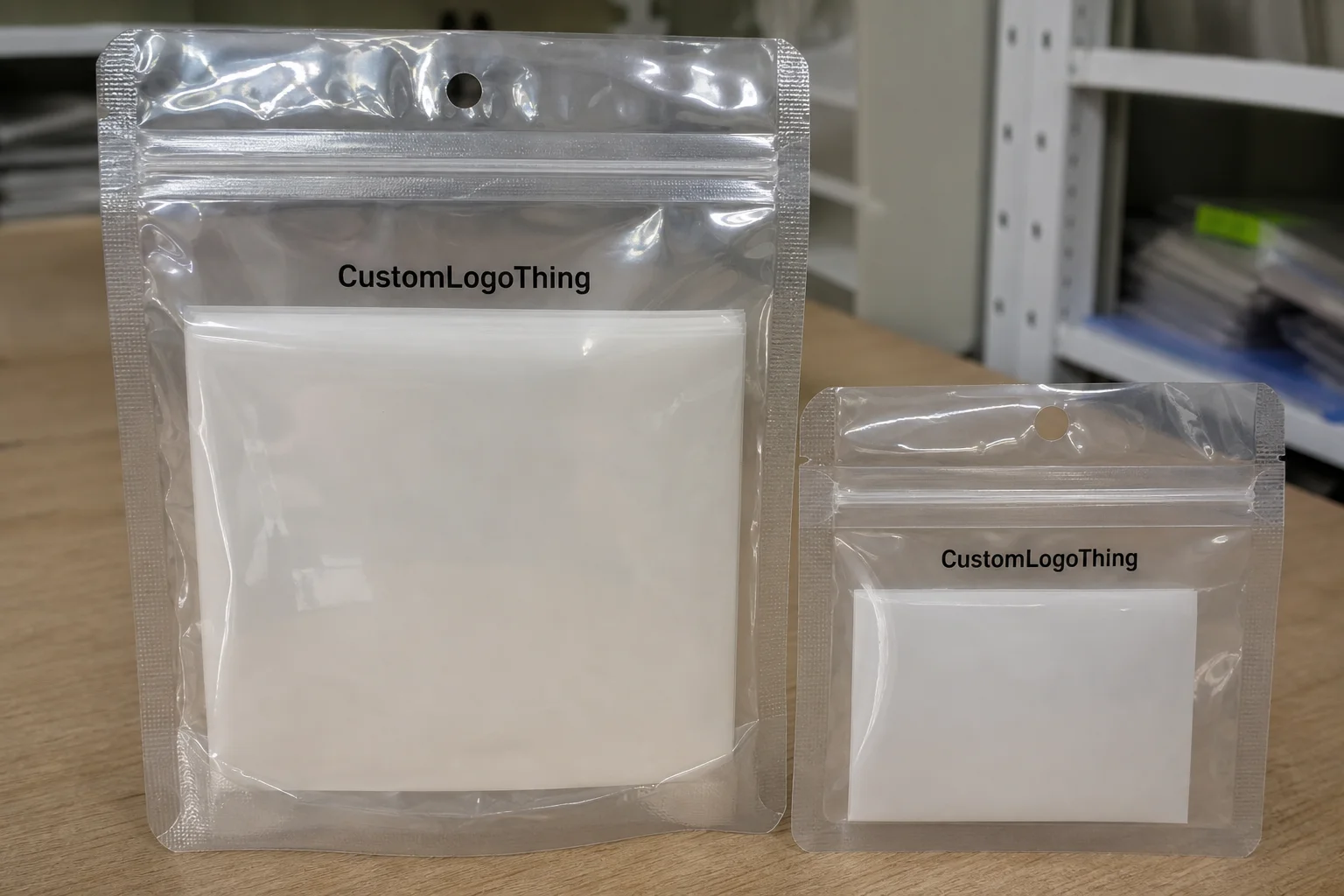
A plain pouch only holds something. In retail, that is not enough. A clear bag with no branding and no structure can make a good item feel like a sample, a loose refill, or leftover stock. Add a logo in the right place and the same bag starts to read as deliberate packaging instead of a stopgap.
Visibility is the first advantage. Shoppers can judge color, texture, count, and shape before they read a line of copy. That matters for products that sell on appearance as much as on function. It also matters for items that need to look orderly, because a transparent pouch shows whether the contents are aligned, full, and cleanly packed.
The zipper helps as well. A resealable closure suggests repeated use, which is valuable for snacks, cosmetics, sample kits, small accessories, and replacement parts. It signals practicality without adding bulk. In many categories, that makes more sense than a carton That Feels Premium but hides the product and adds cost.
Logo placement carries more weight than buyers often expect. A centered mark on the front panel can lift the whole package. A small logo tucked near the seal usually looks accidental, especially once the bag is on a shelf or in a bin. The bag becomes part of the display, so the brand mark needs to be readable at the distance where the product is actually sold.
A clear pouch does not hide the product. It frames it. That difference separates simple packing from actual presentation.
Clear Zip Lock Bags with logo custom logo are strongest when the item inside already has something worth showing. Bright gummies, handmade jewelry, sample sets, small electronics, and beauty refills all benefit from visibility. If the product itself is visually weak, the transparent bag will not improve it. It will simply expose the weakness sooner, which is often useful during product development.
What makes a zip-lock pouch clear, printable, and shelf-ready
The film is where the first real decision happens. Most clear zip bags use polyethylene, sometimes with a laminated structure if the package needs more stiffness or better barrier performance. Clarity is not just the absence of color. It is the absence of haze, waviness, and distortion that can make the item inside look dull even when the product itself is fine.
There is a difference between “clear enough” and shelf-ready clear. Better film gives the logo stronger contrast and keeps the product visually crisp under store lighting. Lower-grade film can wrinkle, cloud, or reflect unevenly, which weakens both the product presentation and the print.
Zipper style changes the user experience every time the package is opened. A standard press-to-close zipper is usually the lower-cost option and works well for lighter items or low-complexity retail packaging. A slider zipper costs more, but it is easier to operate and often feels more polished. For heavier products or repeated opening, that added convenience is not cosmetic. It affects how the bag performs in use.
Printing on clear film needs more discipline than printing on white stock. A logo that looks strong on a mockup may disappear if the contrast is too soft or the linework is too delicate. Light frosted or matte-clear film can help reduce glare, but it also changes how much of the product remains visible. Some brands use an insert card behind the pouch so they can add ingredients, instructions, or branding copy without crowding the front panel.
Clear Zip Lock Bags with logo custom logo are usually best for these use cases:
- Dry goods and snacks where visibility supports freshness and portion size.
- Cosmetics and samples where the contents need to be seen but still handled neatly.
- Jewelry and accessories where presentation matters more than barrier performance.
- Small retail parts where count, organization, and resealability matter.
For products that need more than a simple pouch, compare the bag against Custom Packaging Products that include boxes, inserts, or alternate closures. A clear bag is often the right answer. Sometimes it is just the least expensive answer, and that is not the same thing.
Transit should also stay in the conversation. A package can look perfect in a staged photo and still fail when stacked, compressed, or rubbed against harder contents. Packaging groups such as ISTA publish test methods for drop, compression, and vibration, which is useful context when the bag needs to survive more than shelf display.
Clear Zip Lock Bags with Logo Custom Logo: Cost, MOQ, and unit price drivers
Clear Zip Lock Bags with logo custom logo do not price like stock inventory. The final cost depends on size, film thickness, print coverage, zipper style, finishing, and quantity. If a quote comes back too quickly without asking about those details, it usually means the vendor is quoting the cheapest version and assuming the rest will be adjusted later. That is where budgets get distorted.
MOQ is one of the most common surprises for first-time buyers. Lower quantities carry a higher unit cost because setup, printing, and waste are spread across fewer pieces. At larger volumes, the unit price starts to move in visible steps. The exact breakpoints vary by plant and spec, but the pattern is consistent. A run of 500 pieces is rarely efficient. A run of 5,000 pieces starts to make practical sense. Beyond 10,000, simple specs can become much more economical.
These are rough planning ranges, not universal pricing:
| Bag Spec | Typical MOQ | Approx. Unit Price | Notes |
|---|---|---|---|
| Small clear press-to-close bag, one-color logo | 1,000-3,000 | $0.08-$0.18 | Useful for light items and basic retail packaging |
| Medium clear bag, thicker film, one- to two-color logo | 3,000-5,000 | $0.14-$0.28 | Common for branded packaging that needs more presence on shelf |
| Premium clear pouch with stronger zipper and larger print area | 5,000-10,000 | $0.22-$0.45 | Fits products that need a more finished retail look |
| Custom size, special finish, or multi-pass print | 5,000+ | $0.35-$0.70+ | Higher setup, more waste, and tighter QC requirements |
Two cost drivers matter more than most buyers expect. First, print coverage. A small one-color logo is inexpensive because it uses less ink, less setup, and fewer registration risks. A full-panel design costs more because it raises inspection demands and increases the chance of rejection. Second, special finishing. Matte, frosted, soft-touch, extra barrier layers, and stronger closures can improve the bag, but each one adds cost and can stretch lead time.
There are also hidden costs. Plate setup, sampling, freight, rush production, and packaging weight often appear after the first quote if the buyer did not ask for them upfront. A larger bag looks cheap until shipping is calculated by volume. For any comparison between vendors, ask for an itemized quote that separates unit price, setup, tooling, proof cost, and freight.
Packaging.org is a useful reference point for packaging standards and industry context: packaging.org. It will not solve pricing, but it keeps the discussion grounded in how packaging is actually specified and handled.
Production steps and lead time from artwork approval to finished bags
Good production is orderly. The sequence usually runs through spec confirmation, artwork preparation, proof review, printing, curing, converting, packing, and shipping. If one step gets rushed or skipped, the problem usually returns later as waste, rework, or a delayed launch.
Artwork is where many timelines slip. Low-resolution JPEGs create cleanup work. Tiny type is hard to print clearly on transparent film. Bag size also matters because the safe zone for text is smaller than most buyers expect. Vector files, exact dimensions, and a clear label of the print area usually speed up the process because the production team can build the run without guessing.
For straightforward jobs, clear zip lock Bags with Logo custom logo can often be produced in about 12 to 15 business days after proof approval, assuming the artwork is ready and the quantity is not extreme. Larger runs, complex shapes, special finishes, and multi-color printing can push that to 18 to 25 business days. Freight time sits on top of that. It should be planned separately, not treated as part of production.
Rush service exists, but it is not a cure for missing decisions. If the size is still changing, the artwork is unresolved, or the packaging is being asked to do more than it was designed for, a compressed schedule usually creates more risk than value. A week spent on proof correction is usually cheaper than a run of bags that print well but fit poorly.
When timing matters, these three dates should be clear before approval:
- Proof turnaround time.
- Production time after approval.
- Transit time to the receiving dock.
Spec choices that change performance: thickness, zipper, seal, and finish
Thickness is one of the easiest specs to understand and one of the easiest to misjudge. Thin film lowers the price, but it also feels less substantial and can wrinkle enough to make the print look worse. Thicker film stands better on a shelf, resists puncture, and usually feels more finished in the hand. For lightweight goods, 2.0-3.0 mil can be enough. For more visible retail packaging, 3.5-5.0 mil often feels safer and more durable.
Zipper choice should match how often the bag is opened. A press-to-close zip is fine for lower-cost retail items, samples, and accessories that are not opened every hour. A slider zipper makes repeated access easier and reads as more premium. For heavy or sharp contents, the zipper is only part of the equation. The side welds and bottom seal need to hold under stress too.
Finish influences the way the product reads under lighting. Glossy film reflects more light, which can make a logo stand out in a bright retail environment, but it can also produce glare that hides the product. Matte or lightly frosted film softens the reflection and often gives the logo a cleaner read, especially if the mark is dark, metallic, or fine-lined. The right choice depends on whether the bag or the product should catch the eye first.
Think in combinations rather than isolated specifications. A thick bag with a weak zipper still disappoints. A strong zipper on thin, slippery film still feels cheap. A better spec stack might look like this:
- Light retail item: 2.5 mil clear bag, press-to-close zip, one-color logo.
- Midweight product: 3.5-4.0 mil bag, reinforced zipper, moderate print area.
- Premium presentation: 4.0-5.0 mil bag, slider zipper, controlled matte or frosted finish.
If the package includes inserts or cards, paper stock can be selected separately. That is where FSC-certified material can matter, especially if the brand wants a responsible paper component without making exaggerated claims about the plastic itself. The film and the insert often come from different supply chains, so they should be reviewed separately.
Clear zip lock Bags with Logo custom logo perform best when the buyer treats the bag as a packaging system. Clarity, closure, thickness, and finish all need to work together. None of them can carry the entire job on its own.
Common mistakes that ruin clarity, seals, or branding impact
The first mistake is choosing a bag that is too thin for the product. It saves a few cents and costs more in presentation. Thin film wrinkles, bows, and tears more easily, which makes a perfectly good logo look careless. If the item has corners, weight, or repeated use, thin film is usually a false economy.
Logo scale is the second issue. Too small and the brand disappears. Too close to the zipper and the print zone gets distorted. Too low in contrast and the mark washes out under store lights. Buyers often approve artwork on a white screen and never test it on a transparent surface, which is where the real package lives.
Readability at actual size matters too. A logo that feels balanced in a mockup may be too intricate once it is reduced to fit a 3-inch zone. Thin serif fonts, delicate lines, and tiny copy tend to fail first. If the bag sits beside other retail packaging, the mark needs enough weight to remain visible without crowding the product window.
Skipping sample testing is another mistake that causes avoidable problems. A real sample shows how the zipper feels, how the film handles, whether the logo lands in the right place, and whether the surface scratches or scuffs too easily. That is not paperwork. It is quality control. For a launch run, it is also cheaper than replacing a bad order.
Before approving a full run of clear zip lock Bags with Logo custom logo, check these four items on the sample:
- Does the zipper close evenly across the full width?
- Does the bag present the product cleanly on shelf or in a bin?
- Is the logo readable from normal viewing distance?
- Does the film remain clear after handling and under bright light?
Expert buying tips and next steps before you request quotes
Buyers get better pricing and fewer surprises when they send a complete spec from the start. Keep it specific: exact dimensions, product weight, desired thickness, logo file format, print colors, zipper style, quantity, and whether the bag is for display, storage, or shipping. If those details are missing, the quote is a guess with a price attached.
Ask for an itemized quote every time. The useful version breaks out bag cost, printing cost, setup, tooling if any, sample charge, freight, and lead time. That makes vendor comparison practical. A low headline number can disappear quickly once extras are added back in.
Vector artwork is the safest starting point. PDF, AI, and SVG files hold edges cleanly at print size, which matters on a clear surface where weak detail shows immediately. If the logo only exists as a low-resolution image, expect extra prep time and possible cleanup charges. If color matters, ask how the printer handles Pantone references or near-match process color, then confirm the proof on the actual material. Clear film does not behave like paper, and that changes how color reads.
A practical pre-order checklist looks like this:
- Confirm the bag size against the product inside, not by memory.
- Choose thickness based on handling, weight, and puncture risk.
- Decide whether clear, frosted, or insert-backed presentation fits the product.
- Request a sample or pre-production proof.
- Compare MOQ, lead time, and freight together, not as separate decisions.
The best clear zip lock Bags with Logo custom logo are rarely the most decorative ones. They are the ones that fit the product, survive handling, print cleanly, and keep the brand mark visible without getting in the way. That usually comes down to a sensible spec, a realistic budget, and a sample that gets checked before the full run starts.
Are clear zip lock bags with logo custom logo good for retail packaging?
Yes, if the product benefits from visibility and resealability. They work best when the logo has enough contrast and the bag thickness suits the item weight. For retail, the closure and clarity matter as much as the print itself.
What thickness should I choose for clear zip lock bags with logo?
Light items can use thinner film, but anything with edges, weight, or repeated opening usually needs a thicker spec. Thicker bags feel more stable on shelf and are less likely to wrinkle or tear. The right choice depends on puncture risk, handling, and the product itself.
How much do clear zip lock bags with logo custom logo usually cost?
Price is driven by size, thickness, print coverage, quantity, and any special finishing. Higher MOQs usually lower unit cost because setup is spread across more bags. Rush production, custom sizes, and multi-color printing usually raise the price.
What is the normal turnaround for custom clear zip lock bags?
Simple orders can move quickly after artwork approval, while more complex specs or larger quantities take longer. The biggest timeline risks are artwork delays, proof changes, and print setup issues. Shipping time is separate from production time, so both should be confirmed early.
Do I need vector artwork for the logo on clear zip lock bags?
Yes. Vector files are the safest option because they stay sharp at print size. PDF, AI, or SVG files are usually preferred over low-resolution images. If the logo is not vector, expect extra prep time and possible cleanup fees.


