Private Label Caps Logo Print Quote for Bulk Orders
Private Label Caps look simple until pricing starts. Then the details show up fast: closure type, crown shape, logo placement, decoration method, packaging, and the actual file quality. A private label caps logo print quote should be read like a production sheet, not a rough estimate. One small spec change can move the number more than the blank cap itself.
That is especially true on first orders. Buyers often start by comparing the cap blank and ignore the work behind it. Setup, digitizing, proofing, color matching, and packing all affect the landed cost. A quote that leaves those items vague is not cheap. It is just incomplete.
For sourcing teams, the useful question is not whether a cap is priced low. It is whether the quote reflects the real job. If the decoration method changes later, or the packing standard is tighter than expected, the order costs more anyway. Better to surface those variables early and avoid the usual round of revisions.
Why Cap Quotes Change After the First Sample
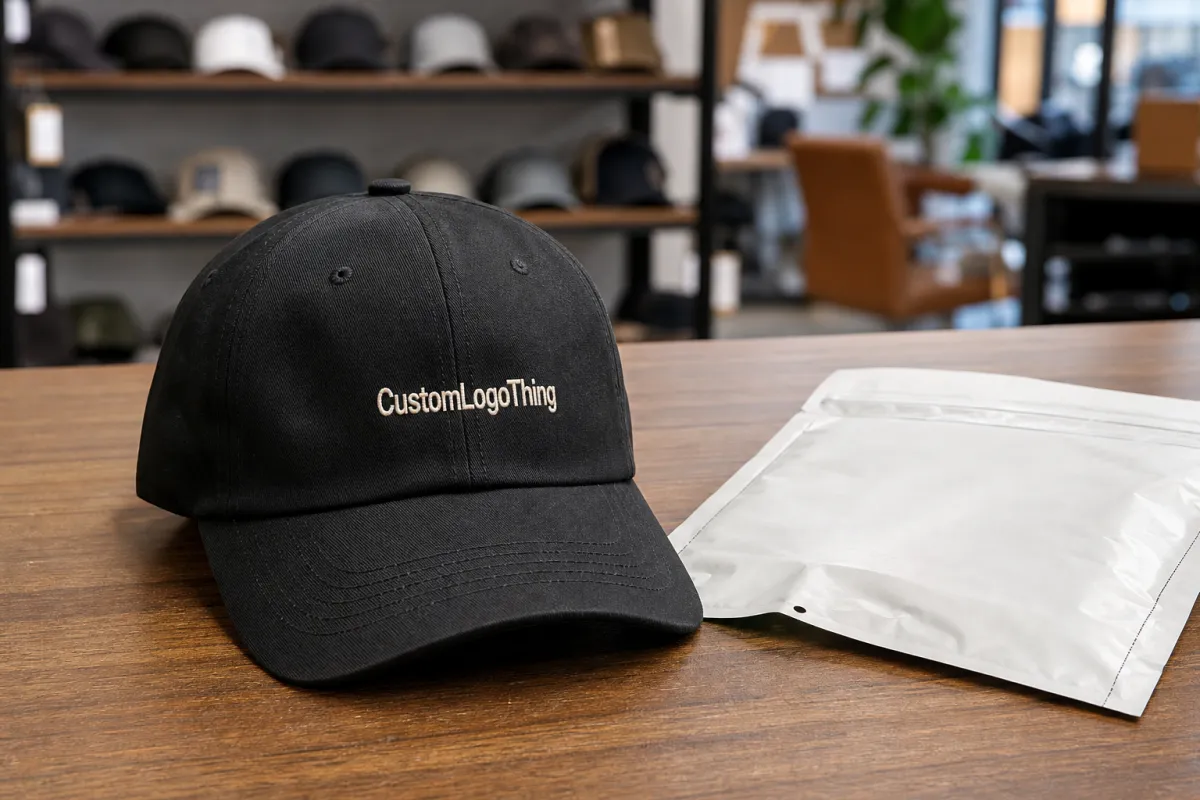
Most first-time buyers assume the cap blank drives the price. In practice, decoration usually has the bigger impact. A six-panel dad hat with a small front embroidery is a different job from a structured snapback with a woven patch, back embroidery, and retail folding. The sample makes that obvious. The quote usually follows.
The most common cost shifts are predictable. Embroidery needs digitizing, and digitizing can run anywhere from about $20 to $80 depending on artwork complexity and stitch count. Screen print needs screen or plate prep, even if the run is small. Patches may need a mold, backing choice, edge finish, and an approval round for color. If the buyer wants individual polybags, hangtags, barcode stickers, or carton labels, those items move the total faster than most people expect.
Color control also changes the quote. A rough “close enough” match is easier than a strict Pantone target. Once the brand asks for exact fabric, thread, or print color alignment, production needs more checks and sometimes more sampling. That does not mean the supplier is overcharging. It means the order is more controlled.
A quote is only useful if it shows what can move. If the line items are vague, the risk is still hidden somewhere.
It also helps to compare landed cost instead of unit price alone. Freight, packaging, inspection, and rework risk matter. A quote that looks cheaper on paper can be more expensive once the buyer adds a second sample, a color correction, or a shipping surcharge. That happens often enough to be boring.
Cap Styles, Materials, and Logo Print Methods
Cap style affects both the look and the decoration outcome. A dad hat usually has a soft, low-profile crown and a relaxed fit. It works well for smaller embroidery or simple print because the panel sits naturally under the logo. Snapbacks are more structured and hold shape better, which is useful for retail presentation and bold front graphics. Five-panel caps give a flatter front panel, so they suit logos that need a clean stage. Truckers bring mesh back panels and a more casual feel. Performance caps use technical fabrics for moisture control, stretch, or lighter weight.
Fabric choice matters just as much. Cotton twill is common because it is predictable, affordable, and easy to decorate. Washed canvas gives a softer finish but can slightly blur very fine print edges. Polyester and blended performance fabrics behave differently under heat and need more careful testing. Mesh reduces heat buildup, but it limits where a logo should go if the goal is high visibility and clean registration.
The decoration method should match the cap and the brand standard. Embroidery is still the default for many retail and corporate programs because it feels durable and finished. It also hides minor fabric texture better than print. Screen print works best on flatter front panels with simple shapes and fewer colors, though it is less forgiving on curved or heavily textured surfaces. Heat transfer is better for small runs, thin lines, gradients, or highly detailed artwork. Woven patches are useful when the brand wants sharper edges and a more badge-like finish. Rubber or PVC patches create a heavier visual punch, but they can feel out of place on softer lifestyle caps.
Artwork format is a frequent source of avoidable friction. A logo built for web use is not ready for production. Vector files such as AI, EPS, PDF, or SVG give the cleanest result because they scale without pixelation. If the art arrives as a JPG or PNG, someone still has to rebuild or trace it before printing or embroidery. That rebuild takes time and can change the quote.
Exact color matching also depends on the decoration method. Embroidery thread does not behave like on-screen color. Transfer films and printed inks shift differently again. For simple logos, spot colors are usually easier to control than a full CMYK build. A useful Private Label Caps logo print quote should say whether the artwork will be digitized, separated for print, or converted to a pantone-matched thread set.
For buyers who need the cap to match packaging or labels, the decoration plan should be separated from the print collateral. Packaging methods such as offset, digital, and flexographic printing each behave differently as quantity changes. That matters when the cap program includes hangtags, inserts, or labels in the same delivery window.
Specifications Buyers Should Confirm Before Requesting a Quote
The fastest way to slow pricing down is to send a vague brief. A supplier can estimate from a sketch, but the estimate becomes far more accurate once the buyer locks down the cap construction. Panel count, crown height, brim shape, closure type, size range, and decoration placement all belong in the request before quoting starts.
These details remove most of the back-and-forth:
- Panel count: five-panel, six-panel, or another build.
- Crown profile: low, mid, or high.
- Brim shape: curved, pre-curved, or flat.
- Closure: snapback, strapback, buckle, Velcro, or fitted.
- Size range: one-size-fits-most or specific sizing.
- Decoration placement: front, side, back, under-brim, or patch.
- Color callout: fabric color and Pantone references for artwork.
Artwork size matters more than most teams expect. A logo that looks balanced at 3.5 inches wide on a monitor may need to shrink to 2.25 inches to sit cleanly on a low-profile front panel. Side-panel logos usually need even tighter sizing. Under-brim decoration is possible, but it is not a default option and usually needs a specific factory setup. If the placement is tight, ask for a mockup at actual scale, not a generic digital layout.
Quality expectations belong in the same request. Stitch count, thread density, print registration tolerance, and patch edge finish all affect the result. If the cap needs a clean retail look, say so. If the run can tolerate more variance, say that too. Clear acceptance criteria help the supplier quote the right method instead of overbuilding or underbuilding the job.
Packaging is another place where the quote can drift. Individual polybags, size stickers, carton markings, hangtags, and folded inserts all create extra handling. On a small run, the packaging labor can be more noticeable than the decoration itself. If the cap line has to match a broader private label program, it makes sense to list those items at the start rather than adding them after approval.
Buyers should also specify the target destination and any delivery constraints. Ex-factory pricing, FOB pricing, and delivered pricing are not interchangeable. A quote that does not say which basis is being used is hard to compare. That sounds basic. It still gets missed constantly.
Private Label Caps Logo Print Quote: Pricing, MOQ, and Unit Cost
Pricing usually breaks into five parts: the blank cap, decoration setup, sampling or proofing, packaging, and freight. The structure is simple enough. The problem is how each part scales. A $40 digitizing fee barely matters on a 1,000-unit order. On 100 units, it changes the price per cap in a way buyers feel immediately.
Typical minimum order quantities depend on style and decoration. Simple printed caps can sometimes start around 100 to 300 units. Embroidery and patch work often sit closer to 300 units or above, especially if the design has multiple colors or a more complex placement. Lower minimums are useful for testing, but the unit cost usually rises because setup is spread across fewer pieces.
| Cap Style | Typical MOQ | Approx. Unit Cost | Common Decoration | Buyer Note |
|---|---|---|---|---|
| Dad hat | 100-300 | $3.20-$6.25 | Embroidery or heat transfer | Good for softer branding and lifestyle retail |
| Snapback | 300-500 | $3.60-$6.80 | Embroidery, woven patch, or screen print | Structured front supports bolder logos |
| Five-panel | 100-300 | $3.40-$6.50 | Flat print or patch | Works well for front-focused artwork |
| Trucker | 300-500 | $3.10-$5.90 | Embroidery or patch | Mesh backs reduce options for certain placements |
| Performance cap | 300-1000 | $4.20-$7.50 | Heat transfer or low-profile embroidery | Technical fabric needs more heat control |
Those ranges are working numbers, not fixed offers. Fabric grade, logo size, stitch count, print coverage, and packaging standard all move the final amount. A heavier cotton twill cap with a structured front usually costs more than a light promo cap. Add retail folding, barcode labels, or custom polybags, and the landed price rises again. A private label caps logo print quote becomes much easier to evaluate if the supplier shows 100, 250, 500, and 1,000 unit breaks instead of one flat number.
It also helps to ask what is included in the sample process. Some suppliers quote a mockup only. Others include a stitched or printed prototype, which takes longer but catches problems earlier. The second option may look pricier, but it saves money when the logo is small, the cap fabric is tricky, or the production run is large enough that a mistake would be expensive.
For margin planning, compare quotes using the same assumptions. If one offer includes packaging and another does not, the lower number is meaningless. If one supplier quotes air freight and another quotes ocean freight, the schedule and cost basis are different enough to distort the result. The cleanest comparison is only possible when every line item is named.
Process, Timeline, and Turnaround From Artwork to Delivery
A clean cap program usually follows the same sequence: inquiry, artwork review, mockup approval, sampling if needed, production, inspection, and shipment. The order matters. Skip a step, and the schedule slips later. A reliable quote should reflect that sequence before anyone commits money.
Artwork proofing is often the fastest stage, usually one to two business days if the file is usable. A vector file makes life easier because the logo can be resized for embroidery or print without losing edge quality. Sampling commonly takes five to ten business days, depending on the decoration method and whether the cap needs a new patch, a special thread match, or a color strike-off. Production is often two to four weeks after approval. Freight sits outside that window.
Delays usually come from a small list of repeat offenders. Unreadable artwork creates rework. Late approvals push the job into the next production slot. Color changes after sampling can trigger a second proof. Packaging changes near the end can slow packing and labeling. Buyers who need a tight turnaround should flag the target date early and ask whether the schedule includes inspection and packing or only sewing and decoration.
There is also a difference between a fast quote and a fast order. A supplier can respond quickly and still need time to confirm closure hardware, fabric availability, and decoration capacity. That is normal. The quote is only reliable once the supplier has checked the actual production constraints, not just the art file.
Quality control should be written down before production starts. For embroidery, that means stitch density, pull compensation, and placement tolerance. For print, it means registration, color consistency, and ink coverage. For patches, it means edge finish, backing type, and whether the patch sits flat once heat-applied or sewn. Small variances are acceptable if both sides agree in advance. Unwritten expectations cause most disputes later.
For programs with custom labels, inserts, or shipping cartons, transit protection deserves attention too. Packaging standards such as ISTA transit testing standards can help reduce damage claims, while FSC-certified paper options support packaging choices without turning the order into a science project. The point is simple: the cap should arrive in the same shape it left the factory. That sounds obvious until a boxed run gets crushed in transit.
Why Buyers Choose a Focused Private Label Cap Supplier
Operational focus matters. A supplier that handles caps every day usually quotes more clearly because the team knows where the risk sits: crown structure, decoration placement, closure hardware, and packing format. Fewer handoffs usually mean fewer pricing surprises. That matters on repeat programs, seasonal drops, and multi-store launches where consistency matters more than a small unit saving.
Repeat orders expose the real difference between suppliers. The first batch can be luck. The second batch shows whether the process is stable. If the color drifts, the patch lands slightly off-center, or the closure changes without warning, the buyer inherits a merchandising problem. That is why retail teams care so much about tolerance and documentation. They are not being fussy. They are protecting the line.
Service quality is measurable too. A useful quote should identify the decoration method, the setup charge, the assumed artwork size, the packaging format, and the shipping basis. It should also say whether related items like labels, tags, or inserts can be handled in the same production flow. That kind of coordination matters because private label programs rarely involve just one item.
Some suppliers are strong on low-cost blanks but weak on finishing. Others can deliver a premium look but quote slowly or explain poorly. The right partner depends on the job. A trade-show giveaway can tolerate looser tolerances. A retail launch cannot. The best fit is the supplier whose process matches the brand standard, lead time, and margin target. Fancy language does not help if the cap arrives off-spec.
There is also an efficiency gain when the supplier understands the surrounding packaging work. If the order includes hangtags, label cards, or carton marks, the buyer can keep artwork, print methods, and delivery dates aligned instead of managing them as separate projects. That matters because offset, digital, and flexographic printing each suit different volumes and different budgets. A supplier that can explain those choices without hand-waving tends to produce cleaner estimates.
Next Steps to Request a Production-Ready Quote
Before asking for pricing, decide on the basic variables: cap style, logo file, quantity, target date, and decoration method. That alone improves the first private label caps logo print quote more than a long email thread ever will. If the artwork is not final, send the cleanest draft available and note what still needs to change.
A simple decision order works well. First, choose the blank cap. Second, confirm logo placement. Third, lock the quantity. Fourth, compare the quote against sample terms and freight assumptions. That sequence keeps the buyer from judging price before the real variables are fixed. It also shortens the back-and-forth, which matters when multiple options are under review.
Use this checklist before sending the request:
- Cap style and closure type
- Vector artwork or best available draft
- Logo placement and size
- Pantone colors or thread color targets
- Quantity breakpoints
- Packaging and labeling needs
- Delivery address and deadline
Ask the supplier to confirm what is included and what is not. That means the sample path, setup charge, decoration method, packaging format, and freight basis. If the quote includes all of that, comparing options becomes much easier. If it does not, the low number is probably doing too much work.
The cleanest outcome comes from a spec sheet that leaves little room for interpretation. Send the cap style, logo file, quantity, and packaging requirements together. Then request a private label caps logo print quote that shows the decoration method, the unit price breaks, and the landed cost assumptions in one place. That is enough to judge whether the order fits the budget before production starts.
What should I send with a private label caps logo print quote request?
Send a vector logo file if possible, plus the cap style, quantity, logo placement, and target delivery date. Include Pantone colors, packaging needs, and whether you want embroidery, screen print, heat transfer, or patches. If artwork is not final, send the closest draft so pricing can be estimated without waiting for redesign.
What MOQ is typical for private label printed caps?
MOQ depends on cap style and decoration method, but many programs start around 100 to 300 units. Smaller runs are possible on some styles, though unit cost usually rises because setup is spread across fewer caps. Ask for multiple price breaks so you can compare 100, 250, and 500 unit scenarios side by side.
Which decoration method is best for a private label caps logo print quote?
Screen print works best for simple logos with flat color areas and a cleaner front panel. Embroidery is a stronger choice when the buyer wants a more premium retail finish and a tactile logo. Heat transfer is useful for detailed art or smaller runs that need sharper color separation. The right option depends on the cap fabric, placement, and the finish you want customers to notice first.
How long does private label cap production usually take?
Artwork proofing can take 1 to 2 business days if the logo file is ready. Sampling often takes 5 to 10 business days, depending on decoration complexity. Production commonly runs 2 to 4 weeks after approval, then freight time is added separately. If packaging is custom, add a little buffer for that step too.
Can I get a private label caps logo print quote before final artwork is ready?
Yes, a rough logo and target placement are usually enough for an initial estimate. Final pricing may change once the exact artwork size, color count, and print method are confirmed. Use the early quote to decide whether the cap style fits your margin before spending time on final design. That keeps the project moving without locking you into the wrong format.


