Private Label Caps Quality Control Checklist for Buyers starts with a simple reality: a cap that looks right in a sample can still fail in bulk. The front panel sits half a centimeter off. The embroidery puckers. The brim arrives flattened by bad packing. None of that shows up in a pretty mockup, which is why orders slip from “looks good” to “why are these all different?” faster than buyers expect.
“Approve the product, not the presentation. A cap lives or dies on fit, finish, and pack-out.”
Private Label Caps Quality Control Checklist: What Fails First
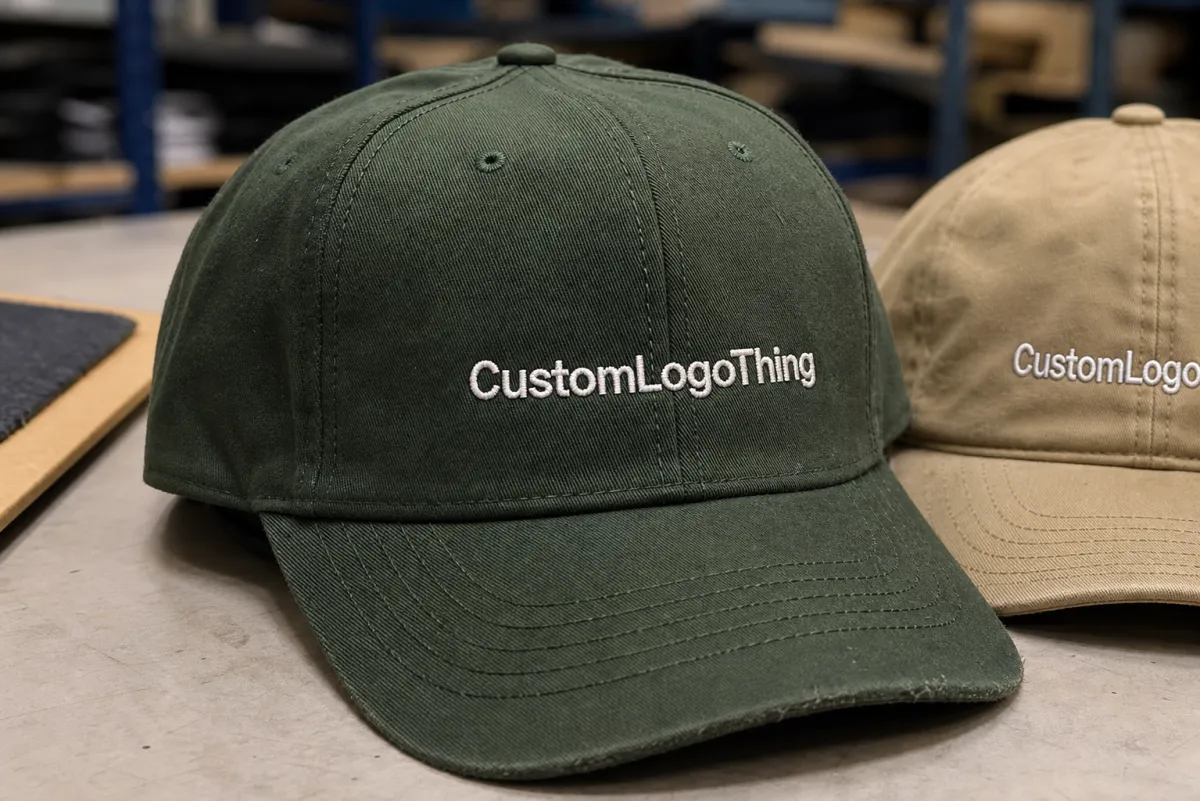
The first failures are usually boring ones. That is what makes them expensive. Crown shape, logo placement, stitch tension, and carton fill are the things buyers tend to check too lightly. A cap can sit clean on a sample board and still come off the line with a front panel that leans, a closure that binds, or a seam that wanders just enough to annoy every customer who tries it on.
A Private Label Caps quality control checklist should define pass and fail before bulk cutting starts. Not after approval. Not once the cartons are sealed. The standard has to be the approved sample, measured against actual production, not the artwork file or the render. A mockup does not tell you how structured foam behaves after sewing, how fabric lot variation affects shape, or how the brim curve changes once the cap is packed and shipped.
The usual failure points are predictable:
- Crown shape: too tall, too flat, or uneven side to side.
- Logo placement: embroidery or print drifting left, right, high, or low.
- Closure function: snapback, buckle, or Velcro that feels loose, stiff, or inconsistent.
- Stitch quality: skipped stitches, loose thread tails, broken bar tacks, or uneven tension.
- Pack-out damage: dented crowns, crushed brims, or wrinkled front panels from weak carton support.
That last one gets ignored too often. Buyers focus on the decoration and forget that packaging is part of product quality. If the cap arrives with a flattened brim or a creased crown, the customer does not care that the logo was centered in the factory. The same checklist should cover carton size, polybag fit, insert cards, and master carton count. If the order is retail-bound, packaging needs the same approval trail as the cap itself.
Use measurements, not adjectives. Crown depth in millimeters. Placement from center seam to logo edge. Closure range in actual fit points. Color tolerance against a Pantone reference or a signed swatch. “Looks premium” is not a control standard. It is a way to argue later.
How the Inspection Flow Actually Works
The cleanest inspection flow starts with a tech pack, artwork files, color references, and one sealed golden sample. If any of those are missing, the factory is guessing. Guessing is how a simple reorder turns into a correction loop that burns time and margin.
A practical inspection flow has three gates: pre-production approval, in-line checks during sewing and decoration, and final inspection before packing. Skip one gate and the defect usually moves downstream, where it costs more to fix. A crooked logo caught before sewing is a nuisance. The same issue found after carton closeout becomes a chargeback fight.
Pre-production is where the checklist earns its keep. Confirm panel count, fabric weight, thread color, closure type, sweatband material, label placement, and carton spec. If the cap uses embroidery, ask for stitch-out on production thread. If it uses patches or heat transfer, inspect edge adhesion, corner lift, surface smoothness, and how the finish behaves on the actual fabric. Materials change once they leave the sample room. That is not surprising, just inconvenient.
In-line inspection matters because cap defects build slowly. A sewing line can run clean for the first dozen dozen units, then tension drifts and the next batch starts walking off spec. A good checklist tracks the parts that slip first:
- panel symmetry and seam alignment
- stitch count and seam strength
- logo centering and placement variance
- sweatband finish and internal trim cleanup
- closure function across the full size range
Final inspection should be documented, not discussed vaguely over chat. “We fixed it” is not a quality record. Ask for defect photos, counts, corrective actions, and a note on which cartons were opened. If you use AQL sampling, write the sample size and reject threshold into the PO before production starts. For many medium runs, a 20 to 32 piece pull is workable, but the right number depends on order size, defect risk, and whether the factory is new to you.
For shipped product, the carton should get its own test. If the caps are traveling long distances or stacked heavily, ask for transit testing aligned with ISTA guidelines. That helps catch crush and vibration issues before customers do.
Fit, Stitching, and Decoration Specs Buyers Should Lock
Fit issues are rarely mysterious. They come from crown depth, panel count, brim curve, closure range, and sweatband construction. A structured six-panel cap will not wear like a soft five-panel, even if the artwork is identical. The shape tells on the spec, every time.
This is where the Private Label Caps quality control checklist needs hard numbers. “Good fit” means nothing to a sewing line. Lock the spec before bulk production starts:
- Crown height and depth: define the shape target from front panel to back seam.
- Closure range: check the smallest and largest usable fit so the cap does not pinch or float.
- Brim curvature: confirm how much curve is acceptable after packing and after unpacking.
- Thread and stitch density: set embroidery fill, outline clarity, and loose-thread limits.
- Color standards: confirm Pantone or swatch references for fabric, thread, underbill, and trims.
Decoration changes the inspection plan. Embroidery needs clean outlines, no bobbin mess, and no puckering around the front panel. Patches need edge adhesion and consistent placement. Heat transfers need rub resistance and decent wash durability. Printed logos need good ink coverage, sharp edges, and no ghosting from poor curing. If the cap includes swing tags or paper inserts, keep the approval set together so packaging does not turn into a late-stage guess.
Material drift also matters. Bulk fabric can come from a different lot than the sample. Thread can look a shade duller or brighter. Closures can feel tighter on one shipment and looser on the next. Those small shifts are where margin gets eaten. A buyer who ignores them ends up arguing over “close enough,” which is a terrible business model.
If the order is retail-facing, ask for FSC-certified paperboard on tags and inserts where paper-based components are used. It does not fix bad product, but it keeps the packaging story cleaner and the sourcing file easier to defend. For paper components, FSC certification is a practical filter, not a slogan.
Pricing, MOQ, and Unit Cost: Where QC Changes the Number
Tighter quality control costs more. Not dramatically, but enough to matter. More inspection time, more sample pulls, more photo proof, more rework if a defect gets caught early. On a 5,000-piece cap order, stronger QC might add roughly $300 to $900 total depending on how much in-line checking and third-party inspection you want. That sounds like overhead until you compare it with a rejected batch, a discounted sell-through, or a second round of freight.
MOQ changes the math quickly. Smaller orders spread sampling, digitizing, approvals, and inspection labor across fewer units, so the per-cap price goes up. A 500-piece run usually costs more per unit than a 5,000-piece run. That is not a supplier trick. It is just fixed setup cost showing up where it should.
| QC option | Typical added cost | Best for | Main tradeoff |
|---|---|---|---|
| Basic buyer check | $0.03-$0.06 per cap | Repeat orders with stable materials | Less protection against bulk variation |
| Tight in-line + final inspection | $0.08-$0.15 per cap | Custom logos, retail packs, new vendors | More labor time and slower release |
| Third-party inspection | $250-$450 per inspection day | Higher-value orders or first runs | Extra booking time and report review |
The useful comparison is not cheap quote versus expensive quote. It is same product, same approval scope, same QC scope. If one vendor includes carton photos, replacement terms, and final sampling while another gives you a one-line price, those are not equivalent offers. One is a quote. The other is a very expensive surprise.
Watch the hidden cost traps:
- rush production that compresses inspection time
- extra colorways that increase approvals and setup
- special trims or closures that introduce fit variation
- packaging upgrades that require separate checks
If the caps are selling through ecommerce or retail, unit cost should also include packing labor and the risk of transit damage. A cap that leaves the factory perfect and arrives crushed is still a bad order. The private label caps quality control checklist has to cover landed condition, not just the sewing line.
Production Steps, Timeline, and Lead Time for Caps
A typical cap order follows a straight path: sample approval, trim sourcing, bulk sewing, decoration, final inspection, and carton closeout. Miss one step and the schedule slips. The usual lead time lands around 20 to 40 days after approval for standard orders, though detailed embroidery, special closures, new molds, or custom labels can push that longer. Rush orders cost more because they leave less room to catch mistakes.
Artwork revision is a common delay. So is color approval. So is the first article that comes back with a perfect logo and the wrong underbill shade. That is why the quality checklist should sit next to a real production calendar. Not a loose promise. A dated plan with sample sign-off, bulk start, midpoint check, final inspection, and freight booking.
Pack-out deserves a place in that schedule too. If the caps are going to sit in master cartons for weeks, ask for crush resistance and handling checks that reflect the route, not the best-case version of it. Many buyers use ISTA 3A or a similar shipping reference for packaged goods, especially when outer packaging matters as much as decoration.
If the order is urgent, do three things early:
- freeze the tech pack before any bulk material is cut
- approve the sample fast, with defects written down clearly
- book inspection and freight before bulk production ends
That sequence is dull. Good. Dull is cheaper than fire drills. On cap orders, speed only helps if the spec is fixed first.
Common Mistakes That Turn a Cap Order Into Rework
The biggest mistake is approving one beautiful sample and assuming the bulk run will match it automatically. Bulk fabric shifts. Thread tension changes. Trim batches vary. If a supplier says every unit will be identical without showing the control points, that is not quality management. That is wishful thinking with a production schedule.
Another mistake is checking only the front logo. Yes, branding matters. But seams, sweatband finish, closure function, and carton crush matter too. A cap can look great from three feet away and still fail in the hand. That is exactly why the checklist has to cover both appearance and construction.
Other repeat offenders show up on almost every rushed order:
- vague specs like “premium look” or “good fit”
- no photo reference for acceptable logo placement
- no written rule for color tolerance
- no ownership for replacement costs if the batch misses spec
- top-carton-only inspection that misses variation lower in the stack
That last one is lazy and expensive. Open cartons from different layers, not only the easiest boxes on top. Variation often shows up in the middle or bottom of the stack, where nobody bothered to check because the tape looked clean. Also, keep photo proof. A factory can describe a defect politely and still leave you with no evidence of what changed.
If the order includes branding extras, keep the cap, label, and insert approvals tied together. That is where Custom Labels & Tags should be locked early, especially if barcode placement, hangtag size, or string length affects pack-out. Small packaging details become big problems when they are left for later. Later is where quality control goes to get messy.
Expert Sign-Off Checklist and Next Steps
Before mass production, freeze three things: the golden sample, the spec sheet, and the defect list. Those three documents prevent most arguments. If a private label caps Quality Control Checklist is supposed to do one job, it is this: compare the bulk run against the approved sample, record every deviation, and stop anyone from redefining the standard after production starts.
A practical sign-off package includes:
- approved sample photos from multiple angles
- measurement sheet with tolerances
- artwork placement map
- packing count and carton label rules
- reject thresholds and who pays for corrections
Ask for pre-shipment photos of each colorway, packed units, carton labels, and the final random inspection report. If the order value is high enough to hurt, use a third-party inspector or a buyer-side checklist that someone can actually enforce. Internal factory checks are useful, but they are not independent. That difference matters more than most buyers want to admit.
Repeat orders deserve the same discipline as launch orders, sometimes more. Quality drifts quietly on the second or third run because everyone assumes the process is already settled. That is how a good first order turns into a sloppy reorder. The fix is not complicated. Recheck the same points every time.
Keep the checklist attached to the PO. If the order includes woven branding, size labels, or swing tags, keep Custom Labels & Tags in the same approval set so the factory is not improvising on your dime. That one step saves more money than another round of apologies ever will.
What should a private label caps quality control checklist include?
It should include the approved sample reference, measurements, decoration specs, packaging checks, and clear reject rules. At minimum, cover crown height, closure range, logo placement, color tolerance, and carton count requirements. Add photo proof or video proof so the factory cannot interpret the standard for you.
How many caps should I inspect before approving a bulk order?
Sample from multiple cartons, not just the top layer, so you catch variation across the run. For medium runs, a 20 to 32 piece pull is a practical baseline, or use your AQL standard if you already have one. Increase sampling for first orders, new factories, or any order with detailed embroidery or custom packaging.
What defects are most common in private label cap production?
Crooked embroidery, loose threads, uneven panels, and a bad brim curve show up constantly. Wrong color trim, mislabeled closures, crushed cartons, and weak seams are also common. Decoration defects often hide until the cap is worn or packed, so check both form and function.
How do MOQ and unit cost affect quality control?
Smaller MOQ makes QC more expensive per cap because setup and inspection are spread over fewer units. Low-price quotes often cut corners on checks, packing, or rework, which is why the cheapest quote usually ages badly. Compare quotes using the same QC scope, not just the same product name.
When should I request a pre-shipment inspection for caps?
Use one for custom runs, first orders, and anything with complex embroidery or packaging. Book it before balance payment and before freight so defects can still be fixed without a fight. If the supplier resists inspection, that is not a small issue; it is the issue.


