A private label Clear Poly Retail Bags supplier looks straightforward from the outside. The bag seems like a simple commodity, and in one sense it is. But buyers find out quickly that the real cost is not the film itself. The cost shows up when a bag is a little too narrow for the product, a seal opens during transit, or a logo that looked sharp on screen disappears once it is printed on transparent film.
That is why apparel brands, accessory lines, beauty sellers, and gift retailers keep using clear poly. The format gives visibility, low weight, and a clean retail presentation without the expense of full cartons on every item. The bag still has to do real work, though. It needs to protect the product, fit the packing line, and arrive looking like the same spec every time. A reliable private label Clear Poly Retail Bags supplier is not just selling plastic. It is delivering repeatable dimensions, predictable print, practical packing formats, and enough process control to make the next order behave like the first.
The best programs are rarely flashy. They are measured, consistent, and built around a spec that can survive handling, storage, and shipping without turning into a project every month.
What a private label clear poly retail bags supplier actually does
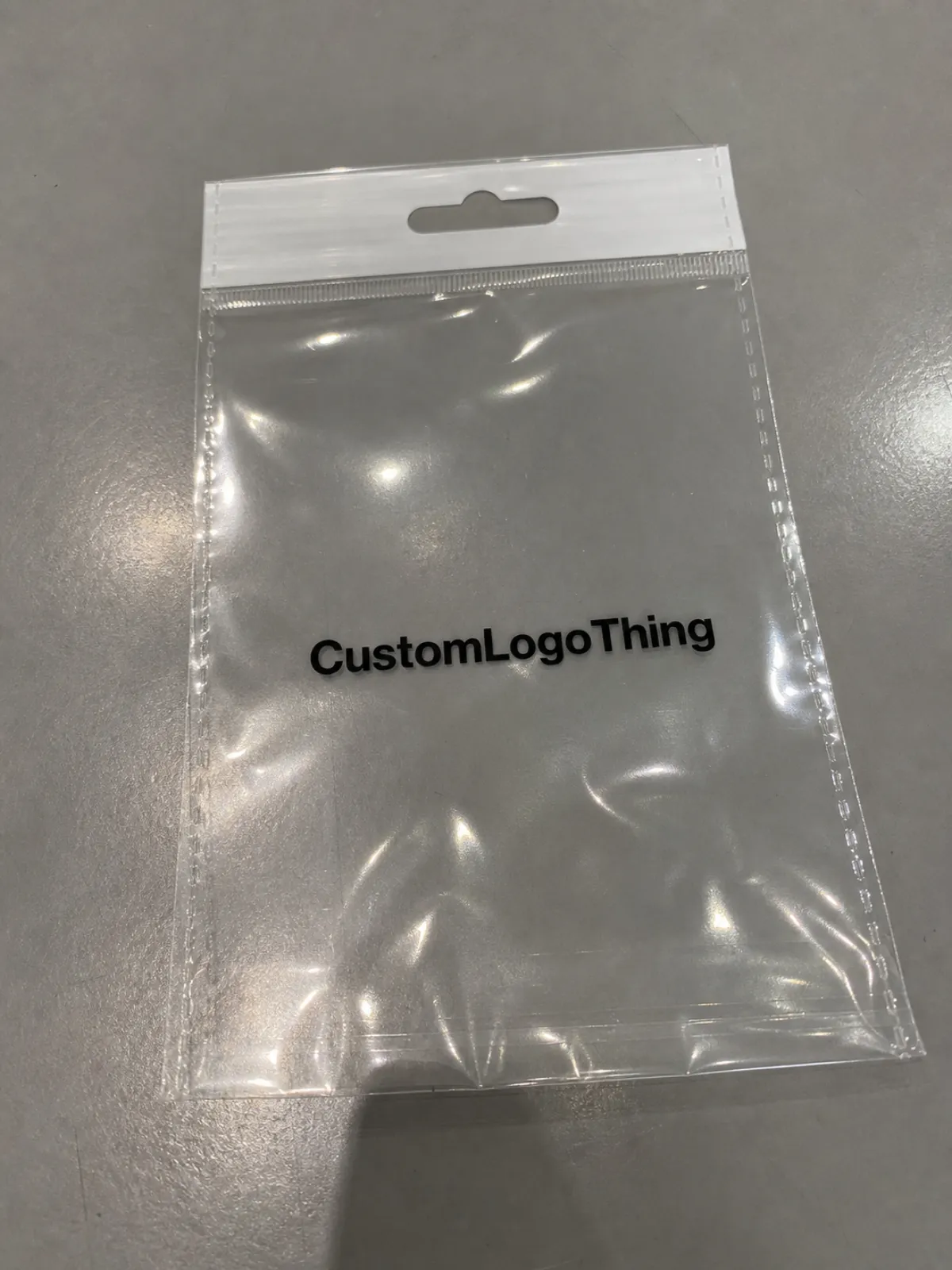
Private label in this category means the bags carry your brand, not the supplier’s. That can mean a simple logo print, a custom size, a branded header card system, or a more structured package with a defined closure style and film thickness. In other words, the supplier is not just cutting plastic. It is turning a packing decision into a retail-facing component.
The important part is control. A supplier that knows the category should be able to discuss gauge, clarity, seal width, dimensional tolerance, closure type, and packing configuration without drifting into vague marketing language. If the conversation stops at price and a cheerful promise, the buyer usually ends up carrying the risk.
Most problems begin before production. A bag that is 1/2 inch too tight slows the packing team and wrinkles the product. A bag that is too long leaves dead space, which makes the item shift and can make the front face look crooked on shelf. A seal that looks acceptable during approval can still fail in transit if the film gauge is too light or the sealing process is inconsistent. That is why a good supplier should speak in practical terms, not just quote a number and move on.
The lowest quote often leaves something out. That missing detail may be tolerance, seal strength, freight, carton pack, or print setup. The sample and the first production run usually tell the full story.
Clear poly remains popular because it lets the product stay visible. Retailers like that, merchandising teams like that, and brands like the cleaner presentation compared with a printed carton for every SKU. The bag should make the item look intentional, not temporary.
Clear poly retail bag specs that change performance
Price comparisons are only useful after the spec is understood. The film thickness matters first. Most Clear Poly Retail Bags fall somewhere between 1.5 mil and 4 mil, though the right range depends on weight, shape, and handling. Lightweight apparel inserts can work at the lower end. Heavier garments, bulkier accessories, and items that need better puncture resistance usually need more material. Thin film can save money, but it can also feel soft, wrinkle easily, and show wear sooner than expected.
Size matters just as much. Width and length do not sound dramatic, yet they control fit, labor time, and shelf presentation. A bag that is too tight slows down the line. A bag that is too loose lets the product move around, which is how corners get scuffed and displays start to look uneven. Buyers sometimes focus on the logo and ignore the measurements, then wonder why the finished pack feels awkward. The dimensions are not a detail. They are the starting point.
Seal style changes how the bag performs in real use. Side seals, bottom seals, zipper closures, and adhesive flaps each behave differently. If the package is opened and reclosed by shoppers, the closure is not a minor feature. It affects usability, presentation, and return visits. For retail programs that need a more premium feel, a zipper can justify the extra cost. For single-use packaging, a clean adhesive flap may be enough. The right choice depends on the product, not the catalog description.
Clarity is another place where low price and acceptable performance are not the same thing. Crystal-clear film makes a low-cost item look more polished. Slight haze may be fine for some uses, but if the bag is part of the presentation, haze can flatten the whole package. Recycled content can be helpful for sustainability goals, yet it may introduce color shift or a softer finish. That is not a deal breaker, but it should be checked with a physical sample rather than assumed from a spec sheet.
There are a few other features worth asking about:
- Anti-static film helps reduce cling on apparel and some electronics.
- Perforation or venting can matter for bulky goods that trap air.
- Hang holes change the retail display format and need to be placed carefully.
- Tear notches can improve opening, but only if they are positioned correctly.
For most buyers, these details matter more than a small difference in unit price. A bag that packs quickly and presents well usually costs less in labor and rework than a cheaper bag that creates friction every day.
MOQ, pricing, and quote drivers for private label orders
Pricing is never just the bag. Material cost matters, but so do setup, tooling, print method, carton pack, and freight. On smaller private label runs, setup can dominate the economics. A quote can look attractive until the buyer sees the charges for artwork prep, plate or screen setup, special packing, or international shipping. None of that is unusual. It is simply how the order gets built.
MOQ changes the equation quickly. Lower minimums are useful when a new SKU is being tested, a seasonal line is being launched, or the artwork still may change. The unit cost is usually higher, because the supplier has less volume to spread setup across. Larger runs lower the per-bag price, but only make sense if the spec is stable and demand is real. Ordering too much just to save pennies per unit is not a strategy. It is inventory risk with better branding.
For reference, a typical range for Private Label Clear Poly Retail bag pricing may look something like this:
| Order style | Typical MOQ | Unit price range | Setup cost | Best fit | Main tradeoff |
|---|---|---|---|---|---|
| Unprinted stock-style clear bags | 1,000-5,000 | $0.03-$0.09 | Low or none | Testing, basic retail packing | Little branding control |
| Single-color private label print | 3,000-10,000 | $0.08-$0.18 | $75-$250 | Logo-led retail presentation | Needs clean artwork and proofing |
| Multi-color or specialty finish | 5,000-20,000 | $0.15-$0.35 | $150-$500+ | Premium positioning | Higher setup and tighter approval control |
Those numbers are only a guide. Final pricing depends on the exact dimensions, film thickness, print colors, finish, packing format, and destination. Freight can swing the result more than some buyers expect, especially if the order is shipping across borders or going to multiple warehouses. If the bags are part of a broader packaging system, it helps to compare them with Custom Packaging Products so the entire line stays consistent across SKUs.
One practical point: a quote that does not separate bag cost from setup and freight is hard to evaluate. Ask for those pieces individually. That makes it easier to compare suppliers and see where the money is actually going.
Process and lead times from RFQ to delivery
The best buying process is boring, because boring usually means the details are locked. It starts with a request for quote, then spec confirmation, artwork review, sample approval, production, inspection, and shipment. Each step can move quickly or drag, depending on how clean the inputs are. A private label clear poly retail bags supplier can only be as fast as the information it receives.
Lead time tends to disappear in a few predictable places. Proofing is one of them. Material sourcing is another. If the supplier does not already have the right film in stock, production waits before the machine even starts. Print setup adds more time when plates, screens, or color matching are involved. Freight booking is the final delay many buyers overlook. The bags may be finished, but the truck, container, or vessel still has to move.
For timing, unprinted stock-style orders can sometimes move in about 7-12 business days once the specs are finalized, depending on capacity and available material. Printed private label runs often need 12-15 business days after proof approval if the film and print setup are ready. Offshore production usually adds several weeks once transit is included, so seasonal launches need buffer time rather than optimism.
There are also smaller delays that add up. A missing artwork file. A bag size that needs to be reconfirmed. A buyer who changes the logo placement after proofing has started. Each one sounds minor. Together, they can push a shipment past the date that mattered.
For that reason, it helps to confirm three things early: exact dimensions, final artwork, and the deadline that cannot slip. If the supplier knows a launch date is fixed, scheduling changes. So does the willingness to flag issues before they become production problems.
Artwork, samples, and print setup without the headaches
Printing on clear film is not the same as printing on a white carton. Transparency changes how the artwork reads. A logo that looks balanced on a PDF can vanish once it sits behind a patterned garment or a colorful accessory. Thin lines, subtle gradients, and low-contrast type often look cleaner in a design file than they do on the finished bag.
Use vector artwork whenever possible. AI, EPS, or a clean PDF is easier to work with than a flat image file. Outline fonts, define exact placement, and specify the live area so nothing critical lands near a seal, fold, zipper line, or tear notch. The more precise the layout, the fewer questions the supplier has to send back, and the fewer surprises show up later.
Sampling should usually happen in two stages. First, request a material sample so you can judge clarity, thickness, stiffness, and closure feel. Then ask for a printed proof or pre-production sample if the final retail appearance has to match a standard. Skipping the second step is where many buyers get caught. The logo may still be correct, but the scale, contrast, or placement can be off enough to make the bag feel unfinished.
Common proof issues include:
- Logo placed too close to the edge or seal
- Artwork scaled for a screen, not the finished bag size
- Poor contrast against the product visible through the film
- Text that becomes hard to read after folding or stacking
If the supplier offers label application instead of direct print, ask about adhesive clarity and edge lift. Labels can work well for shorter runs or test programs, but the finish still has to look deliberate. A crooked label or a cloudy adhesive patch can make the whole package look improvised.
If the packaging system includes tags or inserts, keep the structure aligned. Pairing the bag with Custom Labels & Tags can help the presentation feel coordinated instead of pieced together from separate orders.
How to vet a supplier before you place the order
Not every seller that offers clear bags actually controls the process well. Some are resellers with decent pricing and limited visibility into production. Others can manufacture to spec, but only if the buyer asks the right questions. A private label clear poly retail bags supplier should be able to explain the film type, where the bags are made, what the tolerance range is, and how repeat orders are handled. If the answers stay fuzzy, that is usually the answer.
Ask for proof of consistency. Recent QC photos help. So do dimensional tolerance ranges, material sheets, and examples of repeat runs in similar retail categories. The goal is not a polished sales deck. The goal is evidence that the bags will come back the same way next time. If the supplier cannot explain how it checks seal integrity or dimensional accuracy, keep moving.
For many buyers, the most useful quality checks are simple and practical. They may include:
- Film thickness verification against the agreed gauge
- Seal-width inspection for weak spots or inconsistent bonding
- Dimensional checks on width, length, and closure alignment
- Visual review for haze, scratches, dust, or print registration errors
- Carton count and pack consistency before shipment
Compliance should match the market. If the bag touches food, ask for food-contact compliance for the exact region. If recycled content or sustainability claims are part of the brief, make sure the wording is documented and accurate. Transit testing can matter as well, especially for heavier goods or fragile contents. For broader packaging and shipping guidance, the ISTA site is a useful reference for distribution testing, and Packaging Matters is a practical resource for material and packaging basics.
Communication quality matters more than buyers like to admit. A supplier that answers directly, sends exact spec sheets, and flags issues before production is usually easier to work with than one that stays upbeat and avoids specifics. Packaging is a manufacturing relationship. It works better when both sides stay concrete.
If shipping presentation is part of the brand standard, compare outer-pack options with Custom Poly Mailers so the retail bag and the shipper do not look like two different systems. A good packaging program feels planned from product to doorstep.
Common mistakes buyers make with clear poly bag orders
Most bad orders come from three habits: guessing, shopping on price alone, and changing the brief after approval. Guessing on dimensions sounds harmless until the bag starts fighting the product. Shopping on price alone sounds disciplined until a cheap bag arrives hazy, thin, or inconsistent. Changing the brief after proof approval sounds flexible until it creates a delay and a second round of charges.
Another common mistake is ignoring labor. If the bag is hard to open, hard to fill, or awkward to reseal, the packing team pays for it every day. That cost never appears on the product quote, which is why it gets missed. A bag that saves two seconds per unit can matter more than a fraction of a cent in unit price on larger runs.
The other blind spot is assuming that shelf appearance and transit protection are the same requirement. Some bags look excellent on a display table and fail once they are compressed into cartons. Others ship well but feel bulky or overly stiff in retail. The right spec depends on what the product does after it leaves the pack line, not just how it looks in a sample photo.
Here is the short version of what usually goes wrong:
- Ordering by eye instead of using exact dimensions
- Skipping samples because the digital render looked fine
- Assuming all clear film has the same clarity and feel
- Forgetting freight, cartons, and storage in the total landed cost
- Approving artwork before checking how it reads through the product
If a quote looks unusually clean, ask what it leaves out. The missing line item is often where the surprise lives.
Good buyers think about the bag as part of a system. The product, the pack line, the shipping method, and the shelf presentation all influence the spec. When those parts are aligned, the order is routine. When they are not, the bag becomes the place where every weakness shows up at once.
Next steps: build a shortlist and request smarter quotes
The fastest way to get a useful quote is to send a tight spec sheet. Include exact dimensions, film thickness, closure style, print method, artwork file type, carton pack, target volume, and destination. If the supplier has to guess, the quote may look fine at first and then drift once the real details arrive.
A simple shortlist process works better than chasing the lowest number:
- Compare at least three suppliers on the same spec sheet
- Request a physical sample before approving production
- Ask for a printed sample if shelf readability matters
- Review lead time, MOQ, freight, and revision policy side by side
That comparison usually shows where the tradeoffs live. Some suppliers are cheaper but slower. Some can move faster but need bigger minimums. Some are flexible with artwork and strict on materials. None of those differences is a problem if they are known upfront. They become a problem only when they show up a week before launch.
If the bag is part of a larger retail system, the most useful question is not which supplier sounds best. It is which one can hold the spec, keep the quality steady, and repeat the result without extra drama. That is what a private label clear poly retail bags supplier should deliver: a clean spec, a reliable sample, and a production run that arrives the same way it was approved. The bag should not need a story. It should simply do its job, every time.
FAQs
What should I ask a clear poly retail bags supplier before requesting a quote?
Ask for exact size, gauge, closure style, print method, MOQ, Lead Time, and freight terms so you can compare real apples-to-apples quotes. If the bag has to match an existing format, request a sample or a material spec sheet. Also confirm whether the supplier can handle your artwork file type before any setup cost is incurred.
How does MOQ affect private label poly bag pricing?
Lower MOQs usually raise unit cost because setup, materials, and handling are spread across fewer bags. Higher-volume runs often reduce the per-bag price, but only if the specs stay stable. If you are testing a new product, balance MOQ against the risk of overbuying inventory that may not move as planned.
What lead time should I expect for printed clear retail bags?
Unprinted stock-style orders move fastest, while printed private label runs take longer because of proofing and production setup. Artwork approval and freight booking often add more time than the actual bag run. Ask for a timeline with each milestone spelled out so you can see where delays are most likely.
Can a supplier match my existing clear poly bag specification?
Usually yes, if you can provide exact dimensions, thickness, seal style, and a physical sample or clear photo set. Matching clarity and feel is harder than matching size, so request a close sample before committing. If the old bag was inconsistent, expect the supplier to recommend a tighter tolerance or a different film grade.
What artwork format works best for private label bag printing?
Vector files are best because they keep logos sharp at different sizes. Ask the supplier whether it prefers AI, EPS, or PDF files and whether fonts must be outlined. For transparent bags, keep the design simple and high-contrast so it stays readable on shelf.
A clear retail bag is not a glamorous part of the product line, but it carries more weight than most buyers expect. It affects the pack line, the shelf look, the shipping outcome, and the brand impression all at once. That is why the right supplier matters: not because the bag is dramatic, but because consistency is what makes the whole system work.