PVC garment Bags for Bakeries Wholesale Pricing sounds narrow until you look at how bakery teams actually work. Uniform shirts, aprons, seasonal apparel, event wear, and folded stock all need to stay clean, visible, and easy to sort. If a back room handles multiple sizes and roles, a clear outer bag saves time every time someone reaches for a piece of clothing.
That is the practical side of the purchase. The packaging does not need to be fancy. It needs to hold its shape, resist everyday handling, and make inventory easier to manage. Once the order volume grows, the economics shift too. Wholesale pricing stops being a nice-to-have and starts deciding whether the bag format is useful long term.
Custom Logo Things works with buyers who want packaging that earns its place in the workflow. For bakery operations, that usually means repeatable specs, predictable reorders, and a material that protects apparel without adding unnecessary bulk. PVC is a work material here, not a display piece.
Clear PVC is especially useful because it makes contents visible at a glance. That matters in a storage area where staff are looking for the right garment fast. It also reduces handling, which helps keep folded items presentable between issue and use.
PVC garment bags for bakeries wholesale pricing: where they fit best
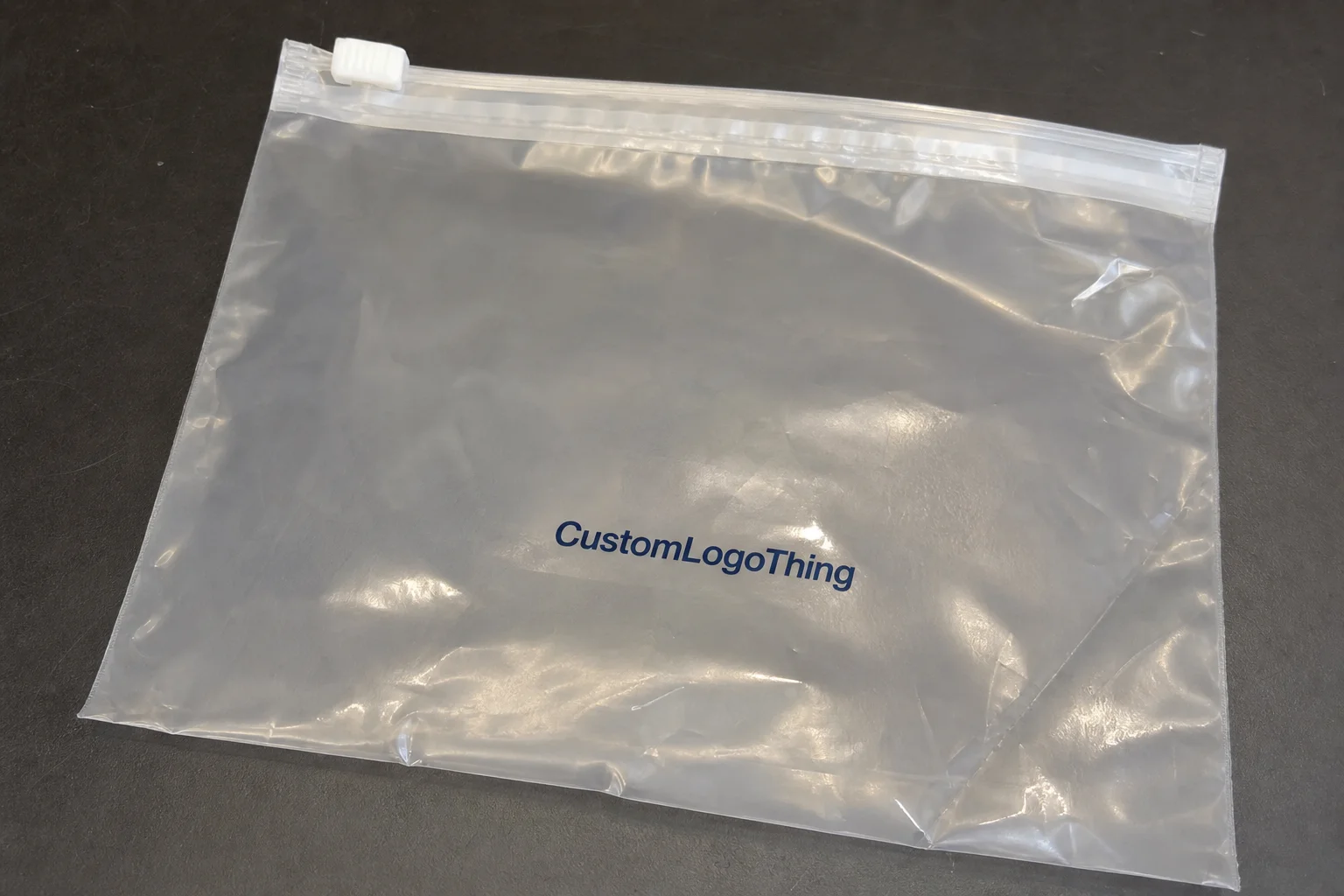
PVC Garment Bags for bakeries wholesale pricing becomes a useful conversation once storage has moved past casual shelving and into repeatable operations. A bakery may need bags for uniform sets, branded shirts, aprons, tasting-event outfits, or employee gear stored between shifts. In each case, the same thing matters: the team needs to identify the item quickly without opening every package.
That is why clear garment bags tend to outperform opaque storage for busy rooms. Visibility cuts down on mis-picks. It also makes it easier to spot when a bag needs replacement, when a garment is missing a matching piece, or when a folded item has been stored in the wrong size.
There is another reason buyers keep coming back to this format. The bag is reusable in the sense that the spec can be repeated without reinventing the whole program. If the same garment bag size works for staff shirts this quarter and promotional apparel next quarter, procurement gets simpler. That consistency is one of the real savings behind wholesale pricing.
These bags are not for food contact. They are for apparel storage only. That distinction matters in a bakery environment, where clean handling and humidity control are useful but direct heat, steam exposure, or product contact are the wrong assumptions. A good garment bag protects against dust and incidental handling. It does not replace proper storage discipline.
“If the job is clean apparel storage and quick identification, clear PVC is usually the most practical format. Buyers are paying for visibility, durability, and repeatable use, not decoration.”
That is also why the format works for back-of-house operations before it ever touches anything customer-facing. A uniform program gets easier to run when the storage system is obvious. People stop guessing. Reorders get easier. And the packaging no longer feels like an afterthought.
Material and build details that affect daily use
The biggest mistake buyers make is treating all clear bags as interchangeable. They are not. Film thickness, seam construction, opening style, and the overall cut all change how the bag behaves after a few dozen uses. A sample can look good on a table and still fail once it is handled, folded, and hung repeatedly.
PVC is chosen because it gives clear visibility and a wipe-clean surface. That makes sense for bakery teams that want something low-maintenance. Frosted PVC is a reasonable alternative if fingerprints, surface scuffs, or a slightly softer look matter more than absolute clarity. Both can work. The right choice depends on how often the bags are handled and how much presentation matters in the storage area.
The build details are where the value lives:
- Film thickness affects how the bag hangs, how stiff it feels, and how well it holds up under repeated use.
- Seam quality determines whether the bag stays aligned or starts to split at stress points.
- Opening style controls how fast the garment can be inserted or removed.
- Hanger reinforcement matters for heavier garments, embroidered pieces, or layered workwear.
- Finish changes how visible marks, fingerprints, and minor wear appear in daily handling.
Flat bags are usually the simplest option for lighter apparel. Gusseted bags make more sense if the garment has bulk, if the shoulders need extra room, or if the buyer wants a bag that does not press against seams as tightly. That extra capacity costs more, but it can be worth it if the alternative is a bag that looks stretched or wrinkles the contents.
Closure style also changes the job. A zipper closure can offer a neater finish and better retention during transport. A fold-over top with a hanger opening is often faster and cheaper. A zipper, though, adds hardware and another failure point if the bag will be opened frequently. None of these choices is universally right. The point is to match the structure to the use pattern.
If outer cartons, labels, or inserts are part of the order, packaging should be considered alongside the bag itself. For shipping durability, distribution testing guidance from ISTA can help frame the conversation. If paper inserts or carton boards are included, procurement teams often ask for materials that can support FSC certification claims when that matters to their internal standards.
One more practical note: fresh PVC can have a noticeable odor. That is normal for the material, but it should not be ignored if the bags will sit near apparel for long periods. Buyers should ask for samples and check whether the film needs airing before use. That is the kind of detail a spec sheet rarely mentions, but operations teams notice immediately.
Size, gauge, and spec choices to lock before ordering
Start with the garment, not the supplier catalog. Measure the longest item, the shoulder width, and any added bulk from embroidery, layered fabric, or heavy threadwork. If the bag is too tight, the seams get stressed and the final product looks undersized. If it is too loose, material is wasted and rack space disappears fast.
Thickness is the other spec that changes the result. Buyers often focus only on dimensions because those are easy to compare. Gauge or film thickness is harder to judge, but it controls how the bag feels in use. A lighter film may be fine for short-term storage and lightweight apparel. A thicker film usually performs better for heavier uniforms, longer storage windows, and more frequent handling.
Before requesting a quote, lock the details that affect production:
- Finished length and width
- Gusset depth, if the garment needs extra room
- Film thickness or gauge
- Closure style and hanger opening
- Clear, frosted, or tinted finish
- Print area, label position, or branding method
- Carton count and destination
That list looks basic because it is. But those details are what separate a usable quote from a rough guess. pvc garment Bags for Bakeries wholesale pricing only makes sense if the supplier knows exactly what is being made. “Standard size” is not enough when one bakery stores light event shirts and another stores thicker work jackets.
One useful habit is to ask for a fit check against the heaviest garment in the program, not the easiest one. A spec that works for a thin shirt can fail once an embroidered jacket or apron set is added. A slightly larger bag can be the cheaper choice if it avoids returns, rework, or extra labor at packing.
Pricing, MOQ, and quote drivers for wholesale orders
This is the part buyers care about most, and with good reason. PVC Garment Bags for bakeries wholesale pricing depends on a few variables that move cost more than anything else: film grade, size, thickness, closure hardware, print coverage, packing format, and total quantity. Larger dimensions and heavier film usually push the price up faster than people expect because they consume more material and require more handling.
MOQ varies by whether the buyer wants a stock size or a custom build. Stock clear bags often allow smaller minimums because the production setup is already established. Custom dimensions, custom print, frosted film, special colors, or special closures usually require a larger run to cover setup and material allocation. If the quantity is tight, the first question should be whether one standardized size can serve more than one garment type without creating fit issues.
For planning purposes, the market usually breaks into three pricing lanes:
| Option | Typical spec | MOQ | Approx. unit price | Best fit |
|---|---|---|---|---|
| Stock clear bag | Standard dimensions, medium-gauge clear PVC, simple hanger opening | 250-500 pcs | $0.32-$0.58 | Internal uniform storage and quick reorder needs |
| Semi-custom bag | Adjusted size, reinforced opening, clear or frosted finish, simple logo panel | 1,000-2,500 pcs | $0.55-$0.95 | Branded apparel, seasonal staff wear, repeat programs |
| Fully custom bag | Custom dimensions, thicker film, print, specialty closure, custom carton pack | 3,000+ pcs | $0.85-$1.60 | Long-term supply plans and presentation-focused packaging |
Those figures are directional. They are useful for budget framing, not for purchase orders. A wider bag, a heavier film, or a larger logo area can move the price quickly. The same goes for special carton packing, inserted cards, or any extra kitting step. Freight can matter too. A low unit price does not help much if the order lands in a warehouse that charges aggressively for pallet receiving or carton handling.
The cleanest comparison is the one built on identical specs. Same size. Same thickness. Same finish. Same closure. Same print method. If any of those change, the unit price is no longer a fair comparison. A good supplier should be able to quote the order in lanes so the buyer can see what each upgrade actually costs.
That kind of pricing structure is more useful than a vague discount promise. It shows where the cost sits, which changes are expensive, and which changes are minor. In a procurement setting, that clarity matters more than a low headline number.
Process and timeline from quote to shipment
A clean process saves time later. The normal path is simple: send the dimensions, quantity, finish, and branding details; receive a quote; review a sample or proof; approve the build; move into production; inspect the cartons; then ship. The faster the proof is approved, the faster the order moves.
Lead time changes with complexity. Standard sizes with no print are usually faster because there is less setup and less risk during proofing. Custom dimensions, custom packaging, or logo printing add time. If the supplier needs to source a specific film thickness or create a new layout, production stretches accordingly.
For planning, many buyers use a rough range of 12-15 business days after proof approval for simpler orders. More complex custom jobs usually take longer. That range is not a promise. It is a practical planning window. If the bags need to arrive before a rollout, a uniform refresh, or a seasonal launch, the sample schedule, production window, and shipping method should all be confirmed before the purchase order is issued.
Receiving matters just as much as production. The cartons should arrive labeled clearly, packed consistently, and tallied against the order. That sounds obvious, but it is exactly where delays show up. If the packing format does not match the warehouse workflow, staff spend extra time opening cartons, counting pieces, and re-sorting inventory.
For repeat programs, ask for a retained spec record. That should include dimensions, gauge, finish, print layout, carton count, and any packing instructions. Without that record, the next order becomes a new project instead of a reorder. That is where small differences creep in.
What a dependable supplier should prove before you place the order
Consistency is the first test. A dependable supplier should be able to hold the same gauge, dimensions, seam quality, and closure alignment across repeat runs. That is what keeps the wholesale program stable. If the second shipment is a little smaller, weaker at the seam, or packed differently, the buyer loses the operational gain that justified the program in the first place.
Spec discipline matters too. Look for a written quote that matches the actual build, not a loose description. There should be a spec sheet, an artwork check, a proof stage, and a final confirmation that mirrors what will be made. If the supplier cannot explain the bag in plain terms, that is a warning sign. Vague language tends to hide mismatches.
Quality control should include more than a visual glance. At minimum, the supplier should be checking dimensions, film consistency, seam integrity, opening alignment, and print placement if branding is included. For a buyer, the useful question is not “Does it look okay?” It is “Will this still work after handling, folding, hanging, and transit?”
Packaging details matter for the same reason. Standard carton counts, clear labels, and pallet configuration make life easier for receiving teams. So does a final carton count that matches the quote exactly. If the supplier cannot keep those basics in order, the order will probably need extra hands on the receiving side.
Transit risk is worth a direct conversation. A bag that performs well in a sample can still arrive damaged if the cartons are weak or the packing is careless. Buyers who deal with recurring shipments usually ask how cartons are reinforced, whether the outer boxes are compression-tested in practice, and how the goods are secured inside. The goal is not to over-engineer the shipment. It is to avoid wasting money on product that arrives bent, split, or scattered.
Next steps to request an accurate bulk quote
If you want a useful quote, send the real inputs in one message: dimensions, quantity, closure preference, branding needs, finish, and delivery window. That gives the supplier enough information to price the actual order instead of guessing. Fewer revisions. Fewer surprises. Better numbers.
If the project still has flexibility, ask for three versions: stock, semi-custom, and fully custom. That comparison makes the cost jumps visible and lets you decide whether a small spec change can improve the economics without compromising the use case. In many programs, the cheapest option on paper is not the cheapest option in practice.
Before approving, confirm the sample path, MOQ, estimated lead time, packaging format, and reorder terms. If the bags will be reordered through the year, lock the build carefully so the second and third runs match the first. That is the real value of a stable spec. It protects the program from drift.
Bottom line: pvc garment bags for bakeries wholesale pricing works best as a specification exercise. Once the size, thickness, closure, and branding details are fixed, the quote becomes easier to compare, the lead time becomes easier to plan, and the bags are far more likely to fit the daily rhythm of a bakery operation.
What sizes are common for PVC garment bags for bakeries?
There is no single correct size. The right choice depends on the longest garment, shoulder width, hanger height, and any added bulk from embroidery or heavier fabric. If the bakery stores multiple garment types, it is often better to size for the largest item and avoid a bag that is too tight for the rest of the program.
Are clear or frosted PVC garment bags better for bakery uniforms?
Clear PVC works best when visibility and fast identification are the priority. Frosted PVC is useful if the buyer wants a softer look or wants minor scuffs and fingerprints to show less. Both can work well. The decision usually comes down to how often the bags are handled and whether presentation matters in the storage area.
What drives wholesale pricing on bakery garment bags the most?
Size, thickness, finish, closure type, print coverage, and order quantity drive most of the cost. Carton configuration and freight can also change the landed cost enough to matter. A fair comparison requires identical specs across quotes. Otherwise the lowest number is just the least complete number.
What MOQ should I expect for custom bakery garment bag orders?
Stock sizes usually allow lower minimums than custom builds. MOQ rises when the order needs custom dimensions, print, special film, or a nonstandard closure. If the run is small, ask whether one standardized size can cover more than one garment type so the economics stay workable.
Can I get branded PVC garment bags for bakeries with my logo?
Yes. Branding is usually handled with print, labels, inserts, or a reserved logo area. The key is to confirm the usable print space and the proofing process before production starts. Clear PVC can limit how large or bold the branding looks, so artwork should be planned around the material, not forced onto it.


