PVC Garment Bags for Breweries Supplier Comparison: What Actually Separates a Good Quote From a Cheap One
Two garment bags can look almost identical in a catalog and behave very differently in a brewery back room. One keeps uniforms clean, visible, and easy to grab before a shift. The other splits at the seam, clouds up from moisture, or turns a neat storage system into a pile of wrinkled fabric. That gap is why pvc garment Bags for Breweries Supplier Comparison should start with operating conditions, not graphics or catalog polish.
Breweries use these bags for staff uniforms, branded shirts, hoodies, sales rep apparel, and event kits. The real job is plain: protect clothing from dust, moisture, snagging, and confusion in a space that is often cramped, humid, and busy. If a bag slows people down or fails after a few weeks, the price on the invoice stops mattering.
The useful comparison is not "which supplier looks premium?" It is "which supplier can hold a repeatable spec at a price that makes sense after freight, samples, and reorders?" That is a narrower question, but it is the one that avoids expensive mistakes.
PVC garment bags for breweries: what buyers miss first
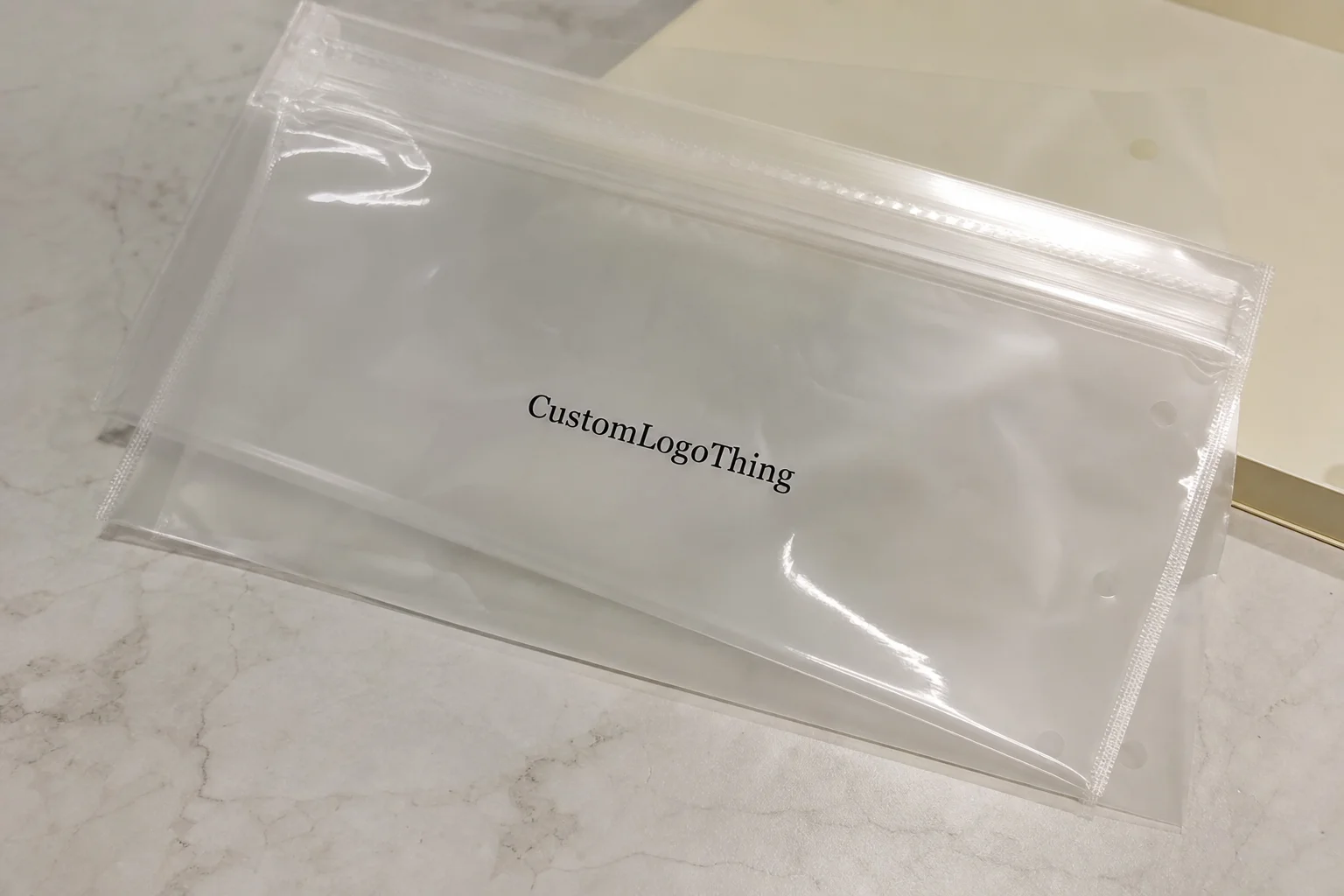
The first mistake is treating garment bags as disposable accessories. In a brewery, they are part of storage workflow. They live in back rooms, closets, loading areas, and event bins. They get opened, closed, shifted, stacked, and zipped far more often than most buyers expect. Weak seams and poor zipper tracks show up quickly in that kind of use.
The second mistake is focusing on appearance before function. Clear PVC looks simple, but the visual benefit matters. Staff can identify a hoodie, jacket, or shirt without opening every bag in a row. That saves time, reduces handling, and lowers the chance of mixing uniforms across teams or locations. A small efficiency gain repeated all week becomes real labor savings.
There is also a storage issue that does not get enough attention. Brewery closets are rarely spacious. A bag that hangs straight and keeps its shape helps standardize the storage line. A bag that twists, bows, or collapses wastes space and causes tangles. If you are comparing suppliers, ask how the bag behaves when fully loaded, not just how it looks empty.
One more detail matters: humidity. Breweries are not dry retail environments. PVC film can handle moisture well, but the zipper, seams, and hanger opening need to be built with the same reality in mind. A bag with decent film and weak closures is still a weak bag.
"If the bag cannot survive the back room, it does not belong in the quote."
That is a useful filter for early sourcing. Separate the must-have functions from the cosmetic ones. Print, gloss, and branding can help, but they should not outrank durability, fit, and repeatability.
How the bag protects uniforms, labels, and storage space
A PVC Garment Bag is built from a few parts: the film, seams, closure, and hanger opening. Each one affects durability. Buyers often compare thickness alone, then discover the zipper fails first or the seam splits at a stressed corner. That is not a material problem in isolation. It is a system problem.
Clear or lightly frosted PVC protects garments from dust and incidental splash exposure while keeping contents visible. For breweries with rotating staff, event apparel, or rep kits, visibility is not a luxury. It cuts down sorting time and helps prevent one of the more annoying mistakes in operations: issuing the wrong garment because the label was hidden or the bag was opaque.
Gusset depth matters more than many quotes admit. A 2- to 4-inch gusset often provides enough room for jackets, folded shirts, or a uniform set without making the bag bulky. Too little room compresses the garment and strains the closure. Too much room creates a bag that hangs awkwardly and takes up unnecessary space. The best size is usually the one that fits the actual wardrobe, not the broadest possible spec.
Film thickness is a tradeoff, not a moral choice. A heavier gauge usually resists punctures better and feels more stable in use. A lighter gauge can be cheaper and adequate for occasional storage. In a brewery that opens bags daily, the heavier film often pays for itself in fewer tears and less replacement work. If the bags are used occasionally for travel or events, a mid-weight option may be enough.
Basic test standards can help buyers stay grounded. Transit and handling benchmarks from organizations such as ISTA are useful if packaging will be shipped or stored across multiple touchpoints. For material and disposal questions, the EPA is a practical reference, especially when buyers need to understand waste handling or recycled-content claims. Neither source replaces a real sample test, but both help prevent vague supplier language from passing as proof.
- Best fit: reusable storage and presentation for hanging garments
- Not ideal: archival storage or harsh chemical environments
- Most useful in breweries: uniform storage, branded event apparel, and ready-to-issue clothing kits
Key factors to compare before you request quotes
Good pvc garment Bags for Breweries supplier comparison starts with a spec sheet that removes ambiguity. Ask for the film thickness in millimeters or mils, exact dimensions, gusset depth, zipper type, seam construction, and the opening style for the hanger. If the supplier cannot answer those points cleanly, the quote is not ready for comparison.
Construction details are often where the real difference hides. Heat-sealed seams, welded seams, and stitched or reinforced areas do not perform the same way. A strong zipper on a weak body does not solve the problem. In a brewery setting, the zipper usually sees repeated handling first, so the track, pull strength, and end-stop reinforcement deserve more attention than a printed logo.
Printing belongs after the structural details are settled. A one-color logo or event mark can be useful for brand identity, but it should not distort the decision on thickness, closure, or size. Buyers sometimes approve a pretty mockup and discover later that it does not fit the actual uniform set. That mistake costs more than the print run itself.
Documentation is a valuable filter. Ask whether the supplier can provide material data, inspection steps, and repeat-order records. A supplier that can describe defect thresholds, pack-out checks, and sampling procedure is usually more reliable than one that only offers a low price and broad claims.
If a supplier mentions a test method, ask what it covers. A reference to ASTM D882 points to tensile properties for thin plastic sheeting, which is at least relevant to film strength. It does not guarantee quality, but it is a better sign than the phrase "premium material" with no measurable backing.
Packaging format matters more than it seems. Bags shipped flat, nested, or bulk packed can arrive with very different levels of crease memory, edge wear, or contamination. A bag folded carelessly before shipment may look fine in a sample photo and still arrive with stress marks that shorten its service life. That is one reason to ask how the supplier packs each order, not just how they make the bag.
Useful comparison checklist:
- Material spec: film thickness, clarity, finish
- Construction: seam type, zipper quality, hanger opening
- Fit: garment width, length, gusset depth
- Commercial terms: MOQ, setup, freight, sample cost
- Control: inspection standard, defect policy, reorder consistency
Cost, pricing, and MOQ: reading supplier quotes correctly
Price only means something if the quoted spec is actually the same. In a PVC Garment Bags for breweries supplier comparison, one supplier may be quoting a thin stock bag while another is pricing a heavier custom bag with stronger closure hardware and print. Those are not comparable products, even if the unit price appears close.
Break the quote into material, labor, printing, packaging, and freight. Then ask what is not included. A sample may cost $20 to $75 depending on complexity. Setup or plate charges for custom print can add another $60 to $200. Freight, split shipments, and replacement allowances can shift the true landed cost more than the base unit price suggests.
MOQ deserves equal scrutiny. Higher minimums often lower the per-unit number because setup costs are spread across a larger run. That can look efficient on paper and still create an inventory problem if the brewery does not need that many bags quickly. If the stock sits in a closet for months, the unit price no longer tells the full story.
For the first round of quotes, this comparison is more useful than chasing the cheapest line item.
| Option | Typical unit price | MOQ | Lead time after approval | Best for | Main tradeoff |
|---|---|---|---|---|---|
| Stock clear PVC bag | $0.18-$0.28 | 1,000-3,000 | 10-15 business days | Internal storage and quick resets | Limited branding and fewer size options |
| Custom clear PVC with zipper | $0.32-$0.55 | 3,000-5,000 | 12-18 business days | Daily uniform storage and event kits | Higher setup cost, but better fit control |
| Heavy-gauge printed PVC bag | $0.58-$0.95 | 5,000-10,000 | 15-25 business days | Branded presentation and repeated handling | More inventory risk if usage is uneven |
Those numbers are starting ranges, not universal pricing. Print coverage, film gauge, zipper grade, packaging format, and freight all move the total. A quote that comes in far below those ranges should trigger questions, not celebration. Usually something has been reduced, excluded, or simplified.
Ask for three quote tiers when possible: a small pilot, a mid-volume order, and a reorder scenario. That reveals whether the supplier has a sensible repeat-order structure or just a low opening price. The reorder number matters because many buyers eventually return to the same spec if the first run performs well.
Process and lead time: from sample request to delivery
Lead time problems usually begin with vague specs. A supplier cannot quote accurately without dimensions, film thickness, closure details, print needs, and the number of garments the bag must hold. In a pvc garment bags for breweries supplier comparison, the quality of the first spec sheet often predicts the quality of the final order.
Start with a sample request and test it with actual brewery garments. A work shirt alone tells you little. Put in a shirt, hoodie, or heavier jacket if that is the real use case. Close and reopen the zipper several times. Move the bag between rooms. Hang it in the same environment where the final order will live. A sample that looks fine in an office can fail in a humid closet.
Approval discipline matters. Artwork, dimensions, and packaging format should be signed off before production begins. One revision after proof approval can add days. If tooling or print plates need to change, the delay can grow fast. The supplier is not always the source of the delay. More often, the problem is that the buyer approved too early.
Separate the lead time into parts. Sampling takes one window. Production takes another. Freight takes a third. A 12-business-day production run can still become a three-week delivery if artwork approval drifts or shipping is slow. Buyers who collapse those steps into one date usually end up with unrealistic expectations and unnecessary pressure.
Seasonality also matters. Brewery merchandise launches, festival periods, new taproom openings, and staff onboarding can compress demand quickly. The best supplier is not simply the fastest one on paper. It is the one that flags risk early, gives realistic milestones, and does not hide schedule slip until the shipment is already late.
- Send a complete spec sheet.
- Request a sample and test it in real storage conditions.
- Approve artwork and dimensions only after sample review.
- Confirm production, packing, and freight as separate steps.
- Build buffer for reorders and seasonal spikes.
Common mistakes that raise breakage rates and reorders
Price-only buying is the biggest error. A low number looks efficient until the bags start tearing at the seam or the zipper begins to fail after repeated use. Then the brewery pays again, with less time and fewer choices. Cheap first orders often become expensive second orders.
Fit errors come next. A bag that is too narrow wrinkles garments. A bag that is too short strains the closure. A bag without enough gusset room becomes hard to use, which means staff stop using it properly. At that point the bag is no longer a storage tool. It is clutter.
Storage conditions deserve more respect than they usually get. Humidity, dust, cleaners, and temperature swings all affect service life. If bags sit near a cold dock door or in a warm utility closet, the spec should reflect that reality. A supplier who asks about the storage environment is doing better work than one who only wants the order quantity.
"A sample is a starting point. The real test is whether the bag still behaves after repeated handling in the actual storage room."
Another mistake is approving a full run too quickly. One sample can hide zipper fatigue, edge wear, or variation from bag to bag. A small pilot order reveals much more than a perfect prototype ever will. If the pilot breaks early, the buyer saves the cost of a much larger failure.
Reorder stability is another weak point. If the supplier cannot repeat the same film, zipper, and print standard on the next batch, the operation loses consistency. The first shipment may look fine, but the next one does not match. That creates confusion in storage and increases the chance that older bags will be mixed with newer ones that behave differently.
Watch for these warning signs:
- Quotes that skip film thickness
- Vague wording around zipper grade
- Unclear sample or setup charges
- No inspection or defect policy
- Reorder pricing that changes without explanation
Expert tips and next steps for a stronger supplier shortlist
Use a scorecard. Weight the factors that matter most to the brewery: spec match, sample quality, communication speed, lead time, reorder stability, and landed cost. A simple scoring sheet exposes weak suppliers faster than a long email thread ever will.
Ask for a sample kit and, if branding is part of the job, a production proof. A sample shows what the bag looks like and how it feels. A proof shows whether the supplier can repeat the same result with consistent print placement and alignment. Those are different tests. Buyers often blend them together, which hides problems until production.
A pilot order is the cleanest way to see how the bag behaves in real use. It lets you evaluate fit, breakage rate, zipper fatigue, and storage behavior before you commit to a larger batch. A bag that stays clear and intact in a humid closet is meaningful evidence. A bag that wrinkles, cracks, or snags is equally useful evidence.
For this category, three suppliers are usually enough to show the shape of the market. Send the same spec sheet to each one and require itemized quotes. The goal is not to collect the cheapest number. It is to see where each supplier makes assumptions, trims quality, or adds hidden cost. That is the part of pvc garment bags for breweries supplier comparison that saves real money later.
One practical rule holds up well: move forward only if the supplier can explain the path from sample to repeat order without hand-waving. If they can document the spec, hold the standard, and repeat the same result, they belong on the shortlist. If they cannot, a lower opening quote is just a short-lived discount.
There is one caveat worth stating plainly. PVC is useful for visibility and moisture resistance, but it is not the answer for every storage problem. It is a plastic product with its own disposal and recycling limits, so buyers should be realistic about lifecycle and replacement planning. A durable bag used longer is often a better operational choice than a cheaper bag replaced twice as often.
That is the value of a disciplined supplier comparison. It does more than find a bag. It identifies a supply relationship that keeps uniforms protected, storage cleaner, and reorder cycles predictable.
What should I compare in PVC garment bags for breweries supplier quotes?
Compare the same spec set across every quote: film thickness, dimensions, zipper type, seams, printing, and packaging format. Ask for itemized pricing so you can see where the money goes and spot hidden setup or freight costs. Confirm whether the quote covers a sample, a pilot run, or full production, because those numbers are not interchangeable.
How does MOQ affect unit cost for brewery garment bags?
Higher MOQ usually lowers the per-unit price because setup and production costs are spread across more bags. The tradeoff is inventory exposure. A low unit price can still be expensive if it forces you to hold too much stock or reorder before demand is real. The right MOQ is the one that fits usage and storage capacity.
What lead time should I expect for custom brewery garment bags?
Lead time usually depends on sampling, artwork approval, tooling, production, and freight, so ask for each phase separately. Custom print or special hardware can add time, especially if revisions are needed after proof approval. Build buffer for seasonal rushes, new taproom openings, and event-related orders so the schedule does not slip.
Which specs matter most for humid storage and repeated use?
Focus on seam strength, zipper quality, and film gauge first because those features affect durability most directly. Clarify whether the bag needs to be wipe-clean, see-through, or resistant to moisture pickup in storage. If the bags will be handled daily, ask how the design performs after repeated opening and closing cycles.
How do I test a supplier before placing a larger order?
Request a sample or small pilot run and test it with real brewery garments in actual storage conditions. Track zipper fatigue, seam wear, clarity, and fit issues over time instead of judging only the first impression. Use the results to decide whether the supplier can support repeat orders with the same quality standard.


