Gift shops do not have time for slow, custom packaging at the counter. They need something that looks clean, protects the item, and can be used the same way across multiple products. That is the practical value of this matte zipper Bags for Gift Shops bulk order guide: it helps buyers choose a package that supports presentation without adding labor.
Matte Zipper Bags work well because they are easy to standardize. They are more durable than wrap-based presentation, more polished than basic sleeves, and easier to stock across candles, accessories, stationery, and seasonal items. The matte finish also reduces glare and fingerprints, which helps the bag hold a consistent retail appearance after handling.
For buyers planning repeat orders, the real advantage is predictability. Once the shop settles on a few core sizes and finishes, reordering becomes simpler to quote, stock, and replenish. That matters more than most packaging descriptions admit.
Why matte zipper bags solve the gift-shop packing problem
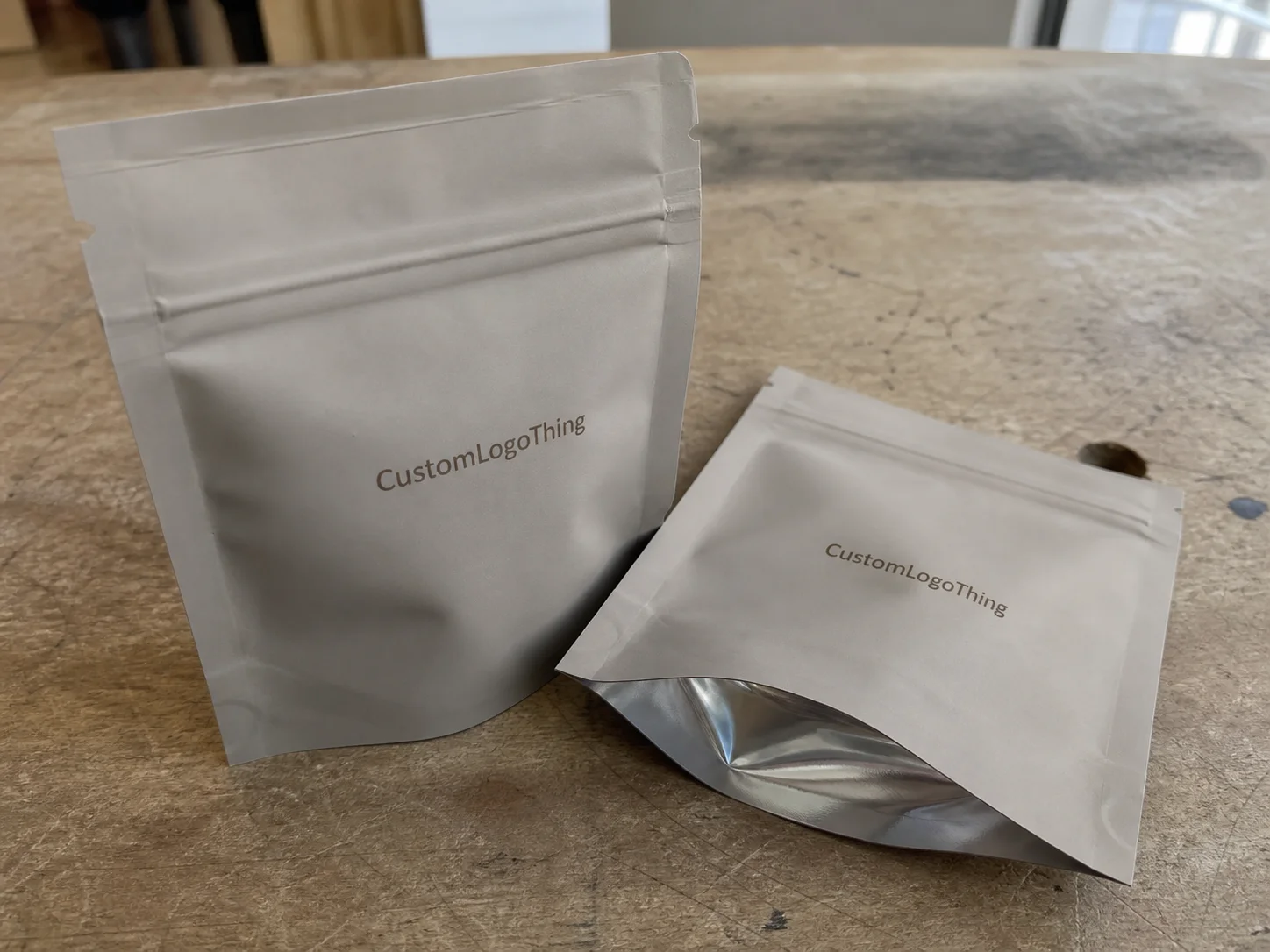
Gift shops sell products that are small, varied, and often handled before purchase. Staff need packaging that is quick to use, neat enough for display, and strong enough to protect the item during checkout and transit. Matte Zipper Bags meet those requirements without tying up staff time.
The matte surface is not only a visual preference. Under store lighting, it softens reflections that can make packaging look cheap or overly shiny. It also hides minor scuffs better than glossy film, which matters when bags are stacked, moved, and touched throughout the day.
The zipper closure adds a functional benefit after the sale. Customers can reopen and close the bag, which is useful for small apparel, stationery sets, soap bars, craft kits, and mixed gift bundles. That reclosability reduces complaints about damaged presentation and makes the purchase feel finished.
For bulk buyers, repeatability is the biggest operational win. Staff do not need to cut wrap, tie ribbon, or adjust decorative pieces for every sale. The same bag can be used across a product family, which reduces packing errors and makes inventory planning easier.
“A good retail bag protects the product, presents it cleanly, and disappears into the sale process.”
What to specify before you request a quote
Most quoting problems start with missing dimensions. A supplier needs finished width, height, and gusset depth if the product has thickness. A candle in a rigid box is not the same as a flat stationery set, and the fit changes immediately if the bag is too tight or too loose.
Thickness should be defined early as well. Thinner film may work for light items, but heavier goods usually need more material to resist punctures and seam stress. A low unit price can be misleading if it leads to more damage, returns, or repacking later.
Finish should match the product and the brand intent. Soft matte gives the most polished retail look. Frosted matte softens the contents while keeping some visibility. More opaque versions are better when the contents should stay hidden. Clear-matte options can work when you want visibility with less glare.
Structural details matter just as much as appearance. Confirm whether the bag needs a hang hole, euro slot, tear notch, slider, or a specific zipper style. Those choices affect both production and shelf use. If the bags will hang on peg walls, the top geometry and artwork placement need to be set with that in mind.
For printed orders, prepare artwork before you request pricing. Vector files are safer than flattened images because they hold edge quality at production scale. State the number of print colors, the placement, and whether artwork must avoid the seal area or zipper track. The top edge of a zipper bag has less usable space than many buyers expect.
If the order is seasonal, say so. Holiday lines, spring events, and year-round replenishment have different deadlines and stock needs. Suppliers can quote and schedule more accurately when the use case is clear.
Materials, sizes, and structure details that affect performance
Most Matte Zipper Bags use layered plastic films chosen for appearance, seal strength, and handling resistance. Common constructions include PET/PE and BOPP/PE, with the exact combination depending on the balance of stiffness, clarity, printability, and cost. Buyers are not really buying chemistry; they are buying how the bag behaves in retail use.
Film thickness affects shape retention as much as strength. A thin bag may look fine on a sample table but collapse after a few handling cycles. Heavier film usually costs more, but it also holds its shape better in bins and on shelves, which is noticeable for premium gift items.
Size matching is where many bulk orders go wrong. If the bag is too small, staff have to force the item in and stress the seams. If it is too large, the product shifts and the display looks loose. The best fit gives enough room for insertion and closure without excess slack, especially for boxed products.
Surface texture changes perception quickly. A soft-matte finish reads as premium and restrained. A frosted finish feels slightly more utilitarian but still polished. Strong opacity helps when the contents should not be visible. Zipper color can reinforce branding, but high contrast should be used carefully so it does not dominate the package.
Different products place different demands on the bag:
- Jewelry and small accessories: smaller bags, tight dimensional control, light frosted or clear-matte finishes, and consistent zipper alignment.
- Candles and boxed gifts: stronger film, more gusset depth, and enough rigidity to stay upright in a bin or on a shelf.
- Stationery and paper goods: flatter profiles that pack neatly and do not bow at the seams.
- Event favors and seasonal bundles: reliable reseal function, moderate thickness, and print that remains legible across lots.
Some orders need extra checks. Food-contact compliance may matter for edible gifts. Aroma retention matters for scented products. Moisture resistance can matter in entries, near windows, or in stores with temperature swings. Anti-static treatment is useful for some inserts, but not every gift-shop SKU needs it.
Useful references can help frame the discussion. Packaging terminology and material categories are covered by packaging.org. Transit and distribution questions can be benchmarked against ISTA. If the order includes paper inserts or cartons, FSC documentation may matter for the non-plastic components.
Cost, pricing, and MOQ factors for bulk ordering
Price is usually driven by size, thickness, finish, print complexity, zipper type, and quantity. Larger bags use more film. Thicker material costs more. Multi-color printing adds setup time and more inspection. Specialty finishes can increase both the material cost and the chance of variation between lots.
MOQ depends on whether the buyer is ordering stock bags or a custom specification. Stock items often support lower minimums because the supplier is drawing from an existing run. Custom-printed or custom-sized bags generally require a higher MOQ to cover tooling, setup, and machine time.
Quotes only make sense when compared on the same basis. A low price may hide a thinner film, a different zipper profile, a shorter print area, or freight that was left out of the estimate. Compare the same dimensions, same material, same finish, same closure type, and same shipping assumptions.
| Order Type | Typical MOQ | Indicative Unit Price | Best For |
|---|---|---|---|
| Unprinted stock matte zipper bag | 500-1,000 pcs | $0.12-$0.28 | Fast replenishment, simple gift items, lower-risk testing |
| Custom printed matte zipper bag | 3,000-5,000 pcs | $0.18-$0.45 | Brand presentation, seasonal assortments, repeat retail programs |
| Heavier gauge or specialty finish run | 5,000+ pcs | $0.25-$0.60 | Premium gifts, thicker products, stronger shelf presence |
Those numbers are directional only. A custom size with a simple one-color logo may land very differently from a larger bag with multiple print passes and a specialty zipper. Freight, carton count, packing method, and shipping distance also affect landed cost, and they often matter more than the raw bag price once the order reaches a warehouse.
Timing matters too. Rush production can carry a premium because it compresses scheduling and inspection. On the other hand, larger orders with a stable spec can reduce unit cost enough to justify the inventory. Buyers need to decide whether their priority is cash flow, shelf flexibility, or per-unit efficiency.
Production steps, lead time, and approval milestones
The normal sequence is straightforward: specification review, quotation, artwork check, sample or proof approval, production, inspection, and dispatch. Delays usually come from incomplete details rather than machine time. Missing dimensions, unclear artwork, and last-minute changes to zipper style are the most common problems.
Lead time depends on stock availability and whether the order is supported by existing inventory or fully custom. Stock-supported bags can move quickly if the supplier already has the right size and finish. Custom runs need time for material sourcing, proofing, and scheduling, especially when the order is tied to a seasonal launch.
Proof approval should be treated as a real control point. Verify size, zipper function, print placement, color expectations, and carton count before production starts. If the bags will go to multiple stores, ask whether outer cartons need SKU labels, store labels, or seasonal identifiers.
“The fastest bulk order is the one where dimensions, artwork, and quantity are already fixed before the first quote is sent.”
Rush orders are possible, but only if the spec is stable and the material is available. A rush request with changing artwork or a changing size is not really a rush. It is a compressed revision cycle, and that distinction matters when a store has a hard deadline.
Before final approval, ask how the matte finish behaves under handling. Bags that look good in a sample photo can show scuffing if the film is too thin or the packing method is poor. If there is any doubt, ask for a sample. A sample is cheaper than replacing a batch that looked right on paper but wrong on the shelf.
How gift-shop buyers evaluate suppliers before placing a bulk order
Gift-shop buyers need a supplier that can repeat quality, not just produce one acceptable sample. The main risk in packaging is inconsistency. A bag that looks good on the first run and then shifts in print color, zipper action, or seal quality on the next run creates avoidable work.
Quality control questions should be specific. Ask how seal integrity is tested. Ask how zipper function is checked. Ask what tolerance is held for print registration and color variation. Ask how cartons are packed so the matte surface does not rub and cloud in transit.
Retail packaging also needs reasonable transit protection. Matte films can scuff if they are packed too tightly or if carton surfaces rub during shipping. Corner crush is another common problem when cartons are stacked heavily. The supplier should be able to explain how outer cartons are reinforced and whether inner packs are protected against abrasion.
Communication quality is often a better signal than a polished product page. A supplier who gives a clear spec summary, points out what still needs confirmation, and flags production constraints early is usually easier to work with than one who only replies after a problem has already landed.
For recurring programs, repeatability matters as much as price. That is why our Wholesale Programs are built around reorder consistency, straightforward spec review, and matching earlier production records. A supplier that preserves the same size, finish, and print behavior across batches saves more time than one that only offers a low first quote.
If the bags need to support multiple SKUs or store locations, ask about carton labeling and palletization before production starts. It is easier to sort cartons correctly at the factory than to fix labeling mistakes at receiving. The best wholesale relationship is not only about producing the bag; it is about making sure the shipment arrives in a form the store can use without rework.
Next steps for ordering matte zipper bags at scale
Before asking for pricing, gather four things: product dimensions, preferred finish, expected volume, and whether the bag needs printing. If you have a physical item, send a sample or a measured drawing. A dimensional sketch is enough to prevent most sizing errors.
Ask for quotes at the order tier you expect to repeat, not only at the smallest possible quantity. A test order can be useful, but it should not distort the real cost picture. If the bags will be reordered for a seasonal line, quote the next quantity break too so you can see the landed-cost difference.
A practical ordering sequence looks like this:
- Measure the product and confirm the fit requirement.
- Select the bag structure, finish, and zipper style.
- Prepare artwork or choose an unprinted stock option.
- Review the proof or sample with packing use in mind.
- Approve production only after the size and finish match the product.
You can shorten the cycle by finalizing artwork before the first quote, using standard material options where possible, and limiting the order to a small family of sizes rather than too many near-identical dimensions. That approach reduces quoting friction, simplifies production, and makes reordering easier later.
For gift retail, packaging should support the sale, not complicate it. The value of this guide is simple: define the product correctly, compare quotes on the same spec, and buy enough detail to protect presentation, budget, and repeatability.
What sizes work best for matte zipper bags for gift shop bulk orders?
The best size depends on the actual product footprint, not only the item label or shelf name. Leave enough room for easy loading, but not so much that the product shifts inside the bag. For mixed gift-shop assortments, a small size family usually works better than a long list of near-identical dimensions because it simplifies stocking and reordering.
Do matte zipper bags show fingerprints or scuffs more than glossy bags?
Matte surfaces usually hide minor fingerprints and light scuffing better than glossy film, which is useful in retail handling. The tradeoff is that a thin matte bag can still show crease stress if the film is underbuilt for the item weight. If the package will be touched often, ask for a material and finish combination that balances appearance with abrasion resistance.
What is the usual MOQ for custom matte zipper bags?
MOQ depends on bag size, print complexity, and whether the order uses stock materials or a custom structure. Unprinted stock bags often allow lower minimums than custom printed runs. The most useful comparison is not the smallest order size, but the quantity where the unit price and freight start making sense for a real reorder program.
How long does production usually take after proof approval?
Lead time varies with stock availability, custom requirements, and shipping method. Production starts after final proof approval, so slow artwork turnaround will extend the schedule even if the supplier is ready. Rush options are possible in some cases, but only if the size, material, and design are already fixed.
Can matte zipper bags be printed with a logo for gift shop branding?
Yes. Many Matte Zipper Bags can be printed with a logo, product name, or simple brand mark. The artwork should be prepared carefully because matte surfaces can change how color appears compared with glossy film. Supplying clean vector files and confirming the print area early reduces revision cycles and keeps the order moving.


