If you are pricing Frosted Zipper Bags unit cost for tea, the first mistake is comparing a pouch to a rigid box or glass jar and stopping there. That ignores freight, packing labor, storage space, and the small charges that appear once a pack becomes truly custom. A frosted zipper pouch often lowers the total packaging cost because it weighs less, packs faster, and ships in a smaller carton footprint, even before you get to the shelf presentation.
For tea brands, the appeal is practical rather than decorative. The frosted finish feels premium without requiring a heavyweight package, the zipper supports repeat opening, and the format works for loose leaf tea, herbal blends, and sample sizes. The real question is how the Frosted Zipper Bags unit cost for tea changes once you choose film structure, dimensions, printing method, and order quantity.
Why frosted zipper bags can cut tea packaging waste
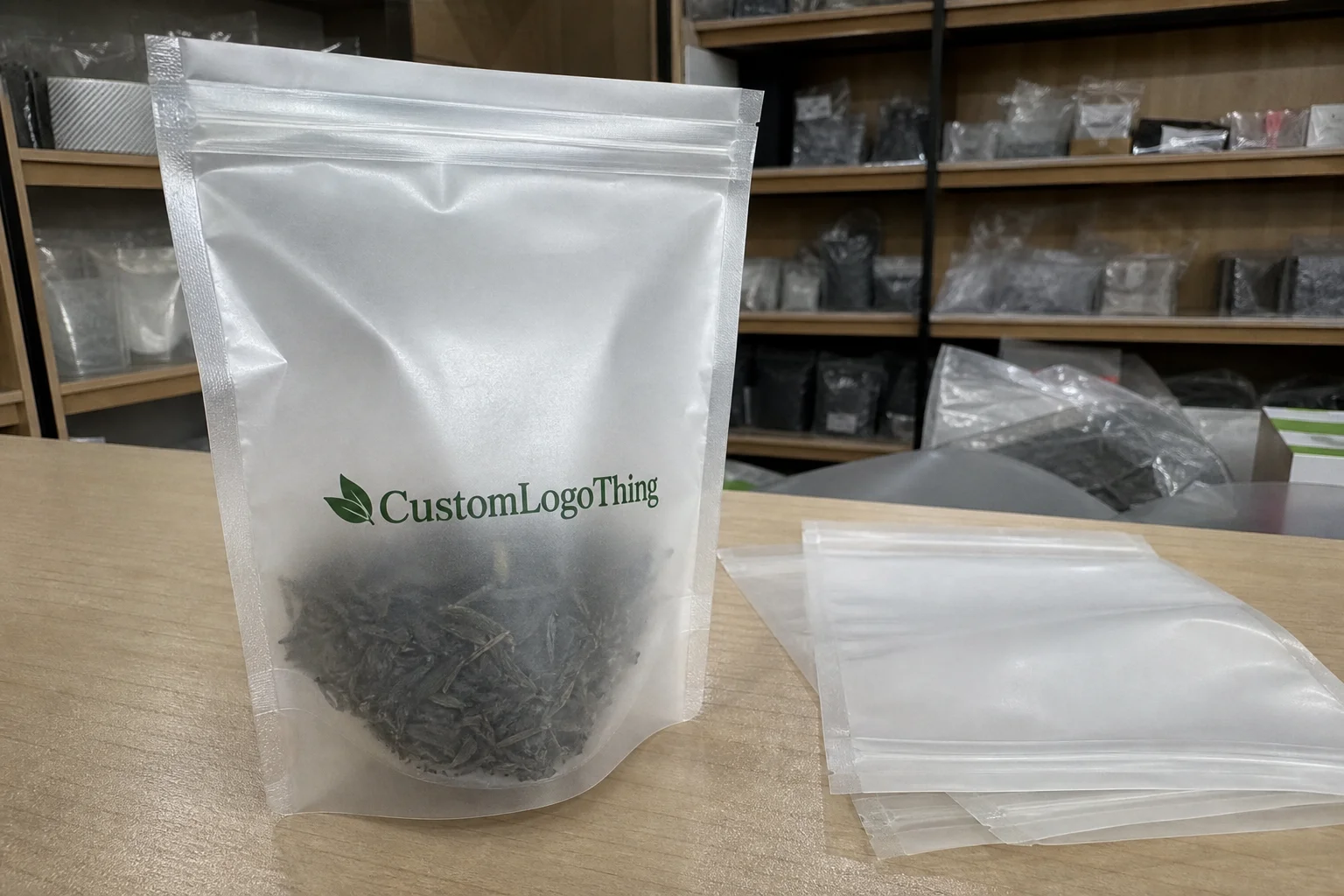
Tea packaging gets expensive when the structure is overbuilt. A product that could work in a resealable pouch is sometimes pushed into a carton, an insert, a label, and extra hand assembly. Each step adds labor, material, and room for error. None of that automatically makes the pack better.
A frosted zipper bag combines presentation and function in one format. You get a matte, clean look, a closure that helps keep aroma inside the pouch, and a package that is easier to store and ship than a jar or rigid box. That matters more than many buyers expect. A lighter pack usually means lower freight, less warehouse space, and less damage risk during transit.
There is also a cost detail that gets missed early in sourcing. The bag itself may be cheaper than the combined cost of the label, insert, and labor required to assemble a more complicated pack. Once you count those extra steps, rigid packaging can stop looking premium and start looking inefficient.
For tea, frosted zipper pouches are usually a good fit in three situations:
- Loose leaf tea that needs resealability after opening.
- Herbal blends where fragrance retention matters.
- Sample packs that need to be economical to ship and easy to distribute.
The point is not that pouches are always cheaper in every scenario. The point is that they usually reduce waste across several parts of the packaging chain at once. That is where the savings come from.
“A low pouch price means very little if freight, labor, and setup charges erase the savings.”
For tea brands trying to cut packaging waste, the practical advantage is simple: fewer components, fewer box sizes, fewer steps on the packing line, and less inventory sitting around waiting for the next production run.
Specifications tea buyers should lock in first
Before asking for a quote, define the build. Otherwise each supplier may price a slightly different pouch and present it as a comparable offer. It is not comparable if the film, zipper, and size are not the same.
Most tea buyers will choose between frosted PE, PET/PE laminates, or combinations that include a clear window. Pure PE tends to be more flexible and often easier on cost. PET/PE generally gives better stiffness, stronger print appearance, and better barrier performance. Window styles can improve shelf visibility, but they are not always the right choice if aroma protection is the top priority.
For tea packaging, the details that matter most are the ones that affect filling, sealing, and storage:
- Bag size matched to fill weight and headspace.
- Gusset depth for stand-up stability.
- Zipper type for user feel and closure reliability.
- Tear notch for clean opening.
- Hang hole if the pouch will display on hooks.
- Valve only if the tea format truly needs it, which is uncommon for standard tea SKUs.
Barrier performance matters more than the cosmetic finish. Tea is sensitive to moisture, oxygen, and odor transfer. A pouch that looks elegant but uses weak film is still a poor choice. Buyers often focus on the frosted surface first, yet the real value is in what the laminate does after the pouch leaves the production floor.
Print choice affects both appearance and cost. Simple spot-color printing keeps the job controlled and often economical. Full-coverage artwork creates a stronger retail presence, but it adds setup time, ink coverage, and sometimes a higher waste allowance during production. Matte frosting tends to read as more premium than gloss, but that decision should follow brand positioning, not trend pressure.
Labeling strategy deserves attention too. Some tea brands print directly on the bag. Others use labels for seasonal blends, SKU changes, or test runs. Labels add a small amount of labor, but they reduce the risk of sitting on outdated printed inventory. For a product line that changes often, that tradeoff is usually easier to manage than discarding obsolete packaging.
If you need a reference point for packaging terminology and materials, the Packaging School / packaging.org resource library is a practical starting place. It is not flashy, but it is useful when you want the right terms in a supplier conversation.
How material, print, and size shape unit cost
The frosted zipper Bags Unit Cost for tea moves for a few predictable reasons: resin type, film thickness, zipper quality, pouch size, and print coverage. Add special features, and the pricing can change more than first-time buyers expect. That is not a hidden trick. It is just packaging production math.
Larger bags use more film. Thicker film uses more material. Better zippers cost more. More colors, more ink coverage, and more artwork preparation all add labor and setup. If a quote seems oddly low, it is usually because one of those details was changed, omitted, or assumed differently.
| Option | Typical use | Relative unit cost | What drives the price |
|---|---|---|---|
| Blank frosted zipper bag | Samples, launch tests, basic private label | Lowest | Material, size, zipper, quantity |
| One-color printed pouch | Simple tea SKUs, limited branding | Mid | Setup charges, proofing, ink coverage |
| Full-coverage custom print | Retail tea lines, stronger shelf presentation | Higher | Artwork prep, tooling or plate fees, waste allowance |
| Printed pouch with extras | Special blends, retail-ready packouts | Highest | Valve, custom zipper color, special finish, added QC |
Order volume matters as much as the structure itself. Higher MOQ usually lowers unit cost because setup charges and production waste are spread across more bags. A quote for 3,000 pieces should not look like a quote for 20,000 pieces. If it does, the difference is probably being hidden somewhere else, usually in freight assumptions or a spec mismatch.
Typical buyer ranges are broad because the spec range is broad. A blank stock-style pouch may sit near the lower end, while a fully customized tea pouch with full print coverage and extra features moves up quickly. The best way to compare offers is to line up the same size, film structure, zipper style, thickness, and artwork coverage. Anything less is not a real comparison.
Watch for the cost traps that usually show up in procurement:
- Extra proof rounds because artwork was incomplete.
- Custom zipper colors that complicate production.
- Unclear dimensions that force a revised dieline.
- Late copy changes after final proof.
- Small runs that spread tooling fees and setup charges across too few units.
If you want a quote that means something, ask for apples-to-apples pricing and make sure the supplier confirms the build in writing. Same dimensions, same film, same zipper, same print method. Otherwise you are comparing different products and calling it price shopping.
Frosted zipper bags unit cost for tea: pricing and MOQ basics
Buyers usually want one number, but packaging rarely works that way. A blank pouch, a lightly printed pouch, and a fully customized retail pouch are different products with different economics. The phrase Frosted Zipper Bags unit cost for tea only becomes useful once the build is specific.
MOQ is one of the biggest cost levers. Lower-MOQ runs are useful for sampling, launch testing, or small seasonal tea blends. They are convenient, but the unit price is higher because the factory still needs to cover setup, calibration, and production waste. Once the order grows, the cost per piece usually comes down in a visible way.
In practical buying terms, the market often falls into three buckets:
- Low MOQ: good for testing, but rarely the cheapest per piece.
- Mid-volume: often the best balance for first serious retail runs.
- Higher volume: better bulk pricing if inventory and sell-through support it.
That does not mean the largest run is always the smartest choice. If a tea SKU is still changing, overbuying packaging can create dead stock faster than it creates savings. Sometimes a slightly higher unit cost is the safer decision because it preserves flexibility on flavor, seasonal changes, or package redesigns.
As a rough framework, these are the usual cost tiers buyers should expect to see in custom pouch sourcing:
- Blank frosted zipper bags: lowest cost, suitable for samples or placeholder packaging.
- Simple printed bags: mid-range cost, usually one or two colors with controlled coverage.
- Fully customized retail bags: higher cost, especially with special finishes, stronger barrier requirements, or custom zipper details.
Shipping must be included in landed cost. So do customs, carton packout, and any inspection work you request before shipment. A quote that looks cheap on paper can become expensive once freight and handling are added. It is usually better to receive a clear, slightly higher unit price than a suspiciously low number with vague assumptions built into the background.
To get a meaningful quote, include fill weight, pouch dimensions, finish preference, print colors, and target quantity. If the supplier has to guess, the number will be soft. Soft numbers are not useful for purchasing decisions.
Production steps, approval, and lead time
Production is usually straightforward, but the lead time begins after final proof approval, not when the quote arrives. That distinction matters more than many buyers realize, especially if the tea launch is tied to a seasonal release or retail schedule.
A standard order flow usually looks like this:
- Inquiry and basic spec review.
- Artwork check and dieline confirmation.
- Proof approval.
- Production.
- Quality check and packing.
- Shipment.
Lead time changes with the level of customization. Stock-style sizes usually move faster than custom sizes. Blank bags are quicker than printed bags. Special material combinations can add time because the factory may need a different production run, extra setup, or additional verification before full output starts.
In practice, delays usually come from a short list of predictable issues: artwork revisions, missing barcode details, copy changes after proofing, and slow approvals. None of those are unusual. They are the routine causes of packaging delays, and they are easy to underestimate until they start pushing the shipping date.
The date that matters most is the final approval date. If your launch depends on a specific delivery window, work backward from that milestone and leave room for production, freight, and customs clearance. It also helps to ask for separate estimates for production lead time, transit time, and any rush option before you commit. One number is not enough to plan from.
For distribution testing, the ISTA framework is a useful reference if you need to check how a tea pouch behaves in transit. Tea pouches do not usually require heavy-duty certification, but rough handling, compression, and vibration can still reveal whether the package seals and cushions properly.
If sustainability reporting matters for your brand, ask whether the film structure supports reduced-material goals or a recyclable pathway. The EPA recycling strategy page is not a packaging spec sheet, but it is a solid reference for material planning and waste reduction vocabulary.
What tea brands should check in a custom bag supplier
A good supplier is more than a quoting desk. The value shows up in consistency: correct dimensions, accurate print registration, a zipper that closes the same way on every lot, and repeat orders that do not drift because someone changed a machine setting without catching it.
Quality control should focus on the basics that affect real use:
- Seal integrity
- Zipper smoothness
- Print adhesion
- Film frost consistency
- Dimension accuracy
Those checks sound simple because they are simple, yet they are the checks that prevent returns and packing problems later. A pouch that looks good on a proof can still fail if the seal is weak or the zipper jams in use.
For tea brands, the commercial upside is easy to understand. Custom pouches help standardize SKUs, improve shelf presentation, and reduce the mismatch between packaging and the product line. That matters more once the catalog expands into multiple teas, multiple sizes, or both.
There is a tradeoff, of course. More customization means more planning. Dielines need confirmation, print files need checking, and proofs need approval. That takes time, but for a serious retail tea line, the added coordination usually pays for itself by reducing packing friction and keeping the brand consistent across reorders.
The best supplier is the one that explains unit cost, MOQ, setup charges, and material choices clearly without hiding behind vague premium language. A useful quote should show what changes the price and what stays fixed. If that breakdown is missing, the quote is not helping you make a purchasing decision.
How to quote frosted tea zipper bags accurately
If you want a real price on Frosted Zipper Bags Unit Cost for tea, avoid vague requests like “need a bag for tea.” That gets vague pricing back, and vague pricing is usually the first sign that the build has not been defined properly.
Send the basic specs up front:
- Tea type and fill weight.
- Pouch size or target dimensions.
- Finish preference: frosted, matte, window, or mixed.
- Print colors and coverage level.
- Target quantity and acceptable MOQ.
- Any extras: tear notch, hang hole, valve, or custom zipper color.
If you already have artwork, send it. If not, send a reference pouch, a photo of a comparable tea package, or at least a rough layout. That reduces the chance of a quote being built on wrong assumptions. It also helps the supplier judge whether the pouch needs a standard build or a more specialized production plan.
For the cleanest comparison, ask for two options: one at your target spec and one at a simpler lower-cost spec. That gives you a clearer view of the tradeoff between shelf presentation and landed cost. In many cases, the more expensive pouch is not the wrong choice; it is simply the one that matches the market position better.
Confirm sample policy, lead time, and freight terms before approval. A cheap sample with unclear shipping terms is not a saving. It is just another delay waiting to happen.
For tea packaging buyers, the best approach is straightforward: define the specs, request a unit-cost breakdown, compare landed cost against your sell-through, and choose the pouch that balances shelf appeal with sane economics. That is how you keep packaging cost under control without giving up the look that makes customers pick up the product in the first place.
FAQs
What affects frosted zipper bags unit cost for tea the most?
Material type, pouch size, thickness, print coverage, zipper style, and order quantity are the biggest cost drivers. Special features such as valves, hang holes, and custom finishes usually add cost, and setup charges can matter a lot on smaller runs.
What MOQ should I expect for custom tea zipper bags?
MOQ depends on size and print complexity, but custom printed runs are usually higher than blank stock orders. If you want better bulk pricing, the order size needs to be large enough to spread setup and waste across more pieces.
Are frosted zipper bags good for loose leaf tea?
Yes. The resealable zipper helps maintain freshness, and the frosted look gives the pouch a clean premium presentation. For very aroma-sensitive tea, ask about barrier film options and seal performance so the packaging actually protects the product.
How long does production usually take after artwork approval?
Lead time depends on customization level, but it starts after final proof approval. Custom printing and special materials usually take longer than standard pouch builds, and shipping time should be counted separately from production time.
Can I lower unit cost without changing the tea package size?
Yes. You can often reduce cost by simplifying print, using a standard zipper, or increasing quantity. Keeping the same dimensions while comparing alternate specs usually reveals the real savings.


