Buyer Fit Snapshot
| Best fit | Request Mailing Bags Quote projects where brand print, material claims, artwork control, MOQ, and repeat-order consistency need to be specified before quoting. |
|---|---|
| Quote inputs | Share finished size, material target, print colors, finish, packing count, annual reorder estimate, ship-to region, and any compliance wording. |
| Proofing check | Approve dieline scale, logo placement, barcode or warning zones, color tolerance, closure strength, and carton packing before bulk production. |
| Main risk | Vague material claims, crowded artwork, missing packing details, or unclear freight terms can make a low unit price expensive after revisions. |
Fast answer: Request Mailing Bags Quote: Pricing, Specs, and Process should be specified like a repeatable production item. The safest quote records material, print method, finish, artwork proof, packing count, and reorder notes in one written spec.
Production checks before approval
Compare the actual filled-product size with the drawing, then confirm tolerance on folds, seals, hang holes, label areas, and retail display edges. Reserve space for logos, QR codes, warning copy, and material claims before decorative graphics fill the panel.
Quote comparison points
Review material grade, print process, finish, sampling route, tooling charges, carton quantity, and freight assumptions side by side. A quote is only useful when the supplier can repeat the same color, closure quality, and packing count on the next order.
Request Mailing Bags Quote: Pricing, Specs, and Process
If you need to request mailing bags quote details for a new apparel drop, the first number you see should never be the only number you compare. Two poly mailers can look nearly identical on a screen, yet behave very differently once they are packed, sealed, stacked, and pushed through a courier network, so the real job is to request mailing bags quote information that covers price, strength, print Quality, and Lead Time in the same conversation.
From a packaging buyer’s point of view, the safer path is to request mailing bags quote options early enough to compare materials, closures, and artwork before volume is committed. A bag with a slightly thinner film, a narrower adhesive strip, or a weaker seal can look fine in a product photo and still create waste, returns, and complaints after the first production run. I’ve seen teams save a few cents per unit and then spend far more fixing packing issues later, which is a pretty rough trade.
Why Request Mailing Bags Quote Before You Overbuy
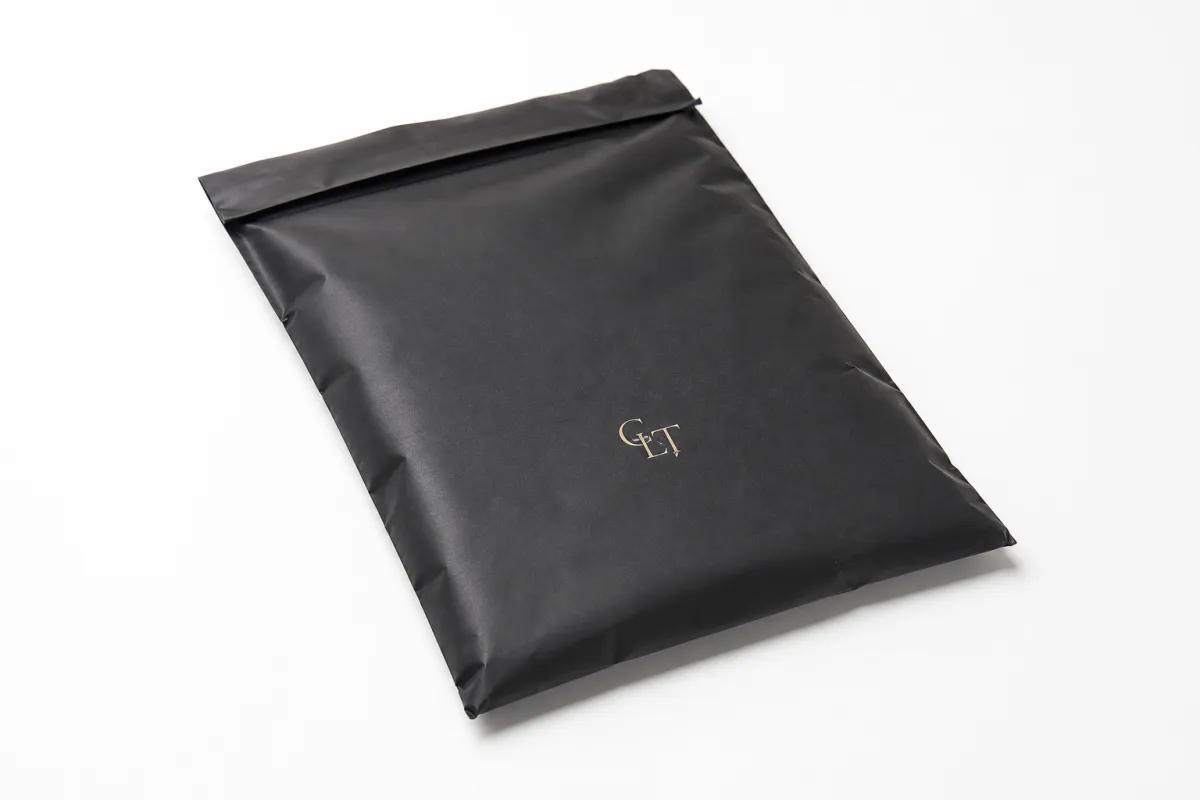
It is easy to overbuy mailing bags when the samples seem close enough to pass a quick visual check. In practice, one bag may have a 2.0 mil film with a narrow seal, while another uses a thicker 2.5 mil film and a better adhesive laydown; that difference changes puncture resistance, handling feel, and how often a bag opens on the packing line. That is why many brands request mailing bags quote details before they place volume, not after the first shipment has already exposed a weak spec.
When you request mailing bags quote information, the aim is not to collect numbers for the sake of collecting them. The aim is to compare the right bag for the right application: soft goods, apparel, folded textiles, and other non-fragile products that need moisture resistance, tamper-evident sealing, and a clean branded finish. If a supplier is not quoting the same dimensions, the same closure type, and the same print method, the price comparison is not real. That part gets missed a lot, especially on fast-moving launches.
Small spec changes also change the risk profile. Film gauge affects puncture resistance and stiffness. Seal width affects how well the flap holds during sorting and transit. Adhesive type affects whether the mailer stays closed in cool warehouses or humid loading areas. Opacity matters for privacy and brand presentation, especially if the contents could show through a thin white film. Those are the details that should sit at the center of any request mailing bags quote review.
The cheapest quote is not the best quote if the bag tears at packing, shifts in transit, or forces your team to rework cartons by hand.
Brands That Sell consistently usually treat mailers as a production item, not a generic supply. They request mailing bags quote data with the same care they would use for carton specs or label stock, because every failure at the mailer stage becomes a labor problem later. If you are still mapping out the product line, it is also worth reviewing Custom Poly Mailers so the quote request lines up with the actual shipping format you need.
Honestly, this is where many buyers get caught out: they ask for a price, but they do not ask for the spec sheet behind the price. A proper request mailing bags quote conversation should cover the bag’s construction, the print coverage, the packaging format, and the freight destination. Once those pieces are on the table, the comparison becomes much cleaner and the buying decision gets a lot easier.
What Mailing Bags Are Made For: Product Details That Matter
Mailing bags are built for lightweight protection. They are used most often for apparel, soft goods, accessories, and other non-fragile items that do not need rigid protection but do need a dependable outer layer against dirt, scuffing, and light moisture. A good poly mailer also gives the brand a consistent front-facing surface for print, which matters more than many teams expect once an order is opened on a busy receiving bench. If you plan to request mailing bags quote pricing for retail fulfillment, the product purpose needs to be clear from the start.
Material choices buyers should ask about
The most common material is LDPE, usually chosen because it balances flexibility, seal performance, and cost. Recycled-content film is also a practical option for many programs, especially where the buyer wants to lower virgin resin usage without giving up too much strength. Thickness matters a great deal here: a lighter film may be fine for a folded T-shirt, but a heavier hoodie, denim piece, or bulk pack often benefits from a more substantial gauge.
For reference, many buyers think in terms of microns or mils. One mil equals 25.4 microns, so the numbers are easy to compare once you start request mailing bags quote conversations with multiple suppliers. For general apparel work, a film in the 2.0 to 3.0 mil range is common, while higher-stress applications may call for more. That does not mean thicker is always better; it means the film should match the product, packing environment, and shipping path. If the film is too thin, you are gonna feel it fast on the packing line.
If sustainability matters, ask for the material specification in writing. Do not settle for broad claims. A supplier should be able to explain recycled content, downgauged options, and any tradeoff in stiffness, opacity, or seal strength. For broader packaging guidance, the resources at Packaging Institute are useful for general material context and industry language.
Closure systems and workflow fit
Closure style has a direct effect on warehouse speed. A standard self-seal adhesive strip is the simplest option and works well for straightforward outbound fulfillment. Peel-and-seal closures are common for clean, repeatable packing because the liner removes quickly and the flap closes with a clear press. Double adhesive strips are a good fit for returns-friendly programs, especially if the brand wants the customer to reuse the same bag for a return shipment.
That last point matters more than it gets credit for. A return-capable mailer can reduce friction for the customer and simplify the reverse logistics flow, but only if the adhesive strip is positioned correctly and the second seal is strong enough to remain usable after the first opening. When you request mailing bags quote options for a returns program, make sure the supplier knows whether the bag needs a single seal, a two-strip seal, or a tamper-evident format.
Branding also shapes the quote. One-color print is often more economical and can still look sharp when the artwork is simple and bold. Full-color print gives more design flexibility, but it usually raises setup, proofing, and production complexity. If the bag needs an opaque liner, a retail-ready finish, custom sizing, or a special surface for better ink adhesion, those choices should be stated up front when you request mailing bags quote pricing.
For buyers who already know the general bag type they want, a short list of specs is usually enough to get meaningful offers. For buyers still comparing mailer families, it helps to talk through the product line first, then narrow the quote. That is one reason our team often points people back to the product page for Custom Poly Mailers before the final quote stage.
Size, Thickness, and Closure Specifications to Compare
Mailing bag sizing looks simple until the first production run lands on the packing table. A quoted width and length do not tell the whole story unless everyone agrees on whether those measurements are outer dimensions or usable interior space. The difference matters because seal width, side welds, and flap overlap all reduce the practical room inside the mailer. If you request mailing bags quote numbers without clarifying those details, the risk of ordering a bag that is too tight goes up fast.
The best quote requests include the packed product dimensions, not just the mailer dimensions. A single folded shirt takes a different amount of space than a pair of jeans, a hoodie, or a multipack. If the item is bulky or uneven, ask for a gusseted bag or allow a little more room for the bend and fold. A bag that fits with 5 mm of breathing room is very different from one that needs force to close, and that difference can show up as torn film or weak seals.
A simple spec checklist
Before you request mailing bags quote pricing, gather these points so vendors can quote the same build:
- Width and length of the mailer, stated as outer size or usable size.
- Gusset depth, if the product is bulky or needs expansion room.
- Film thickness in mils or microns.
- Closure type, such as self-seal, peel-and-seal, or double strip.
- Print coverage, including one-color, two-color, or full-color artwork.
- Opacity requirement, especially for privacy or premium presentation.
- Packaging format, such as loose-packed, boxed by 100, or carton-packed by case count.
- Delivery location and target date so freight and lead time are real, not guessed.
Thickness deserves a plain-language explanation. Thicker film usually means better puncture resistance, a firmer hand, and more forgiveness during high-speed packing, but it also raises material cost. Thin film can save money on paper, yet it may not survive rough handling or long transit chains. A supplier should be able to explain why a certain gauge was recommended, and if that explanation is missing, it is worth pressing before you request mailing bags quote approval. No need to overcomplicate it; the bag either fits the job or it doesn’t.
There are also details buyers often forget to ask about. Adhesive strip width can change how secure the closure feels. Seal placement affects whether the flap sits flat or bunches during packing. Edge weld strength matters if the bag is being dragged across a bench or dropped into a carton with other goods. Dimensional tolerance matters because a bag that varies too much from piece to piece can cause packing inefficiency. If your program depends on repeatable fit, ask the supplier to confirm tolerances in writing.
For shipping reliability, many teams also use performance language from transit testing. The ISTA framework is widely recognized for distribution testing, and while not every mailer needs full certification, the concepts behind transit vibration, drop resistance, and packaging integrity are useful when you are comparing suppliers. That is especially true if you request mailing bags quote options for products that move through multiple facilities before final delivery.
A buyer-friendly quote comparison can be kept simple. Match the same dimensions, the same film thickness, the same closure, and the same print coverage, then compare the landed cost. If one supplier is quoting a 2.5 mil film and another is quoting 1.8 mil, the lower price may not be a better value at all. In packaging, spec drift is often where the hidden cost lives.
Request Mailing Bags Quote: Cost, MOQ, and Unit Pricing
Price is rarely just price. A proper request mailing bags quote response should break out unit cost, setup, proofing, samples, freight, and any extra charges tied to print complexity or special film. If those pieces are bundled into one number, you can still buy the bags, but you cannot compare them fairly. The cleanest way to request mailing bags quote data is to ask suppliers to state exactly what is included and what is not.
Several variables push the quote up or down. Size matters because larger bags use more film. Thickness matters because heavier gauge uses more resin. Print complexity matters because more colors, larger coverage, and tighter registration raise production demands. Packaging format matters because boxed or pre-counted mailers can add labor. Custom features matter because double adhesive strips, opaque liners, and specialty finishes all change the build. Any one of those can move a quote enough to change the business case.
| Option | Typical MOQ | Typical Unit Price | Setup / Notes | Best Fit |
|---|---|---|---|---|
| Stock-style white poly mailer | 1,000 to 3,000 | $0.10 to $0.18 | Lowest setup, fast production, minimal print | Basic shipping, short runs, new product tests |
| Semi-custom printed mailer | 3,000 to 5,000 | $0.14 to $0.24 | One- to two-color logo print, moderate proofing | Retail brands that want consistent branding |
| Fully custom full-color mailer | 5,000 to 10,000 | $0.18 to $0.38 | Higher setup, tighter print control, longer lead time | Launches, premium packaging, strong visual identity |
| Recycled-content custom mailer | 5,000+ | $0.20 to $0.42 | Material certification and spec review may add time | Brands with sustainability targets and clear messaging |
MOQ matters because it controls how much inventory you must hold. Some buyers need a short run for a seasonal test. Others need a larger quantity to lower per-piece cost. A lower minimum often comes with a higher unit price, while a higher quantity can bring the price down if storage space and demand forecasts support the purchase. That is why people request mailing bags quote numbers from more than one supplier: the right MOQ is the one that fits your sales pattern, not the one that simply sounds easiest.
Unit price also needs context. A quote of $0.15 per bag sounds attractive until freight adds another $0.03, sample approval adds time, and a narrow seal drives up the damage rate later. A better comparison is landed cost per usable unit. If the supplier quotes a carton-packed mailer with stronger film, better registration, and a dependable seal, a slightly higher unit price can still win on actual value.
Here is a practical way to compare offers. Ask each supplier to quote the same size, thickness, closure, and print layout. Ask them to list the setup charge separately. Ask them to state whether freight is prepaid or collect. Then compare total landed cost at the same quantity. That is the clearest way to request mailing bags quote information without getting misled by a low headline number.
Higher quantities can lower the price, but only when the volume makes sense. If a brand orders 10,000 bags to save a fraction of a cent per piece and then stores them for a year, the carrying cost may erase the savings. Buyers who plan carefully usually choose a quantity that balances price break, storage space, and forecast confidence. That is the kind of practical thinking that separates a decent buying decision from a truly good one.
Process and Timeline: From Quote Request to Delivery
A solid order process is predictable. First comes the initial inquiry. Then the supplier reviews the spec, checks the artwork, and confirms what kind of film, closure, and print method is needed. After that, proofing starts, and if samples are part of the project, they are reviewed before production moves ahead. If you request mailing bags quote support from a supplier who follows this sequence well, the order is much easier to manage because every step has a clear owner.
The fastest jobs usually share the same traits: complete dimensions, clear quantity targets, print-ready files, and one person who can approve the proof quickly. Missing art files are a common delay. So are vague size instructions and back-and-forth over whether the bag needs to fit one folded garment or a bulk pack. The more detail you give before you request mailing bags quote approval, the less time gets lost in clarification.
Where delays usually happen
Delays often come from avoidable points. Artwork revisions can slow the proof stage if logos are too low-resolution or color expectations are unclear. Sample changes can push back the schedule if the first test bag is too small, too thin, or too transparent. A late change after production has been booked can add days quickly, especially when film has already been staged for the run. If your launch date is fixed, those are the pressure points to control first.
For transit-sensitive projects, it also helps to think beyond production and into shipping validation. Distribution testing methods from groups such as ISTA are useful references because they remind buyers to think about vibration, drops, compression, and route handling, not just how the mailer looks on the table. That does not mean every order needs laboratory testing, but it does mean the pack spec should be judged against the journey it has to survive.
Typical turnaround depends on the bag type and print complexity. Simple stock-style or lightly printed orders may move faster, while fully custom printed bags with multiple colors or special materials usually need more time for proofing and production. In many cases, a realistic window after proof approval is around 12 to 15 business days for standard custom work, plus freight transit. Larger volumes, special finishes, or recycled-content films can take longer. If someone promises a very short lead time without checking artwork and quantity, treat that carefully.
Good lead-time planning starts with the quote, not the warehouse floor. If the bags are needed for a launch or a seasonal shift, build the schedule backward from delivery, not forward from the day the order is placed.
If the team needs help tightening the order details, it is better to slow down for one day than to rush into a three-week correction cycle. That is why clear communication matters so much in packaging procurement. When buyers share the packed product, the film target, the print requirement, and the delivery destination early, the request mailing bags quote process becomes straightforward instead of stressful.
Why Choose Us for Mailing Bags
Buyers do not need hype; they need packaging that behaves the same way from carton to carton. The value of a good mailing bag supplier is consistency: stable film quality, dependable sealing, repeatable print alignment, and dimensions that hold within the promised tolerance. Those things do not sound flashy, but they are exactly what a fulfillment team notices after the first shipment. If you request mailing bags quote support from a source that understands production discipline, the order tends to be easier to receive and easier to use.
We focus on practical fit. That means asking whether the item is a single folded garment or a more bulky multi-item pack. It means recommending the closure style that matches the workflow, not just the lowest-cost option. It means being clear about print setup, proofing, and the tradeoff between a simple one-color mark and a more elaborate full-color design. If the bag is meant to present a premium brand image, that needs to be built into the quote from the start.
Our approach is straightforward: listen to the use case, confirm the spec, and quote the bag that matches the job. That sounds simple, but it is where a lot of packaging programs go wrong. A bag that looks right on paper can still fail if the seal is weak, the film is too soft, or the print is off-center. A quote is only useful when the supplier understands those quality details and prices them accurately.
There is also real value in clear communication. Buyers Should Know what they are getting, what the MOQ is, how the bags are packed, and what the lead time actually means. If a sample is needed, that should be stated early. If the customer needs help with artwork, that should be noted before proofing begins. The best request mailing bags quote experience is the one that removes surprises before production starts.
When a team asks for a quote, they are usually trying to solve one of three problems: better brand presentation, lower transit damage, or more efficient fulfillment. The right bag can support all three, but only if the spec is matched to the application. That is why we keep the conversation grounded in measurable details rather than vague promises.
For buyers ready to move, Contact Us with the bag size, thickness target, quantity, closure style, and print needs. If the team is still narrowing the format, we can help sort the tradeoffs before the quote is finalized.
Next Steps After You Request Mailing Bags Quote
Once you request mailing bags quote pricing, the next step is not to wait passively; it is to compare the offer against the job the bag actually has to do. Start with the product dimensions. Add the packed form, the target quantity, the closure style, and the print requirement. Then decide whether you need a sample, a proof, or both. The cleaner the brief, the more accurate the quote will be.
Before you approve anything, compare at least two quote formats side by side. Look at unit cost, setup charge, freight terms, lead time, and whether the supplier has used the exact same film thickness and print coverage across each offer. A lower unit price can be offset by a larger setup charge or longer lead time, so the landed cost deserves the final say. If you are collecting options for a team review, keep the spec sheet attached to every request mailing bags quote comparison so nothing gets lost in email threads.
It also helps to send one concise request that covers the product type, shipment method, packing environment, and any brand or compliance requirements. Mention whether the mailers will be used in a warm warehouse, a cold room, or a mixed environment. Mention whether the contents are light apparel or slightly bulky soft goods. Mention whether the bags need to be retail-ready, returns-friendly, or simply durable enough for outbound shipping. The more accurate the brief, the better the result.
If you are ready to move, send the dimensions, desired film thickness, closure style, quantity range, and artwork details through Contact Us. If you already know your product category, you can also review Custom Poly Mailers to align the request with the right construction before the quote comes back.
My practical advice is simple: do not ask only for a number. Ask for the right number, backed by the right specification, with enough detail to judge fit, performance, and cost together. That is the difference between a purchase order that runs smoothly and one that keeps costing time after the bags arrive.
What details should I include when I request mailing bags quote pricing?
Include bag dimensions, film thickness, closure type, print requirements, and target quantity. If you need a custom fit, note the product size and how it will be packed inside the mailer. Share the delivery location and timing too, because freight and lead time change the quote in a real way.
How can I compare two request mailing bags quote offers fairly?
Compare unit price, setup charges, samples, freight, and any extra charges for custom artwork or special film. Check whether both quotes use the same size, thickness, and closure style before judging cost. Ask for the same pack format and shipment terms so the landed cost is apples-to-apples.
What is a normal MOQ when I request mailing bags quote samples or production?
MOQ depends on whether the mailer is stock, semi-custom, or fully custom printed. Smaller runs are usually possible, but unit pricing is often higher at low quantities. If you are testing a new product line, ask whether the supplier can offer samples or a short pilot run before you commit.
How long does production usually take after I request mailing bags quote approval?
Timeline depends on artwork readiness, quantity, and whether the order needs a proof or sample sign-off. Simple orders move faster when the spec is complete and approved quickly. Freight transit time should be added separately, especially for replenishment planning, so the bags arrive before stock gets tight.
Can I request mailing bags quote options for eco-friendly materials?
Yes, ask about recycled-content film, downgauged options, and whether the material still meets your strength needs. Make sure the supplier explains any tradeoffs in opacity, stiffness, or seal performance. If sustainability claims matter, ask for the material specification in writing before approving production.
If you need to request mailing bags quote support for a new launch, send the product dimensions, quantity, print details, and closure preference first so the supplier can quote the right build without guesswork.

