Restaurant Embroidered Beanies Material Sample Guide
The fastest way to waste money on branded headwear is to approve a beanie from a screen mockup and assume the bulk run will behave the same in service. The restaurant Embroidered Beanies Material Sample guide you actually need starts with a physical sample: one that shows how the knit feels, how the logo sits on the crown, and whether the hat still looks clean after a few shifts under hot lights, steam, grease, and constant handling. Product photos can hide a lot. A thin yarn can feel scratchy, the cuff can collapse, and embroidery can pucker once the beanie is stretched over a real head.
For buyers in hospitality, samples are not a courtesy item. They are a risk check. You want to see the material, the stitch behavior, the color under real lighting, and even how the sample is packed and shipped. A supplier who protects samples in kraft paper inside corrugated cardboard made with FSC certified or recycled materials is already showing attention to detail. That kind of care often carries into the production run, though it should still be tested rather than assumed.
Why samples matter before you approve a beanie order
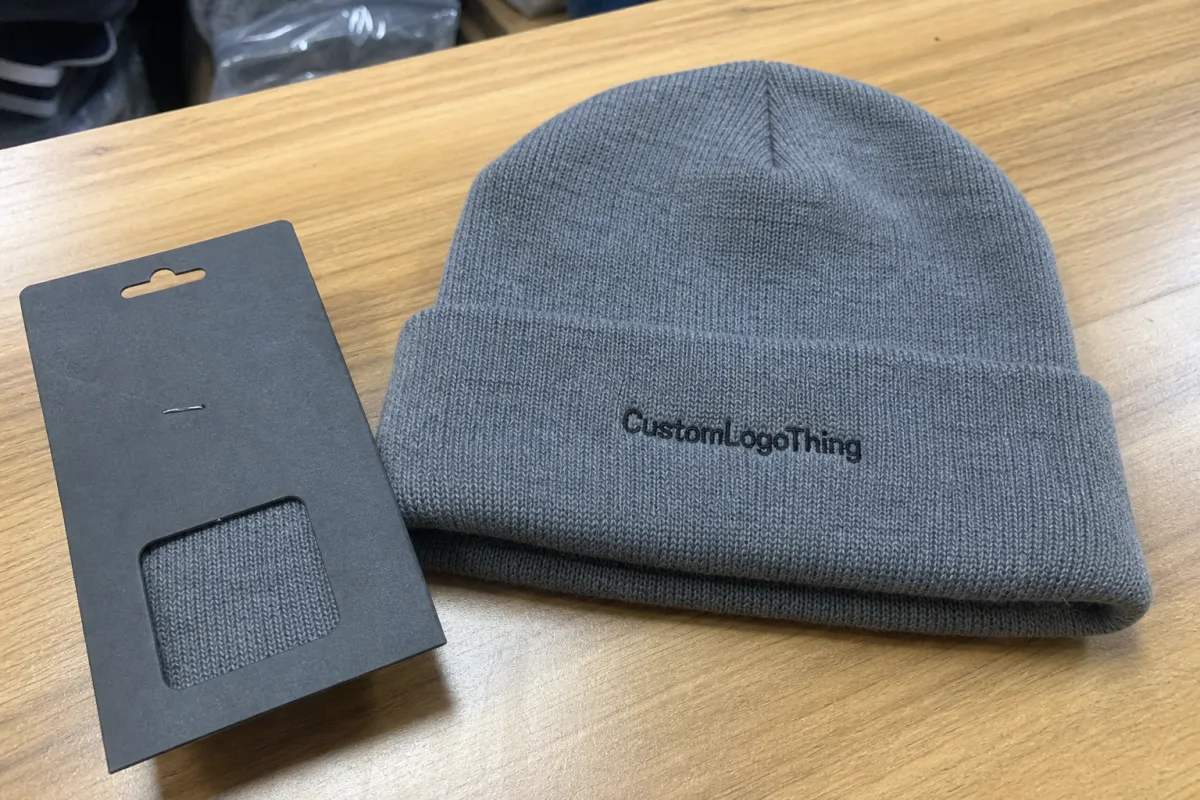
Restaurant teams judge beanies in motion. That is the part people miss. A hat can look premium in a flat lay and still fail once staff pull it on, push it back, and wear it through a long dinner rush. In back-of-house spaces, heat and grease matter. In front-of-house, harsh lighting and close-up guest interaction matter. A sample reveals whether the material holds shape, pills quickly, or distorts the embroidery when stretched.
A material sample is simple in theory: it is a physical reference that lets you inspect yarn, stitch behavior, color, and handfeel before bulk production starts. In practice, it does something more valuable. It turns a vague approval into a concrete one. Instead of saying “looks good,” you can say the knit is too loose, the thread finish reads too glossy, or the cuff needs more depth for a cleaner logo placement.
Hospitality is harder on apparel than casual merch. A staff beanie gets worn repeatedly, tossed into lockers, washed more often, and seen from a few feet away under mixed lighting. That is why the restaurant Embroidered Beanies Material Sample guide should be treated as a production control tool, not an optional extra. If a sample fails on fit, finish, or logo clarity, revise before the run. The cost of one corrected sample is usually far lower than the cost of 300 flawed hats.
A sample that only looks good on a hanger has not passed the restaurant test.
There is also a less obvious reason to use samples carefully: embroidered knitwear behaves differently from woven apparel. Stretch changes stitch density. A logo that looks balanced on a mockup can shift once the beanie is pulled over a head. Dense embroidery can make a lightweight knit lose flexibility around the crown. Those tradeoffs do not show up in a digital preview.
How the sample review process works from spec sheet to swatch
The cleanest process starts with a simple spec sheet. The buyer sends logo art, preferred colors, target use case, and any garment notes, such as “front-of-house uniform,” “kitchen staff,” or “resale merch.” The supplier then recommends candidate materials and the most useful sample format. That might be a blank swatch, a decorated sample, or a pre-production proof. Those are not the same thing, and the distinction matters.
A blank material swatch tells you how the yarn feels, how much it stretches, and whether the knit looks dense enough for embroidery. A decorated sample adds the logo so you can inspect placement, thread color, and stitch clarity. A pre-production proof goes a step further and is meant to mirror the final production spec as closely as possible. If you only review a swatch, you still do not know how the logo will behave on the finished cap.
Restaurant buyers should test embroidery against real geometry: crown shape, cuff depth, knit stretch, and logo size. A logo that sits neatly on a flat digital mockup can look crowded once it lands on a ribbed cuff or a softer knit. A good check is to view the sample from three distances: arm’s length, across a service counter, and in a phone photo. That catches problems that polished product photography tends to hide.
Sample review should also include the inside of the garment. The backing behind embroidery can feel abrasive if the stitch count is high or the thread tension is off. On a beanie worn for eight hours, that matters. If the interior is scratchy now, it will not improve after the first wash.
For shipping samples, ask how they are packed. A sample wrapped in kraft paper, protected inside corrugated cardboard, and shipped with recycled void fill is not just a greener choice; it also reduces crush damage and scuffed embroidery. If the supplier uses ISTA packaging test guidance as part of their transit checks, that suggests they think beyond the first unboxing.
The rule is plain: if the sample misses on fit, finish, or logo clarity, stop there and revise. Do not argue with the sample. It is the clearest preview you are going to get before dozens or hundreds of units are made.
Material, stitch, and color factors that change the final look
The material you choose controls more than warmth. It changes the drape, the wash behavior, the color depth, and how embroidery sits on the surface. Acrylic is common because it is light, inexpensive, and easy to maintain. It also resists shrinkage better than many natural fibers. Cotton blends feel softer and can be more breathable, but they deserve closer wash testing because they may relax or lose shape sooner. Recycled materials and recycled polyester blends can help with sustainability goals, especially if your brand already specifies post-consumer waste content in uniforms or packaging.
Wool blends bring warmth and a more premium handfeel, but they are not always the easiest option for a restaurant team that launders frequently. The “best” fabric depends on actual use. A boutique dining room with moderate wear has different needs from a high-volume kitchen where hats get treated like utility gear. If the role is front-of-house and the look matters more than thermal insulation, a fine-gauge acrylic knit may outperform a heavier wool blend simply because it keeps the logo cleaner.
Knit gauge matters as much as fiber content. Tighter knits generally hold embroidery edges more cleanly. Looser, chunkier rib knits can let stitching sink, spread, or wobble. That is why a 12-gauge or similarly fine knit often looks sharper for logos, while a bulky, low-gauge style can feel better in winter but create more visual distortion. Thread finish matters too. Matte thread reads calmer and more expensive under restaurant lighting; a shinier thread can catch glare and make the logo look louder than expected.
Color is its own trap. The same black, navy, or cream can look different in daylight, under warm pendant lighting, and on camera. If your restaurant posts a lot of social content, ask for sample photos in more than one light source. Also think about grime resistance. A cream beanie may look refined in a concept photo, but it will show kitchen marks faster than charcoal or deep navy. Brand accuracy matters, but so does how the hat behaves after a week of real use.
There is a practical embroidery issue here that gets missed often: thread count and backing can change handfeel. A dense logo on a soft knit can create a stiff patch, especially if the artwork is oversized. For restaurant staff, that can become a comfort complaint. If the logo area has to be large for visibility, it is safer to test a tighter knit or adjust the placement so the beanie still flexes naturally.
For restaurants that care about material sourcing, ask whether the supplier can document FSC certified paper inserts, recycled hang tags, or biodegradable packaging for sample shipment. Those details do not change the beanie itself, but they do tell you how seriously the vendor handles presentation and waste. That matters if you are evaluating them as a long-term partner rather than a one-off vendor.
Cost, pricing, MOQ, and unit cost signals to compare
Sample pricing is easier to read once you break it into parts. There is usually a sample fee, digitizing or setup for the embroidery file, material selection, decoration complexity, and freight. If the sample is custom-dyed or uses specialty yarn, the price moves again. For a small branded beanie run, a sample might fall around $25-$75 before shipping, while digitizing can add another $20-$60 depending on logo detail. If the first sample requires revisions, that can add time and cost, which is exactly why the first pass should be reviewed carefully.
The cheapest sample is not always the best value. A low quote can hide weak yarn, inconsistent knit density, or a rushed embroidery setup. Those problems become expensive once they are multiplied across the bulk order. The better question is which sample gives the clearest proof that the production run will match expectations.
MOQ, or minimum order quantity, affects the unit price in a predictable way. Larger runs usually reduce the per-hat cost because setup is spread across more pieces. Smaller runs carry more overhead, so the unit cost rises. For embroidered restaurant beanies, it is common to see pricing move from roughly $7-$12 per unit on lower quantities to $4-$8 per unit at better volume, depending on yarn, logo size, and added features like woven labels or custom packaging. Those ranges are not fixed; they change with stitch count, packaging, and shipping distance.
Here is a practical comparison that helps separate the options.
| Option | Typical sample cost | Typical unit cost at mid-volume | Best for | Watch-outs |
|---|---|---|---|---|
| Basic acrylic beanie | $25-$45 | $4-$7 | High-use staff uniforms | Can feel less premium if knit is too open |
| Acrylic-blend with tighter gauge | $30-$60 | $5-$8 | Balanced comfort and logo clarity | Thread sheen may need testing under bright lights |
| Cotton or cotton-blend beanie | $35-$70 | $6-$10 | Soft handfeel and casual merch | More wash testing needed for shape retention |
| Wool blend or premium yarn mix | $45-$90 | $8-$12+ | Upscale resale or cooler climates | Higher care needs and potential shrink concerns |
If a vendor will not break out the quote, ask for a line-item version. You want to see sample fee, embroidery setup, material cost, shipping, and any revision charge. That makes it easier to compare apples to apples across vendors and prevents a low initial quote from disguising a high final landed cost.
One more pricing detail deserves attention: embroidery coverage. A small chest-style logo equivalent on a beanie is relatively modest. A large, dense emblem or multi-color mark can push cost up quickly because stitch count rises and the machine time increases. The same design can look simple on paper and expensive on the production floor.
Process and timeline from sample request to bulk approval
A realistic timeline usually runs in stages: request, artwork review, material selection, sample production, shipping, hands-on review, revisions, and final sign-off. For a clean order, the first sample can often be ready in about one to two weeks, then shipping and internal review add a few more days. If a second round is needed, plan for that too. It is better to build that buffer now than to rush the decision and regret it later.
Most delays happen for predictable reasons. Logo files are incomplete. Color references are vague. Someone changes the material after seeing the first sample. Or the approval chain is too long and the sample sits in an inbox for a week. The more exact the spec, the faster the process moves. A simple file with final logo artwork, Pantone or close visual references, use case, and target delivery date cuts a surprising amount of friction.
Complex embroidery can extend lead time, especially if the logo has fine text, multiple colors, or a large stitched area on a stretch knit. Add custom labels or special packaging and the schedule stretches again. If the beanies are tied to a staff launch, an opening date, or a seasonal merch drop, work backward and allow room for transit and a second round of sampling if needed.
I also recommend checking transit packaging during approval. If the sample survives shipping in a neat corrugated carton with minimal scuffing, it tells you something about the vendor’s handling. If the sample arrives crushed or damp, do not ignore that as a one-off. Sample handling is part of production discipline.
For teams that care about waste reduction, ask whether the supplier can use recycled inserts, kraft paper wraps, or biodegradable packaging for sample mailers. Small decisions like that are not just branding details. They also shape how the order feels when the box is opened by a manager, a buyer, or a franchise operator.
Good approval timing also includes wash testing. Even if the first sample looks acceptable out of the box, it should be checked after laundering and air-drying at least once. That simple step can expose logo shrinkage, puckering, or color shift before the purchase order is locked in. Skipping it is how a tidy-looking sample turns into a uniform problem later.
Common mistakes that lead to bad approvals or rework
The first mistake is approving under flattering light. Warm light can soften color differences and hide stitch irregularities. Natural daylight is less forgiving, which is exactly why it is useful. The second mistake is judging from too far away. A beanie can look fine from three meters and still show puckering, loose edges, or logo distortion at arm’s length, where staff and guests actually see it.
The third mistake is testing only one head size. A beanie that fits a manager perfectly may pinch, slide, or sit oddly on the rest of the team. Fit needs to be checked on more than one wearer, especially if the order will serve both front-of-house and back-of-house staff. A hat that feels snug after five minutes may become annoying after a four-hour shift.
One approved sample does not guarantee a stable production run. It only proves that one piece passed one test.
The fourth mistake is skipping wash and wear testing. This is a serious one for restaurant uniforms. Repeated laundering can expose shrinkage, fuzzing, thread loosening, and color shift. If the beanie is going to be washed weekly, test it weekly. If it is going to be worn in a hot kitchen, test it in heat. The sample is only useful if it reflects the environment the final order will live in.
The fifth mistake is chasing the sample that photographs best. Some beanies look exceptional on camera because the knit hides flaws or the light flatters the thread. That does not mean they are the best choice for service. Photo appeal matters for merch, but for staff uniforms the real benchmark is durability and comfort in actual use.
Another common miss is ignoring seam and cuff recovery. If the cuff stretches out after one wear, the logo placement can drift lower than intended and the beanie starts to look tired fast. That may sound minor, but on a uniform program it affects consistency across the team. Consistency is what separates a branded item from a random accessory.
Expert tips and next steps before you place the order
Start with a one-page approval checklist. Keep it blunt and specific: material, fit, logo size, thread color, cuff style, wash expectations, and packing method. That list becomes your paper trail if the next sample comes back with a surprise. It also helps different stakeholders review the same criteria instead of arguing over general impressions.
Request at least two material options if you can. One should be the safest production choice, and the other should test a different balance of softness, structure, or sustainability. Sometimes the better answer is not the softest beanie or the warmest beanie. It is the one that preserves logo clarity, washes well, and feels right for the staff who will actually wear it.
Ask for sample photos in daylight and kitchen lighting, then compare them side by side with the physical sample. That is especially useful if the final approval will come from different people, such as operations, marketing, and a venue manager. Include written notes on the approved version. If there are later questions about the batch, those notes become the reference point.
If sustainability matters in your brand story, ask about the broader presentation too. A beanie shipped in corrugated cardboard with minimal filler, FSC certified paper inserts, and recycled or post-consumer waste components can reinforce the same message as the product itself. Packaging will not rescue a poor beanie, but it can strengthen a well-planned order.
- Ask for a swatch and a decorated sample, not just one or the other.
- Test the sample on several team members with different head shapes.
- Compare the logo in daylight, indoor light, and on camera.
- Write down the final approved spec before production starts.
- Confirm shipping materials if presentation and sustainability matter.
Once the sample passes those checks, place the bulk order with confidence. Request the final quote in writing, confirm the approved material, and save the sample reference photos with the sign-off notes. That is the simplest way to reduce surprises later. The strongest restaurant Embroidered Beanies Material Sample guide is not the one with the most theory; it is the one that helps you approve a hat that fits, lasts, and still looks sharp after real service.
What material is best for restaurant embroidered beanies that will be washed often?
Acrylic and acrylic-blend beanies are usually easier to maintain because they resist shrinkage and dry faster than many natural fibers. Cotton blends can feel softer, but they may need more careful wash testing to make sure the shape holds up. The best choice depends on kitchen heat, wash frequency, and whether the beanies are for front-of-house or back-of-house use.
How many samples should I request for a restaurant embroidered beanies order?
Start with at least one material swatch and one decorated sample so you can compare fabric feel with logo appearance. If you are choosing between several colors or yarn blends, ask for more than one option before approving. A second round is worth it when the first sample reveals fit, stitch, or color issues.
Will embroidery look different on acrylic versus cotton-blend beanies?
Yes, because the knit surface and stretch level change how the thread sits on the fabric. Tighter acrylic knits often give cleaner edges, while softer cotton blends can show more texture around the logo. Always check the sample in person so you can judge crispness, thickness, and distortion.
What should I budget for sample fees and unit pricing?
Budget for the sample itself, digitizing or setup, shipping, and any revisions that come after the first review. Unit cost usually drops as quantity increases, but custom materials, dense embroidery, or specialty labels can raise the price. Ask for a detailed quote so you can separate true production cost from one-time setup charges.
How can I speed up approval without missing important quality issues?
Send final logo artwork, exact colors, and the intended use case before requesting the sample. Use a simple approval checklist so everyone reviews the same criteria instead of debating vague impressions. Test the sample on real staff members and compare it in the same lighting where it will be worn.
What if the first sample looks good but feels too stiff?
That usually points to a knit that is too tight, a logo that is too large, or embroidery that is too dense for the base fabric. Ask the supplier whether a lighter knit, smaller logo field, or adjusted stitch count can preserve the look while improving comfort. Stiffness is worth fixing early because it often becomes a wear complaint later.