A beanie can look identical in a product rendering and still embroider very differently once knit stretch, thread density, and backing material are introduced. That gap is exactly why the corporate gifting embroidered Beanies Material Sample guide matters before anyone signs off on a bulk order. A sample shows the real hand feel, logo behavior, and color response that a flat mockup cannot reveal.
Corporate gifting leaves very little room for a near miss. A beanie is worn in public, handled repeatedly, folded into bags, and judged in daylight, office light, and event lighting. If the knit feels scratchy, the logo sits too high, or the embroidery distorts the cuff, the gift loses value before it reaches the recipient. The sample stage is where those problems show up while they are still cheap to fix.
Why the sample protects the whole gift program
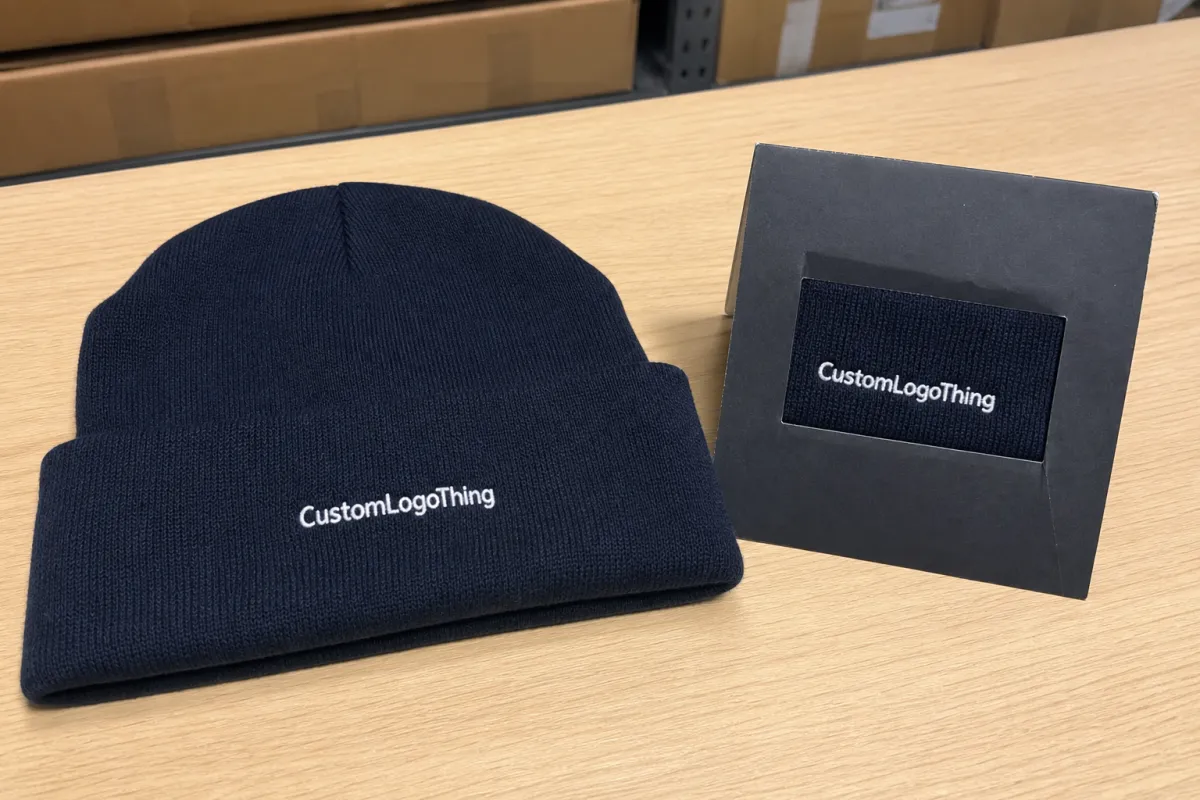
A working sample combines the actual knit, the chosen decoration method, and a real thread color so the buyer can see how the pieces behave together. That sounds straightforward, but it solves the recurring failures that hit promotional apparel again and again: puckering on soft knits, logos sinking into ribbing, stiff embroidery that changes the drape, and color shifts that only become obvious once the thread sits against the yarn.
For buyers, the corporate gifting Embroidered Beanies Material sample guide is a safeguard against a mistake that looks minor in a proof and expensive in a warehouse. If the cuff is too shallow, the logo may ride high on the forehead. If the yarn has too much stretch, a dense stitch count can pull the knit out of shape. If the beanie feels rough, the gift loses the premium feel the program is trying to communicate.
Experienced teams treat the sample as a decision tool, not a box to check. It answers practical questions a rendering cannot: Does the logo stay legible when the cuff is stretched? Does the beanie still feel comfortable after embroidery backing is added? Does the material read as premium enough for employees, clients, or event guests?
A good sample does not exist to impress anyone in one photo. It exists to show stitch density, knit recovery, and wearability before the full run is committed.
The sample can also expose whether the presentation plan matches the product. A beanie shipped in a plain poly bag does not create the same impression as one nested in kraft paper, placed inside corrugated cardboard, or paired with branded inserts made from recycled materials. If the program is aiming for FSC-certified paperboard, post-consumer waste content, or biodegradable packaging, the sample stage is the time to confirm that experience, not after production starts.
That level of detail matters because the gift is usually carrying more than a logo. It is carrying a seasonal message, a budget, and a brand judgment that people will make in seconds. A sample is the only practical way to test all three at once.
How sample beanies are tested for logo quality
Sampling usually begins with artwork cleanup and digitizing, where the logo is translated into stitches instead of pixels. That step matters more than many buyers expect. A logo with clean edges in a PDF can still need stitch edits, especially if it contains tiny text, thin outlines, or close color overlaps that blur on knitted fabric.
Next, the supplier decides whether to sample from stock or knit a custom blank. A stock blank is faster and usually enough for evaluating embroidery placement, logo scale, and basic hand feel. A custom knit prototype takes longer, but it shows rib structure, yarn selection, and fit more accurately when the final project depends on a specific silhouette or colorway.
Then comes the stitch-out. This is where the corporate gifting embroidered Beanies Material Sample guide earns its keep: the embroiderer can inspect edge clarity, thread sheen, stitch density, and how the logo lands on the cuff or front panel. A sample should make it obvious whether the design needs to be resized, moved a few millimeters, or simplified so it reads well from arm's length.
One detail buyers often miss is the difference between a blank material swatch, a decorated sample, and a pre-production prototype. A swatch helps with touch and color. A decorated sample shows the real embroidery finish. A pre-production prototype comes closest to the final order because it uses the intended fabric, decoration, and often the final packing method as well.
Before approving, ask for written notes that capture logo placement, thread codes, yarn content, and any requested changes. Photos help, but photos alone do not create a dependable production record. The sample should become the reference that both buyer and supplier can use later if a question comes up.
Practical checks matter here. Hold the sample at a normal viewing distance. Stretch the cuff slightly and see whether the logo shifts or warps. Check the back of the embroidery for scratchiness. If the stitches can be felt through the knit in a way that would bother the wearer, that is not a small issue. It usually gets worse in bulk if the backing or density is not adjusted.
Cost, pricing, and MOQ: what changes the sample bill
Sample pricing depends on more than the hat itself. The main drivers are the blank beanie type, yarn content, embroidery stitch count, digitizing work, and whether the piece is a true custom knit or a decorated stock blank. A simple stock sample with one small logo may run in the $35-$65 range. A recycled yarn or wool blend sample with custom color matching can land closer to $70-$140, especially if revisions are needed.
The sample price and production price are not always connected in a straight line. Some suppliers absorb part of the setup cost when the bulk order is approved, but charge more for a one-off sample because the labor is spread across a single unit. That is normal. What matters is knowing what is included before comparing quotes.
| Sample option | Typical sample cost | What you learn | Best use case |
|---|---|---|---|
| Stock acrylic beanie with logo stitch-out | $35-$65 | Placement, stitch clarity, basic hand feel | Fast approval for standard corporate gifts |
| Recycled polyester or blended blank | $45-$85 | Stretch recovery, softness, thread behavior | Programs emphasizing recycled materials |
| Wool blend or heavier knit prototype | $70-$140 | Warmth, texture, embroidery tension, drape | Premium client gifts or colder-weather use |
| Custom knit sample with packaging mockup | $90-$160+ | Fit, logo behavior, presentation experience | Higher-touch gifting with packaging review |
MOQ and sample quantity are related, but they are not the same thing. A buyer may be able to order one sample even if the final program needs 250, 500, or 1,000 pieces. The minimum order usually applies to production, not the proofing step. Still, if the project has multiple colorways or audience tiers, it can be smart to request separate samples for the variations that matter most.
When comparing quotes, check whether the sample fee can be credited toward the bulk order, whether shipping is included, how many revision rounds are allowed, and whether thread colors are matched to Pantone references or only to a visual standard. That is where the corporate gifting Embroidered Beanies Material Sample guide helps a buyer avoid comparing numbers that do not describe the same scope.
There is also a difference between cheap and efficient. A lower sample fee can be misleading if it excludes digitizing changes, one-way shipping, or a second stitch-out after the first version puckers. A slightly higher sample cost is often the better buy if it includes real revision support and a clearer path to production approval.
If the shipment will travel through several handling points, it is worth asking how the sample is packed and tested as a parcel, not just as a product. The International Safe Transit Association has useful packaging guidance at ista.org, and paper sourcing standards can be checked through fsc.org when your program includes fiber-based packaging.
Process and turnaround: from brief to approved sample
The cleanest sampling process follows a predictable sequence: discovery brief, artwork review, yarn or blank selection, digitizing, stitch-out, inspection, revision if needed, approval, and shipment. When each step is documented, the sample becomes easier to judge and easier to reproduce in production.
Turnaround changes based on a few real-world variables. Artwork cleanup can take a day or two if the logo file is messy. Yarn sourcing can add time if the color needs close matching. Holiday congestion can slow the line even when the sample itself is simple. If the buyer wants multiple revisions before signoff, each edit adds another round of review.
A complete brief on day one saves more time than any rushed follow-up ever will. Include vector logo files, Pantone references if color matters, target audience, desired decoration size, placement restrictions, and packaging needs for gifting. If there are any known constraints, such as a shallow cuff, a narrow embroidery field, or a required hangtag size, they should be called out early.
For most programs, it is wise to build in a buffer so the sample can be worn, stretched, and looked at in normal lighting before approval. A rushed yes may solve the calendar problem, but it does not solve the fit problem. In a gift program, that distinction matters.
Timeline expectations should be realistic. A stock blank with a single logo often moves through sampling in about 5-10 business days. A custom knit or a multi-step approval with color matching can stretch to 2-3 weeks, sometimes longer if materials need to be sourced. That range is not a warning sign by itself; it is simply the cost of controlling variables that are easy to miss on screen.
Which materials make embroidery look clean and last
Material choice changes both appearance and durability. Acrylic is common because it is cost-effective, easy to knit, and usually gives solid stitch definition for a wide range of logos. Recycled polyester is often chosen when a buyer wants a lower-impact material story and a smooth surface that still holds embroidery well. Wool blends can feel more premium and warmer, but the surface texture may require tighter attention to stitch density. Cotton blends are comfortable in milder climates, though they do not always deliver the same thermal feel as acrylic or wool.
Knit gauge and fabric weight matter just as much as fiber content. A tighter knit typically supports cleaner logo edges because the needle has a more stable base. A loose, stretchy knit can distort a design if the embroidery is too dense or placed too close to an unstable seam. In practical terms, a 7-gauge beanie and a 12-gauge beanie do not behave the same way, even if they are both sold as custom knit caps.
Comfort is part of the material decision, not an afterthought. Buyers often focus on logo visibility, but the beanie has to feel good when someone wears it for hours, not just for a photo. Check stretch recovery, cuff depth, crown shape, and whether the embroidery backing adds stiffness where the head touches most often.
Support materials also affect the final result. A lighter backing can reduce puckering on soft knits, while an overly heavy backing can make the front panel feel boardy. Thread choice matters too. Some threads have a subtle sheen that makes logos pop; others look flatter and more understated. Neither is inherently better. The right choice depends on whether the gift needs a sharp corporate edge or a softer apparel-like finish.
For an everyday client gift, the best result usually sits in the middle: enough structure to hold the logo, enough softness to wear well, and enough visual weight to feel intentional. That balance is what the corporate gifting Embroidered Beanies Material Sample guide is trying to verify.
There is also a practical limit to what embroidery can do on certain materials. Very plush knits can swallow fine detail. Very stretchy fabrics can make thin lettering look unstable. If a design depends on hairline strokes or tiny registered elements, the safest answer is usually a slightly larger decoration area and fewer micro-details. That is not a compromise so much as a production reality.
Common mistakes when reviewing beanie samples
The first mistake is approving only by color. A beanie can be close to the target shade and still fail on fit, drape, or logo readability once it is worn. Color matters, but it is only one piece of the decision.
The second mistake is comparing the sample to a mockup instead of the actual production fabric. Knit texture, thickness, and stretch can change the look of the logo enough to matter. If the sample is on the wrong substrate, the approval may not mean much.
Another common miss is ignoring seam placement and fold behavior. A logo that looks centered on a flat table can shift when the cuff is stretched or when the beanie sits unevenly on a head. It is worth checking the sample in low light, in office light, and from a few feet away, because contrast thread can disappear surprisingly fast.
Comfort testing should not be skipped. Have someone wear it, turn their head, pull the cuff down, and move around normally. That small step shows whether the embroidery sits where people actually notice it and whether the beanie still feels like something they would choose to wear.
One more practical issue: presentation. If the sample arrives loose in a bag, but the final gift is supposed to feel polished in a corrugated cardboard mailer with kraft paper filler, those details should be reviewed together. A sample can also be used to confirm whether your packaging plan uses FSC-certified paperboard, post-consumer waste content, or biodegradable packaging that fits the brand story instead of fighting it.
Sampling errors often come from rushing the review rather than the production itself. The hat may be fine. The approval process may not be. If the buyer has not checked the piece for stitching pull, thread contrast, cuff balance, and packaging fit, the order can still drift away from the intent even when the sample looked promising at first glance.
Expert tips and next steps after the first sample
A simple pass-or-revise checklist keeps approvals consistent. Cover five points: color match, fit, stitch clarity, comfort, and presentation. If all five land well, the sample is probably ready for production. If one is off, write the revision clearly and focus on that issue first.
Review the sample under the same lighting where the gifts will be opened. Thread sheen can change a lot under warehouse LEDs, office fluorescents, or mixed event lighting. The beanie may look darker, glossier, or flatter depending on where it is seen, and that can change how the logo reads.
Ask for one focused adjustment at a time when possible. A change in stitch density is easier to judge if the placement and thread color stay the same. A shift in yarn choice is easier to evaluate if the embroidery map stays fixed. Small, isolated revisions produce cleaner decisions than a batch of edits that all move at once.
Once the sample is approved, document the exact blank or knit spec, the decoration map, the approved thread colors, the acceptable tolerances, and the packing method. Then treat the corporate gifting embroidered beanies material sample guide as the last check before production, not the first step after production starts. That pause is often what keeps a simple gift from turning into a correction run.
If the order will be shipped directly to offices, conferences, or client addresses, this is also the point to confirm carton counts, insert wording, and protective packaging. A locked production sample can travel in a clean system of recycled materials and paper-based packing without losing the premium feel that corporate gifting needs.
A final check worth making: ask for the same sample notes to be attached to the production file. That includes measurement tolerances, approved logo scale, thread brand or code, and any known risks such as slight yarn variation between dye lots. Those details are easy to overlook and difficult to recover later.
For brands that care about details, the corporate gifting embroidered beanies material sample guide is not extra work. It is the part of the process that makes the rest of the order easier, cleaner, and more predictable.
There is no substitute for a physical sample when the product depends on texture, stretch, and wear. The buyer who approves from a screen alone is guessing. The buyer who inspects the knit, the stitch, and the packing plan is making a decision.
What should a corporate gifting beanies sample include before approval?
A useful sample should show the actual knit, embroidery placement, thread color, and finished hand feel, not just a flat mockup. Ask for notes on material content, cuff height, sizing, and any special packing or labeling that will affect the gift experience.
How many material samples do I need for embroidered beanies?
Most buyers can start with one approved sample per material or decoration method, then compare only if the program will use multiple beanie styles. If the order has different audience tiers or colorways, request samples for each critical variation rather than assuming one sample covers everything.
Does embroidery on beanies change after wearing or washing?
Yes, the stitch look can settle after wear, and some knits may relax slightly, which is why a sample should be tested for stretch and recovery. Ask about wash care and thread durability so the final gift still looks crisp after normal use.
What is a normal turnaround for beanie material samples?
Turnaround depends on whether the supplier is sampling a stock blank or building a fully custom knit, plus how many revisions the artwork needs. A clear brief, approved logo file, and specific color references usually shorten the sample timeline more than any other factor.
How do I compare quote prices for sample beanies fairly?
Compare what each quote includes, such as digitizing, setup, revision rounds, shipping, and whether the sample fee applies to the bulk order. Look beyond the unit price and check material quality, decoration method, and how closely the sample matches the final production spec.


