For restaurant groups, the difference between a clean pack-out and a compliance headache often comes down to one detail: the restaurant groups OPP Header Bags Warning Label guide spec has to be right before the first carton ships. A polished OPP header bag can look retail-ready on screen, but if the warning language is too small, placed in the wrong spot, or tied to the wrong bag size, the rollout gets harder for store teams and less reliable for customers.
OPP, or oriented polypropylene, is common because it gives a clear product view, good stiffness for its weight, and a tidy finish for bakery items, utensils, promo inserts, and other light packaged goods. In multi-location foodservice programs, that clarity matters because the package is doing two jobs at once: it protects the item and carries the message that needs to be seen quickly at the packing table.
A bag that looks good but hides the warning copy is not a finished spec. In practice, the packaging has to work at the counter, in the carton, and in the customer's hand.
Restaurant Groups OPP Header Bags Warning Label Guide Basics
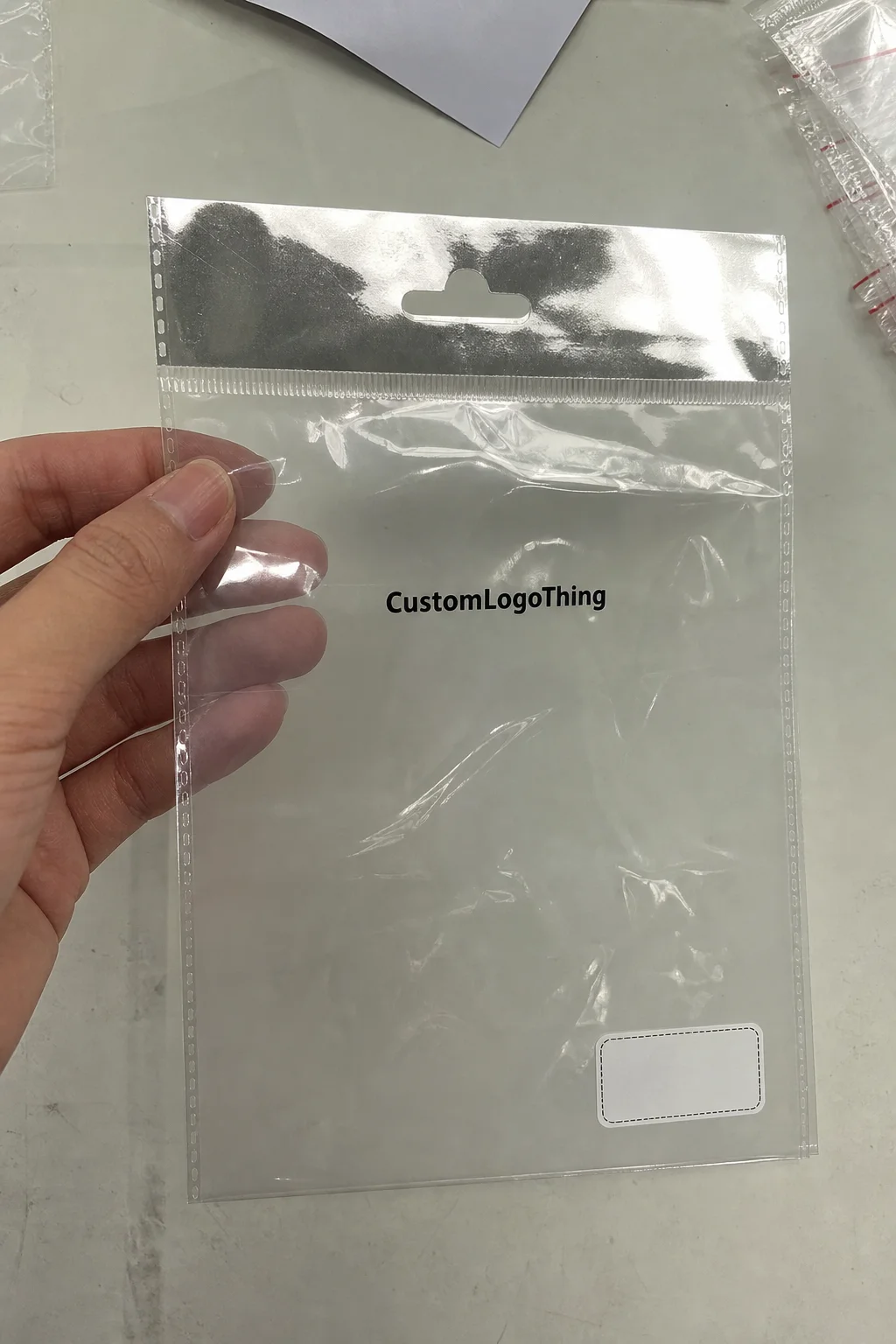
The basic setup is simple, but the details are not. An OPP header bag usually combines a clear film body with a header area that can carry branding, size information, and the warning label. That header area may be printed, pre-labeled, or designed with enough blank space to accept a separate compliance label later. For restaurant groups, that structure is useful because one packaging format can cover several menu items without changing the core bag every time the campaign changes.
The phrase restaurant groups OPP Header Bags warning label guide sounds long, but the buying logic is straightforward: keep the bag usable, keep the text legible, and keep the program repeatable across locations. If a warning statement is required, it should be treated as part of the approved artwork, not something added casually by the last person touching the carton.
That is where buyers sometimes miss the risk. A clean-looking header bag can still fail internal review if the warning copy is hidden behind a fold, reduced too far to read, or placed where the packing team cannot verify it during assembly. For groups with several store formats, consistency is the real payoff. One approved bag spec means fewer exceptions, fewer store-level questions, and fewer last-minute changes when a new menu item or seasonal run comes along.
For anyone comparing options, the practical definition of OPP should stay grounded in use. It is a film chosen for clarity and presentation, not for heavy abrasion resistance or freezer abuse. If the program needs more barrier, a different structure may be a better fit. If it just needs a tidy retail look and a clear warning panel, OPP is often the simplest choice.
Packaging buyers often benefit from shared terminology. Industry references from groups such as the Packaging Machinery Manufacturers Institute can help teams and suppliers stay aligned on bag format, pack-out, and line handling.
How the Film, Header, and Warning Panel Work Together
Think of the bag as three working parts. The film delivers visual clarity and gives the package its body. The header provides structure for hanging, stacking, or easy handoff. The warning panel carries the compliance language and any operational cautions the group needs to communicate. If one of those parts is weak, the whole package looks less controlled.
Gauge matters here. A very light film can feel flimsy in hand and may wrinkle more easily during pack-out. A heavier film can look and feel better, but it also raises cost and may not be necessary for lightweight items. Most buyers are trying to land in the middle: enough stiffness to hold shape, enough clarity to show the product, and enough surface area on the header to keep the warning visible.
The header width deserves more attention than it usually gets. If the header is too narrow, long warning copy can wrap awkwardly or shrink below a readable size. If it is too tall, the bag can start to feel top-heavy and waste material. The best spec is usually the one that gives the artwork room to breathe without turning the bag into a billboard.
There are two common ways to handle the warning text:
- Printed into the design — best when the warning language is fixed and the group wants a clean, integrated look.
- Applied as a separate label — useful when the warning needs to change by market, concept, or SKU, or when the approval process is still moving.
There is no universal winner. Printed copy tends to look cleaner and removes a manual step. Separate labels give more flexibility if the same base bag will support different restaurant concepts or slightly different compliance text. The right choice depends on volume, how often the message changes, and whether the group wants inventory simplicity or artwork flexibility.
Restaurant operations benefit most when the warning appears in a predictable position every time. Staff can pack faster, managers can inspect cartons faster, and the bags feel like a controlled part of the brand system instead of a patchwork of store-by-store fixes. If you are comparing bag structures, tie the warning location to the exact packing motion, not just to the mockup on a screen.
A practical caution: OPP is clear and tidy, but it is not a cure-all. It can scuff, crease, or show handling marks if cartons are overpacked or the line is rough. That is not a defect in the material; it is a reminder to match the bag to the actual use case. A lighter snack program and a greasy carryout insert do not ask the same thing of the film.
Cost, Pricing, and MOQ Drivers
Pricing for OPP header bags is usually driven by a short list of variables: film thickness, bag dimensions, header style, print coverage, warning method, and any extra finishing needed for the label area. Buyers can save time by asking suppliers to break out those items separately instead of giving one all-in number that hides the actual cost driver.
For a smaller restaurant group, a custom run of 5,000 pieces might land around $0.18–$0.30 per unit depending on size, print coverage, and whether the warning is printed or labeled. At 25,000 pieces, the unit price often drops because setup, proofing, and material prep are spread across more bags. Those are not fixed numbers, but they are realistic enough to frame an internal budget conversation.
MOQ matters because the most expensive part of a small run is often not the film itself. It is setup, artwork handling, proof review, and the administrative back-and-forth that comes with special compliance text. If a group wants five store formats, each with a slightly different label, the cost rises quickly unless the supplier can standardize the base bag and vary only the label panel.
Here is a practical comparison buyers can use while reviewing quotes.
| Option | Typical Use | Cost Impact | Operational Tradeoff |
|---|---|---|---|
| Printed warning on bag | Fixed language, repeat orders, uniform rollout | Lower changeover risk, often better at higher volumes | Less flexible if text changes later |
| Separate warning label | Multiple concepts, changing copy, market-specific text | Can add label labor and extra QA | More flexible, but more parts to manage |
| Standard header bag without branding | Low-complexity packaging or short-term test | Usually lowest upfront print cost | Less brand presence, weaker shelf appeal |
| Fully branded OPP header bag | Retail-facing programs and organized restaurant rollouts | Higher art setup, stronger visual control | Best consistency, but stricter proof approval |
Freight and storage deserve a line item too. A low unit price can stop making sense if cartons are oversized, pallet counts are awkward, or the group needs partial releases that create extra handling. If the order is part of a larger packaging program, Custom Labels & Tags may be worth reviewing alongside the bag spec so the whole rollout feels aligned instead of improvised.
If the bags will travel through a distribution center before reaching stores, ask how the carton will be packed and whether any transit testing is appropriate. The ISTA test methods are often used to evaluate distribution hazards, and that matters when the packaging is being handled more like a retail supply item than a simple store purchase.
On timing and cost, there is a pattern buyers see repeatedly: the smaller the run and the more customized the warning area, the more the quote reflects labor and coordination instead of raw material. That is why a well-prepared spec sheet often saves more money than negotiating a few cents off the unit price.
Process, Timeline, and Production Steps for a Custom Run
A clean production process starts with the spec sheet, not the artwork. Size, film choice, warning text, quantity, use case, and rollout date should all be set before the supplier starts building the proof. If those inputs are fuzzy, the quote will be fuzzy too, and the approval cycle usually stretches longer than anyone planned.
The proof stage is where most of the real value gets created. This is the moment to check font size, line breaks, label placement, and whether the warning copy stays readable once the bag is folded, stacked, or packed with product. A good proof should show the exact text in the exact position, not a rough note that someone promises to fix later.
Typical production steps look like this:
- File review and spec confirmation.
- Digital proof or layout approval.
- Material scheduling and print planning.
- Printing or label application.
- Inspection, cartoning, and shipment.
Lead time depends on complexity. Simple runs with stock film and fixed text can often move in 12–15 business days from proof approval. Larger quantities, special labels, or custom colors usually add time. If the bags are tied to a menu launch, remodel, or grand opening, build in extra margin rather than cutting the timing close.
For paper-based inserts, shelf cards, or other non-film components that may be part of the same rollout, materials claims can matter too. If any fiber-based component is being sourced, the FSC system at fsc.org is the right place to verify certification language before anything goes to print.
There are practical limits that do not show up in a mockup. Ink coverage can affect drying time. Label stock can change how neatly cartons close. And if the bag is being produced alongside a second SKU, the changeover between jobs can slow things down more than expected. None of that is unusual; it just means the schedule should reflect the real production line, not a clean spreadsheet version of it.
Common Mistakes That Slow Down Restaurant Rollouts
The most common error is simple: writing the warning copy before the bag dimensions are finalized. Text that looks fine on a screen can become cramped once it lands on a real header panel. If brand graphics, a product descriptor, and compliance language all have to share the same space, the layout needs room, not optimism.
Another problem is treating every store format as identical. A bag that works for a bakery add-on may not work for a grab-and-go item, a bundled utensil pack, or a seasonal promo. Different items change the way the bag hangs, how the header folds, and how visible the warning remains after packing.
Skipping physical approval is expensive in a quiet way. A digital mockup does not reveal weak seals, unreadable copy at real size, label adhesion issues, or awkward folds that happen only when the bag is handled by an actual packer. A sample on the table is better than a surprise in the store.
One more thing gets overlooked a lot: approval authority. If marketing signs off without operations, the rollout may stall later when the packing team realizes the warning is hard to read or the carton count does not match the launch plan. The best restaurant groups usually name one internal approver and collect the rest of the feedback before that final yes.
There is also a hidden failure point on reorders. A file that was “final” six months ago can drift if the artwork team, procurement team, and store operations team each saved a different version. A clean version control process matters almost as much as the bag spec itself.
Expert Tips for Cleaner Displays and Fewer Reprints
Standardize wherever the business allows it. Fewer bag versions mean fewer stock errors, fewer reorders, and a cleaner shelf or counter presentation. For restaurant groups that have multiple locations but a single brand voice, one approved OPP header bag often does more for operations than a dozen slightly different versions ever could.
Keep the warning copy short and visually separated from the brand elements. Good hierarchy matters. The customer should see the brand first, then the caution text, without the header looking crowded or improvised. If the warning is too dominant, the bag starts to feel like a notice instead of a branded package.
Lock in a master file and a single source of truth. Once the group decides on the final layout, every store, agency, and regional manager should be working from the same version. Version drift is one of the fastest ways to create a reprint, especially when several people think they approved the “final” file.
Test the bag with the actual product inside. Empty samples are useful, but real weight, shape, and folding behavior can change how the header sits. A bag that looks perfect on a flat table can lose its warning visibility once it is packed with a lidded container, folded napkins, or a bundled promo insert.
For buyers who want a cleaner procurement process, the most useful habit is to ask for a spec summary that includes dimensions, film gauge, warning text, artwork method, and carton count before the quote is released. That keeps the conversation grounded in the real job the bag needs to do.
Inspection should not stop at the first sample. A short run can look perfect and still drift later if print alignment shifts, label placement changes, or cartons are packed too tightly. A practical QC checklist usually catches more problems than a single sign-off ever will.
Next Steps Before You Request a Quote
If you are preparing a rollout, build a one-page spec sheet first. Include bag size, film preference, warning text, print needs, target quantity, carton count, and the date the first cartons must arrive. That gives the supplier enough structure to price accurately and reduces the back-and-forth that usually slows the project down.
Next, send a real product sample if the bag will be used for more than one menu item. A sample helps confirm fit, seal clearance, and header visibility, which is especially useful if the same bag has to work across different restaurant concepts or different pack-out styles.
Ask for a proof that shows the warning copy exactly where it will appear on the finished bag. That is the cleanest way to catch layout issues before production starts, and it is especially helpful for restaurant groups that need the same packaging to work in multiple locations without store-level guesswork. A tight restaurant groups OPP Header Bags Warning Label guide process saves time, reduces reprints, and keeps the rollout moving with fewer surprises.
If the rollout is tied to a seasonal launch or a location opening, do not order purely on instinct. Match the quantity to the first phase of the launch, then reorder from a confirmed spec once the bag has been tested in real use. That is usually safer than overbuying before the team has seen how the package behaves on the line.
One more practical point: ask how long the supplier will hold the approved art before production begins. In a busy buying cycle, even a small delay can create a mismatch between the version approved on paper and the version that actually gets printed.
FAQ
Do restaurant groups need warning labels on OPP header bags?
Often yes, depending on how the bag is used and what local rules apply. The exact wording and placement should be confirmed before production so the same bag can be used across locations without confusion. A supplier should show the warning text on the proof, not leave it as a loose note for the packing team.
What affects the cost of OPP header bags with warning labels?
The biggest drivers are film thickness, bag size, print complexity, and whether the warning is printed or applied as a separate label. MOQ matters because setup and proofing are spread across more units at higher quantities, which usually lowers unit cost. Freight, carton packing, and storage should also be included so the quote reflects the real landed cost.
How long does a custom OPP header bag order usually take?
Lead time depends on whether the film is in stock, how many colors are involved, and how fast the proof is approved. Simple orders move faster; custom artwork, special labels, or larger quantities typically add time. Build extra margin into the schedule if the bags are tied to a rollout, seasonal menu, or opening date.
Can one warning label work across multiple restaurant concepts?
Yes, if the use case and required language are the same, but the layout still needs to be checked for each bag size and brand format. A brand-neutral warning panel can simplify inventory, but the approval process should confirm that every concept is covered correctly. If the concepts have different legal text or packaging rules, separate SKUs are usually safer.
What should we send before asking for a quote?
Send the bag dimensions, target quantity, warning copy, artwork needs, and the date the first cartons need to ship. If possible, include a sample product so the supplier can verify fit and header visibility before quoting. A clear spec upfront usually gets a cleaner price and reduces the back-and-forth that slows approval.
What should a quality-control check include?
At minimum, verify print placement, warning readability, seal consistency, carton counts, and whether the bag holds shape after packing. If labels are used, check adhesion and alignment under normal handling, not just on a flat sample. The useful test is whether the bag behaves correctly in the same motion store teams will use every day.
For restaurant teams that want cleaner rollouts and fewer surprises, the best path is simple: lock the spec, verify the warning copy, and order against a real use case instead of a guess. That is the practical way to use the restaurant groups opp header Bags Warning Label guide approach without turning a packaging purchase into a planning problem.


