Restaurant ribbed winter beanies Unit Cost Review sounds narrow, but the buying decision is wider than the phrase suggests. The real question is not whether a knit hat looks acceptable on a mockup. It is whether the same hat still holds shape after repeated shifts, quick washes, heat from the dish line, and a month of being stuffed into a locker or apron pocket. That is the test that exposes the difference between a low quote and a useful uniform item.
Cheap beanies fail in predictable ways. The cuff rolls. The crown stretches out. Thread tension loosens, so the logo loses its edge. The hat may still be wearable, but it stops looking intentional. Ribbed construction handles that better than a flat, loose knit because the ribs recover more cleanly and the cuff offers a steadier branding zone. For restaurants, that matters. A hat that survives service, cleaning, and reissue is cheaper than a bargain piece that needs replacing twice a season.
The best buying comparison is not unit price alone. It is unit price plus wear life, setup fees, decoration method, and reorder consistency. A $0.80 difference on a 1,000-piece order turns into $800 before freight, and freight rarely helps the cheaper option. That is why a restaurant ribbed winter Beanies Unit Cost Review should treat the quote as one piece of the picture, not the whole picture.
Why Ribbed Beanies Beat Generic Winter Hats
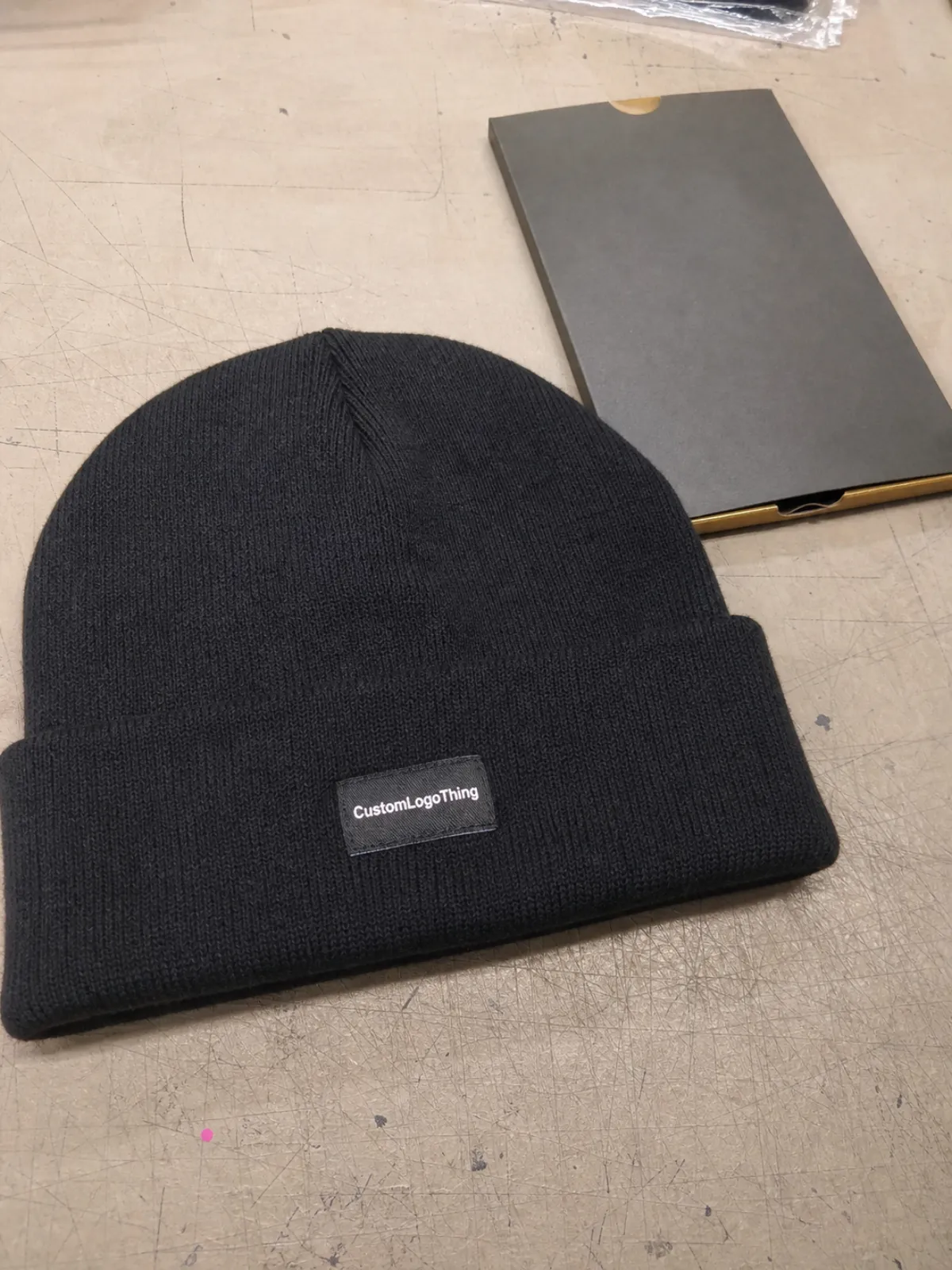
Ribbed beanies are forgiving in a way generic winter hats are not. Restaurants have mixed head sizes, mixed shifts, and mixed wear conditions. Front-of-house staff often want a cleaner fit, while back-of-house teams care more about comfort and heat retention. A ribbed knit stretches enough to cover that range without collapsing into the loose, shapeless look that makes a uniform feel accidental.
The cuff is the practical advantage. On a plain knit hat, the front area can distort quickly, especially when the knit is soft or the yarn is too light. On a ribbed beanie, the fold creates a flatter, more stable area for embroidery or a patch. That means the logo reads better from a distance and stays legible after repeated use. In uniform buying, legibility is not a cosmetic detail. It is part of how a brand appears organized.
There is also the matter of replacement cycles. A lower-cost acrylic hat can look fine on day one and tired by day thirty. Pilling, fading, and oversoftening are common. Once that starts, the hat no longer matches the rest of the uniform standard, and managers begin pulling good pieces out of circulation. That hidden replacement rate is where cheap options quietly become expensive.
The real cost of a winter beanie is not the invoice line. It is how many pieces still look acceptable after service, laundry, and a few weeks of hard use.
Material choice makes a bigger difference than many buyers expect. A basic acrylic knit is the lowest-cost route and usually the easiest to source quickly. An acrylic-wool blend holds warmth and structure better, though it can raise price and care sensitivity. Recycled blends appeal to brands that want a sustainability story, but quality varies more by mill and finishing process than the recycled claim alone. If a supplier cannot explain yarn content, gauge, and wash behavior in plain language, the risk is not the fabric. It is the vague answer.
If you want a rough benchmark for packaging durability during shipping, the ISTA testing framework is a useful reference point. It does not tell you whether a beanie is stylish. It does tell you whether your cartons are likely to survive rough handling without the product arriving crushed or misshapen.
Logo Placement and Finish Options That Change the Look
Logo placement on ribbed knitwear is more technical than it looks. A taller cuff gives you a broader decoration zone. A shorter cuff forces the logo to stay smaller and simpler. That is not a design flaw; it is a constraint of the material. Ribbed fabric moves, so the goal is to place the mark where the knit is most stable and the eye can find it quickly.
Embroidery remains the workhorse choice because it holds up through wear and repeated washing. It has depth, but not so much bulk that it overwhelms the cuff. Woven patches offer sharper edges and work better for small type or multi-part marks. Faux leather patches create a more rugged, elevated finish that often fits bars, grills, and colder-season promotions. Woven labels are subtle and tidy, though they can disappear at a distance. That is useful if you want a low-key uniform. It is a drawback if the hat also needs to function as visible staff identification.
Oversized artwork is the most common mistake. On a stretchy ribbed cuff, large logos can warp, especially if the artwork relies on thin lines or stacked text. Tiny logos fail too, but for a different reason: they vanish on dark yarns. The best placement is usually sized to the cuff width rather than trying to dominate it. In practical terms, a logo that is readable and stable beats a bigger logo that looks strained.
Color choices should be driven by reordering, not just first impressions. Black, charcoal, navy, and oatmeal are easy to restock without creating a mismatch across future batches. High-contrast logo combinations work well for delivery and host teams because they read faster. Tonal branding feels quieter and can suit higher-end concepts, but the cost of matching closely across reorders is higher. Even a small shade shift can be visible once a staff group wears pieces from different production runs.
Finish options also matter. A clean folded cuff looks more formal than a slouchy crown. A structured patch can make a simple beanie feel deliberate. If the restaurant sells retail merchandise, a hangtag or care insert may be worth the extra spend. Keep those additions simple. Complex packaging rarely improves the product. It mostly increases handling time and the chance of a delay.
Specs to Lock Before You Request a Sample
A sample only helps if the specification is already disciplined. If the yarn, cuff height, and decoration method are still shifting, the sample becomes a moving target. Before requesting one, lock the blend, knit weight, cuff style, fit profile, and logo dimensions. Those details determine whether the hat feels sturdy or flimsy, warm or overlight, neat or sloppy.
For restaurant use, the fit needs to cover a wide range without looking oversized. One-size beanies are normal, but “one size” is not the same as “one shape.” A tighter cuff and a crown that is not too deep generally create a cleaner silhouette. That is helpful for open kitchens, counter service, and delivery staff who are constantly moving. A hat that slumps low can look relaxed in a photo and careless on the floor.
Ask for the performance details that actually matter after approval: pill resistance, colorfastness, shrink behavior, wash care, and whether the knit is likely to relax after laundering. These are not decorative details. They are the variables that decide whether the hat stays in circulation or gets demoted to backup stock after three washes. If a supplier cannot answer them clearly, expect surprises later.
Artwork should be prepared for knit production, not just for screen viewing. Send a vector file, define thread colors, set exact placement measurements, and flag any thin lines or tiny text that may blur in embroidery. If your logo is too detailed, simplify it. A simplified mark on a beanie reads better than a complicated one that turns fuzzy in the cuff ribs. Restaurants are judged fast. The branding has to read fast too.
- Fabric: acrylic, acrylic-wool blend, or recycled blend
- Weight: often 70g-120g per beanie, depending on warmth target
- Cuff: single fold or double fold, based on logo height
- Decoration area: usually 2.5-4.5 inches wide on the front cuff
- Care: wash instructions should reflect actual restaurant labor, not ideal laundry habits
One useful question many buyers forget: is the sample a true pre-production reference or just a generic stock hat with a mockup logo? Those are not the same. A stock example can hide fit and finish differences that only show up in the bulk run. A real pre-production sample is more honest, and honesty is cheaper than corrections.
Restaurant Ribbed Winter Beanies Unit Cost, Pricing, and MOQ
This is the part where the quote stops being a mood and starts being arithmetic. Unit cost changes with decoration method, quantity, color count, packaging, and any custom labeling. The lowest number on the page is often missing one of those variables. It may reappear as a setup fee, a patch tool charge, a rush premium, or a freight adjustment. That is not a discount. That is deferred math.
For standard custom ribbed beanies used in restaurants, these ranges are a realistic starting point:
| Order Type | Typical Cost per Piece | Best For | Notes |
|---|---|---|---|
| Simple embroidery, 300-500 pcs | $3.80-$5.20 | Small chains, pilot launches | Lower MOQ, moderate setup charges |
| Embroidery or patch, 500-1,000 pcs | $3.10-$4.60 | Single-location groups, seasonal rollouts | Better bulk pricing, smoother cost per piece |
| Woven patch or faux leather, 1,000+ pcs | $2.60-$4.10 | Multi-location restaurants | Tooling fees may apply for custom patch shapes |
| Fully custom knit programs | $4.50-$7.50+ | Brand-forward concepts | Higher MOQ, longer lead time, more development work |
Those numbers move with yarn costs, labor, order complexity, and freight conditions, but they are useful for budgeting. A straightforward embroidered order in the 500-piece range often lands around $3.10-$4.60 per unit before shipping. If you move to a patch application or a fully custom knit pattern, the pricing steps up because the factory is adding more tooling, more setup, or more production time. That is normal. What is not normal is pretending every hat style should cost the same.
MOQ follows the decoration method. Embroidery usually allows smaller minimums than custom patch programs or fully knitted designs because the setup is simpler. Patches can raise the minimum when the supplier needs the run to justify a special die, mold, or sewing workflow. Fully custom knit beanies are their own category. They require stitch programming, yarn coordination, and more careful production calibration, so the MOQ often rises along with the lead time.
Watch the hidden charges. Split shipments, extra mockups, garment bagging, individual polybags, color-matched thread upgrades, and special labels can all nudge the final number upward. If a supplier is vague about any of those, assume the quote is incomplete. That does not always mean bad intent. It usually means the first price is just the first price.
The cleanest comparison is a like-for-like spec sheet. Match fabric, cuff, logo size, decoration method, packaging, and delivery window before comparing numbers. If one supplier is quoting a thinner beanie or leaving freight out of the estimate, the price difference is fake. A real quote can stand up to side-by-side comparison. A padded quote cannot.
What should a buyer expect to pay?
For a standard embroidered run around 500 pieces, a practical budget is often $3.10-$4.60 per unit before freight. At larger volume, the unit price usually improves because setup is spread across more pieces. If you want premium finishing, specialty packaging, or a heavier knit, the price will climb. That is the tradeoff: more polish usually means more labor.
What pushes the price up?
Multiple logo colors, dense stitching, faux leather patches, custom labels, and retail-style packaging all add cost. Tooling fees can appear when a patch or label requires a custom shape. Rush timing can add another layer. If you need a short turnaround, expect to pay for it. The factory is not only printing a hat; it is rearranging production priority.
Production Steps, Lead Time, and Delivery Windows
Most orders move through the same sequence: quote, artwork review, digital proof, sample approval, bulk production, QC, packing, and shipping. The process is straightforward. The timing is not. Proofs may move quickly, but bulk production is governed by line capacity, material availability, and how stable the artwork is by the time the order is approved.
For custom ribbed beanies, proofing can take one to two days once the artwork is clean. Sample approval may take longer if the logo needs sizing corrections or if the cuff height is not working with the decoration. Bulk production is usually measured in business days, not calendar hopes. A simple embroidered order may ship in roughly 10-15 business days after approval. A patch-heavy or more complex run may take 15-25 business days. Add transit time and any customs delay if the order is crossing borders.
Three things slow the schedule most often: unclear artwork, late color changes, and revisions after the sample stage. Tiny text is another common problem because it may look fine on screen and weak on knit. Thread color matching can also consume time if the brand is using a specific shade that is hard to source. These are not dramatic problems. They are routine production friction, and they are exactly why the schedule should include buffer.
Ask for QC checkpoints before shipment. A good supplier can explain how they inspect thread tension, patch alignment, seam finishing, count accuracy, and carton labeling. That is more useful than broad claims about premium quality. It also shows whether the production process is controlled or just optimistic. In uniform programs, controlled beats optimistic every time.
If the beanies are needed for a holiday rollout, a menu launch, or a winter opening, build the calendar backward from the delivery date. A one-week delay in approvals often turns into a two-week delay in receipt. The calendar has no sympathy for indecision.
What a Reliable Supplier Does for Repeat Restaurant Orders
Repeat orders reveal whether a supplier is organized or merely responsive. The first order is usually the easiest because everyone is paying attention. The second order shows whether the original specs were saved correctly and whether the factory can reproduce the same hat without drift in fit, color, or logo placement. Small changes accumulate fast. A cuff that is only slightly shorter, a yarn that is slightly softer, or a logo that shifts a few millimeters can make a re-order look like a separate program.
A reliable supplier keeps the practical details on file: yarn blend, cuff height, logo size, thread colors, patch dimensions, packaging notes, and the approved artwork version. That saves time for restaurant groups, especially those with multiple locations or staggered replenishment cycles. It also reduces the chance that a reorder becomes a fresh correction exercise.
Quality control should be specific. The supplier should be able to talk about sample approval, production inspection, final count verification, and carton labeling. If the answer stays at the level of “we check quality carefully,” there is no useful process behind the phrase. Real QC has checkpoints. It has tolerances. It has failure modes. That is the language of a factory that understands uniforms.
Packaging should match the way the order will be received. Back-of-house distribution usually does better with bulk cartons because they are faster to unpack and distribute. Individual polybags make sense when the hats are being handed to staff in a launch kit or sold at retail. Branded inserts or hangtags can help in those cases, but only if they are simple. Fancy packaging without a purpose is just added cost and more waste.
For buyers who care about long-term consistency, ask for archived specs and a repeat-item quote format. That turns the next order into a known quantity. In procurement terms, that is a real efficiency gain. In practical terms, it means the hats on the floor keep looking like they belong to the same restaurant.
How to Compare Quotes and Place the Order
Start with a complete input list: quantity, logo file, color choice, decoration method, delivery deadline, and packaging requirements. The cleaner the brief, the cleaner the quote. If you ask for “best price” with only a logo attached, the supplier has to guess at the rest. Guessing usually appears later as an invoice adjustment.
Compare quotes line by line. Match the fabric blend, cuff style, knit weight, logo size, and shipping terms before deciding which number is actually lower. One supplier may be cheaper because the beanie is thinner. Another may be excluding freight. Another may have a lower MOQ because the decoration method is simpler and the final look is less durable. Those are not interchangeable offers.
Review the mockup for cuff width, logo visibility, and placement on the ribbing. The same logo can look balanced on one cuff and crowded on another. If the order is large enough, request a pre-production photo or a final sample image before bulk production starts. Minor issues are easy to correct then. After the full run begins, every correction is expensive.
Good buying decisions usually come down to three questions: What is the true cost per piece? Can the order hit the deadline without rush fees? Will the supplier repeat the same result on the next run? That is the practical center of a restaurant Ribbed Winter Beanies Unit Cost review. Not the lowest headline price. The best usable hat for the money.
Once the spec is locked, move the order forward. Delay has a cost. In winter apparel, that cost often shows up as rush production, compressed approval windows, and compromise on finish. Those expenses are easy to avoid if the decision is made on the basis of production reality instead of sticker shock.
What is a realistic unit cost for custom ribbed winter beanies for restaurants?
For a straightforward embroidered run, many buyers land around $3.10-$4.60 per unit at moderate volume, before freight. Smaller runs usually cost more per piece, while higher quantities bring the price down. Packaging, logo complexity, and yarn choice can move the number either way.
What MOQ should I expect for restaurant ribbed beanies with logo embroidery?
Embroidery often allows lower minimums than patch-based or fully custom knit programs because the setup is simpler. Once you add custom patches, special labels, or multiple yarn colors, the MOQ may rise to justify the tooling and production effort.
How long does production take after artwork approval?
Proofing may take a day or two if the artwork is clean. Bulk production is commonly measured in weeks rather than days, with simple embroidered runs often shipping in about 10-15 business days after approval and more complex runs taking longer.
Will a logo look clean on a ribbed winter beanie?
Yes, if the cuff is stable and the artwork is sized for knit production. Fine detail can blur, so simplified embroidery or a patch often gives a sharper result. Dark yarns also make contrast more important.
What do I need to send for an accurate quote on restaurant beanies?
Send the logo file, target quantity, color choice, decoration method, packaging needs, and delivery date. If you want useful comparisons, keep the specifications identical across every supplier you contact.
For buyers making a real purchase decision, the useful filters are still the same: fabric quality, decoration method, MOQ, setup charges, timeline, and repeatability. A hat that looks clean on day one but falls apart in circulation is not a saving. A slightly higher-priced beanie that survives service, washing, and reorders usually is. That is the hard truth behind a restaurant ribbed winter beanies Unit Cost Review, and it is the one that keeps the uniform looking like a uniform after the first rush, the first wash, and the first replenishment.


