Buyer Fit Snapshot
| Best fit | Retail Box Lamination Supplier projects where brand print, material claims, artwork control, MOQ, and repeat-order consistency need to be specified before quoting. |
|---|---|
| Quote inputs | Share finished size, material target, print colors, finish, packing count, annual reorder estimate, ship-to region, and any compliance wording. |
| Proofing check | Approve dieline scale, logo placement, barcode or warning zones, color tolerance, closure strength, and carton packing before bulk production. |
| Main risk | Vague material claims, crowded artwork, missing packing details, or unclear freight terms can make a low unit price expensive after revisions. |
Fast answer: Retail Box Lamination Supplier: Board, Finish, Dieline, and Unit Cost should be specified like a repeatable production item. The safest quote records material, print method, finish, artwork proof, packing count, and reorder notes in one written spec.
Production checks before approval
Compare the actual filled-product size with the drawing, then confirm tolerance on folds, seals, hang holes, label areas, and retail display edges. Reserve space for logos, QR codes, warning copy, and material claims before decorative graphics fill the panel.
Quote comparison points
Review material grade, print process, finish, sampling route, tooling charges, carton quantity, and freight assumptions side by side. A quote is only useful when the supplier can repeat the same color, closure quality, and packing count on the next order.
Retail Box Lamination Supplier: How to Choose Wisely
A retail box lamination supplier can make the same artwork look expensive, ordinary, or completely forgettable. The finish changes how light lands on the carton, how it feels in the hand, and how well it survives the abuse of shipping. For brands trying to win on shelf, that thin film does more work than most people want to admit.
I have seen buyers pick a box based on the mockup alone, then act surprised when the real cartons look flatter, scratch faster, or fold badly. That is not a design problem. That is a materials problem. A retail box lamination supplier is not just selling shine or a soft matte feel; the right partner is balancing print protection, fold performance, and perceived value while keeping unit cost inside a range that still leaves room for margin.
A quote that looks 8% cheaper on paper can turn into the expensive option after reprints, delays, and waste. Happens all the time. A box can look premium or cheap without changing the artwork at all, and the finish is usually the difference. A strong retail box lamination supplier knows how to shape that difference without creating problems in die cutting, folding, or assembly.
Why Lamination Changes the Way a Retail Box Sells
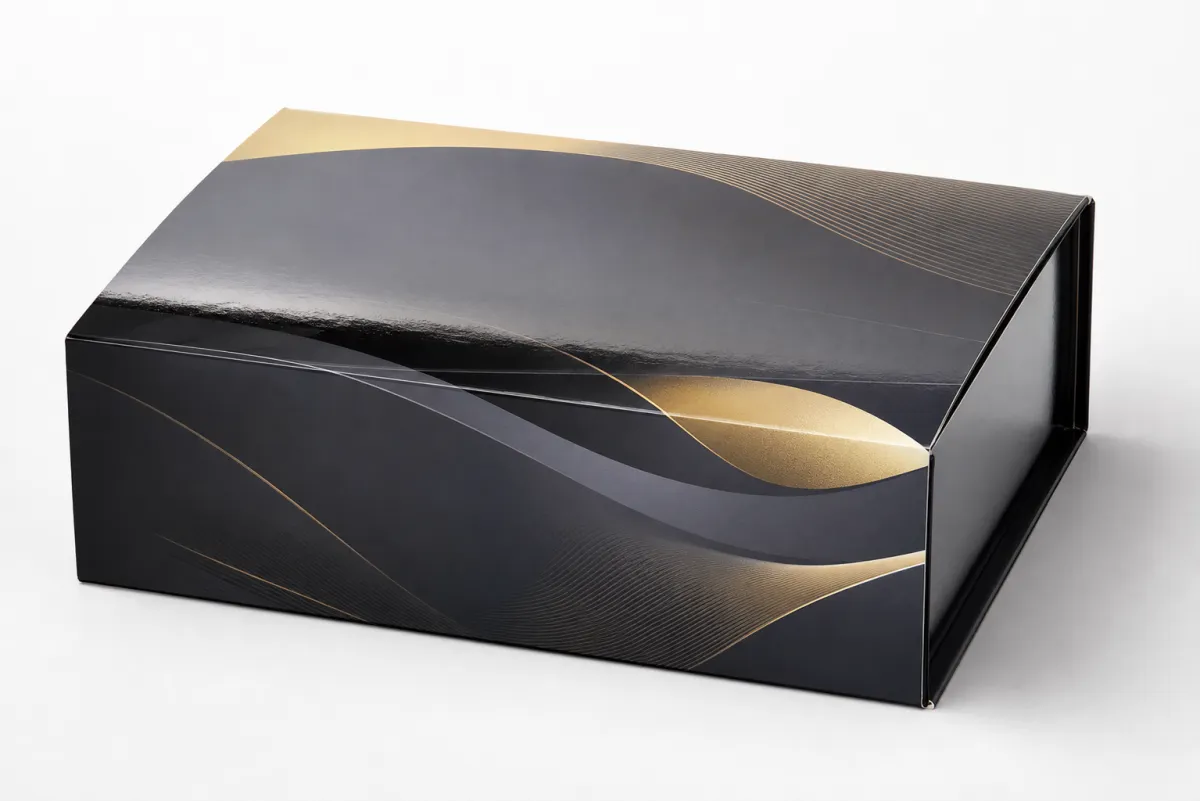
Lamination is not decoration for decoration's sake. It is a practical layer that protects print from abrasion, reduces scuff marks on corners, and can slow moisture pickup in humid storage conditions. For a packaging buyer, that matters because retail cartons spend time in warehouses, on trucks, in back rooms, and under harsh store lighting before anyone opens them. A retail box lamination supplier that understands those conditions is helping preserve the brand promise, not just the artwork.
The shelf effect is real. Gloss lamination can drive color saturation and grab attention from several feet away. Matte lamination usually cuts glare and gives the box a calmer, more premium feel. Soft-touch adds a velvety surface that invites handling, which helps cosmetics, specialty food, and gift products. A retail box lamination supplier should help you decide which signal matters most for your category, because each choice changes how the product reads in the store.
There is a practical business case too. Retail teams often compare boxes only by artwork, but the finish changes perceived value almost as much as the design itself. If the product sits in a crowded category, a retail box lamination supplier may be the hidden variable that decides whether the carton feels mass-market or closer to prestige. That is why brands investing in foil stamping, embossing, or spot UV still keep lamination in the spec sheet: the finish supports the rest of the structure.
- Shelf pressure: A reflective gloss finish can help a carton stand out under harsh retail lighting.
- Transit wear: Matte or anti-scratch film can keep corners and edges presentable after shipping.
- Brand consistency: The right retail box lamination supplier reduces batch-to-batch variation that makes one run look different from the next.
- Perceived value: The finish can move a box from plain to premium without changing the dieline or artwork.
"A finish can rescue average artwork, but it cannot rescue poor board selection."
That line matters more than most people want to hear. A retail box lamination supplier has to work with your board stock, ink coverage, and structural design. If the carton uses a heavy dark solid, a thin film with weak adhesion can show drag marks or wrinkles. If the brand wants a soft-touch finish on a tightly folded structure, the supplier needs to think ahead about cracking at the score lines. In practice, the finish is only as strong as the material stack underneath it.
For teams comparing suppliers, the real question is simple: which retail box lamination supplier gives the best balance of appearance, durability, and cost without forcing compromises later in production? That question gets you farther than asking only for the cheapest quote.
What a Retail Box Lamination Supplier Actually Does
A retail box lamination supplier applies a thin film to printed board stock so the surface becomes more durable, more controlled in appearance, and easier to handle during packing and transport. The film is bonded after printing and before final converting steps such as die cutting, folding, and gluing. That sequence matters. If lamination happens too late in the process, the carton may already be damaged by trimming or scoring issues.
In a solid production flow, the retail box lamination supplier reviews the substrate, the print method, the artwork coverage, and the final structure before recommending a finish. Gloss, matte, soft-touch, and anti-scratch films all behave differently. Gloss usually pushes color pop. Matte lowers glare. Soft-touch gives a velvety hand feel. Anti-scratch works well for cartons that will move through several touchpoints before sale. A supplier that knows the difference is not just adding film; they are matching the film to the job.
That match is where experience shows. A retail box lamination supplier has to think about ink curing, adhesive bond strength, score depth, and whether the board has enough flexibility to survive folds without cracking. Heavy ink coverage on dark backgrounds can expose scuffing fast. A textured paperboard can change how the laminate lays down. Even the grain direction of the board can influence crease performance once the box is folded and packed.
Finish choices that change the customer's first impression
Gloss, matte, and soft-touch are the common options, but they are not the only ones that matter. Some projects mix lamination with UV coating or spot UV for selective highlights. That can create contrast, but the jobs are different. Lamination is protective. Spot UV is visual. Foil stamping adds metallic emphasis. Embossing adds dimension. A retail box lamination supplier should explain that difference clearly so the team does not expect one treatment to do the work of another.
A perfume or skincare carton, for example, might use matte lamination for the base surface, then pair it with foil stamping on the logo and a hit of spot UV on the pattern. A snack or beverage carton might use gloss lamination to keep color saturation strong and the brand visible under store lights. In both cases, a capable retail box lamination supplier helps the brand choose the finish stack, not just a single coating decision.
One practical detail is adhesion at the fold. A retailer may never inspect it closely, but a buyer will notice if edges lift, if the film crackles at the crease, or if the lamination starts to peel near the tuck flaps. That is why a retail box lamination supplier is part technical partner, part quality-control checkpoint, and part problem-solver. The better suppliers catch issues before the cartons are boxed and shipped.
Packaging teams that care about transit testing should also ask how the finish affects performance under shipping stress. ISTA testing gives a useful framework for transport simulation, and the general packaging guidance on packaging.org is a solid starting point for teams that want a broader materials perspective. If a retail box lamination supplier can speak comfortably about board, film, and distribution stress in the same conversation, that is usually a good sign.
At this stage, the best retail box lamination supplier does not sound like a salesperson. They sound like someone who has seen enough production runs to know where the weak points usually appear.
Key Factors That Separate Good Suppliers From Great Ones
Consistency is the first filter. A retail box lamination supplier may deliver one beautiful proof and then drift on the repeat order if their process controls are weak. That is a brand risk, not a small annoyance. If your launch depends on the cartons looking identical across multiple runs, ask how they monitor film thickness, adhesive application, press settings, and inspection. The sample in hand should not be a lucky one-off.
Compatibility comes next. A good retail box lamination supplier checks whether the finish, adhesive, and board stock work together under production heat and pressure. This is especially important on heavy coverage artwork, deep black solids, and cartons that use specialty print methods. If the supplier cannot explain how the laminate behaves on your exact substrate, keep looking. A technical answer beats a polished sales pitch every time.
Sustainability claims deserve a skeptical eye. Not every laminate is recyclable in every region, and not every eco claim survives contact with local waste sorting rules. Ask whether thinner films are available, whether the project can be built on FSC-certified board, and whether the supplier can document what is actually in the finished carton. A retail box lamination supplier should be able to say, plainly, what the laminate does and does not change. If they mention recyclability, ask for specifics, not slogans. For additional context on certified fiber, the FSC organization at fsc.org is a useful reference point.
Touch and appearance matter more than teams often expect. A box that feels silky in the hand can lift a premium brand, but it may also show fingerprints more easily. A low-glare matte finish can look elegant under boutique lighting, yet flatten color if the artwork depends on strong saturation. A retail box lamination supplier worth trusting will let you feel multiple samples and compare them under the actual lighting conditions your cartons will face.
- Sample stability: Ask for repeat samples or previous-run references, not only a hero sample.
- Substrate fit: Verify how the finish performs on your board thickness, not a generic demo board.
- Edge and fold behavior: Check whether the lamination cracks, lifts, or whites out along scores.
- Repeat-order control: A strong retail box lamination supplier can re-run the job with close visual matching.
- Communication: Fast, clear answers during sampling usually predict better production behavior later.
Think about it this way: a good retail box lamination supplier solves the obvious problem, but a great one prevents the hidden ones. That includes color drift after lamination, edge lift after folding, and glare that makes a premium carton look cheaper than the mockup suggested. Most buyers only find those problems after the boxes arrive. The better supplier catches them before you pay freight.
There is one more sign of quality that buyers underestimate. A great retail box lamination supplier will tell you where lamination is the wrong answer. Sometimes a UV coating is better for a tight budget. Sometimes spot UV is enough if the carton only needs a focal point. Sometimes the board itself needs upgrading before anyone adds a finish. Honest advice like that usually saves money later.
Retail Box Lamination Supplier Pricing: What Drives Cost
Pricing is where a retail box lamination supplier separates useful quoting from vague quoting. The biggest drivers are film type, box size, print coverage, board thickness, order volume, and whether the job needs a specialty finish. A small carton with a basic gloss laminate will usually cost less than a large carton with soft-touch plus spot UV. That part is obvious. What catches people off guard is how quickly setup charges and waste can move the real unit cost.
A retail box lamination supplier may quote a tempting low per-unit number, then add setup charges, sample fees, rush fees, die cut adjustments, and freight. Once those are included, the true landed cost can move by a meaningful margin. For that reason, ask every vendor to separate material, labor, setup, testing, and shipping. If one retail box lamination supplier refuses to itemize, it becomes hard to compare them fairly.
Volume has a big effect. Short runs usually carry a higher unit cost because setup work is spread across fewer cartons. Longer runs reduce the cost per box, but only if the job is stable and the spec does not require frequent changes. A retail box lamination supplier that handles both short and long runs should be able to explain the breakpoints clearly, usually in terms of sheet count or carton quantity rather than vague promises.
| Finish option | Typical look and feel | Approximate cost impact on a 5,000-unit run | Best use case | Watch-outs |
|---|---|---|---|---|
| Gloss lamination | Bright, reflective, high color pop | Base option; often the lowest premium uplift | Bold retail display, fast-moving consumer products | Shows glare and fingerprints more easily |
| Matte lamination | Low sheen, refined, less reflective | Usually about $0.01-$0.03 per unit more than gloss | Premium, minimalist, natural brands | Can flatten artwork if the design relies on shine |
| Soft-touch lamination | Velvety, tactile, luxury-oriented | Often about $0.03-$0.08 per unit more than gloss | Cosmetics, gift sets, prestige packaging | Can be more sensitive to marks during handling |
| Anti-scratch film | Cleaner surface after abrasion | Usually about $0.02-$0.06 per unit more than standard lamination | Boxes with frequent touchpoints or shipping movement | Higher material cost, sometimes longer lead time |
| Spot UV on laminated box | Selective shine over a matte base | Commonly adds $0.02-$0.05 per unit depending on coverage | Logos, pattern accents, visual contrast | Extra setup and registration control required |
The table above is only a starting point, because actual numbers move with carton size, ink coverage, and production region. A retail box lamination supplier may quote lower on a simple one-color carton and much higher on a full-bleed luxury carton with foil stamping, embossing, or spot UV. Still, the pattern is consistent: more finish complexity usually means more labor, more setup, and more room for error.
Another price variable is the board itself. A 300-350gsm SBS or C1S board generally behaves differently from a recycled or textured board. Thicker board can improve rigidity, but it may also affect how well the laminate lays on the fold. A retail box lamination supplier that understands those trade-offs is worth more than one who only knows how to print a price.
Ask for a quote format that looks like this:
- Material: board, film, adhesive, and any special coating.
- Setup: plate charges, machine setup, and sample preparation.
- Labor: lamination, die cutting, folding, gluing, and inspection.
- Freight: carton shipping, palletization, and any split delivery.
- Contingency: rework allowance, rush handling, or extra trimming.
That level of detail makes the quote easier to audit. It also helps the retail box lamination supplier explain where savings are realistic and where they are not. A supplier who is transparent about price is usually easier to work with on scheduling and quality, too.
Retail Box Lamination Supplier Process and Timeline
The workflow usually starts with a spec review. A retail box lamination supplier should confirm carton size, board type, print coverage, finish preference, fold style, and packing method before anything moves to production. If the artwork includes foil stamping, embossing, or spot UV, those elements need to be scheduled with the lamination step so registration is not lost later. Good coordination here prevents a chain reaction of small mistakes.
Sampling comes next. That might mean a digital proof, a press proof, or a physical prototype depending on how sensitive the carton is to color and finish. For finish-heavy packaging, a retail box lamination supplier should ideally provide a tactile sample, because surface feel is hard to judge from a screen. If the customer sees glare, scratch resistance, or edge behavior as part of the brand story, proofing in hand is better than approving a JPEG.
Then the project moves into print, lamination, die cutting, and converting. The exact sequence varies by facility, but the logic stays the same: print first, add the film, then cut and fold with the finish already in place. A retail box lamination supplier needs tight control over machine settings because heat, pressure, and speed can all influence bond quality. If the board shifts, the score line can whiten. If the laminate is too stiff, the crease can crack. If the artwork is heavy with dark solids, rub resistance matters even more.
Lead times depend on complexity. A simple repeat job can move in roughly 7-12 business days after proof approval if materials are in stock and the schedule is open. A first-time custom order often runs closer to 12-20 business days, and specialty finishes can add 2-5 extra days. A retail box lamination supplier should be able to explain where time is spent: proofing, setup, production, inspection, or freight. If the answer is only "soon," that is not enough detail for a launch schedule.
Timeline risk usually comes from a few predictable places. Artwork revisions slow everything down. Finish changes late in the process force new setup. Board substitutions affect machine settings. A retail box lamination supplier that builds a pilot run into the plan can catch those issues early. In higher-risk projects, a small pre-production batch is worth the extra time because it reveals whether the finish behaves correctly under real conditions.
Here is the planning rule I trust most: work backward from launch and leave room for two approval cycles, one production window, and a shipping cushion. If the carton is tied to a seasonal launch or retail reset, that cushion should be larger. A retail box lamination supplier can only move as fast as the artwork approval and the materials allow.
Many packaging teams also forget to check testing expectations. If the carton will face rough distribution, ask whether the supplier references ISTA testing protocols and whether they can align with your shipping profile. That matters even more for e-commerce or mixed retail distribution. For teams that want a neutral overview of testing language, ISTA's site at ista.org is a practical place to start. A capable retail box lamination supplier should be comfortable talking about tests, not just finishes.
Time planning gets much easier once the retail box lamination supplier translates each stage into something concrete. "Proof approval in three days" is useful. "Shortly" is not.
Common Mistakes When Choosing a Lamination Partner
The biggest mistake is choosing only on price. A retail box lamination supplier may look inexpensive until defects, reprints, or missed ship dates show up. If a carton needs to be run twice because the first lot cracked on the fold, the cheap quote becomes a very expensive lesson. Packaging buyers see this all the time, especially on launches where the business case depends on tight timing.
Another mistake is approving the finish from a screen image alone. Lamination changes the way color, glare, and contrast appear, and that effect is hard to judge on a monitor. A matte finish that looks elegant online may feel too flat in person. A gloss finish that seems subtle on a phone may turn out much brighter under retail lights. A retail box lamination supplier should provide physical samples because the hand feel and light response are part of the decision.
Fold performance is another blind spot. Some teams sign off on the front panel and forget to inspect the scores, corners, and glue flaps. That is where problems hide. If the film cracks at the crease or peels at the edge after assembly, the box may fail visually even if the printed face looks perfect. A retail box lamination supplier that does not test the finished structure is taking a shortcut that usually shows up later.
"A carton can pass the eye test and still fail the handling test."
Skipping written specs creates avoidable confusion. Finish name, film thickness, board stock, tolerances, and sequence of operations should all be documented before production starts. Otherwise, one team member may say "matte laminate," while another imagines a specific anti-scratch film with a different surface quality. A retail box lamination supplier cannot hit a vague target with precision.
Switching suppliers without checking process compatibility is risky too. Even if the artwork stays the same, color drift can appear because of different film behavior, different press calibration, or different board sourcing. That is especially true on darker cartons and repeat programs. A retail box lamination supplier should be re-qualified the same way you would re-check any critical production variable.
There is also a subtle mistake that costs money over time: assuming lamination and other decoration methods are interchangeable. They are not. Foil stamping adds metallic emphasis. Embossing adds relief. UV coating adds local shine or surface protection, depending on the method. Lamination protects the whole surface. A retail box lamination supplier should know where the role ends for each treatment so the carton does not get over-specified.
One more trap deserves mention. Some buyers accept a beautiful sample without asking how it was produced. A hand-finished prototype may not behave like a high-volume production run. A retail box lamination supplier that is honest will say so. That honesty is valuable, because the production carton needs to be judged as a real manufacturing item, not as a studio sample.
The goal is not to find the flashiest retail box lamination supplier. It is to find the one that delivers the same result on the 10,000th box that they showed on the first sample.
Expert Tips and Next Steps for Ordering With Confidence
If you want a cleaner comparison, request three samples that are close in finish but different enough to reveal trade-offs. Ask each retail box lamination supplier to send gloss, matte, or soft-touch versions on the same board if possible. Put them side by side under the kind of lighting your customer will actually see. That means retail white light, not just office daylight.
Build a simple scorecard. Rate each retail box lamination supplier on quote clarity, sample quality, communication speed, lead time, repeat-run stability, and willingness to explain trade-offs. A vendor that replies quickly but dodges technical questions may not be the one you want for a time-sensitive launch. The scorecard helps the team stay objective when one sample happens to look prettier than the rest.
Use one detailed spec sheet for every vendor. That sounds obvious, but it is one of the easiest ways to avoid unfair comparisons. If one retail box lamination supplier receives a fuller brief than the others, the quotes will not be comparable. Include carton dimensions, board thickness, print coverage, finish type, expected quantity, target launch date, and any secondary decoration like foil stamping or embossing. The better the brief, the cleaner the quote.
For a new product, a seasonal release, or a luxury carton where finish differences matter a lot, a pilot order is usually the safest move. A small run can reveal whether the lamination holds on the crease, whether the color shifts after finishing, and whether the carton scratches too easily in packing. A retail box lamination supplier that supports a pilot run is helping you reduce risk before you commit to volume.
Use the checklist below before you place the order:
- Compare three samples in real light.
- Confirm the board, film, and adhesive stack in writing.
- Ask for a line-item quote with material, labor, setup, and freight.
- Review fold performance and edge condition, not just front-panel appearance.
- Check the timeline against your launch date with room for approval and shipping.
- Make sure the retail box lamination supplier can repeat the result on future runs.
One final practical note: if sustainability is part of your brand promise, ask the supplier how the finished carton fits local recycling rules and whether FSC-certified board is available. Do not stop at the film. The whole structure matters. A retail box lamination supplier can only give useful eco advice if they understand the package as a system, not as a single finish choice.
There is no perfect finish for every carton. A retail box lamination supplier that says that out loud is probably worth trusting. The best fit depends on shelf lighting, handling, budget, and how much visual drama the brand actually needs. If you short-list two or three vendors, compare their samples, verify landed cost, and then place a pilot order, you will make a much better decision than the buyer who picked the cheapest quote and hoped the rest would sort itself out. That is the difference a good retail box lamination supplier makes in practice, and it is the part that saves you from cleaning up avoidable mess later.
How do I choose a retail box lamination supplier for my product?
Start with samples, not promises. Compare finish quality, quote transparency, and communication speed before you focus on price alone. Ask how the retail box lamination supplier handles your board stock, print method, and fold style, because those details affect how the carton performs after die cutting and assembly. If possible, request repeat-order examples so you can judge consistency, not just first-run appearance.
What does a retail box lamination supplier usually charge?
Pricing usually depends on finish type, carton size, order volume, board stock, and whether the job includes specialty effects. A line-item quote is the easiest way to see where the money goes. Ask the retail box lamination supplier to separate setup, materials, labor, testing, and freight so hidden costs do not appear later. Short runs often cost more per box, while larger orders usually reduce the unit cost by spreading setup work across volume.
Which finish is best for retail box lamination?
There is no universal winner. Gloss works well if you want strong color pop and visible shelf shine, but it can show glare and fingerprints. Matte gives a softer, more restrained look and is often chosen for premium or natural branding. Soft-touch adds a tactile feel that supports luxury positioning, though it can raise cost and require careful handling. A good retail box lamination supplier should show you each option in hand.
How long does a retail box lamination project take?
Lead times vary based on artwork approval, sample stages, finish complexity, and order size. A repeat job can move faster than a first-time custom order that needs proofing or finish testing. A retail box lamination supplier should be able to tell you where time is spent, whether that is prepress, lamination, converting, inspection, or freight. Build in a cushion for revisions so the launch date does not depend on the fastest possible schedule.
Can a retail box lamination supplier help with eco-friendly packaging?
Yes, many suppliers can suggest thinner films, recyclable options, or alternative coatings depending on your region and recycling rules. Ask for documentation rather than general claims, because environmental performance depends on the full package structure, not just the laminate. If sustainability matters to your brand, compare durability and recyclability together so you do not solve one problem by creating another. A thoughtful retail box lamination supplier will talk through those trade-offs plainly.
Related packaging resources
Use these related guides to compare specs, costs, quality checks, and buyer decisions before making the final call.