Vitamin Twisted Handle Paper Bags Material Thickness Guide
Picking the right vitamin Twisted Handle Paper Bags material thickness guide spec is not a decorative decision. It decides whether the bag feels crisp and dependable or flimsy enough to undermine the product inside. A bag can print cleanly, stack well, and still disappoint the first lift if the stock is too light, the top fold is weak, or the handle bond is doing more work than it should.
That gap between shelf appearance and real carry performance causes most packaging mistakes. Buyers often judge a sample by touch first, which is understandable, but paper feel alone does not tell you whether the bag will hold a bottle set, a supplement bundle, or a boxed wellness kit without stretching at the mouth. In practice, thickness affects more than durability. It changes how the bag stands, how clean the print looks, how the folds behave, and how premium the whole package reads before the customer even opens it.
Vitamin Twisted Handle Paper Bags Material Thickness Guide
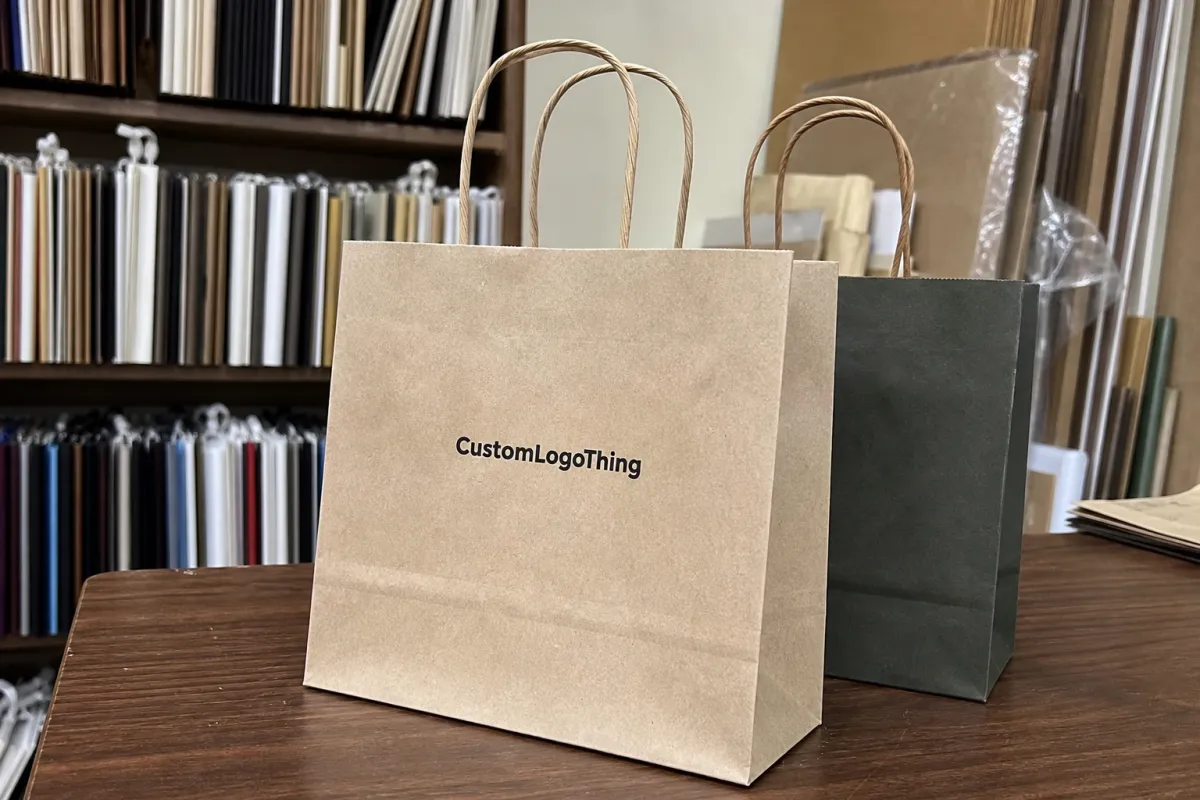
The first rule is simple: match thickness to the load, not to the wish list. A paper bag that feels sturdy in the hand can still fail once it is filled, carried, and lifted a few times. That is why this kind of spec work starts with product weight, bag geometry, and how the customer will actually use the bag, not with a random caliper number copied from a previous project.
For vitamin and wellness packaging, that matters more than most teams expect. Buyers are not just looking for a container. They want a bag that carries cleanly, holds its shape on the counter, and looks deliberate next to the product line. A soft bag suggests a soft brand. Harsh, maybe, but true.
Twisted Handle Paper Bags are especially sensitive to balance. If the stock is too light, the top mouth sags and the handle stress concentrates at the fold. If the stock is too heavy, the bag can become boxy, stiff in the wrong way, and expensive enough that freight starts eating the margin. The right spec is usually somewhere in the middle, with enough reinforcement at the top to protect the handle area and enough body strength to preserve shape.
For sustainability programs, many buyers want FSC-certified stock or recycled fiber content. Fine. Just do not confuse a green label with usable strength. A recycled sheet that passes the marketing brief but fails in transit is not environmentally clever. It is just waste with better branding.
A good bag spec is not the heaviest one available. It is the one that carries the product cleanly, survives repeated lifts, and does not make the handles or seams fight the paper.
That is the part too many quote sheets ignore. They list a paper weight, maybe a finish, and stop there. Real sourcing needs a better question: what does the bag need to do in the customer’s hand, in the store, and in the carton? That answer determines whether the stock should be light kraft, a thicker recycled sheet, or a coated paper build with stronger top reinforcement.
How Twisted Handles Work With Paper Stock and Load Support
Twisted handles look basic. They are not. They change how stress moves through the entire top section of the bag. The load does not just pull downward; it pulls at the bond line, the mouth fold, the side seams, and the top edge where the handle is attached. That is why a handle can be the weakest part of a bag even when the body stock looks perfectly acceptable.
Most twisted handles are pasted into the upper fold or fixed to a reinforced patch. Either way, the attachment needs to work with the paper fiber direction. If the stock is too soft, the mouth ovalizes and the bag loses its profile. If it is too rigid, the folding line can get bulky and the gusset area may not sit neatly. Neither outcome helps the brand, and both show up fast once the bag is actually filled.
The best construction usually comes from balance, not brute force. A midweight sheet with a well-placed handle patch can outperform a heavier bag that was converted poorly. That is especially true for vitamin kits and smaller wellness sets, where the product is not massive but the presentation still needs to feel polished.
For retail programs, the distribution chain matters too. A bag that looks solid at inspection can still arrive crushed if the master carton is underspecified, overpacked, or exposed to rough handling. I would rather see a buyer test the bag as part of the whole system: body stock, handle bond, carton compression, and display behavior after transit. Otherwise the spec only works on the sample table.
Standard references such as ISTA for transport testing and EPA for recycled-content guidance can help teams ask better questions. They are not shortcuts, but they do keep the discussion grounded in reality instead of marketing language.
Choosing Paper Stock, GSM, and Bag Dimensions That Match the Product
One number is never enough. GSM matters, but only as part of a larger spec. The practical way to think about a vitamin Twisted Handle Paper Bags material thickness guide is as three linked choices: paper grade, thickness range, and finished bag size. Those three decide strength, print behavior, and how the bag feels in real use.
For light items such as sample kits, travel packs, or small cosmetic bundles, a stock in the 120-170 gsm range may be enough if the fill weight stays modest. Once the contents move into boxed supplements, glass jars, or mixed wellness sets, buyers usually start looking closer to 170-230 gsm. For heavier bundles or premium presentation bags, a thicker sheet or more carefully reinforced build becomes the safer option.
Bag dimensions matter just as much as paper weight. A tall, narrow bag places more stress near the top fold and can feel unstable if the product sits high in the body. A wide bag may need stronger gussets so it does not bow out under load. Oversizing the bag just to create a premium look is a common mistake. Too much empty space makes the product shift around, which does not feel premium at all. It feels unplanned.
Print quality also changes with stock choice. Heavier or smoother paper usually gives cleaner solids and sharper logos, but it can behave differently in folding, pasting, and handle attachment than a lighter kraft sheet. If the artwork uses full-bleed color, foil, or a coated finish, sample the actual stock. A PDF is not a substitute for paper, and mockups lie with great confidence.
Useful working ranges buyers often compare:
- 120-170 gsm for lighter retail kits and lower carry weights.
- 170-230 gsm for standard vitamin packs, boxed goods, and stronger shelf presentation.
- 230 gsm and up for heavier bundles, premium builds, or more shape retention.
There is no magic number that works for every brand. A better question is whether the bag needs to look premium, carry weight, or do both. If the answer is both, the spec needs to be chosen more carefully, not just made thicker.
Cost, Pricing, MOQ, and Quote Factors Buyers Should Compare
Price moves quickly once the paper gets heavier or the finish gets more complex. Material grade, thickness, handle build, print coverage, coatings, and manual finishing all affect the quote. A simple one-color kraft bag sits in a very different cost band from a laminated, heavily printed, premium retail bag with extra reinforcement and stricter finishing control.
For planning purposes, these are the rough ranges buyers often see:
| Spec Level | Typical Build | Indicative Unit Cost | What Drives It |
|---|---|---|---|
| Basic | Light kraft paper, twisted handle, 1-color print | $0.18-$0.30 | Lighter stock, simple converting, lower print coverage |
| Midrange | Heavier kraft or coated paper, better top reinforcement, 2-4 colors | $0.30-$0.55 | More material, stronger handle build, more ink, tighter QC |
| Premium | Thicker stock, special finish, refined fit and fold | $0.55-$1.10+ | Finish complexity, labor, packing precision, closer inspection |
MOQ and freight matter too. A heavier bag does not just cost more at the factory. It can reduce carton efficiency, increase ship weight, and change pallet count. That extra burden shows up later in the quote, which is exactly where buyers often get surprised. A bag that looks only a few cents more expensive can become a real budget problem after packing and shipping are added.
Quote comparisons only work if the specs match. Ask each supplier for the same finished size, target fill weight, paper grade, GSM or caliper, handle type, print colors, coating or lamination, carton count, and destination. If one quote uses FSC-certified paper and another does not, or one includes recycled content and another is virgin fiber only, the numbers are not directly comparable. Same for eco claims: they need the same paper basis, not just similar wording.
If the project is still open, request two or three material options side by side. A lighter recycled blend, a standard kraft sheet, and a heavier premium stock make the tradeoffs easier to see. That keeps the decision practical instead of emotional, which is usually how packaging budgets get damaged.
Production Steps and Timeline From Spec Approval to Delivery
A clean project usually follows the same path: brief, dieline review, sample approval, print production, converting, inspection, and packing. The trouble starts when the thickness changes late or the artwork is still moving after sampling. Then the schedule stretches for reasons that were entirely avoidable.
Typical lead times for custom twisted-handle paper bags often run 12-20 business days after spec approval. Simple orders can move faster. Premium finishes, special stock sourcing, or repeated proof rounds usually push that out. If the buyer changes thickness after the first sample, the bag may need another check for fold behavior, handle bonding, and print registration. That is not a delay invented by the factory. It is the natural cost of changing a structural part of the build.
The most common sources of delay are straightforward: late artwork changes, coating dry time, paper sourcing, and carton planning. A specific kraft shade, FSC-certified stock, or recycled-content target can add lead time if the paper mill supply is tight. Bulkier bags can also change carton counts, which changes palletization, which changes freight planning. Packaging is full of dominoes. Ignore one, and the schedule notices.
Good teams work backward from the launch date. If a store reset or seasonal promotion has a fixed shelf date, the bag program needs room for sample approval, signoff, packing, and shipping. A technically approved bag that arrives late is just an expensive reminder that timing is part of the spec.
There is also a practical sustainability question. Sometimes a slightly lighter build that performs correctly is the better environmental choice than a heavier one that uses more fiber than necessary. The right answer is not “greenest-looking paper.” It is the bag that carries the product reliably with the least waste and the fewest failures.
Common Mistakes That Lead to Soft Sides, Split Seams, or Handle Failure
The biggest mistake is judging thickness by touch alone. A sample can feel nice and still fail once it is loaded. If the final product is heavier than expected, the handles can start to tear near the top fold, the body can stretch, and the entire package becomes less trustworthy. That is a packaging failure, not a paperwork issue.
Another common miss is underestimating how much stress twisted handles add to the top section. The handle, top fold, and side seams all meet in a small zone. If the reinforcement is weak, the failure point usually shows up there first. A midweight bag with better handle bonding can outperform a heavier sheet that was converted carelessly. Heavier does not cancel bad construction. It just makes the mistake more expensive.
Over-specifying thickness causes its own trouble. A bag that is too stiff can be awkward to fold, bulk up around the gusset, and complicate machine performance. It may also look bulky on shelf, especially for smaller vitamin or supplement items. More material is not the same as better design.
Skipping sample testing is the fastest route to regret. The bag should be loaded to real-use weight, lifted several times, and checked at the handle bond, top edge, and side seams. Casual hand-feel testing tells you very little. Real use is what matters.
One more mistake shows up often in sourcing discussions: comparing paper bags to corrugated cardboard as if thickness alone means the same thing. It does not. Corrugated strength comes from flute structure. Paper bag strength comes from fiber quality, fold design, handle bonding, and reinforcement. Different materials, different engineering rules.
Expert Tips for Sampling, Testing, and Locking the Final Spec
A useful sample process is boring in the best way. Load the bag with the actual product weight, carry it more than once, and inspect the handles, seams, and top fold after each lift. If the bag still looks sharp after use, the spec is probably in the right zone. If it starts to soften, wrinkle badly, or pull at the mouth, it is not.
For vitamin and wellness packaging, I would check three things first: handle comfort, seam integrity, and shelf shape. Handle comfort sounds minor until a rough or narrow handle makes a strong bag feel awkward. Seam integrity matters because seam failures tend to show up after a few lifts, not in the first five seconds. Shelf shape matters because a slumped bag loses retail value fast.
Before production starts, lock the parts that are painful to change later: stock, finished dimensions, handle length, print tolerances, finish, and carton pack count. If the team is still debating thickness, compare two adjacent options instead of opening the floor to every possible number. A 170 gsm versus 210 gsm comparison is useful. A six-way debate is a meeting with a paper problem.
Sample approval checklist:
- Confirm fill weight with the actual product, not an estimate.
- Check that the handle bond leaves enough top margin.
- Review print on the actual paper surface, not just a digital proof.
- Ask how many bags fit per carton and what that does to freight.
- Approve the sample under retail-like lighting if possible.
If the project includes recycled materials, FSC-certified stock, or biodegradable packaging claims, get the documentation early and make sure it matches the paper spec. That is especially useful when different product lines need to stay consistent across regions, retailers, or seasons. Claim language without paper support is a fast way to create headaches nobody asked for.
Handled well, this is not a mysterious process. The best buying teams treat the vitamin Twisted Handle Paper Bags material thickness guide as a fit-for-use decision. The bag needs to carry the load, hold its shape, print cleanly, and stay inside budget. If those four things line up, the thickness is right. If they do not, the number on the spec sheet is just a number.
How do I choose the right vitamin twisted handle paper bags material thickness?
Start with the filled weight and the way the bag will be carried. Match the paper thickness to the load, the handle construction, and the shape you want on shelf, then test a real sample before approving production.
Does thicker paper always mean stronger twisted handle paper bags?
No. Strength depends on paper quality, seam construction, top reinforcement, and handle bonding. A well-built midweight bag can outperform a heavier stock bag if the build is cleaner.
What affects the price of vitamin twisted handle paper bags the most?
Paper grade, thickness, print coverage, handle build, finish, and MOQ usually drive the biggest cost changes. Freight and carton efficiency also matter once the bag gets heavier or bulkier.
How long does production usually take after the spec is approved?
Lead time often runs 12-20 business days after approval, depending on artwork, finish, and material availability. Late changes to thickness or print can extend that schedule.
What should I test before ordering custom vitamin twisted handle paper bags?
Test real fill weight, handle comfort, seam integrity, and whether the bag holds its shape after repeated lifting. Also check print quality, carton count, and how the bag performs in the light used at retail.

