Retail Launch Frosted Zipper Plastic Bags Approval Checklist — a sample can look correct on screen and still miss the mark in store lighting, so approval should focus on fit, print, zipper feel, and whether the bag supports the retail price point.
Why a Sample Can Make or Break a Retail Launch
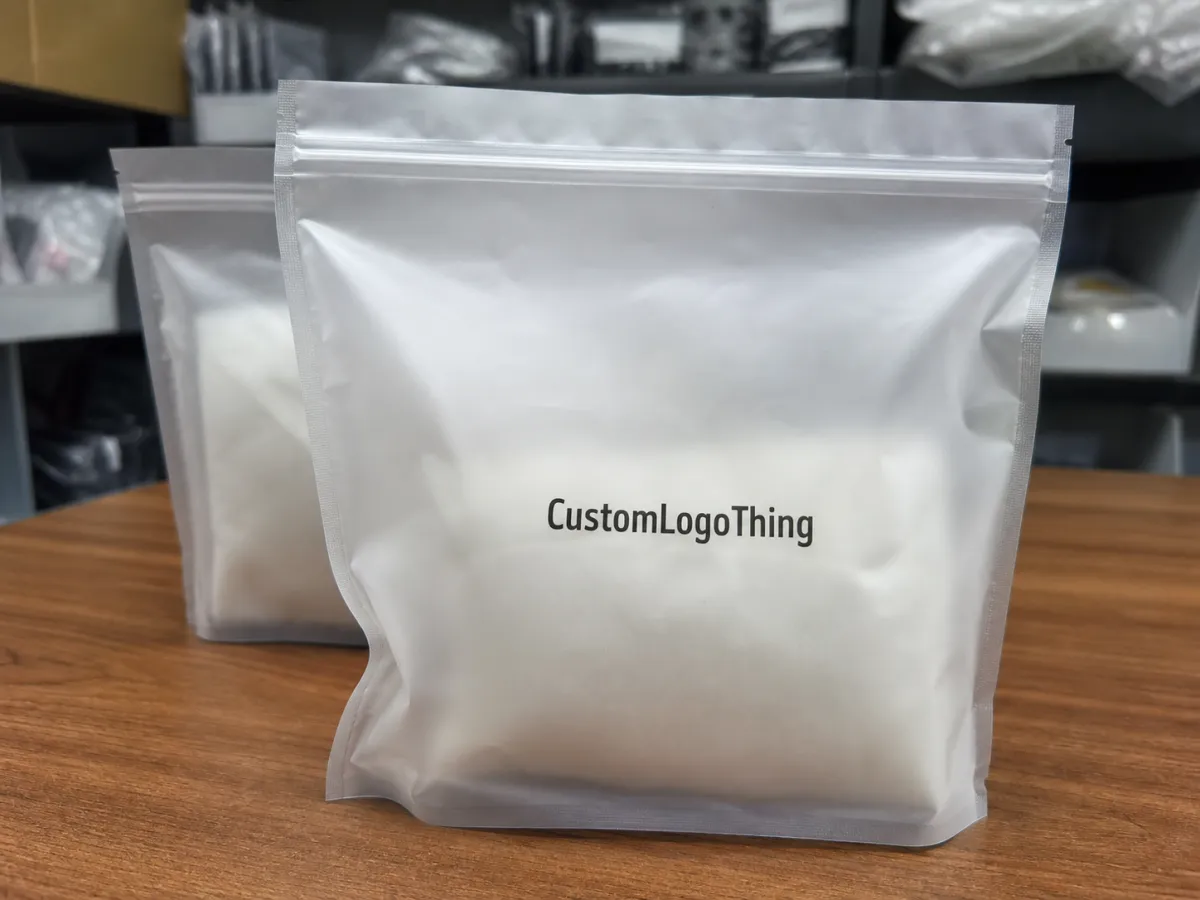
Frosted Zipper Bags sit between packaging and product presentation. The frost softens the look, the zipper adds a tactile cue, and the film thickness shapes whether the bag feels premium or flimsy. That is why sample approval matters before a production run locks in material, print, and tooling.
A bag can pass a spec sheet and still fail in hand. Frost can mute color, a logo can lose contrast, and the zipper can feel looser once the bag is filled. Store lighting exposes those issues quickly, and so does a shopper who opens and closes the bag before deciding whether it feels worth the price.
Keep the right people involved early: sourcing, design, merchandising, fulfillment, and quality. Each one sees a different risk. The buyer watches cost and repeatability, design checks artwork and color behavior, and operations needs the bag to pack, stack, and close without slowing the line. If approval only satisfies one of those groups, the sample is not ready.
How the Sample Approval Process Works
The process is straightforward: brief, prototype or preproduction sample, comments, revision, and final signoff. The hard part is that each round can reveal a different issue. A bag that looks right in one revision may shift in another because of print density, gauge, zipper type, or sizing tolerances.
Compare every sample against the latest spec, not against memory. Check dimensions, closure performance, print placement, and whether the bag still works when filled with the actual product. An empty pouch can look fine and still bow, wrinkle, or overstretch once it carries a real shape.
Approval should usually include the packaging lead, artwork owner, buyer, and someone from operations or quality. That shared review takes a little longer, but it avoids a launch delay later when one person approves appearance and another finds the zipper is awkward in a warehouse or store setting.
- Structure: dimensions, seal width, gusset depth, and usable fill volume.
- Performance: zipper engagement, opening force, reseal consistency, and repeated use.
- Presentation: frost level, print contrast, logo placement, and color behavior.
- Production fit: whether the sample can be repeated at the quoted MOQ without hidden changes.
Material and Build Factors That Decide Pass or Fail
Film gauge is the first decision that affects both feel and cost. A lighter pouch can work for soft goods or promotions, while a thicker film is better for accessories, kits, or products that will be handled often. Even a small gauge change can shift the hand feel enough that the bag no longer reads as retail-ready.
Frost finish deserves close review because it changes how light and graphics behave. It gives the bag a softer look, but it also reduces contrast. That matters for logos, warnings, care text, and barcodes. If the artwork is delicate, white underprint or stronger ink coverage may be necessary.
The zipper is where many approvals fail quietly. Track alignment, closure pressure, and opening force all affect the user experience. A zipper that snaps shut unevenly may pass a quick glance and still frustrate anyone who needs to reopen the bag several times. Test it before filling, then test it again after the product is inside.
Build details matter too: seal width, edge trim, corner consistency, and any hang hole or punch feature. If the bag will sit in a display tray or hang on a wall, the top area should stay straight after filling. A slight tilt can throw off the presentation of the whole set.
A bag that only looks approved is not approved. It has to survive filling, closure, handling, shelf display, and the repeated touch that turns a sample into a live retail package.
Decoration can change the reading of the package fast. Frosted film softens color and can make small type disappear. Metallic inks may shift under store lights. If the design depends on crisp detail, the sample should use the final print method rather than a simplified proof.
Retail Launch Frosted Zipper Plastic Bags Sample Approval Checklist
Use the same checklist for every revision so comments stay consistent. A retail launch Frosted Zipper Plastic Bags sample approval checklist should be specific enough to stop a bad run and simple enough that the team will actually use it.
Keep the notes factual. “Looks good” does not tell the supplier whether the zipper issue is cosmetic or structural, or whether the print shift is acceptable. Approval should be based on observable details, not general impressions.
- Fit: confirm the real product fits without overstretching seams or leaving too much dead space.
- Zipper action: open and close the bag several times to check for smooth, even engagement.
- Print: verify logo position, color contrast, and legibility on frosted film.
- Surface: inspect frost uniformity, scuffs, gloss patches, and haze variation.
- Build: check seal width, cut edges, gussets, and any hanging feature.
- Pack-out: confirm the bag stacks, cartons, and ships the way operations expects.
- Consistency: compare multiple samples if available and look for variation between pieces.
If the shelf version, the sample in hand, and the approved spec do not match, the package is not ready. Approval should mean measurable agreement, not a polite compromise.
Process and Timeline for Approval
Approval moves faster when the sequence is fixed: written brief, artwork or structure proof, physical sample, comments, corrected sample if needed, and final signoff. Launches that slip usually fail on basics, not on complicated problems.
Timeline depends on the kind of change. Artwork-only adjustments can move quickly if the structure is locked. Changes to size, zipper style, material gauge, or print method take longer because they affect the build itself. A revised proof may come back in a few days, but a new film or zipper spec can add a full cycle.
For planning, a simple artwork revision often takes 5 to 7 business days. Structural changes can take 10 to 15 business days or more, depending on tooling, queue, and the number of corrections. Those numbers only help if the launch calendar leaves room for one revision round.
The safest assumption is that the first sample may not be final. If it passes, the extra time becomes margin. If it misses, the launch still has breathing room.
Cost, Pricing, MOQ, and Unit Cost
Price depends on the variables that touch manufacturing: size, film gauge, frosting method, zipper style, print coverage, and whether the artwork needs underprint. A plain clear pouch and a decorated Frosted Zipper Bag are not the same product, even if they share dimensions.
MOQ affects unit cost more than many teams expect. Smaller quantities carry a higher per-piece price because setup time is spread across fewer bags. Larger runs absorb setup more efficiently, so a 3,000-piece order can price very differently from a 10,000-piece order even when the material is identical.
| Option | Typical Cost | Typical Lead Time | Best Use | Main Watch-Out |
|---|---|---|---|---|
| Prototype sample | $50-$150 plus freight | 3-7 business days | Early fit and look review | May not reflect final production tooling |
| Preproduction sample | $100-$300 when print or tooling is involved | 7-15 business days | Final structure and decoration check | Must match the locked specification exactly |
| Production golden sample | Usually bundled into the run | After final approval | Reference for incoming quality control | Needs to be stored and labeled clearly |
Landing cost matters more than unit cost alone. Freight, carton count, packaging format, and import handling can change the real economics of the order. A low per-bag quote can stop looking attractive once the cartons arrive and the extra charges show up at receiving.
Ask how sample charges are handled. In some programs, the sample fee is credited back on the production order if the run is awarded. In others, it is separate. That difference affects how many versions a team can reasonably review before signoff.
Common Mistakes That Delay Signoff
Photos help, but they are not enough. Frosted film changes the way light reads across the surface, so alignment issues, zipper distortion, and weak ink contrast can hide in a picture. A screen mockup can start the conversation; it cannot finish it.
Another error is testing with the wrong contents. A pouch for a soft accessory behaves differently from one carrying a rigid kit, folded garment, or mixed set of components. Fit has to be judged with the actual item, or the team is approving a shape that does not exist in the launch.
Version control causes avoidable damage. If one person checks an old dieline and another checks a revised artwork file, the review becomes noise. The logo seems moved, the zipper width seems off, and the supplier spends time reconciling documents instead of improving the sample.
Some launches also stall because only one sample is reviewed. That is risky when the order is large or the build is sensitive. Zipper tension, seal quality, and print registration can vary across pieces, so compare two or three samples side by side when possible.
Finally, do not approve under the wrong light. Frosted bags are especially sensitive to lighting conditions. A sample can look balanced under warm desk light and flatten under fluorescent store conditions. That second lighting check is quick, cheap, and worth doing.
Expert Checks Before You Give Final Approval
Review the bag under both bright retail lighting and softer warehouse lighting. The frost finish changes character under each one. If the color still holds in both settings, that is a good sign. If the print washes out, the design may need more contrast or a heavier underprint.
Use the actual product inside the bag, not a substitute. That reveals real headspace, closure behavior, and shelf profile. A bag may technically fit and still look awkward because the contents sit too low, lean to one side, or distort the front panel.
Compare multiple samples if you have them. Side-by-side review makes small inconsistencies obvious: slightly different seal widths, a zipper that closes with more resistance, print density that shifts by a shade, or a frost finish that looks less even on one piece than another. Variation is normal, but it should stay inside tolerance.
Use a simple signoff sheet with dimensions, short comments, and a clear approval decision. Attach photos if needed, but keep the decision readable without opening a folder of images. A golden sample should also be stored, labeled, and tied to the signed spec so production and quality are looking at the same reference later.
That paper trail matters more than most people realize. Weeks after launch, the reason a sample passed gets fuzzy. A measured approval sheet removes the guesswork and makes the next order faster.
Next Steps After the Sample Passes
Once the sample is approved, lock the final spec sheet, approved artwork, packing instructions, and tolerances. This document set should control production. If a later change is made, it should be visible, dated, and easy to trace back to the reason.
Request a golden sample and store it with the approval notes. A sealed, labeled reference is useful when the original team has moved on or when a reorder raises questions about frost level, zipper feel, or print alignment. Packaging memories fade faster than people expect.
Confirm the freight plan and receiving checklist next. Waiting until launch creates pressure where there should be control. If the package includes inserts, retail cartons, or recycled paper components, confirm those details now so the full presentation stays consistent from supplier to shelf.
Close the loop by filing the checklist with purchasing and quality records. That gives the next run a clean starting point and reduces repeat mistakes that quietly erode margin.
What should I check first on a frosted zipper plastic bag sample approval checklist?
Start with fit, because the bag has to hold the actual product without overstretching seams or leaving too much dead space. After that, test zipper action and seal integrity, since those failures show up quickly in handling. Finish with print clarity and frost level, because those affect shelf appearance and readability.
How do I know if the print is right on frosted zipper plastic bags?
Review the sample with the real artwork colors, not only a digital proof, because frosted film changes contrast and saturation. Look for clean edges, even coverage, and readable small type such as warnings, ingredient lines, or SKU codes. Check the bag while it is filled, since artwork that looks centered on an empty pouch can shift visually after loading.
What affects MOQ and unit cost for a sample approval order?
Material gauge, zipper style, print complexity, and bag size are the biggest pricing levers. Smaller MOQs usually raise the unit cost because setup time is spread across fewer bags. Ask whether sample charges can be credited to production so you can compare landed cost more accurately.
How long does the approval process usually take?
Simple artwork-only changes can move quickly, while size, zipper, or material changes usually take longer because they affect the physical build. A revision cycle can add time if the first sample needs corrections, so build extra room into the launch schedule. Match the timeline to your store set date and freight plan, not just the supplier's estimate.
What if the sample is close but not perfect?
Mark every issue clearly and separate cosmetic concerns from functional problems so the supplier knows what must change first. Ask for a revised sample before final signoff if the issue affects fit, seal, print legibility, or retail presentation. Keep the original approved sample and compare the revision side by side, then rerun the checklist before greenlighting production.


