For event teams that need merch to look organized before anyone opens the box, Event Merch Frosted Zipper plastic bags wholesale order planning is part of the schedule, not a finishing touch. It affects the budget, the packing line, the freight booking, and the way the product reads on a table. A Frosted Zipper Bag can make a sticker set look intentional, a folded shirt look cleaner, and a conference kit feel ready instead of improvised.
The practical advantage is straightforward. The packaging shapes the first impression before the item is handled. That matters more than many buyers expect, especially when the merch sits in a visible stack for hours and staff have to move it quickly.
Why Frosted Zipper Bags Beat Basic Event Packaging
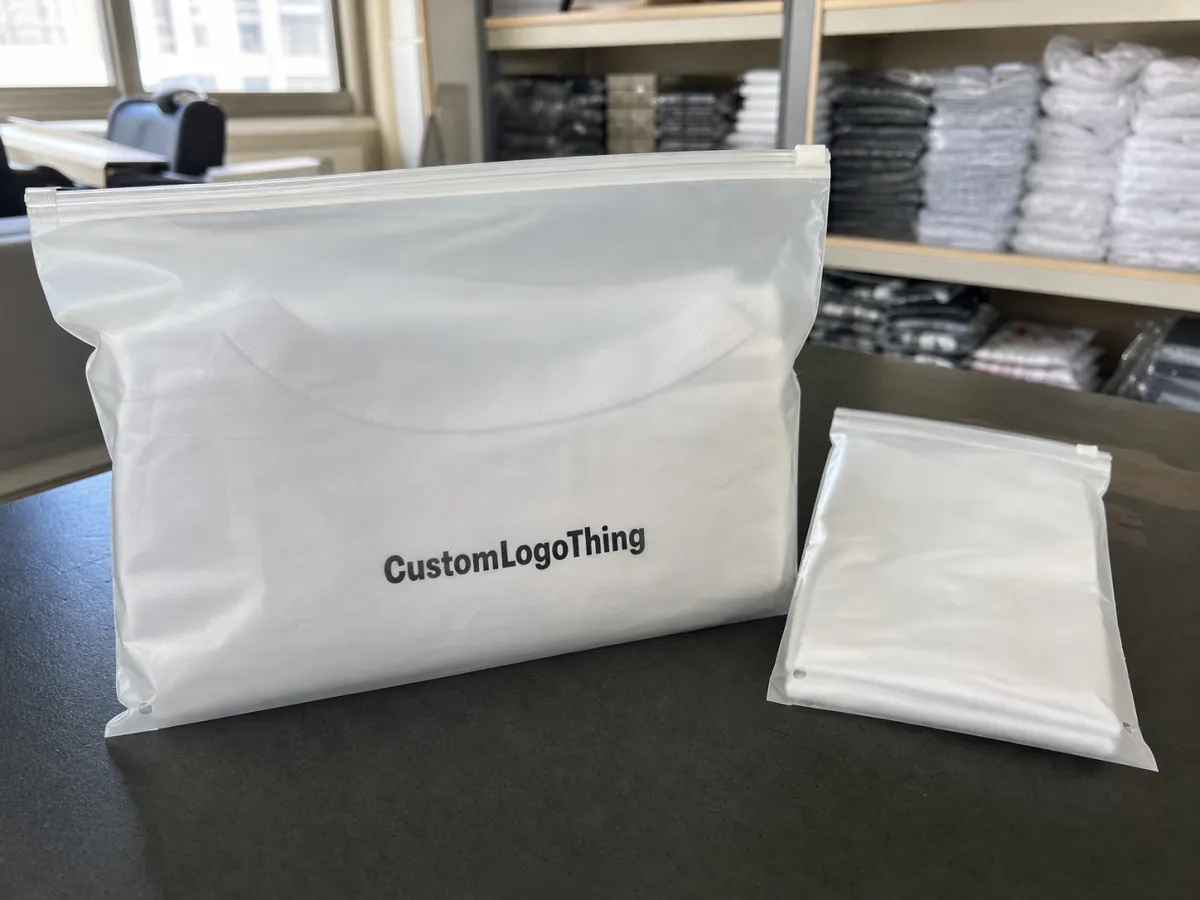
Basic clear poly bags show the contents, but they do little else. Frosted zipper bags soften glare, hide small scuffs, and put the visual emphasis on the merch instead of the film. That changes how a display table feels. Uniform frosted bags read as coordinated. Loose items, even good ones, tend to look unfinished.
For event merch, presentation and handling usually need to work together. The bag should protect the contents, stay closed during packing, and still look clean enough to hand to an attendee without apology. That combination is useful for pop-ups, conference kits, sponsor drops, retail-style activations, and VIP mailers where the packaging is visible before it is opened.
There is also an operational reason buyers keep coming back to zipper closures. Staff can pre-pack, reopen, adjust counts, and reclose the bag without replacing it. That flexibility helps when kits are built in stages or when an attendee package is repacked after a last-minute change. It sounds minor until a registration desk is moving hundreds of units under time pressure.
A clean bag is not decoration. It is part of the workflow. If the packaging slows packing or makes the merch look unplanned, the cheapest quote can become the most expensive mistake.
That is why event merch Frosted Zipper Plastic Bags wholesale order planning should include the packing process itself. The best packaging disappears into the experience while still making the merch feel organized, protected, and worth keeping.
Product Details Buyers Should Confirm Before Quoting
Fast quotes depend on precise specs. Frosted zipper bags are usually made from polyethylene film or a similar flexible plastic, with a reclosable zipper and a semi-opaque finish. That frost level is the point. It gives some visibility without exposing every detail inside the bag.
Buyers should define the use case before asking for pricing. Is the bag holding a folded shirt, a sticker sheet, a sample set, or a multi-item event kit? Will it sit on a table, be packed into a tote, or ship inside cartons? Each of those uses changes the right construction. A lightweight insert bag does not need the same strength as a kit with apparel, a notebook, and a metal accessory.
Zipper quality matters more than many teams expect. A weak closure slows packing and creates avoidable rework. A reliable zipper lets the team close, reopen, and inspect the contents without damaging the bag. For event merch, that usually matters more than a slightly lower unit price.
Before requesting a quote, confirm these details:
- Contents: exact merch list and largest item size
- Fill weight: light inserts versus heavier bundled kits
- Use: display, fulfillment, or shipping
- Print need: stock bag, one-color branding, or full custom art
- Fulfillment format: bagged loose, carton-packed, or kitted by set count
That detail work cuts back-and-forth later. The right frosted bag can make a lower-cost giveaway look deliberate. The wrong size does the opposite. For buyers comparing wholesale options, the real value sits in fit, finish, and how the bag behaves during packing, not in the product photo alone.
Size, Gauge, and Finish Specifications That Affect Results
Three specs do most of the work: width, height, and thickness. Catalog photos rarely show whether a folded shirt will fit with room to spare, whether the zipper can close without strain, or whether a multi-piece kit presses against the seal. Good ordering starts with actual measurements.
Thickness is a performance choice, not just a cost item. A lighter bag around 3 mil can work for stickers, cards, or a thin insert. A heavier kit often needs 4 to 6 mil to resist stretching, splitting, and zipper stress. If the merch has sharp corners or rigid pieces, more film is usually safer. A bag that feels adequate on paper can become a packing problem once the first carton is opened.
Finish changes the visual result. Some frost levels are just cloudy enough to blur details while still showing shape. Others are more opaque and create a stronger premium effect. If the goal is to show a branded shirt fold, a softer frost may be better. If the goal is to hide clutter while still signaling that something valuable is inside, a stronger frost can make sense. There is no single best finish.
Optional features also affect cost and lead time:
- Custom printing: logo, pattern, or front-panel branding
- Gussets: useful for thicker folded items and multi-piece kits
- Hang holes: helpful for retail displays or pegboard setups
- Carton packing: useful for receiving and assembly
- Special closures: pull tabs or upgraded zipper styles
For teams shipping merch through multiple stops, transit testing is worth asking about. The International Safe Transit Association, or ISTA, publishes test methods that help buyers think about handling stress before the event date is at risk. Not every order needs formal testing, but every order should be judged by how it survives movement, stacking, and repacking, not just by how it looks in a mockup.
One simple habit prevents a lot of mistakes: test the actual merch stack inside the proposed bag. A jacket pouch, a flat sticker pack, and a folded shirt behave very differently, even if they look similar on a spec sheet.
Pricing, MOQ, and Unit Cost Drivers to Compare
Wholesale pricing usually moves for five reasons: size, thickness, print coverage, frost level, and order quantity. Buyers often focus on unit price first, but the real cost usually comes from the full combination. A larger bag needs more material. More print coverage adds setup time. A rush timeline can matter just as much as artwork complexity.
For stock frosted zipper bags, a common wholesale range may land around $0.12 to $0.28 per unit at moderate volume, depending on size and thickness. Printed versions often move into the $0.18 to $0.45 per unit range, with heavier coverage or special finishes pushing higher. Expedited production and tight freight windows can add more than a small size change ever will.
MOQ should be treated as a planning tool. Lower minimums help smaller launches test the format. Larger runs usually reduce unit cost and make more sense for event calendars with repeated drops, regional activations, or sponsor kits that will be repacked later. Ask for tiered pricing so you can compare a conservative count against a larger, reorder-friendly quantity.
| Option | Typical MOQ | Typical Unit Cost | Lead Time After Proof | Best Use |
|---|---|---|---|---|
| Unprinted stock bag | 500-1,000 | $0.12-$0.22 | Often 7-12 business days | Fast event kits and simple giveaways |
| One-color branded bag | 1,000-3,000 | $0.18-$0.32 | Often 10-15 business days | Conference merch and launch packaging |
| Full custom print | 3,000+ | $0.24-$0.45 | Often 12-18 business days | Retail-style drops and sponsor-led activations |
| Rush production | Case dependent | Usually 15%-30% higher | Compressed timeline | Late approvals or fixed event dates |
Ask every supplier to separate unit cost, setup, proofing, and freight. A quote that looks inexpensive until the shipping line appears is not a good buy. The clearest quotes show the moving parts instead of hiding them.
Event Merch Frosted Zipper Plastic Bags Wholesale Order Planning
The best wholesale orders are built backward from the event date. That is where many teams slip. They quote from the day the request gets approved, then act surprised when proof revisions, production, and freight cut into the cushion. Strong event merch Frosted Zipper Plastic Bags wholesale order planning starts with the deadline and works back through each step.
A practical workflow looks like this:
- Confirm bag size against the largest merch item.
- Choose stock or printed bags based on the bag's role in the event.
- Approve artwork placement or confirm no-print inventory.
- Review digital proofs or samples.
- Lock production quantity and carton counts.
- Book freight with time for receiving and assembly.
Each checkpoint protects the schedule. If art files arrive late, proofing slips. If the size is wrong, the print area may need revision. If freight is not booked early enough, a finished order can still miss the event floor. The calendar matters as much as the unit cost.
For most conferences and launch kits, a realistic planning window is 2 to 4 weeks before the event if the bag is stock and unprinted, and 3 to 6 weeks if custom printing is involved. Those are not guarantees. They are practical buffers that reflect proof approval, production, and shipping. If the event has multiple cities or staggered distribution points, the buffer should grow, not shrink.
Freight deserves special attention. Packing and transit should be treated as part of the order, not a footnote. If the shipment has to move through a receiving warehouse before reaching the venue, ask how the cartons are packed and whether the supplier can match the assumptions used in standard transit testing. A bag that arrives on time and in clean cartons is worth more than a slightly lower quote that lands late.
How to Vet a Supplier for Event Deadlines and Consistency
Reliability shows up in small details first. Does the supplier ask for dimensions before quoting? Do they explain what affects MOQ? Do they flag a print choice that could slow production? That sort of discipline matters more than a polished sales pitch. A supplier who understands production constraints usually protects the budget better than one who only promises speed.
Consistency matters because one good sample is not enough. A buyer needs the full run to match. Film thickness, zipper feel, frost level, and print placement should stay stable from the first carton to the last. If an order spans several thousand units, variation becomes a packing problem quickly.
Use a few simple checks when comparing vendors:
- Spec clarity: do they list size, gauge, and finish plainly?
- Proof discipline: do they offer a readable mockup before production?
- Lead-time honesty: do they quote a realistic timeline instead of a wishful date?
- Packaging detail: do they explain carton counts and handling?
- Support quality: do they answer file and sizing questions quickly?
Buyers who need branded inserts should also ask about paper components. If the order includes instruction cards or belly bands, look for paper stock tied to responsible sourcing, such as materials certified by FSC. That does not change the bag spec, but it can matter to brand requirements and procurement review.
Checking the supplier's process before the order is placed usually saves more time than chasing updates after production has started.
Ordering Mistakes That Increase Cost or Delay Delivery
The most expensive mistake is guessing the size. It happens constantly. A buyer assumes the merch stack will fit, orders too small, and then loses time re-packing or reordering. The opposite is not better. Oversized bags can make a kit look loose and waste material. Measure the largest item, then test the full stack with the closure shut. That one step prevents a lot of grief.
Artwork timing is another trap. If the bag spec is still moving, the print area can shift. That means the artwork may need to be resized or re-centered. Approving art too early often creates avoidable revisions. The safer path is to finalize the bag dimensions first, then lock the print layout.
Contingency quantity gets skipped more often than it should. Event teams frequently need extra units for damaged products, sponsor requests, or on-site replacements. A buffer of 10% to 15% is usually enough for many events, though the right number depends on distribution points and fragility. Too little buffer creates panic. Too much creates waste.
Freight is another silent budget item. If the shipping window is tight, even a perfect bag spec can miss the event. That risk rises when the order ships to a receiving warehouse before moving to the venue. Always ask how long the bags will sit in transit and whether there is time for inspection on arrival.
Inconsistent pack counts can also create problems on the floor. If one location receives 1,000 units and another receives 850 without a clear plan, staff start improvising. Standardize the pack list before production and the rest of the process gets easier. That matters especially for conference kits, where one missing component can change the whole presentation.
Next Steps to Lock the Order and Protect the Event Date
Start with the merch list, not the bag. Measure the largest item, decide whether the order needs stock or printed bags, and choose the quantity band that fits the schedule. Then gather the details a supplier needs in one pass: dimensions, target count, artwork files, delivery ZIP code, and the event deadline.
Request a written quote that separates unit cost, setup, and freight. That makes side-by-side comparison much easier for procurement, marketing, and operations. If the supplier offers a sample or digital proof, approve it as soon as the spec is locked. Delays at that stage tend to echo through the whole order.
If the event has multiple handoff points, consider a slightly higher order count. Extra units are cheaper than emergency reprints, and they help protect against damaged cartons or late additions. That is the kind of math that keeps a launch from turning into a scramble.
For buyers who want the cleanest result, event merch Frosted Zipper Plastic Bags wholesale order planning works best when size, timing, and quantity are decided together. Get those three pieces right, and the packaging stops being a risk item. It becomes a control point.
How early should I start event merch frosted zipper bags wholesale order planning?
Start as soon as the merch list is final. Size confirmation and artwork review usually take longer than buyers expect, especially if more than one department has to sign off. Work backward from the event date and leave room for proof edits, production, and freight.
What size should I choose for frosted zipper event merch bags?
Base the size on the largest item in the set, not the average item. If the bag holds several pieces, test the stack height and zipper clearance before approving the final spec. A tight fit slows packing and can make the kit look compressed.
What affects MOQ and unit cost the most for wholesale orders?
Quantity has the biggest effect on unit cost, but size, thickness, print coverage, and rush timing can move pricing quickly too. Ask for tiered pricing so you can compare a conservative event count against a larger reorder-friendly run.
Can frosted zipper plastic bags be printed with event branding?
Yes. Print coverage, color count, and placement affect both cost and lead time, so artwork should be reviewed against the bag spec early. Provide vector files where possible and confirm the printable area before proofing.
What information do I need for a fast wholesale quote?
Send the bag dimensions, quantity, whether you need printed or unprinted bags, and the delivery location right away. Include the event date and any packing requirements so the supplier can quote the production timeline and freight option that fit the order.


