Retail Merch Beanies Unit Cost Breakdown for Bulk Buyers
Retail merch beanies Unit Cost Breakdown sounds straightforward until the first quote arrives and the math starts moving. A factory price that looks competitive can lose its edge once setup charges, decoration, packaging, and freight are placed into the same calculation.
For a buyer, the real product is not the blank knit cap. It is a sellable item that fits the spec, arrives on time, and does not need rework before it reaches the shelf. That is why a serious Retail Merch Beanies Unit Cost Breakdown has to separate recurring per-piece costs from one-time charges that disappear only after the order is finished.
The biggest swing often comes from decoration, not the knit itself. A clean woven label may cost very little, while dense embroidery, a patch with multiple stitch layers, or custom retail packaging can move the final number enough to change margin. The cheapest quote is rarely the best quote if it hides the wrong assumptions.
Why the lowest beanie quote can become the highest landed cost
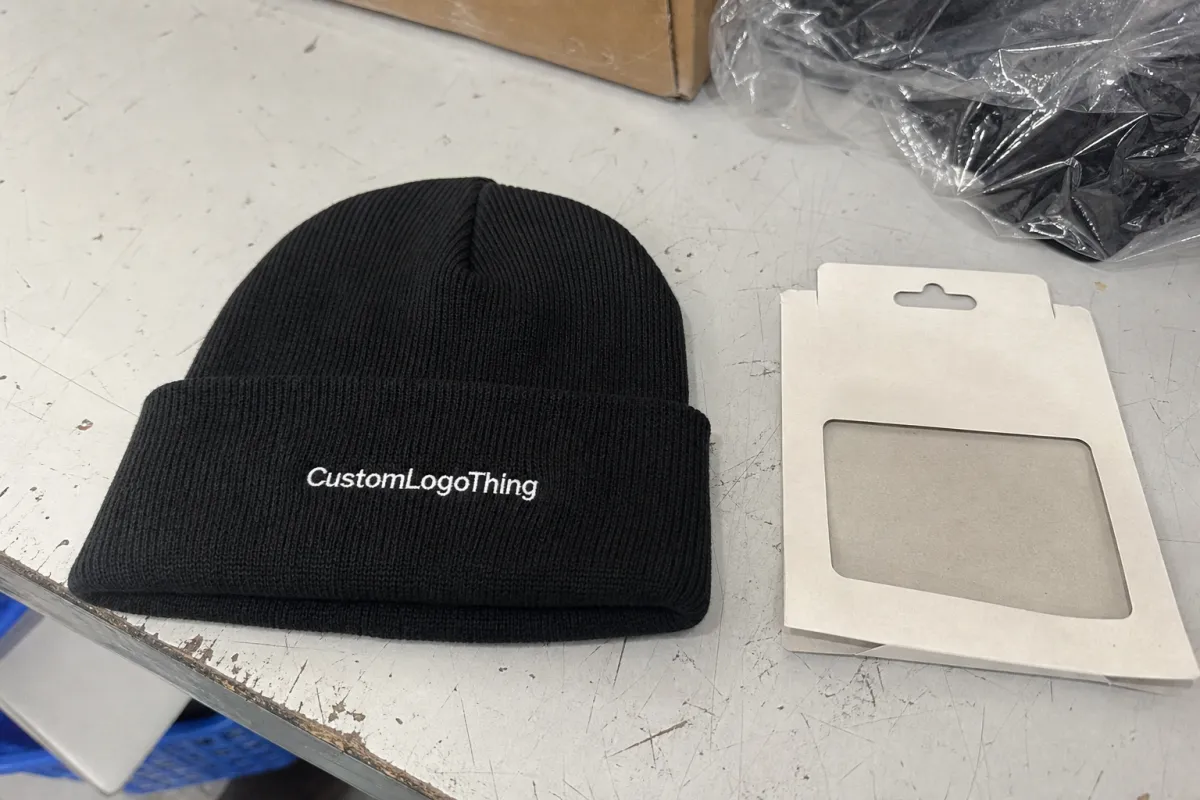
The lowest quote usually wins attention because it is easy to see and easy to compare. It is also easy to misread. A supplier may lead with a low unit price and add digitizing, tooling, carton marking, special thread colors, and export freight later. On smaller runs, those fixed costs sit on fewer pieces, so the gap widens quickly.
That is why buyers should compare landed cost, not headline cost. A beanie priced at $2.05 with $0.45 in decoration, $0.18 in packaging, and $0.32 in freight can be a better buy than a $1.82 blank that turns into $3.20 by the time it reaches the warehouse. The knit matters, but the sellable unit is what affects margin.
"A low quote only matters if the buyer can reproduce it at receiving." That lesson tends to arrive after the first problem shipment, not before it.
Timing matters just as much as price. A quote that misses the delivery window can become more expensive than a slightly higher unit cost. If a retail launch slips, the buyer may need rush freight, split shipments, or markdowns to clear late inventory. In practice, the cost of a beanie is part of a larger merchandising equation.
The Retail Merch Beanies unit cost breakdown works only when every supplier is quoting the same spec, the same decoration method, and the same shipping assumption. Like-for-like comparison is where the pricing story appears.
Retail merch beanies unit cost breakdown: what is inside the quote?
A useful quote should show more than one all-in number. It should separate the beanie body, decoration, labels or trims, packaging, setup charges, and freight assumptions. If the supplier bundles everything into a single price, ask for the line items. Otherwise it is impossible to tell whether the quote is strong or just opaque.
Typical setup charges include artwork digitizing, screen preparation, patch tooling, and custom label programming. Those are not necessarily bad costs; they are fixed costs that need to be visible. The issue is when one quote hides them inside unit price and another shows them separately. That makes comparison misleading.
Decoration is where many buyers get surprised. A one-color woven label may add a small amount per piece, while a high-density embroidered logo, a merrowed patch, or an applique with multiple layers can change labor time and rejection risk. Placement matters too. Front cuff, side cuff, and back hem are often priced differently because handling and stitching steps are not identical.
| Quote line item | Typical pricing behavior | What to confirm |
|---|---|---|
| Blank beanie body | Lower at higher MOQ, higher for premium yarns | Fiber content, gauge, cuff height, fit |
| Decoration | Varies most by method and stitch density | Thread count, patch size, placement |
| Setup charges | One-time cost that drops as quantity rises | Digitizing, tooling fees, art revisions |
| Packaging | Small per-piece cost, but meaningful at scale | Polybag, hang tag, sticker, fold method |
| Freight | Moves with mode, carton count, and urgency | Incoterms, destination, delivery window |
A strong quote also shows tiered pricing at several quantities, not just one MOQ. That is where the buying decision starts to make sense. If a supplier will not show breaks at 100, 250, 500, and 1,000 units, the buyer has to guess where the fixed cost gets absorbed. Guessing is expensive.
Specs that change beanie cost before decoration is added
Not every beanie starts from the same base. Acrylic rib knit is usually the entry-level option because it balances warmth, stretch, and price. Recycled blends often carry a small premium. Wool blends, brushed interiors, and heavier gauge knits move the cost up again. Those differences may look modest on a single sample, then become meaningful on a 1,000-unit order.
Construction details matter just as much. A tall cuff uses more yarn than a shallow one. A fully lined beanie costs more than an unlined style because it adds material and sewing time. A dense rib structure may wear better, but it can also slow production. Buyers should think in terms of retail position, not just fabric name.
For retail merch, the spec should match the shelf price. A promo giveaway beanie and a premium winter retail beanie are not the same product. If the target retail price is under pressure, simplify the construction before the garment gets overbuilt and the margin disappears.
Material choice also affects feel in hand, which is what customers notice first. A low-cost acrylic knit can be perfectly acceptable for a promotional run, but it may pill sooner than a tighter knit with better yarn quality. A wool blend may feel more substantial, yet it can add shrinkage risk or care concerns if the buyer is not clear about finishing and wash expectations. That tradeoff should be visible before production starts, not discovered after resale.
These choices shape the retail merch beanies unit cost breakdown before decoration even enters the quote. The buyer who controls the base spec usually controls the economics more than the buyer who only negotiates the final number.
Retail merch beanies unit cost breakdown: pricing, MOQ, and quote logic
MOQ is where the quote starts to reveal its structure. On a small run, setup charges and art prep are spread across fewer units, so the per-piece cost rises fast. As quantity increases, those fixed costs get diluted and the unit price often drops in steps rather than smoothly. A move from 100 pieces to 250 pieces can matter more than it first appears.
Here is a practical way to read the pricing ladder. If the 100-piece tier is only slightly lower than the 250-piece tier, the supplier may be using setup-heavy pricing. If the 500-piece tier drops sharply, the economics improve once the order reaches that scale. In bulk pricing, the pattern matters more than the absolute number.
| Order tier | Typical unit cost behavior | Buyer takeaway |
|---|---|---|
| 100 pieces | Highest cost per piece because setup is concentrated | Useful for testing demand or urgent drops |
| 250 pieces | Often a noticeable step down | Good for a first retail run with moderate risk |
| 500 pieces | Usually better absorption of setup charges | Common middle ground for custom merch |
| 1,000 pieces | Best leverage on fixed costs if the spec stays stable | Strong option when sell-through is already proven |
Sample policy matters because a sample can prevent an expensive mistake. Some suppliers credit the sample fee against the order; others do not. A pre-production sample is worth paying for if the logo placement is tricky, the knit color needs to match a broader line, or the buyer needs signoff from merchandising, finance, and brand. A $75 sample can prevent a much larger loss later.
Typical price ranges help, but only if the assumptions are clear. A simple blank retail beanie might land around $1.10 to $2.20 before decoration at higher volumes, while heavier knit construction or wool blends can push the body cost closer to $2.50 or more. Decoration often adds $0.25 to $1.50 per piece depending on method, and packaging can add another $0.08 to $0.45. Those are broad working ranges, not guarantees, which is exactly why the line items matter.
To compare quotes honestly, match the same fabric, same decoration, same packaging, same shipping term, and same delivery window. A retail merch beanies unit cost breakdown only works if those variables stay fixed. If one quote includes folded polybag packing and another does not, the lower number is not a real comparison.
Process and timeline for custom retail beanies
The production path is predictable, but each step carries risk. It usually starts with spec confirmation, then artwork review, then sampling or proofing, then bulk production, quality control, packing, and shipment. Buyers who compress all of that into one approval cycle usually pay for the pressure later.
Most delays come from avoidable points. Logo artwork may need revision because the linework is too fine for embroidery. Color matching can stall when a buyer wants a specific PMS reference, but the available yarn library is limited. Internal approval delays are common too, especially when merchandising, finance, and brand all need signoff.
Timeline varies by decoration method and packaging. Simple woven labels may move faster than detailed embroidery or custom patches. If the order needs hang tags, size stickers, barcode labels, or retail folding, add more time for packing and final inspection. A realistic planning window is often 12 to 15 business days after proof approval for straightforward programs, and longer when decoration is complex or freight is constrained.
For many buyers, the longest delay is not sewing; it is waiting for final artwork approval. A beanie with a clean one-color patch can still stall if the digitized logo is too detailed, the background knit color is not approved, or the hang tag language needs revision. Locking those details early keeps the production calendar usable.
Rush orders cost more because they compress queue time, setup time, and shipping options into a smaller window. A smart buyer works backward from the delivery date, then builds in time for art fixes and sample review. The faster the launch, the more valuable spec discipline becomes.
How to judge supplier quality without paying for guesswork
Price matters, but inconsistency can cost more than a slightly higher quote. Buyers should ask how the supplier checks stitch density, size tolerance, yarn shade, and carton count. If the answer is vague, the risk is not small. Poor quality control can turn a good margin item into a return problem.
Reorder consistency is especially important for retail. If the beanie body changes feel from one batch to the next, or the patch finish varies, the brand can end up managing customer complaints and markdowns. A lower quote does not offset that kind of hidden cost.
Ask for photos from similar programs, not just mockups. A supplier that can show retail merchandising work at scale is more likely to understand label placement, fold consistency, and carton packing discipline. For shipping performance, standards from the International Safe Transit Association can be useful reference points; see the test framework at ISTA. If the program uses paper inserts or recycled hang tags, FSC certification can help verify material sourcing, which is worth checking at FSC.
There are a few practical checks that reveal more than a polished quote sheet. Confirm the beanie measurement tolerance after washing if shrinkage matters. Ask for stitch counts or sample photos that show the logo at real size, not just a rendered proof. Check whether the supplier uses carton pack counts that match the purchase order. These details expose whether the vendor is managing a retail order or merely producing a commodity item.
Communication is a quality metric too. Slow answers create missed windows. Missed windows often cost more than the difference between two suppliers. The best vendor is not always the lowest priced one; it is the one that documents the spec clearly, responds quickly, and reduces back-and-forth before production starts.
Packaging, freight, and landed cost: the pieces buyers forget
Packaging can look minor until it is repeated across hundreds or thousands of units. Polybags, hang tags, size stickers, barcode labels, fold style, and carton markings all add small increments. On paper, those increments look harmless. In a landed-cost model, they are not. They also determine whether the beanie is ready for retail display or needs extra handling at receiving.
Freight is the next trap. Air shipping protects a launch date, but it can destroy margin if used too often. Ocean freight is cheaper per piece, yet the schedule is less forgiving. Split shipments may solve one problem while creating another. Domestic delivery, import duty, brokerage, and destination surcharges all need to be included before the buyer chooses the supplier with the lowest factory quote.
It helps to separate product cost from distribution cost. A beanie that looks expensive at the factory might land better if the supplier has efficient carton packing and a better shipping lane. A beanie that looks cheap can become costly if the cartons are oversized, the folding method wastes cube, or the launch date forces premium freight.
Retail-ready packaging can also affect sell-through. Simple polybagging may save a few cents, while a hang tag and insert may support a more premium presentation. There is no universal answer. The right choice depends on the shelf strategy, the channel, and the margin target. The key is to ask for a landed-cost estimate before approval so the finance team is not surprised later.
A practical landed-cost model should include product cost, decoration, packaging, freight, duty, and the cost of any rework or delay risk that the buying team can reasonably predict. A spreadsheet that ignores freight can look elegant and still be wrong by a wide margin. That is why the retail merch beanies unit cost breakdown matters most after the factory quote is translated into a warehouse number.
Next steps to turn quote into a clean purchase order
Send fewer variables, not more. Suppliers can quote faster and more accurately when the buyer chooses two or three target specs instead of ten. A clean request should include quantity, logo files, beanie style, decoration method, packaging preference, ship-to ZIP or port, and the target delivery window. That is enough to produce a useful comparison.
Ask for a line-item quote every time. The best version shows setup charges, unit breaks, sample policy, packaging assumptions, and landed cost. If the supplier will not provide that, the buyer is not getting a quote. The buyer is getting a starting point.
A practical workflow is simple:
- Shortlist two or three specs that fit the target retail price.
- Request the same quote format from each supplier.
- Compare cost per piece at the same MOQ.
- Review sample quality, proof timing, and packaging detail.
- Approve production only after the delivery date is locked.
For buyers working with custom merch programs, the cleanest outcome comes from discipline rather than guesswork. The more complete the quote request, the more accurate the response, and the easier it becomes to see whether the retail merch beanies unit cost breakdown actually supports the margin target.
What drives retail merch beanie unit cost the most?
Order quantity usually has the biggest effect because setup charges spread out as volume rises. After that, decoration complexity, yarn choice, and packaging can move unit cost more than the base knit itself.
How does MOQ change custom merch beanie pricing?
Low MOQ orders carry more setup cost per piece, so the unit price is usually higher at smaller quantities. Once the run gets larger, bulk pricing improves if the spec stays the same.
Which decoration method is usually cheapest for retail beanies?
Simple embroidery or a standard woven label is often lower cost than patches, applique, or multi-location decoration. The cheapest method can change if the design is detailed or requires extra placement work.
What should be included in a beanie unit-cost quote?
A useful quote should show the beanie body, decoration, setup fees, packaging, sample policy, and freight assumptions. It should also list price breaks by quantity so buyers can compare tiers without guessing.
How can I lower landed cost without changing the design?
The fastest levers are cleaner packaging, fewer decoration locations, and a quantity tier that spreads fixed costs more efficiently. You can also lower landed cost by choosing a production window that avoids rush freight.

