A strong Bulk Knit Beanies sample order checklist does more than prevent a bad first impression. It protects fit, decoration, and packing from drifting before a seasonal order turns into thousands of finished units. That matters because knit headwear looks simple from a distance and surprisingly fragile up close. The body can relax, the cuff can fold differently than expected, and a logo that seemed centered in a mockup can sit awkwardly once the fabric stretches.
The sample stage is the first hard proof that the order can be repeated, not just admired. A beanie can look clean in a render and still fail once it is worn, folded, photographed, and packed for shipment. Buyers who treat the sample as a technical approval instead of a style review usually catch the problems that cost the most later: off-center branding, unstable sizing, yarn that pills too early, or a label that scratches the forehead.
That is why the best approvals are measured, documented, and checked from more than one angle. Retailers want consistency. Sourcing wants a clean signoff path. QA wants a physical standard that can be compared against the bulk run. One approved sample cannot solve every problem, but it can stop a lot of expensive guessing.
Bulk Knit Beanies Sample Order Checklist: Why the Checklist Matters
Most sampling mistakes hide in ordinary details. A rib knit may look generous on screen and then recover too tightly on the head. A double-layer beanie may feel premium but shorten the visible area for decoration. A soft acrylic yarn may carry a logo well, then pull inward under dense embroidery. None of that looks dramatic in a product sheet. It becomes obvious only when someone holds the piece, stretches it, and checks the silhouette on a headform.
The checklist keeps the conversation grounded. Instead of debating whether the sample feels "close enough," the team can compare circumference, cuff depth, stitch density, and decoration placement against the spec sheet. That is a better use of time, and it keeps merchandising, sourcing, and QA from working off separate assumptions. A good checklist also reduces revision churn, because the factory knows which detail changed and which detail must stay fixed.
There is a margin side to this as well. Fixing a problem on one sample is cheap compared with fixing it after a run of 5,000 or 10,000 pieces. If the yarn is wrong, the logo sits too high, or the packaging format is off, the sample stage is the least painful time to discover it. The cost of approval is usually small; the cost of a late correction is rarely small.
For Bulk Knit Beanies, the checklist should also account for how the item will be sold. A promotional beanie meant for event giveaways has different tolerance for finish than a retail beanie that will be handled in stores, photographed online, and reviewed by end customers. A warehouse sample may pass visually and still fail once it is folded into retail packaging or placed beside the rest of a winter assortment. The approved standard should match the actual selling environment, not an idealized version of it.
"A useful sample proves repeatability, not just appearance."
Packaging deserves the same attention as the product itself. Carton size, polybag thickness, folded dimensions, and hangtag placement can change how the beanie arrives and how it looks after unpacking. Transit stress testing standards from organizations like ISTA are not just for large boxes; they are a reminder that compression, stacking, and handling can flatten knit goods in ways that matter at retail. If the order uses paper tags, recycled board, or printed inserts, sourcing references from the Forest Stewardship Council can help keep material choices clear and documented.
Construction, Fit, and Decoration Details to Review
Construction changes everything in a knit beanie. Rib knit usually stretches more and reads casual. A tighter gauge creates a cleaner face for logos and tends to look more refined in retail photography. Double-layer construction adds warmth and structure, but it also changes the way the cuff folds and how much room remains for branding. Slouch styles can sell well, yet they need careful proportion control so they do not look floppy after production.
Fit should be checked on the head, not only in the hand. Look at the crown shape, stretch recovery, cuff depth, and the way the beanie sits after a few minutes of wear. A cuff that is too shallow hides the logo. A cuff that is too tall can crowd the front panel, especially if the decoration is a wide woven label or a large embroidery patch. The sample should answer a simple question: does the beanie still look deliberate once the knit has relaxed?
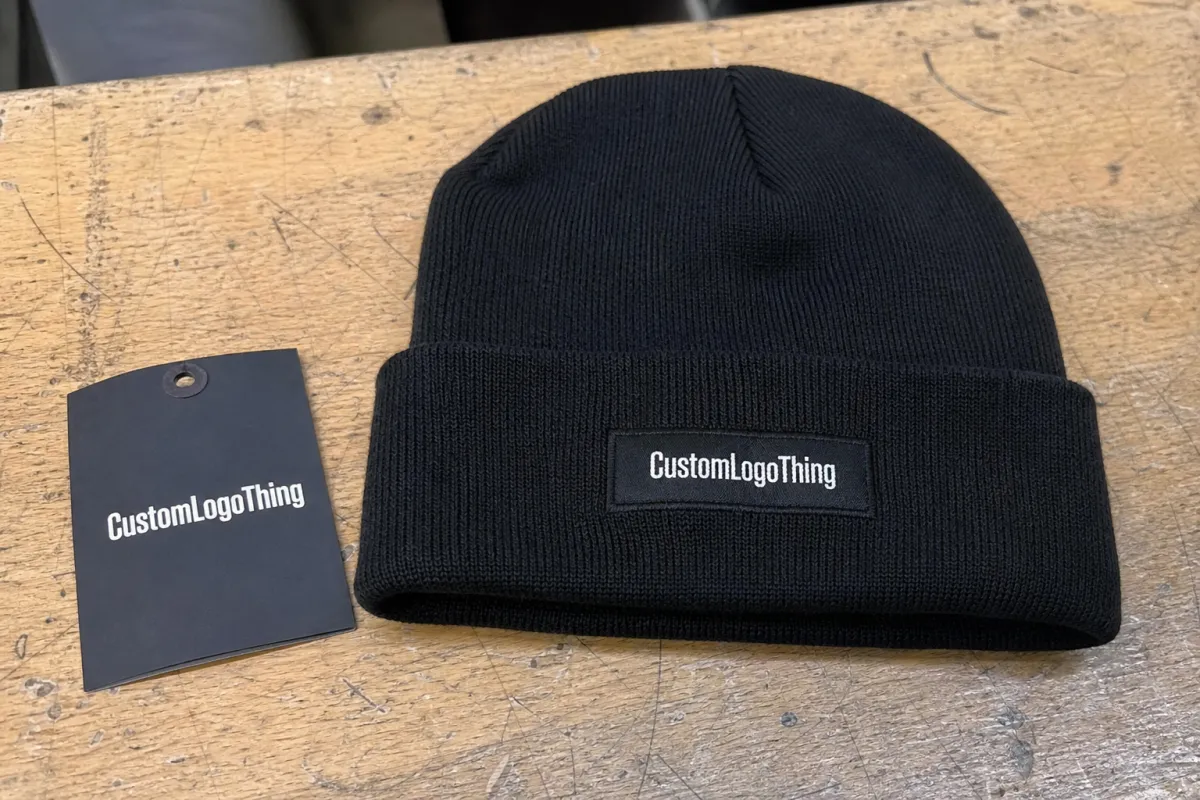
Decoration methods behave differently on knit fabric. Embroidery usually feels premium, but dense stitching can pull soft yarn inward and distort the panel. Woven labels preserve small details, though the edges need clean finishing or they can curl after packing. Sew-on patches create strong shelf presence, but the backing and stitch path must work with a stretchy base. Heat-applied graphics may be useful on some constructions, yet not every knit surface tolerates the same bond or wash profile. The decoration method should fit the fabric, not just the artwork.
Color can be trickier than buyers expect. A charcoal beanie may read nearly black under warehouse LEDs and slightly brown in daylight. That is not a defect; it is a reminder that knit texture and light interact. For that reason, compare samples in more than one lighting condition before approving final shade and contrast.
What to inspect in hand
- Logo scale: check visibility from a normal customer distance without overpowering the beanie.
- Stitch tension: watch for puckering around embroidery, especially on soft acrylic or brushed yarns.
- Placement: confirm the mark sits centered on the cuff or body panel and stays centered when stretched.
- Handfeel: make sure patches, backing materials, and sewn labels do not scratch the forehead area.
- Recovery: stretch the cuff and body, then see whether the shape returns cleanly or stays warped.
Photos help, but they are not enough. A knit sample can look balanced in a flat lay and still fail on-head because the cuff changes shape, the body relaxes, or the logo sits too low once worn. If ecommerce images matter, photograph the sample on-head, in natural light, and from several angles. That gives the team a realistic read on silhouette, scale, and decoration height.
Specs to Lock Down Before You Approve the Sample
A proper bulk knit beanies Sample Order Checklist starts with the spec sheet, because a sample can only be judged against something concrete. If the factory is missing one important input, the piece may look close and still be wrong for production. Minimum inputs should include circumference, body length, cuff height, yarn type, knit gauge, and crown construction. Those numbers define the fit, but they also shape how much the fabric will relax after knitting and finishing.
Tolerances matter here. If the supplier cannot tell you what variation is acceptable, the approval is incomplete. In knit headwear, small differences are normal: a few millimeters in cuff height, slight recovery changes after stretching, and minor shade shifts between lots. What is not acceptable is ambiguity. The buyer, not the factory, ends up paying for that later. Written tolerances stop the debate before it starts.
Fiber choice affects warmth, handfeel, shrink behavior, and unit cost. Acrylic is common because it is affordable, easy to color match, and stable in large runs. Wool blends feel warmer and more substantial, but they cost more and usually ask for more care in washing and handling. Recycled yarns support sustainability goals, though they can come with tighter color constraints or higher MOQs depending on the mill. The right choice depends on target price, season, and how the beanie will be sold.
Size and label details belong in the sample request, not in a later email thread. If the final order will use a sewn-in label, a hangtag, a barcode sticker, or a folded insert, the sample should show that exact setup. For programs with compliance requirements, keep artwork files, PMS or Pantone references, logo placement notes, and label text in one document so there is no guesswork between what was approved and what was quoted.
It also helps to write placement instructions in plain language. Say where the logo begins, how far it sits from the seam, whether the cuff should be folded to a specific depth before measuring, and whether the beanie should be measured relaxed or lightly stretched. Those instructions may sound tedious. They are the difference between a clean run and a batch of "almost right" pieces.
Spec details worth writing down
- Circumference: for example, 18-20 inches relaxed, depending on stretch and target fit.
- Cuff height: often 2.5-4 inches, which affects logo visibility and warmth.
- Yarn composition: acrylic, wool blend, recycled polyester, or a custom blend.
- Knit gauge: finer gauges look cleaner, while heavier gauges feel more traditional.
- Packaging format: flat fold, individual polybag, retail hangtag, barcode label, or carton pack.
- Tolerance note: define acceptable variation for measurement, color, and placement before the sample is approved.
One more useful reality check: bulk pricing often mirrors the spec complexity. A simple acrylic beanie with a woven label may land around $2.50-$5.50 per piece at moderate MOQs, while embroidery, jacquard patterns, wool blends, or recycled yarns can push the unit price higher. That range changes with region, order volume, and season, but it is a better planning baseline than a single headline quote.
Pricing, MOQ, and Sample Charges to Confirm Up Front
Pricing should be part of the sample discussion from the first message. A buyer who only compares production quotes can miss the real cost of getting to approval. The Bulk Knit Beanies sample order checklist should cover the sample charge, setup fee, digitizing cost, shipping charge, and any credit policy before the sample is made. That matters even more if the order includes embroidery, custom labels, or special yarn work.
There is usually a gap between sample pricing and bulk pricing. A one-off sample can cost more per piece because the setup is spread across a single unit instead of thousands. That is normal. The real question is whether those charges are refundable, credited toward the production order, or separate from bulk cost. Small print changes the economics faster than most buyers expect.
| Sample path | Typical charge | What it usually includes | Best for |
|---|---|---|---|
| Basic knit sample | $25-$45 | Standard yarn, simple fit check, no complex branding | Early shape and size review |
| Branded sample | $45-$90 | Embroidery, woven label, or patch with artwork setup | Retail and promotional approvals |
| Revised pre-production sample | $35-$75 | Corrections after first review, plus updated finishing | Final signoff before bulk release |
| Special yarn or complex build | $80-$150+ | Custom color work, multi-piece decoration, added finishing steps | Premium programs or niche designs |
MOQ deserves the same scrutiny. Some suppliers will quote a low sample fee and still require a higher production minimum because custom yarns, special labels, or multiple decoration methods change the setup economics. For simple stock-yarn programs, a production minimum might start around 100-300 pieces. Custom yarn, jacquard knitting, or advanced decoration often pushes that higher, sometimes into the 300-1,000+ range. The exact number depends on the supplier's equipment and sourcing model, so compare the full offer rather than the smallest number on the page.
Sample fees are often credited back against the bulk invoice, but only when the order matches the sampled style and colorway. If the design changes, that credit may not apply. Ask before approval, not after. The same rule applies to shipping: some quotes include express dispatch, others treat courier as a separate line item. A clear cost sheet now usually means fewer disputes after signoff.
Sample Workflow, Lead Time, and Delivery Timeline
A realistic timeline keeps the approval process from drifting into emergency mode. Most knit samples follow the same path: tech pack review, artwork approval, yarn sourcing, knitting, decoration, finishing, inspection, and shipment. That is the skeleton. Timing depends on how custom the order is and how quickly your team answers questions.
Simple samples can move quickly if the yarn is in stock and the decoration is straightforward. Add custom color matching, new label development, or embroidery digitizing, and the lead time stretches. A buyer should plan for at least one revision cycle if the first sample comes back with a fit issue, a logo placement problem, or a label that needs to move. That extra round is not wasted time; it is controlled sourcing.
Internal response time matters too. If the sample reaches the merch team in two days but sits for a week waiting for feedback, the schedule slips just the same. Set a review window before the sample ships, then assign one person to collect comments and send a single consolidated response. That avoids the common problem where merchandising wants one change, QA wants another, and sourcing has to translate between them.
Transit time is the quiet variable. A courier shipment can arrive in a few days once the sample is ready, while standard parcel service may take longer depending on location and season. For winter programs, that difference can decide whether an order launches on time or misses a selling window. If the sample is tied to a retail deadline, request tracking immediately and route it to the person who can approve the order, not just a shared inbox.
A practical sample timeline
- Day 1-2: confirm artwork, measurements, and yarn direction.
- Day 3-7: source materials, knit the sample, and apply decoration.
- Day 8-10: inspect, photograph, and ship the sample.
- Day 11-15: buyer review, markups, and revision feedback.
- Day 16+: second sample if needed, then production release.
Request the sample in the final packing format whenever possible. A flat garment bag tells you one thing; a retail-ready fold, tag, and bag tells you another. If the beanie will be sold as a premium winter accessory, the sample should prove that the presentation survives packing, not just that the knit itself looks good.
Common Sample Mistakes That Create Rework Later
Approving from photos alone is the fastest way to miss a problem. Knit texture, stretch, and logo scale change once the piece is held in hand. A sample that looks balanced on a screen can feel oversized, too soft, or too shallow on a headform. The safest process is basic: hold the sample, fold the cuff, stretch the body, and inspect the decoration from a normal customer viewing distance.
Small defects matter. Uneven stitch tension can make one side of the beanie look tighter than the other. Loose trim can signal rushed finishing. Dye variation between body and cuff can read as a mistake even when both colors are technically within tolerance. Buyers often focus on the front logo and overlook the seams, but the seams are where quality shows quickly.
Another common issue is vague revision history. If the first sample needed a placement adjustment and the second sample needed a yarn change, both decisions should be documented in writing. That record becomes the production standard. Without it, the final approval turns into a memory contest, and memory is a poor control system for bulk production.
There is also a quiet trap around "close enough." In knit headwear, close enough can hide three different problems at once: a spec that was never frozen, a supplier that substituted materials without permission, or a reviewer who judged the sample by appearance only. Treat any unresolved item as a risk item. That includes color references described verbally, label text that has not been approved, or packaging instructions that were assumed rather than written.
"If a detail is vague in the sample stage, it will be expensive in production."
Common rework triggers
- Comparing only digital mockups instead of physical samples.
- Skipping measurement checks on relaxed and stretched states.
- Ignoring how embroidery pulls on soft knit fabric.
- Failing to approve the label, hangtag, and carton format together.
- Leaving color tolerance or placement tolerance undocumented.
In packaging terms, the sample should answer one question: can this item be repeated the same way under normal production conditions? If the answer is uncertain, the design is not ready. That is especially true for seasonal knit goods, where a late correction can easily collide with freight timing and retail launch dates.
Final Approval Checklist Before Bulk Signoff
Before releasing the order, run the final approval like a controlled gate, not a casual nod. Verify measurements, approve colors, confirm logo placement, review labels, and approve packing style. If the sample is a winter retail item, make sure the beanie still looks balanced after folding, bagging, and carton packing. The Bulk Knit Beanies sample order checklist works best as the last checkpoint before the purchase order goes live.
Keep a marked-up reference sample with purchasing, another with QA, and a third available for warehouse receiving if the program is large enough to justify it. That sounds simple, but it prevents the usual mismatch between memory and reality. A photo can help, yet a physical sample is better when a shipment arrives and someone has to decide whether the run matches the approved version.
For higher-value programs, confirm that the supplier can repeat the same build consistently across the full quantity. That means the same yarn, the same gauge, the same label materials, and the same finishing method. If anything changes after approval, treat it as a revision, not a casual substitution. That one rule prevents a surprising number of disputes.
Use the checklist one more time before signoff: approved dimensions, approved decoration, approved packaging, approved timeline, and approved price. If all five line up, the production order can move with confidence. If one item is still open, hold the release until it is resolved. Winter headwear moves fast once the season starts, and the room for fixing mistakes gets smaller with every week.
A good approval process does not try to eliminate every variable. It identifies the variables that matter most and locks them down before bulk production begins. That is the real value of a bulk knit beanies sample order checklist: fewer surprises, fewer revisions, and a final order that behaves the way the sample promised.
FAQ
What should I check first on a bulk knit beanies sample order checklist?
Start with measurements, cuff height, yarn type, and decoration placement because those are the most common approval risks. Confirm that the sample uses the same production method you plan to order, not just a visual mockup. Review packaging and labeling at the same time so the sample matches the final delivery format.
How many sample beanies should I order before bulk production?
Most buyers need one approved reference sample, but a second copy helps when merchandising, QA, or compliance teams need to review it. If you are comparing colors or decoration locations, request separate samples so each version can be judged cleanly. For higher-value programs, a second pre-production sample is often worth the extra cost if the first round needs revisions.
What affects the price of a knit beanie sample order?
Pricing usually depends on yarn choice, knit complexity, decoration method, label work, and whether artwork needs digitizing or revision. Smaller custom orders often carry a higher per-unit cost because setup time is spread across fewer pieces. Ask whether sample fees are refundable or creditable toward bulk production so you can compare vendors accurately.
How long does a bulk knit beanie sample usually take?
Lead time depends on yarn availability, decoration method, and how quickly your artwork and specs are approved. Simple samples move faster than designs that require custom color matching or new label development. Allow time for at least one revision cycle if the first sample needs measurement or branding adjustments.
Can I change colors or branding after the sample is approved?
Yes, but any change after approval should be treated as a new revision because it can affect cost, timing, and sourcing. Color changes may require new yarn confirmation, while branding changes can require new digitizing or label updates. The safest approach is to finalize every spec before signoff so the bulk order matches the approved sample exactly.