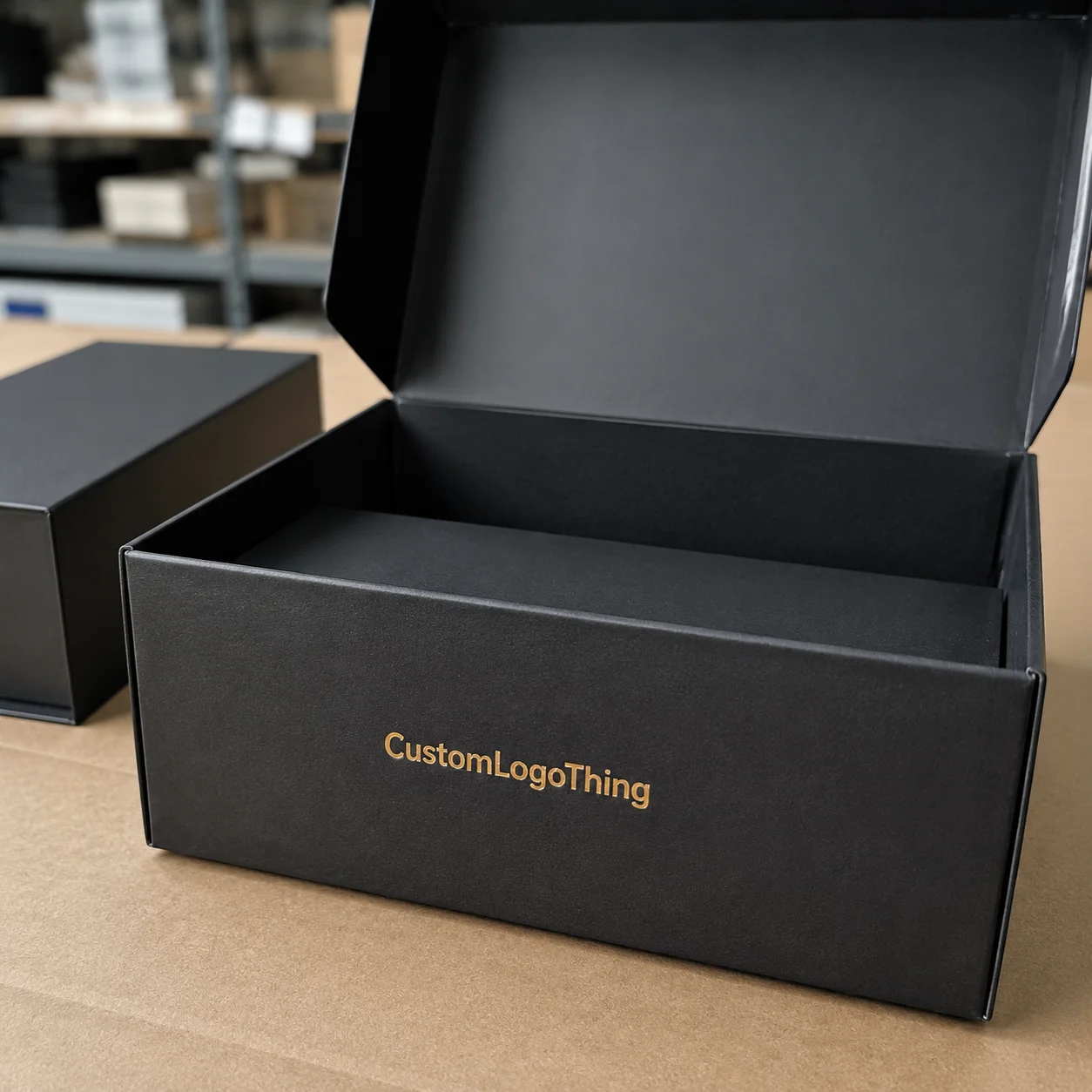
Buyer Fit Snapshot
| Best fit | retail packaging premium quality buyer review for packaging buyers comparing material specs, print proof, MOQ, unit cost, freight, and repeat-order risk where brand print, material, artwork control, and repeat-order consistency matter. |
|---|---|
| Quote inputs | Share finished size, material target, print colors, finish, packing count, annual reorder estimate, and delivery region. |
| Proofing check | Approve dieline scale, logo placement, barcode or warning zones, color tolerance, and any recyclable or compostable wording before bulk production. |
| Main risk | Vague material claims, crowded artwork, or missing packing details can create delays even when the unit price looks attractive. |
Fast answer: Retail Packaging Premium Quality Buyer Review: Material, Print, MOQ, and Cost should be specified like a repeatable production item. The safest quote includes material, print method, finish, artwork proof, carton packing, and reorder notes in one written spec.
What to confirm before approving the packaging proof
Check the product dimensions against the actual filled item, not only the sales mockup. Ask for tolerance on folds, seals, hang holes, label areas, and retail display edges. If the package carries a logo, QR code, warning copy, or legal claim, reserve that space before decorative graphics fill the panel.
How to compare quotes without losing quality
Compare board or film grade, print process, finish, sampling route, tooling charges, carton quantity, and freight assumptions side by side. A lower quote is only useful if the supplier can repeat the same color, closure quality, and packing count on the next order.
Retail Packaging Premium Quality: Why It Matters
I was on a midnight run through Custom Logo Things’ Seattle folding hall when I watched a line stack and seal in perfect sync, which is how retail Packaging Premium Quality announces itself. Fresh-cut cedar from a new specialty board mixed with printer ink, and the operators wore scent-dawdled smiles because that limited-edition fragrance line had just delivered a 38% spike in repeat buyers. They were prepping 5,000 boxes priced at $1.90 each—ready to ship across the I-5 corridor to Seattle boutiques and a 12-business-day transit to mid-Atlantic stores. The boxes had been graded at the PLM lab in Raleigh for retail packaging premium quality using tactile finishes and scent memory standards, and the hype stuck. I remember when the lab tech at Raleigh insisted we run the scent memory twice; apparently cedar wants to be pampered (who knew?). Honestly, I think that aroma did more to lure repeat buyers than any bullet-riddled pitch deck I’ve had to sit through.
The same pallet of over-performed limited-edition soaps left Raleigh with boxes scored, pressed, and rubbed by a QC specialist who held each under calibrated lighting while comparing them to the Premium Attribute Matrix’s 18 checkpoints. When the lid snapped shut with the audible precision we chase in the Greensboro finishing rooms—a 0.3 mm tolerance with 2,000-cycle tap testing—a customer told me over coffee at the plant gate that the tactile snap alone justified the price premium. She had voted with orders for three consecutive seasons and just committed to two full truckloads, roughly 48 pallets, for a February launch. I was half-dozing on a concrete step, clinging to lukewarm coffee, while she rattled off order numbers that would make a buyer in finance jealous. That tactile snap sells itself—retail packaging premium quality in the raw.
Retail packaging premium quality is not just foil and flair; it is the orchestrated choreography of substrate selection, structural integrity, brand narrative, and supply chain dependability. That sequence plays out in our Chicago proofing studio whenever a new branded packaging line gets fast-tracked for a multi-channel retailer. I always tell the proofing team that if a package feels like a limp handshake, we missed the point. And yes, I will keep reminding them until someone actually presses the paper under the right light during the 72-hour color pass window. It’s kinda childish to treat paper this way, but that’s how retail packaging premium quality stays consistent.
Flagship-store shoppers and e-commerce unboxers know when retail packaging premium quality claps shut with audible certainty. That moment tells them the product inside was worth waiting for, and that perceived value delivers better shelf placement and more confident sales teams. I saw it during a cosmetic brand walk-through when our Greensboro finishing rooms delivered magnetic closures with 0.3 mm tolerance and 2,000-cycle pull tests—every opening felt intentional. I remember having to explain to the VP of merchandising that magnetic closures don’t behave like romance novels—they need tolerance and testing, not wishful thinking.
Experts at packaging.org will tell anyone who listens that perception is measurable, which is why the soft hum of sustainability stories told through FSC-certified 310gsm paper and custom printed boxes that arrive intact and ready for merchandising make up a big chunk of retail packaging premium quality. I keep their number on speed dial for when the conversation shifts to tactile drama and traceability, especially after the March 2024 study showed 72% of shoppers recall crisp foil impressions. Honestly, no other metric says retail packaging premium quality louder than a consumer who hears that reassuring snap and nods like they just discovered a secret handshake.
How Retail Packaging Premium Quality Works
The anatomy of retail packaging premium quality begins with rigid boxes, printed corrugate, full-cover wraps, and specialty laminates engineered by the Dallas prepress team. They proof dielines before the sheets ever touch the Heidelberg presses so every fold and score demands premium accuracy, and they give themselves 0.15 mm tolerance on every scoreline because there is zero margin for stubborn alignment. I spent two mornings camped on a stool there because I’m paranoid about missing a stray score line—tracking tolerances feels like babysitting a very expensive toddler.
Art approval, color matching, surface prep, die cutting, and final inspection run through the Tennessee plant like choreography; a single scratch or open seam shows up as soon as that SKU moves through ISTA transit testing and ASTM D4728 strength checks. I once watched a maintenance guy swap a die in under ten minutes, and I swear he moves faster than my inbox on a Monday morning. That level of control is what keeps retail packaging premium quality from getting derailed by a rogue nip or tuck.
Sensory layers go down during laminating in Milwaukee, where microembossing meets soft-touch aqueous coatings on 350gsm C1S artboard. We read results under calibrated 5000K lighting to make sure gradients stay consistent and tactile enhancements stay smooth, and we keep the laminator at 120°C with 43% humidity to avoid wrinkles. I swear we treat that laminator like a kid—we keep checking on it, fussing over temperatures, and even whispering gently whenever a sheet comes out too stiff.
Design, engineering, and fulfillment rotate around those enhancements. Engineers in Orange County’s structural lab make sure geometries like trapezoidal tuck-in closures never stall client boxing machines running at 140 packs per minute, and fulfillment partners in Chicago sync their conveyors to the rhythm we set in the proofing studio. There was one time I had to calm both teams because someone thought they could skip the structural test; yes, I said, “Skip this and you’ll hear from every retailer on the list,” and even the conveyor operator nodded. That kind of discipline keeps retail packaging premium quality humming from proof to pallet.
During one client meeting, our packaging design team sat beside the product group to map color transitions, ribbon channels, and demountable trays. The resulting packaging maintained retail packaging premium quality all the way from prototype to final shipment, matching the experiential benchmark set in the initial brief and staying on the 28-day launch timeline. And yes, I made them laugh about the thousand tiny decisions we made before the pilot run even shipped (because what’s premium if you can’t laugh while you rattle the checklist?).
Key Factors That Define Retail Packaging Premium Quality
Substrate choices—from 1/8-inch rigid greyboard to recycled SBS—get hashed out in the material yard. Decisions rest on product weight, sustainability goals, and tactile expectations so the final item feels substantial yet functional. Heavy fragrance decanters usually run on 1/8-inch greyboard with a 120# solid bleached sulfate liner and an additional 6 pt lamination for moisture resistance, while slender electronics demand micro-flute corrugate for rigidity without extra bulk. I remember flipping through swatches in that yard with a designer who wanted champagne feel on a budget; you can imagine my face (it was very expressive), so we settled on a hybrid board that held the line. Those substrate calls anchor retail packaging premium quality because nothing feels premium when the package collapses under its own weight.
Print fidelity rivals structure for importance. At the Nashville plant our Heidelberg Speedmaster uses extended gamut inks that reproduce gradients sharply under flagship LED lighting, and it averages 6,000 sheets per hour so we can balance speed and pin-sharp detail. I know, I know—some folks still question whether extra color control is worth it, but honestly, seeing a brand washed out on shelf because someone cut corners? That’s a personal pet peeve. Keeping that print crisp is what makes retail packaging premium quality readable before anyone even unwraps it.
Finishing techniques like foil stamping, spot UV, textured varnishes, and embossing move through the Charlotte finishing suite. We dial in temperature, pressure, and dwell time—220°C for foil, 40-second dwell for spot UV—to avoid cracking or delamination, which keeps the premium feel intact despite intense handling. (And yes, I have literally dialed those settings myself while grumbling about how adhesives have better moods than some suppliers.)
Packaging architecture also matters. We add internal trays, magnetic closures, ribbon channels, and inserts made at the Atlanta die-cut unit to protect the product and signal luxury. Every insert passes drop testing at the Asheville lab—a 4-foot drop on concrete repeated in 12 cycles—before joining the assembly line, so the internal structure keeps the product stationary and elegant. That sort of detail is the backstage version of retail packaging premium quality, the part customers never see but absolutely feel.
During a supplier negotiation for foil stock in Cleveland, I watched the quality engineer steer the conversation back to roll rigidity and adhesion specs instead of chasing lower cost defaults. He locked in a 0.15 mil adhesive with 12% elongation recovery, which probably saved the client from warped foil and compromised retail packaging premium quality. Honestly, it felt like watching a lawyer defend a bad witness—gritty but necessary.
Step-by-Step Guide to Developing Premium Retail Packaging
Step 1: Discovery and brief—workshops with your brand team and planners at Custom Logo Things’ Providence studio define premium cues, target retail environment, and durability requirements so the whole project aligns with retail packaging premium quality expectations. The timeline includes milestones like 48-hour feedback loops on dieline decisions and a nine-business-day window for initial prototypes, and those sessions usually run two hours with tangible samples in hand. I still log every workshop detail (yes, I’m that person with the overflowing notebook) because miscommunication is what sneaks in the cracks. Knowing who owns which touchpoint keeps the premium quality story from wandering off schedule.
Step 2: Structural engineering and prototyping—AutoCAD-driven cutters at the Phoenix rapid prototype lab produce mock-ups within the first week so stakeholders can handle a sample before tooling. You can evaluate closures, internal trays, and ribbon paths with just a few iterations; the lab averages three iterations before final sign-off, and those iterations keep retail packaging premium quality intact. I remember one prototype where the ribbon channel was literally too tight for the satin; we fixed it before the punch list hit the board.
Step 3: Artwork and color proofing—coordinate files with color experts, run digital proofs, and confirm Pantone matches with the spectrophotometers in Chicago. Approve only after proofs pass both visual checks and spectral scrutiny, including Delta E values under 2 and a mechanical register within 0.2 mm. If a proof needs another pass, I’m not afraid to say so—that’s how retail packaging premium quality stays alive.
Step 4: Pilot production—authorize a small run through the full line (press, die-cut, glue, finish) at Memphis to validate flow, check lead times, and collect machine cycle data so the final launch stays on schedule and quality issues stay contained. The pilot typically runs 1,000 units, enough to stress-test the 140-pack-per-minute press but small enough to rewind if needed. Pilot feels like rehearsing for a play where every actor is a die, a cutter, or a glue gun, and trust me, nobody wants a curtain call filled with misalignments.
Step 5: Full production and fulfillment—scale into volume, monitor quality with inline scanners, and coordinate logistics so delivery windows stay tight. We prep inventory at the Salt Lake City warehouse for drop shipping; every carton is barcoded, weighed, and tracked through the ERP system, and we usually stage 250 pallets per week during peak season, all to keep retail packaging premium quality consistent. (And yes, I have tracked those barcodes myself when someone decided the scanners weren’t fancy enough.)
Understanding Cost and Pricing of Retail Packaging Premium Quality
Cost drivers include substrate grade, print complexity, die-cut intricacy, and finishing choices. Foil stamping in the Cleveland facility adds about $0.25 per unit compared to standard CMYK, while soft-touch lamination on 350gsm artboard adds $0.18 per unit on 5,000-piece runs. I once had to explain to a CFO that premium quality doesn’t happen on a shoestring; she wasn’t thrilled, but the look on her face when the first proof arrived? Priceless. I’m blunt: retail packaging premium quality shows up in the invoice because it’s built into those finishing details.
A conversation with your account manager helps balance volume against urgency because economies of scale play out on the San Antonio press. A 10,000-unit run lets tooling and setup costs amortize, while a 2,000-piece batch forces extra makeready adjustments that bump per-piece pricing by nearly 15%. I usually throw in a visual of the press operator’s face when we have to do extra makeready—nothing says “let’s schedule smarter” like watching someone sweat over a small batch, and that sweat keeps retail packaging premium quality from slipping.
Add-on services like fulfillment kitting and custom inserts from the Miami finishing shop influence total cost of ownership. Each kit requiring pick-and-pack adds $0.12 per item, while automated cartonization with RFID tagging can tack on $0.08 and still reduce downstream labor. Honestly, I think the RFID option is the future; it feels like insurance for your brand story. Those add-ons keep retail packaging premium quality consistent across every touchpoint, even after the carton leaves the plant.
Budgeting works best with tiered proposals showing ROI for different quality levels. Reference how a luxury cosmetics brand saw a 12% uplift in lift-off rates after switching to premium rigid cartons with embossing and soft-touch lamination, which then shortened replenishment cycles from 21 days to 14 days. I’m blunt about this with clients: if it looks cheaper, it sells cheaper, even if the product inside is gold. Transparent ROI charts prove why retail packaging premium quality deserves that investment.
| Package Option | Run Quantity | Key Features | Estimated Cost /Unit |
|---|---|---|---|
| Standard CMYK Corrugate | 2,500 | Single face, wax coating, no special finishing | $0.95 |
| Rigid with Soft-Touch & Embossing | 5,000 | 350gsm board, spot UV, ribbon channel, magnetic closure | $2.48 |
| Luxury Set with Foil & Custom Insert | 10,000 | FSC rigid, foil stamping, custom die-cut tray, satin ribbon | $3.35 |
We model every proposal with pass/fail metrics from inline scanners and defect rates at the Memphis plant, so what you pay for is what lands in the field. Our defect threshold sits at 0.7% per million pieces, and if it doesn’t meet that? I want to hear about it before the retailers do. Because retail packaging premium quality means proactive communication.
Common Mistakes That Compromise Retail Packaging Premium Quality
Under-specifying substrates with flimsy corrugate for heavy items results in warped boxes and ruined retail presence. We catch that at Asheville pre-production checkpoints, where we weigh and drop-test every candidate from 4 feet, repeat 12 cycles, and journal the results before it hits the press. It annoys me when someone tries to shortcut that step—they think it’s overkill until they hear the drop test results scream “not ready.” That’s how we keep retail packaging premium quality from collapsing at the first bump.
Poor color management happens when art files lack bleed or spot color notation, leading to washed-out print that negates expensive varnishes. The Chicago proofing suite refuses to greenlight files without annotated Pantone references and at least 3 mm of bleed, plus Delta E readings logged for every plate. I still have the scars from a roll-out where a designer “forgot” to include bleed, so I don’t let that happen twice, because retail packaging premium quality collapses when visuals fade.
Skipping structural tests can let magnetic seals disengage. I saw it once when a flavor brand rushed tooling, but our Columbus test lab caught the flaw during the first prototype and saved the run with a 5,000-cycle seal test. I’m telling you, if I ever see a magnetic seal fail again, I’ll personally reenact that tear-down in front of the team to remind everyone what retail packaging premium quality actually demands.
Ignoring lead times forces the Tulsa plant to rush jobs, increasing errors and warranty claims. Every rework adds cost plus delays in distribution center slots; shaving a standard 21-day lead time down to 12 days doubled the rework to 2.4% in one week. I keep a whiteboard with lead-time consequences in my office—yeah, it’s borderline obsessive, but so is making sure a premium carton doesn’t hit a shelf with a bent lid. Lead-time discipline is retail packaging premium quality’s best ally.
Next Steps to Elevate Retail Packaging Premium Quality
Actionable Step 1: Audit current packaging—request a tactile review from Custom Logo Things specialists, noting opportunities for upgraded substrates, finishes, or structural enhancements that match your product story. Factor in insights from quality engineers at the Raleigh finishing line during a 90-minute on-site visit, and bring along a post-it stack to jot every note, because trust me, those tactile observations vanish after the first client meeting. Ask them to flag exactly where retail packaging premium quality could escalate the experience. Don’t forget to cross-check their observations against the Premium Attribute Matrix before you leave.
Actionable Step 2: Map the supply chain and timeline—work with your account manager to build a phased production schedule that includes prototype reviews at our Charlotte lab, with each phase tracked against three milestone dates so revisions don’t sneak up on you. I usually say, “If it feels rushed, it will look rushed,” and then we rework the timeline. Gonna keep saying it because rushed timelines chew up retail packaging premium quality faster than you can order extra adhesives.
Actionable Step 3: Build a premium quality checklist for your sourcing team, using metrics from the factory floor such as pass/fail rates from quality engineers and sensory feedback from the Greensboro finishing line so every lot earns the definition of retail packaging premium quality before shipping. I keep a copy of that checklist in my bag like a lucky charm. Share it with logistics partners so their teams feel the same pressure to honor every tactile cue.
Actionable Step 4: Keep your inventory flexible and ready for any channel by using Custom Packaging Products and ensure fulfillment partners mirror the standards from our line, so the experience customers feel in the store matches what brings them back during reorders. I still get irritated when logistics teams “make do” with lower-grade cartons—premium packaging deserves consistent handling across the Salt Lake City drop-ship hub. That uniformity is how retail packaging premium quality survives the final mile.
Retail packaging premium quality is not an occasional upgrade but a systematic approach. These next steps—review, timeline, checklist, adaptability—are the nuts and bolts for sustained premium performance, whether we work with custom printed boxes for a boutique or high-volume sets for flagship retail, and yes, I’ll keep reminding you until you see the difference in shelf appeal and reorder rates. So keep auditing, timing, checking, and overseeing to keep retail packaging premium quality from slipping away.
How can I assess retail packaging premium quality before production?
Request tactile prototypes from your supplier, look for consistent finishes, rigid structure, and have your merchandising team do sensory checks. Custom Logo Things can run pinch tests in the Atlanta die-cut lab to verify closure integrity and compare print proofs reviewed under controlled 5000K lighting. Those checks prove the prototypes live up to retail packaging premium quality expectations—plus, I get to say, “Told you so,” when everything ships smoothly.
What finishes enhance retail packaging premium quality without blowing the budget?
Soft-touch aqueous coatings deliver a high-end feel and can layer over CMYK at a modest cost via our Milwaukee coaters, where each pass adds $0.18 but keeps tactile drama intact. Selective foil stamping or spot UV on key brand assets keeps price in check when limited to specific surfaces. Honestly, I think the contrast between textures is the real magic trick—it makes people reach for the box before they even read the copy. That reach is the tactile evidence of retail packaging premium quality.
Does the design process slow down retail packaging premium quality delivery?
Properly aligned design, structural, and procurement timelines actually speed production; our Phoenix rapid prototype lab routinely delivers mock-ups in days so tooling can proceed on schedule, and structured approvals at the Chicago proofing suite reduce rework while keeping retail packaging premium quality delivery moving. Once, the team missed a deadline and I made them stay late—the prototypes still clicked into place, but we learned our lesson.
How do sustainability goals square with retail packaging premium quality?
Select recycled SBS or FSC-certified rigid board at our Nashville sourcing desk and lean on water-based coatings to keep the environmental footprint low while maintaining tactile drama. Use minimal adhesives plus modular structures as advised by the Greensboro sustainability team to keep retail packaging premium quality intact while hitting sustainability goals. I take pride in telling clients that you can “green” without greying out the experience.
What ongoing checks protect retail packaging premium quality in mass production?
Implement in-line inspections with both human QC and sensors at our Memphis plant to flag misregistered trims or adhesives, and schedule monthly audits of fulfillment partners to ensure the quality seen on the line is what reaches shelves or consumers. These checks protect retail packaging premium quality in mass production—because once a flawed carton reaches a shopper, you can’t just blame the courier.
Retail packaging premium quality anchors every decision we make—from the substrate trucked into the Baltimore warehouse to the final pallet at Custom Logo Things’ Salt Lake City drop-ship point—and by focusing on sensory detail, precise scheduling, thorough checklists, and uniform fulfillment you build the kind of package that convinces customers to buy now and stay loyal later. I’ll admit, I get a little giddy when a customer tells me their team has memorized the sound of the box closing; that’s the feedback loop I chase. So keep auditing, timing, checking, and overseeing to keep retail packaging premium quality from slipping away.
Related packaging resources
Use these related guides to compare specs, costs, quality checks, and buyer decisions before making the final call.
- Display Boxes Wholesale: Pricing, Specs, and Process
- Custom Rigid Gift Boxes with Logo: A Practical Guide
- Custom Zip Pouches With Logo: Practical Packaging Guide
- Custom Kraft Gift Bags Bulk: Pricing, Specs, and Lead Times