Retail Unstructured Dad Hats unit cost review is less about the first number on a quote and more about what survives once decoration, packaging, freight, and sampling are added back in. A hat that looks inexpensive at the blank stage can land high enough to squeeze margin, especially if your retail team needs hangtags, stickers, carton labeling, and repeatable color control.
From a buyer’s point of view, the best quote is the one you can actually compare. If two suppliers are quoting different closures, different embroidery counts, and different packouts, the unit cost is fiction. The goal is simple: isolate the variables, then see which retail program gives you the strongest cost per piece without sacrificing shelf appeal.
The cheapest headline price often hides the highest landed cost.
That is why the first pass should be strict. Ask for the same cap profile, the same decoration method, the same quantity bands, and the same retail finishing on every quote. Otherwise, the supplier who “wins” on paper may simply be leaving out setup charges, tooling fees, or freight.
Retail Unstructured Dad Hats Unit Cost Review: What the First Quote Hides
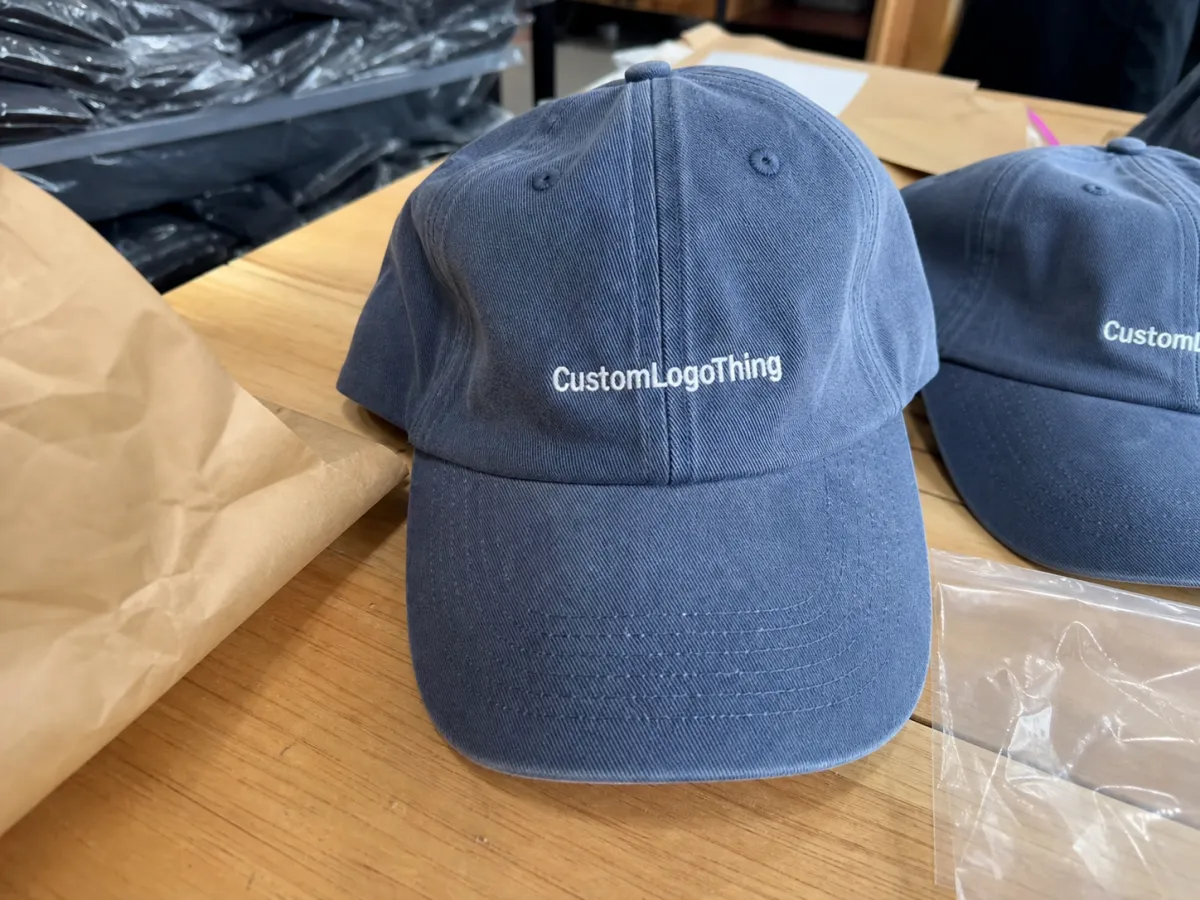
Open every quote with the same line items so the retail unstructured dad hats Unit Cost Review starts on equal ground, not on vendor assumptions. At minimum, that means blank cap price, decoration, setup charges, packaging, and freight. If a supplier only gives you one all-in number, ask for the breakdown. You cannot approve a program if you cannot see where the money is going.
The first quote often excludes the things retail buyers feel later. Embroidery digitizing may be omitted. Woven patch tooling fees may appear only after sample approval. Inner polybags, size stickers, hangtags, or carton labels can also show up as separate charges. Even a modest run can absorb another $0.25-$0.75 per unit once those items are added, and that is before transportation.
Clean retail presentation matters as much as the hat itself. A low-profile, 6-panel unstructured cap can be a strong seller, but only if the finishing looks deliberate. Loose stitching, uneven panels, or sloppy labeling turn a bargain into a markdown risk. In practice, buyers should judge the quote against the shelf, not against a spreadsheet alone.
Use the first response from a supplier as a test of competence. Do they understand retail-ready packing? Do they ask about color standards? Do they mention repeat orders and reorder stability? The best partners talk about consistency, not just price. That tells you whether the factory is thinking in terms of sell-through, not just production.
Here is the simple truth: a small shift in closure, fabric wash, or decoration method can move the real cost more than a minor change in blank cap price. On a program where every cent matters, that difference can decide whether the hat lands as a profitable accessory or an inventory problem.
Fabric, Crown, and Closure Choices That Move Cost
Fabric is usually the first place unit cost moves. Cotton twill is the familiar baseline because it is easy to source and consistent to sew. Brushed cotton adds a softer hand feel and a more retail-friendly look, but it can raise material cost slightly. Garment-washed fabric feels broken-in and premium, yet it can add variability and more waste during production. Blends can help with shrinkage or durability, but they are not always cheaper once the spec is tightened.
The crown matters too. Unstructured hats usually cost less than heavily built profiles because they use less reinforcement, but that softness pushes more pressure onto sewing quality. If the front panels collapse badly, the hat looks underfinished. Most retail teams do well with a low-profile 6-panel cap, a pre-curved brim, and a crown depth that sits comfortably on a wider range of heads. A fit that is too shallow can hurt sell-through faster than a small cost increase ever helps.
Closure choice is a quiet cost driver. Self-fabric straps with a buckle feel more premium, while hook-and-loop can reduce hardware cost and simplify assembly. Metal sliders sit somewhere in the middle, depending on finish and sourcing. In retail programs, the difference is not only mechanical. Hardware also affects perceived value. A buyer may spend an extra $0.08-$0.20 per unit on closure details if the shelf presentation justifies it.
Decoration method changes both the price and the production path. Straight embroidery is common for logos with moderate stitch counts, while woven patches add dimensional appeal and can hide small detail limitations. Direct print is faster in some cases, but it is not always the right choice on textured fabric. Mixed decoration, such as embroidery plus a woven side patch, increases labor and can trigger more setup work. The key question is not which method looks best in isolation. It is which method supports margin, reorder speed, and consistent retail presentation.
For buyers comparing bulk pricing, it helps to think in bands rather than single points. The raw blank may only shift by a few cents, but the total unit cost can move much more once trim, decoration, and finishing are counted. That is why a spec-led quote is worth more than a general promise of “good pricing.”
Specs to Lock Before You Price the Run
Before you compare suppliers, lock the spec sheet. Panel count, crown depth, brim shape, seam structure, and closure type should all be fixed before the first quote. Vague instructions create vague pricing, and vague pricing is how retail programs get delayed. If one vendor assumes a soft washed finish and another quotes standard twill, you are not looking at the same hat.
Be explicit about color standards too. Pantone references are useful, but lab dips and material swatches are better when fabric shading matters. Logo placement should be measured in millimeters, not described loosely. If the logo sits 15 mm too high or 10 mm too wide, the hat may still be wearable, but it will not look approved. That is especially true for display packs and ecommerce photography.
Retail trims deserve the same discipline. If you need a hangtag, woven size label, care label, barcode sticker, or retail polybag, say so early. Carton pack details matter as well. A clean master carton count can make distribution cheaper and faster, while random packing creates waste. For multi-channel retail, ask for inner packs and outer cartons that fit your warehouse process instead of forcing your team to repack later.
One-size-fits-most sounds simple, but it should still be defined. Some programs fit best at 56-60 cm, while others need more flexibility for broader retail appeal. A slightly deeper crown or a longer strap can make a big difference in sell-through, especially if the hat is meant for a wider customer base. That kind of detail barely changes the spec sheet, yet it can change returns and repeat demand.
If you expect reorders, lock the spec now. Changing one detail later can force a new sample, new approval cycle, and new timeline. On a retail calendar, that is expensive. A clean spec sheet is one of the few tools that reduces both cost and risk at the same time.
Pricing, MOQ, and Unit Cost Breakpoints
Ask for tiered pricing at realistic quantity bands so you can see where the unit cost drops and where it barely moves. A quote that only shows one quantity is hard to use because retail buying is rarely one-dimensional. Most teams need at least three breakpoints, such as 300, 1,000, and 3,000 pieces, to understand actual bulk pricing behavior.
| Quantity band | Typical blank cap cost | Typical decorated cost per piece | What drives the move |
|---|---|---|---|
| 300-499 pcs | $1.90-$3.10 | $2.85-$4.60 | Setup charges, sampling, and small-run handling |
| 500-999 pcs | $1.60-$2.70 | $2.35-$4.00 | Better material absorption, lower per-unit decoration spread |
| 1,000-2,999 pcs | $1.35-$2.30 | $2.00-$3.45 | Improved labor efficiency and steadier blank sourcing |
| 3,000+ pcs | $1.10-$2.00 | $1.80-$3.10 | Volume absorption, fewer changeovers, more favorable freight per unit |
Those numbers are not fixed rules. They move with fabric selection, stitch count, closure hardware, and whether the order needs retail finishing. A simple embroidered logo is usually easier than a multi-location patch program. A garment-washed cap with a custom buckle is not going to price like a stock cotton twill hat with a straightforward back strap.
MOQ can be driven by more than supplier preference. Fabric dye lots, decoration method, and carton efficiency all shape the minimum. A small run may still be possible, but the cost per piece is almost always higher because setup is spread across fewer units. If you need a lower MOQ, be ready to simplify the spec or accept a higher landed cost.
Watch the hidden line items closely. Sample charges, digitizing fees, plate costs, and rush fees can distort smaller orders. If a patch requires tooling fees, ask whether that fee is one-time or attached to every reorder. That single question can change the economics of the whole program.
Compare landed cost, not just factory price. Freight, carton size, and distribution method can add more than expected, especially when the order ships to retail packaging requirements. A hat that looks like a bargain at the factory gate may finish as a weak margin item once the final bill includes shipping and handling.
Process, Timeline, and Approval Milestones
Start with a clean RFQ. The best brief includes artwork, quantity bands, cap spec, closure choice, packaging needs, and delivery window. When that information is complete, the supplier can quote faster and more accurately. When it is incomplete, you get guesswork disguised as pricing.
Proof approval is the next choke point. Review the digital proof for logo scale, placement, thread count, and color accuracy before you approve sampling. A good proof should let you catch obvious problems before material is cut. If the logo is too dense, too small, or too close to a seam, you want to know before production begins. That saves time, but more importantly it saves correction cost.
For retail-facing programs, physical samples are worth the extra step. A digital proof cannot show crown softness, brim feel, or how the closure sits in hand. A sample also reveals whether the hat looks stable on display. If your team is evaluating a shelf assortment, those details matter. A hat can look acceptable on screen and still disappoint in person.
Lead time depends on complexity, but a common pattern is 2-5 business days for a digital proof, 7-12 business days for a physical sample, and 12-20 business days for production after approval on a straightforward embroidered order. Garment washing, mixed decoration, or custom packaging can push that longer. Freight is separate. If a retail calendar is tight, ask the supplier to tell you exactly what can be accelerated and what cannot.
Quality control should be built into the schedule rather than treated as an afterthought. Check stitch density, panel symmetry, closure alignment, label placement, and carton counts before release. If the run will ship through a distribution center, ask whether the cartons should be tested against a transit standard such as ISTA practices. If the program includes paper hangtags or board inserts, it may also make sense to ask for FSC-certified material options.
That level of discipline is not overkill. It is what keeps a retail order from becoming an expensive surprise. A few extra approval steps usually cost less than rework, relabeling, or reshipping a program that missed the mark.
Why Retail Teams Source These Hats From Us
We quote the details that retail buyers actually need, including decoration, packout, and freight, so the number is usable from day one. That matters because many suppliers still lead with a blank-only price that tells you almost nothing about real cost. A usable quote should help a buyer compare options quickly, not create a second round of questions.
Our process is built for repeat orders. That is important for a product like a dad hat, where customers often reorder the same style after a strong sell-through. If the color shifts, the fit changes, or the label spec drifts, the line loses momentum. Repeatability is not a marketing phrase here; it is a buying requirement.
Retail-ready finishing is part of the offer. Hangtags, stickers, carton labels, and simple pack configurations can save time downstream. When those details are planned early, your distribution team receives cartons that are easier to scan, sort, and put away. That saves handling cost even if the hat price itself barely changes.
Because we work from a spec-led model, buyers can compare options without guessing where the cost is coming from. If you want a lower cost per piece, we can show which tradeoffs matter most: closure style, fabric finish, stitch count, or packaging. If you want a more premium shelf look, we can show how to add value without blowing up the quote. That is the practical side of a retail unstructured dad hats Unit Cost Review: make the tradeoffs visible before the order is locked.
Honestly, the best retail hat programs are the boring ones. They fit the brief, arrive on time, and reorder cleanly. That sounds unglamorous, but it is exactly what keeps margin intact.
Next Steps for Comparing Quotes and Placing the Right Order
Request one apples-to-apples quote sheet from each supplier with identical specs, quantities, decoration method, and packaging instructions. If a supplier resists that format, treat it as a warning sign. Comparison only works when the inputs are the same.
Ask for a sample or prototype if your logo, color match, or retail presentation has any risk at all. A sample costs less than a bad launch. It also tells you how the hat feels in hand, how the crown sits, and whether the finish matches the pricing you were given.
Compare the full landed cost, then check whether the supplier can hold the same unit cost on the next reorder. A one-time promotional buy is different from a continuing retail program. If the first run is cheap but the reorder becomes unstable, the real program cost is higher than it looked.
Confirm lead time, approval deadlines, and shipment method before you commit. That timeline determines whether the run is actually workable for your channel. A strong price with a weak schedule is still a weak deal.
Use the same formula for every supplier so the retail unstructured dad hats Unit Cost Review stays factual, comparable, and easy to approve. If you keep the spec tight, the numbers become clear. And once the numbers are clear, the buying decision usually gets much easier.
What is the typical retail unstructured dad hats unit cost at different order sizes?
Smaller runs usually carry the highest unit cost because setup, sampling, and packaging are spread across fewer hats. As quantity rises, decoration and handling costs are diluted, so tiered pricing matters more than the first headline number. Always compare landed cost per hat, not just blank price, before you approve the order.
What MOQ should I expect for custom unstructured dad hats?
MOQ depends on fabric availability, decoration method, and packaging requirements, not just the cap style itself. Simple blank or lightly decorated programs can be lower than fully packaged retail runs. Ask suppliers to quote multiple quantity tiers so you can see the real breakpoints.
Which specs have the biggest impact on pricing and unit cost?
Closure hardware, decoration method, and fabric finish usually move cost the most. Retail packaging, hangtags, and carton labeling also add cost quickly when the order is small. Fit depth, crown structure, and color matching can affect sampling and production efficiency.
How long does production usually take after proof approval?
Lead time changes with quantity, decoration complexity, and whether raw materials are already in stock. You should expect more time when the order needs custom packaging or detailed color matching. Build in approval time for proofs and samples so the production clock starts cleanly.
Should I approve a sample before placing a retail hat order?
Yes, if the hats will be sold at retail or shipped to multiple channels, a sample reduces the risk of costly surprises. A sample shows crown shape, fabric feel, logo scale, and overall finish far better than a digital proof. It is the fastest way to confirm that the quote and the final product actually match.

