Buy Vitamin Unstructured Dad Hats Material Sample Guide
If you are comparing custom caps for a retail drop, promo run, or private-label launch, the vitamin Unstructured Dad Hats material sample guide is the point where pretty mockups stop mattering and the real product starts speaking. Two hats can look nearly identical in a product photo and still wear differently because the crown collapses at a different angle, the fabric drapes too softly, or the seam tension pulls the front panel off-center. That is the gap a sample closes.
For buyers, a good sample is not a souvenir. It is a risk filter. It should tell you, quickly and honestly, whether the hat fits the head shape you want, feels premium in hand, and can be reproduced at scale without drifting. If it cannot answer those three questions, the sample has not done its job.
A sample should answer three questions fast: does it fit, does it feel premium, and can the factory repeat it without drifting?
What Makes a Sample Worth Approving Before You Order
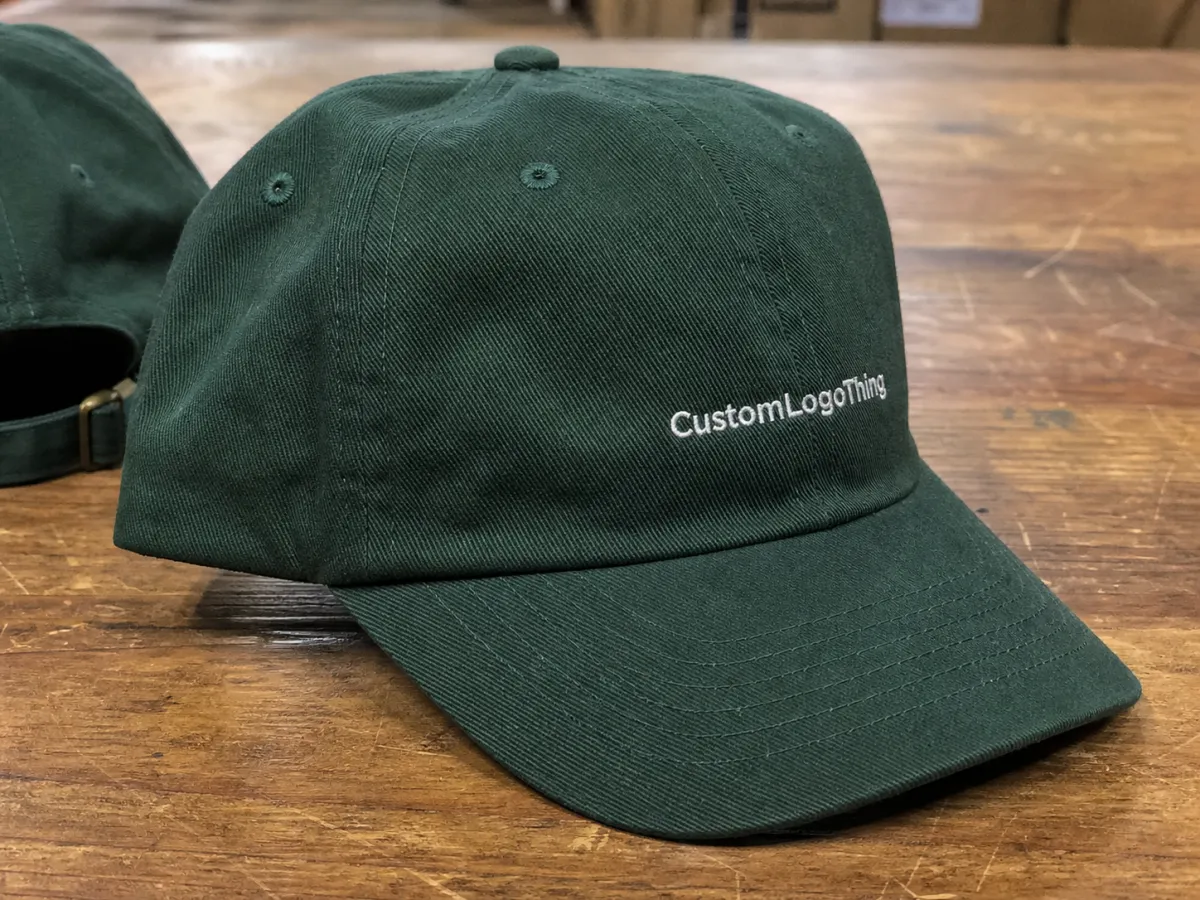
A hat sample is only useful if it behaves like production. That means the fabric is the real fabric, the closure is the real closure, and the decoration method is not a shortcut version that would never survive a bulk run. I see buyers make the same mistake over and over: they judge the sample as a visual object instead of a wearable one. A cap can look clean on a table and still fail after five minutes on a head because the front panel caves in, the sweatband scratches, or the brim sits flatter than the tech pack promised.
A sample package should include the actual hand-feel, the stitch density, the logo placement, the closure hardware, and the way the crown sits after a little handling. That last part matters more than most people expect. Unstructured Dad Hats are supposed to have a relaxed silhouette, but relaxed is not the same as sloppy. If the crown collapses too much, the hat reads cheap. If it is too stiff, it stops looking like an unstructured cap at all.
For that reason, I like to treat the sample as a small production rehearsal. It is the best chance to catch weak stitching, off-spec panel balance, or a brim that photographs badly under retail lighting. That is especially true for the vitamin Unstructured Dad Hats Material Sample guide buyer who wants a repeatable result across multiple colorways or decoration styles. One clean sample is useful. One repeatable sample is what you actually need.
How Hat Samples Are Built, Measured, and Compared
The best way to judge a sample is to compare it against the approved spec, not against memory. The workflow usually starts with the pattern, then fabric sourcing, then embroidery or print setup, followed by assembly, finishing, and inspection. If any of those steps are vague, the sample will drift. A buyer may still like the look, but “looks fine” is not the same as “matches the plan.”
Measure the sample the same way you would measure a production cap. Check crown depth, brim curve, panel balance, closure placement, and the position of the logo relative to the center seam. A cap that matches the Pantone target but misses crown depth by even a small margin can sit noticeably differently on the head. That is why visual approval and functional approval are not the same thing. Color is one variable. Fit is another. Comfort is another again.
Side-by-side comparison helps. Put the sample next to a known good hat and wear them back to back. Photos flatten the details. In hand, you can feel where one cap has a softer front panel, a better sweatband, or a cleaner transition from crown to brim. I also recommend checking the sample after light handling, because some low-structure hats look perfect for the first 30 seconds and then collapse in a way that changes the silhouette.
For a buyer using the vitamin Unstructured Dad Hats Material Sample guide as a procurement tool, the point is not to approve one attractive specimen. The point is to set a repeatable standard that can survive 300, 3,000, or 30,000 units without surprise.
Fabric, Crown, Brim, and Closure Factors That Change Fit
Fabric choice changes almost everything. Cotton twill gives you a classic hand and a familiar aging pattern. Washed cotton softens the look quickly and can create a vintage feel, but it also makes the crown collapse more. Canvas feels a bit sturdier. Brushed twill tends to read cleaner in casual apparel programs. Blends can improve consistency, though not every blend photographs with the same character buyers expect from a heritage-style dad hat.
The crown build matters just as much. An unstructured crown is supposed to relax, but if the fabric is too soft or the seam tension is too loose, the hat can look worn out before it leaves the warehouse. Brim construction changes the story too. The insert, the curve, and the stitch density all affect shape retention. I have seen two caps made from similar fabric behave very differently because one had a better brim insert and tighter topstitching.
Closures are another quiet quality signal. Strapback, buckle, tuck-in, and Velcro all solve the same basic problem, but they do not feel the same to the customer. A metal buckle usually reads more premium. A tuck-in strap can feel cleaner on the back of the cap. Velcro is fast and adjustable, though some buyers dislike the lower-end association. If your target customer expects a fashion accessory, not a giveaway item, the closure choice can affect acceptance more than the logo does.
Decoration compatibility deserves its own check. Thick embroidery can weigh down a soft front panel. A patch with the wrong backing can show edges after the first wear. Print can look crisp on a flat fabric and muddy on a washed surface. This is where the vitamin unstructured dad hats material sample guide should be ruthless: if the decoration style fights the fabric, change one of them before production.
| Sample option | Typical cost per sample | Typical turnaround | Best use |
|---|---|---|---|
| Blank fit sample | $18-$35 | 5-8 business days | Checking crown shape, brim curve, and closure feel |
| Decorated sample | $35-$75 | 7-12 business days | Confirming logo placement, stitch quality, and color match |
| Pre-production sample | $60-$120 | 10-15 business days | Locking final materials and production-standard finish |
Sample Process, Timeline, and Lead Time
A clean sample path usually runs in a predictable order: spec review, quote confirmation, fabric and trim selection, build, shipping, inspection, and revision if needed. The fastest projects are the ones with final artwork, exact thread or patch details, approved Pantone targets, and one decision-maker on the buyer side. The slow ones usually stall because someone asks for a fabric change after the first sample is already cut.
Realistically, a straightforward sample can move in several business days once the tech pack is clear. Add embroidery complexity, specialty wash effects, or imported trims, and the timeline stretches. Shipping can be the hidden delay. A sample built quickly can still arrive late if the freight method is slow or if customs paperwork is incomplete.
If the factory is mailing sample caps, I like to see sensible protective packaging: corrugated cardboard, a simple kraft paper wrap, and enough internal support to protect the brim. If the brand story includes sustainability, ask for recycled materials or post-consumer waste content, and check whether the carton is FSC certified. FSC is a useful reference point when paper sourcing matters to the buyer. For transit damage and package handling, ISTA is the authority I would look at first.
Biodegradable packaging sounds attractive, and sometimes it is the right call, but it still has to protect the cap. A crushed brim or scuffed patch is not a sustainable outcome just because the mailer breaks down faster. For sample delivery, durability comes first, then the material story.
One practical move: ask the supplier for a milestone list before you approve the sampling path. If you know the expected handoff date for pattern confirmation, build start, finished sample photos, and ship date, you can manage the process instead of waiting for it.
Sample Cost, Pricing, and Quote Basics
Sample pricing usually breaks into four pieces: development fee, material cost, decoration setup, and freight. Rush service can add more. A buyer sometimes sees a low sample price and assumes the order will be cheap too, but that is not how the math works. If the minimum order quantity is low, setup gets spread across fewer units, and the unit price rises. That is common with custom caps, custom labels, and specialty decoration.
Ask for a line-item quote. It should show the sample cost separately from the production price, and it should say whether the sample fee is credited back after bulk approval. Some suppliers deduct the fee. Some waive it above a certain order size. Some treat it as a separate development charge. None of those policies are automatically wrong, but the buyer should know the rule before comparing vendors.
The cheapest sample is not always the cheapest decision. If the sample reveals a fit issue, a fabric problem, or a decoration mismatch, paying for one more round is usually much less expensive than correcting hundreds of finished hats. That is especially true on a custom run where a front-panel issue affects the entire order. The vitamin unstructured dad hats material sample guide is really a costing tool as much as a quality tool, because it prevents a small mistake from becoming a full-run write-off.
As a rough benchmark, simple hat samples often land in the $18-$35 range, decorated samples in the $35-$75 range, and pre-production samples in the $60-$120 range, depending on fabric, trim, and decoration complexity. Exact numbers depend on the factory, but the structure of the quote should be easy to read.
Common Mistakes That Turn a Good Sample Into a Bad Order
The biggest mistake is approving by photo alone. A cap can look balanced in a studio image and still twist on the head, sit too shallow, or collapse at the wrong point after wear. Handling the sample matters. Wearing it matters more. If the hat only works when it is sitting untouched on a flat table, that is not a retail-ready result.
Another common failure point is finish. A washed look, a slight sheen, or a rough sweatband can change the way the product is received, even if the logo and measurements are technically correct. Buyers sometimes also approve decoration placement without checking how it looks once the crown is worn. On an unstructured cap, the logo can shift visually as the front panel relaxes.
The subtle trap is treating the sample as a one-off. If the factory cannot reproduce it, the bulk order will drift. That drift might be tiny at first, then obvious by the time the shipment lands. I have seen orders lose their clean silhouette because the approved sample was never converted into a proper production reference sheet. No written standard, no control.
Rushing approval is expensive. A weak seam, a brim that curves oddly, or a closure that feels flimsy can lead to returns, complaints, and a product that never quite earns repeat orders. A good sample should make the next step easy, not merely exciting.
What to Do After the Sample Arrives
Build the inspection process before you open the box. Measure the crown, check seam alignment, test the closure hardware, confirm logo placement, and document every issue with photos. Then separate the notes into must-fix and nice-to-have. That keeps the revision list focused and stops the next round from becoming a moving target.
If the sample passes, lock the approved materials, dimensions, and decoration specs in writing before bulk production starts. Memory is not a control plan. If the sample misses the mark, request a revised sample with exact corrective notes. “Better fit” is too vague. “Reduce crown depth by 8 mm, shift embroidery 4 mm lower, and increase brim stitch density” is useful.
This is also the point where the vitamin unstructured dad hats material sample guide becomes a practical checklist. Use it to decide whether to approve, revise, or ask for another round. That is how you avoid emotional approvals, and it is how you keep the production run close to the sample that won your confidence in the first place.
For buyers at Custom Logo Things, that last step matters because the sample is not just a preview. It is the standard the factory should be held to.
What should I check in a vitamin unstructured dad hat material sample?
Check crown collapse, brim curve, stitching quality, closure hardware, and fabric hand-feel after handling. Wear the hat for a few minutes to see whether it sits too high, too shallow, or twists when adjusted. Compare it against your tech pack and a reference hat, not only the photo proof.
How many sample rounds are normal for unstructured dad hats?
One physical sample is often enough for a simple order, but two rounds are common when the fabric, logo placement, or fit is new. A second round is usually the smarter move if the first sample has multiple issues or if the cap must match a specific retail benchmark.
How long does a dad hat sample usually take?
A straightforward sample can move in several business days, while complex fabric sourcing or decoration can stretch the timeline. Shipping often adds more delay than the build itself, especially if the sample crosses borders. Final artwork, color approval, and hardware choice are the biggest variables.
Is the sample cost deducted from the final order?
Sometimes yes, sometimes no. It depends on the supplier policy and whether the sample was a standard build or custom development. Ask for a written quote showing sample cost, freight, and any credit that applies after bulk approval. If the vendor will not clarify credit terms, compare landed cost instead of only the sample price.
What is the biggest mistake buyers make with hat samples?
They approve too quickly based on looks alone and skip fit testing, wear testing, and close inspection. They also forget to confirm that the sample is the exact production standard, not a one-off version that cannot be repeated. The safest move is to document every approval point before production begins.