A retail woven label Beanies Digital Proof Checklist saves more money than most buyers expect, because the proof is where small problems show up before they become actual inventory. A label can look perfect on a screen and still fail once it is woven, cut, stitched, folded, and viewed under store lighting. I have seen a 2 mm placement mistake turn into a whole reprint because the logo sat too close to the cuff edge.
That is the real value of the checklist. It is not a formality. It is a buyer-side control sheet that checks artwork, construction, measurements, color, and order details before thread is selected and production starts. If those details are right early, the run moves faster and the first batch usually lands where it should.
Retail woven label beanies digital proof checklist: what to catch
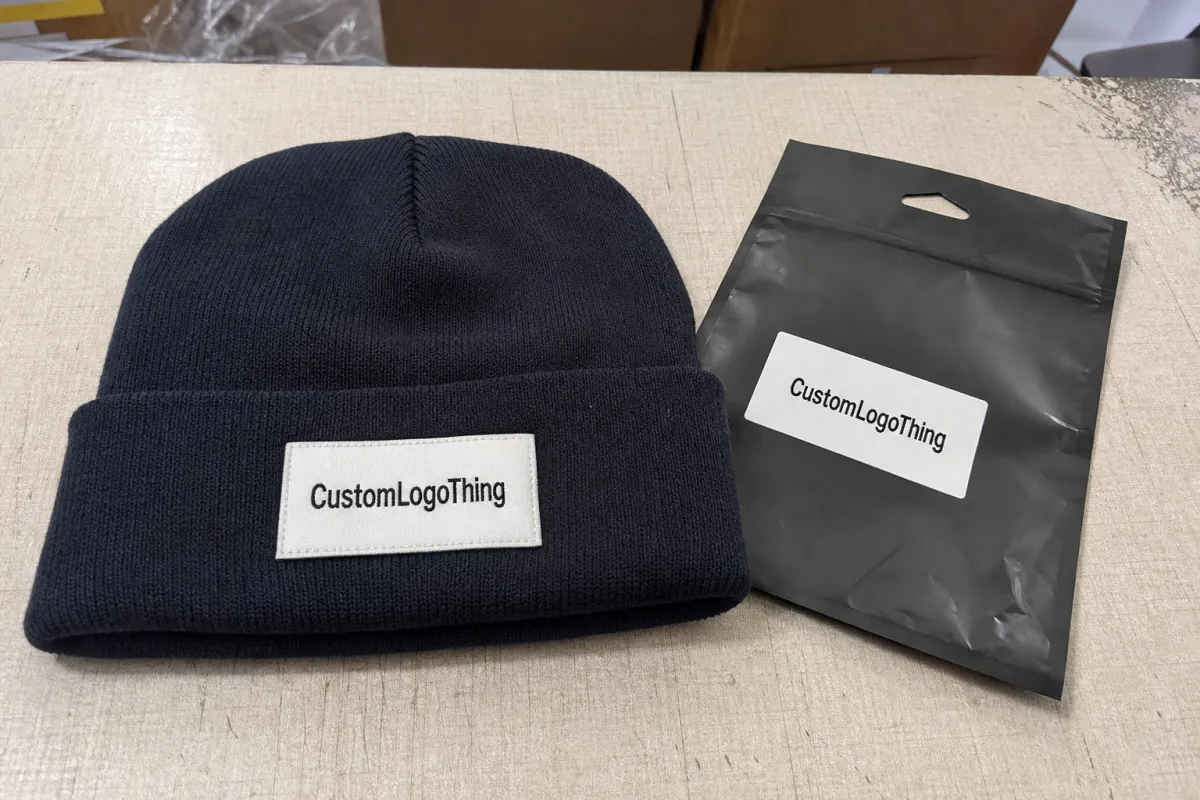
For woven labels on beanies, the biggest risk is rarely the logo concept. The risk is translation. A mark that looks clean in vector form can become muddy if the weave is too dense, the type is too small, or the label is folded in a way that hides part of the artwork. Retail buyers usually notice the result before they notice the reason.
Start with fit, not color. Measure the visible area after the cuff is folded, because the flat label size is only part of the story. A 25 mm label that seems generous on paper can feel cramped once the beanie is folded and stitched. The same goes for legal copy, fiber notes, or care text. If the line is too small to read at actual size, it will not get better in production.
Then check the structure. The proof should show the fold type, stitch path, label dimensions, and placement on the beanie, not just the artwork floating on a white background. A flat mockup can hide the problem. A proper retail proof should show how the label sits on the cuff or seam and how much of it is visible when the hat is merchandised on a hook or folded on a shelf.
A proof is not asking, “Does it look nice?” It is asking, “Will this still work after it is woven, cut, stitched, folded, packed, and handled by a store team?”
Material context matters too. Woven labels are commonly made as damask or satin-style constructions. Damask usually gives finer detail and a cleaner retail read. Satin can feel softer and more premium in hand, but it may not hold the smallest type as well. If a design depends on hairline rules or tiny icons, the weave choice is part of the approval, not just the finish.
One useful habit: compare the proof to the actual beanie color, not to a generic mockup. A black label on a heather gray hat behaves differently than the same label on a cream knit. Some combinations feel sharp. Others disappear. If the proof does not show garment color clearly, ask for a better mockup before approving it.
A good retail Woven Label Beanies digital proof checklist also checks the boring details. Those are usually the ones that save the job: spelling, part numbers, order quantity, thread count, finish, and whether the label is meant for cuff placement, side seam placement, or center-front positioning. The boring details are the expensive ones when they are wrong.
Proof process and timeline for faster turnaround
The cleanest proof process starts with complete intake. The supplier needs artwork, label dimensions, beanie style, quantity, target ship date, color references, and any retail requirements that matter. If one of those pieces is missing, the proof will carry assumptions. Assumptions are where delays start.
Most orders move through three steps: an initial digital mockup, one revision round if needed, and final written approval. After that, production usually moves into thread selection, weaving setup, cutting, finishing, and stitching. Once the order is in that flow, late edits cost more because they touch machine setup and labor sequence, not just the art file.
- Artwork intake: confirm file format, label size, quantity, placement, and any brand rules.
- Annotated proof: verify fold style, stitch line, color references, and how the label sits on the beanie.
- Final sign-off: approve only after every stakeholder has reviewed the same version.
Lead time depends on how clear the feedback is. A clean first-round approval keeps the schedule tight. Vague notes slow everything down. “Make it pop more” is not useful production feedback. Neither is “slightly bigger” unless the buyer says exactly how much bigger and where the increase should happen.
For typical retail programs, digital proof turnaround can be quick if the spec is complete, but sample weaving and bulk production still need room in the schedule. A small revision can be easy. A change to label size, weave density, or fold style can trigger a new setup. That is the part buyers often underestimate. The proof may take one day. The consequence of missing something may take a week.
If the product line includes other trim pieces, keep the label choice consistent with the rest of the collection. A beanie label should not fight the hang tag, neck label, or retail packaging. Buyers do better when the visual system feels planned. For broader trim options and construction choices, a product range like Custom Labels & Tags is useful for comparing formats before final approval.
Label specs that change the retail look and feel
Specs change the final look more than most buyers think. Size, weave density, fold style, and edge finish all affect the way the beanie reads in a store. A crisp damask weave with a clean cut edge does not feel like a thick satin label with a folded edge, even if the artwork is identical. Shoppers react to texture fast. They may not name it, but they notice it.
Thread color is another place where screen thinking causes trouble. A monitor shows light, not yarn. A brand blue that looks bright on a laptop can look flatter in thread. Dark details can close up. Light details can wash out. If the design uses gradients, tiny outlines, or very thin letters, the proof should show the artwork at actual woven size, not blown up. Enlarged art hides weak spots.
Placement is not a decorative afterthought. A center-front cuff label reads differently than a side-seam label. Center-front can feel louder and more streetwear. Side placement feels quieter and more minimal. Both can work. They do not communicate the same thing. That matters if the beanie is part of a premium line, a licensed line, or a mass retail assortment where shelf presentation has to stay consistent.
Construction details also deserve a close look. End-fold, center-fold, mitre fold, cut-and-fold, and sew-on placement all create different visual results and different labor steps. A fold can hide copy. A stitch line can cover part of the border. A label edge that looks clean in a flat file can pucker on a knit cuff if the spec is too stiff for the garment.
Retail buyers usually get the best result when the proof is checked against the actual product color or a close swatch. A black beanie with a high-contrast label behaves differently from a heather knit or a tonal fashion color. That sounds obvious. It gets skipped anyway.
If the order also includes paper inserts or header cards, keep those claims grounded. FSC certification language should only be used where it is actually applicable, and the source should be verifiable at fsc.org. Overstated sustainability copy causes more trouble than it solves.
Packaging quality matters too. If the beanies are going into retail-ready polybags, printed cartons, or shelf bundles, the transit plan needs to protect appearance on arrival. A damaged label edge or a crushed cuff is not a decoration problem anymore; it is a shipping problem. Guidance from ista.org is worth checking when the order has to survive distribution, not just production.
Cost, pricing, MOQ, and quote drivers
Price varies for a handful of predictable reasons: quantity, label size, weave colors, fold complexity, finishing, and whether the order needs packaging or special tagging. Buyers sometimes look only at unit cost. That is a mistake. The real cost includes proof rounds, sample charges, freight, and the time lost fixing problems that should have been caught in the digital proof.
MOQ matters because setup work has to be spread across the run. A small order pays a bigger share of the setup burden. That is why a 300-piece run can price very differently from a 3,000-piece run even when the art is identical. Smaller orders are not always a bargain, even if the quote looks tidy on paper.
| Order profile | Typical quantity | Approx. woven label add-on per beanie | Proofing notes | Best fit |
|---|---|---|---|---|
| Small retail test run | 100-499 | $0.35-$0.80 | Often 1-2 proof rounds; setup cost weighs more per piece | Pop-ups, local launches, market testing |
| Standard retail run | 500-2,499 | $0.18-$0.45 | Best pricing when artwork is final before proofing starts | Regional retail programs, seasonal replenishment |
| Larger program | 2,500+ | $0.09-$0.28 | Lowest unit cost, but changes can affect scheduling more than price | National rollouts, core assortment production |
Ask for quotes with the same scope every time. That means proof revisions, decoration specs, sample charges, freight terms, and rush fees written out clearly. A lower quote that leaves out revision support is not automatically better. It may simply move the cost into delay or rework.
Sample costs are worth watching. For retail beanies, a woven label strike-off or small sample run can prevent a much larger mistake later. The sample may add time and money up front, but it can also prevent a poor weave density, a bad fold, or a label that is too large for the cuff. Those are real production losses, not theoretical ones.
Timelines also affect cost. Rush orders tend to compress the review process, which increases the chance of error. If a buyer needs a short lead time, the proof has to be cleaner. There is no magic workaround. Fast orders need disciplined approvals.
Step-by-step proof approval before production
Keep one master spec sheet for the order. Use it for every revision. The sheet should list artwork file name, label dimensions, beanie style, quantity, target ship date, color references, placement notes, and any retailer requirements. When a proof arrives, compare it against that sheet first. Memory is unreliable. The sheet is not.
Then review the proof in the same order every time. That habit catches the most common problems without turning the process into a scavenger hunt. Spelling first. Logo proportions second. Label size third. Fold orientation fourth. Thread colors fifth. Placement sixth. Retail-specific notes last.
- Spelling and legal text: confirm brand name, fiber content, care copy, and origin language.
- Artwork scale: check that the logo still reads at actual woven size.
- Construction: confirm fold type, stitch line, and edge finish.
- Retail fit: make sure the label sits cleanly on the cuff or seam.
Annotated proofs help a lot. Marked-up notes reduce confusion because everyone sees the same revision list. That is better than passing comments through email chains or phone calls where details tend to mutate. If three people need to approve the artwork, they should all be looking at the same file version with the same notes.
If the proof includes a change you did not request, stop and ask for clarification. A different stitch path, a different label orientation, or a different packaging note can change the final result more than a buyer expects. Written approval should mean both sides are aligned, not vaguely optimistic.
For tight launch windows, set your own comment deadline before the supplier’s cutoff. That gives room for a second look without missing the production slot. It is a simple internal control, but it prevents a lot of rushed approvals. Rushed approvals are where expensive mistakes hide.
Common mistakes that lead to reprints
The most common mistake is approving from screen alone. Woven thread does not behave like flat artwork. Texture changes contrast. Colors shift slightly. Thin details can soften. A logo that looked crisp in a file can read differently once it is woven into label stock.
Scale errors come next. Tiny text, narrow rules, and small symbols often survive a zoomed-in screen view but fail at actual size. If the proof is reduced to the real label dimension and the copy becomes hard to read, that is a warning sign. The file may be technically correct and still be a bad production choice.
Skipping the garment-color check causes trouble too. A label that looks balanced on white can disappear on black or clash with a fashion color. Retail buyers often miss this when they review art before they review the actual garment. Ask for the label shown against the real beanie shade whenever possible.
There are also process problems. Verbal feedback gets misread. A half-day delay on comments can push the job into the next production slot. Assuming the supplier understands the retailer’s display standard can create a mismatch between what the buyer expects and what the factory thinks is acceptable. The proof stage should remove guesswork, not preserve it.
Another mistake is treating every design revision as harmless. A “small tweak” to the fold or placement can force a new setup. That is especially true with woven labels, where stitch path and finishing are part of the production equation. Small changes are only small if they do not touch the machine plan.
The orders that stay clean are usually the ones where the buyer uses the retail Woven Label Beanies digital proof checklist as a real control document. Not a box to tick. A control document. That difference matters. It keeps the first run tied to the approved spec instead of to someone’s memory of what was agreed.
Expert tips and next steps for final sign-off
Use one master spec sheet and keep it steady through the project. That helps when merchandisers, buyers, and brand managers all want input. It also cuts down on version drift. If the dimensions, placement notes, and color references stay fixed, there is less room for silent changes to sneak in.
Ask for an annotated proof when the order is complex. It is faster to approve because the change list is visible. It also helps if the project includes packaging, barcodes, or mixed label placements, since everyone can see how the woven label sits relative to the rest of the product presentation.
Do not force approval just because the calendar is tight. If the proof still looks off, ask for another revision or a sample. That is usually the right move for retailer-facing programs where shelf appearance matters and returns are expensive. A slower approval is often cheaper than a fast mistake.
Here is the short version buyers tend to use: gather the artwork, confirm the specs, review the proof line by line, and use the checklist one last time before sign-off. That final pass catches the little things. Little things are what wreck beanie orders.
What should a woven label beanie digital proof show?
It should show the label artwork, dimensions, fold style, placement, and any stitch or finish notes that change the final look. It should also identify thread or color references so you can compare the proof to your brand standard before approval.
How long does proof approval add to beanie turnaround?
A clean first-round approval may add very little time. Each revision cycle can extend the schedule because production usually waits for written sign-off. Fast feedback matters most when the order has a hard launch date or a retailer delivery window.
What drives the quote for retail woven label beanies?
Quantity, label size, color count, fold complexity, and packaging requirements usually have the biggest impact on pricing. MOQ and setup cost also influence unit cost, so a small run often prices differently than a larger retail program.
What is the most common proof mistake on woven beanies?
The biggest mistake is approving based on screen color alone and missing how thread color and knit texture change the real result. Tiny text and narrow details are also easy to overlook until the physical label is made.
Can I approve a proof if the colors look slightly off?
Only if the difference stays within your brand tolerance and the vendor has confirmed the thread or woven color match against the agreed reference. If the beanie is retail-critical, ask for a revised proof or a material sample before approval. Used well, the retail Woven Label Beanies digital proof checklist keeps the first run tied to the approved spec, not to memory or guesswork.


