Restaurant Woven Label Beanies Unit Cost Review Guide — this is really a margin check dressed up as a sourcing decision. The cheapest quote can look smart until the labels fray, the knit pills, or the fit gets tossed into a locker after two washes. Then you buy again. That is not savings.
Why woven labels beat printed tags in restaurant beanies
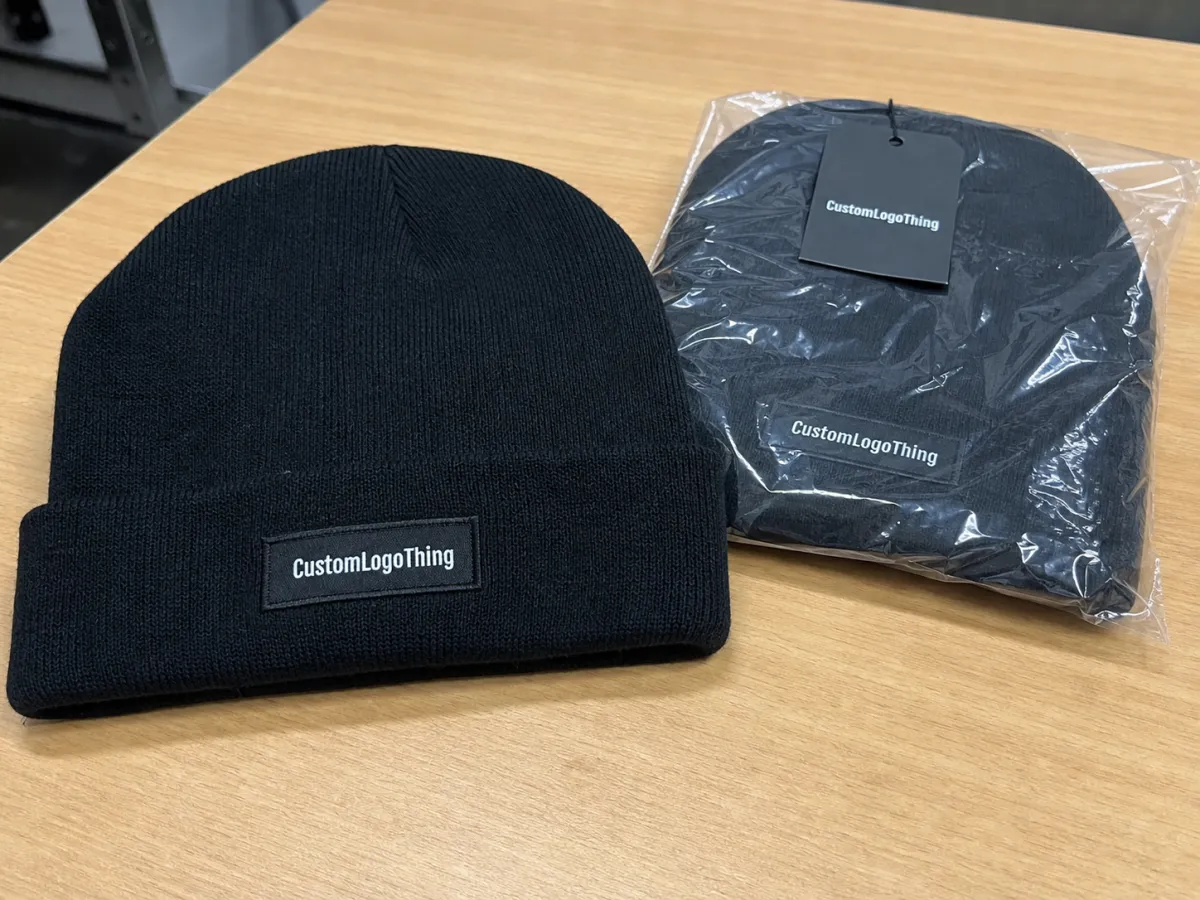
Restaurant buyers do not need another soft story about branding. They need a beanie that survives heat, sweat, locker abuse, and washing without looking tired after a month. That is why a restaurant woven label beanies Unit Cost Review should start with durability, not decoration. A woven label gives you a clean, permanent brand mark without the drama of oversized embroidery or a print that cracks when the knit stretches.
In a restaurant, beanies get treated like utility items. A manager stuffs them into a cubby. Staff toss them in with uniforms. Someone forgets one near a prep sink, and now the fabric is dealing with moisture, detergent, and repeat wear. A cheap printed tag might look fine on day one, then turn sloppy once the beanie is used hard. A woven label holds its shape longer, which matters if the same style is used across front-of-house, kitchen, and catering teams.
That is the part buyers miss. You are not just paying for a label. You are paying for consistency. A durable woven label makes the whole order feel intentional. It lowers replacement risk, protects the brand look, and avoids the awkward situation where staff uniforms start looking mismatched because half the batch has already failed.
"The cheapest uniform piece is usually the one you replace first. That is not budget control. That is busywork."
If your restaurant already buys Custom Labels & Tags for aprons, shirts, or packaging, the beanie program should follow the same logic: choose a label that holds its shape, choose a body that fits the job, and avoid specs that only make sense on a sample sheet. Buyers pay for value when the item lasts through repeated use, not when it just photographs well.
Beanie construction choices that change the final look
The body style changes both appearance and cost per piece. A cuff beanie gives you a clean front panel and a natural place for a woven label. A slouch beanie feels looser and more casual, which can work for a laid-back brunch concept or a seasonal promotion, but the label placement needs more thought. Rib-knit options hold stretch better and usually feel tighter on the head. Double-layer beanies add warmth and structure, which matters in cold kitchens or outdoor service, though they often cost more because there is more material and more sewing.
Material choice matters just as much. Acrylic is common because it is affordable, holds color well, and resists the kind of rough treatment restaurant gear gets. Cotton feels softer, but it can lose shape sooner and is less forgiving after repeated washing. Wool and wool blends bring warmth and a nicer handfeel, though they are usually pricier and can be less comfortable for staff who wear a beanie all shift. Recycled yarns can work too, but the quality varies a lot between mills. The spec needs to spell out what the yarn is and how thick the knit should be.
Placement is not cosmetic trivia. A centered cuff label reads bold and uniform-friendly. It is the obvious choice when the restaurant wants the logo to show clearly from a distance. A side-seam label feels quieter and more premium. It suits brands that want the beanie to look closer to retail merch than staff gear. Neither choice is wrong. The wrong move is pretending placement does not affect both the look and the labor involved.
Construction details also influence comfort. Stitching method, knit density, and label backing all affect how the fabric sits against the forehead and how the logo behaves when the beanie stretches. A stiff woven label on a very soft knit can pull weirdly. A light label on a dense knit can disappear visually. Small things. Big difference.
Here is the buyer reality:
- Cuff beanies are the safest pick for visible branding and repeat reorders.
- Slouch beanies work better for merch drops or relaxed hospitality brands.
- Double-layer beanies cost more, but they hold warmth and structure better.
- Rib-knit styles balance stretch and fit, especially for mixed staff sizes.
For buyers building a uniform system, beanie construction should match the rest of the program. If the jacket embroidery is sharp and the apron trim is minimal, the hat should not suddenly look like festival swag. If the order includes other branded trim, keep the thread colors and logo treatment aligned across all items.
Quality checks that keep the unit cost honest
The price only matters if the finished pieces pass a basic inspection. A low quote with poor QC is a false bargain. On Woven Label Beanies, the first thing I check is label alignment. A label that sits crooked by a few degrees will not ruin a single piece, but it makes a run look sloppy fast when every hat repeats the same mistake. Placement tolerance should be tight enough that the logo lands where the buyer approved it, not wherever the operator happened to sew.
Next comes stitch quality. The label needs secure edge stitching without puckering the knit. Too much tension and the beanie puckers around the patch. Too little and the label starts lifting at the corners after wear. Color matching matters too, especially on logos with darker threads. Small shade shifts are normal in textile production, but the supplier should be able to keep them inside an agreed tolerance.
There is also the wear test nobody wants to skip. Stretch the cuff. Check whether the label distorts. Rub the surface to see if the knit starts pilling early. If the beanie is meant for kitchen staff, wash performance matters more than showroom appearance. If it is meant for retail or guest-facing teams, the finish has to look cleaner under bright light and after folding in transit.
A practical QC checklist usually covers:
- Label placement: centered, level, and consistent across the batch.
- Stitch security: no loose threads, lifted corners, or skipped stitches.
- Color match: body color and thread colors within the approved range.
- Shape retention: cuff and crown recover after stretching.
- Surface finish: no obvious pilling, snagging, or yarn knots.
These checks are not fancy. They are the reason a program survives reorder season.
Specifications to lock before you request a quote
The fastest way to blow up a quote is to ask for “a custom beanie” and leave everything else vague. Buyers need to lock the basic spec before they talk price. That means beanie size, yarn type, label dimensions, thread colors, attachment method, and whether there is any inside branding or care information. If those pieces are not defined, the quote will be padded, because nobody wants to guess on a live order.
Artwork matters too. A woven label is not the place for a logo with tiny text and six thin lines pretending to be elegant. Vector artwork is the standard. Clean line weights help. Pantone references help even more. At small label sizes, you want a logo that still reads after the weave grid does its thing. If the mark has a slogan, the slogan often needs to go. Tiny text turns mushy fast at woven-label scale.
Durability expectations should be stated up front. Ask about wash resistance, colorfastness, stretch recovery, and how many label colors are included before the pricing changes. Most woven label programs stay economical with one to four colors. Beyond that, the cost can move faster than buyers expect. And yes, if the label is being woven to a tight artwork spec, there can be setup charges or tooling fees at the start. Those are not always huge, but they belong in the discussion before approval, not after.
Use context also changes the spec. A beanie for line staff is not the same as a beanie for retail resale or a launch kit. Retail pieces usually need a cleaner finish, better packaging, and tighter QC. Staff uniforms can often be simpler. If the order is tied to a sales push, you may also care about hang tags or insert cards, which is where FSC-certified paper can matter. The Forest Stewardship Council explains paper and packaging certification clearly at fsc.org.
- Fit: one size or graded sizing.
- Yarn: acrylic, cotton blend, wool blend, or recycled knit.
- Label: woven, patch, or sewn-in trim.
- Colors: logo thread count and knit body color.
- Packaging: bulk packed, folded, or retail-ready.
Restaurant woven label beanies unit cost review: pricing, MOQ, and quote breaks
Here is the part buyers actually want: numbers. A restaurant woven label beanies Unit Cost Review has to separate the blank beanie cost from the label and any finishing work. On small runs, the label setup is spread across fewer pieces, so the per-unit price climbs fast. On larger runs, bulk pricing starts to work in your favor. That is why MOQ matters so much. It is not an arbitrary factory rule. It is the math behind the machine time, setup charges, and labor.
For a typical custom restaurant beanie with a woven label, here is a practical range to expect:
| Order size | Typical cost per piece | Best use case | What pushes price up |
|---|---|---|---|
| 100-149 pieces | $2.80-$5.25 | Single-location test run or opening order | Higher setup share, fewer bulk breaks, more expensive packing |
| 250-499 pieces | $1.95-$3.90 | Most restaurant uniform programs | Extra colors, custom back labeling, complex placement |
| 500-1,000 pieces | $1.55-$3.10 | Multi-location orders and seasonal staff rollouts | Premium yarn, retail packaging, rush timelines |
Those ranges assume a standard acrylic or acrylic-blend body with one woven label location. If the beanie is thicker, the label is larger, or the logo has multiple colors, expect the unit cost to move up. If the order needs Custom Hang Tags, individual polybags, or retail inserts, that also adds cost. None of this is mysterious. It is just cost per piece plus labor plus the pain tax for overcomplicated artwork.
The smartest savings usually come from five places: simplify the logo, use one label location, keep the color count tight, avoid unnecessary packaging, and combine locations into one purchase. If a restaurant has three branches, buying 600 pieces once usually beats buying 200 three separate times. You get better bulk pricing, cleaner stock control, and fewer approval cycles. That is the boring answer. It is also the right one.
One more practical point: a slightly better beanie with a durable woven label often costs less over time than a bargain option that pills or loses shape. A buyer who tracks replacements can see this quickly. The first quote is not the full number. The replacement order is the real one.
Production steps, proofing, and lead time from artwork to delivery
Good orders move through a simple chain: brief, mockup, proof approval, label production, beanie assembly, quality check, packing, and dispatch. That sounds obvious because it is. Yet most delays happen when one of those steps gets fuzzy. The first proof should confirm placement, label size, thread colors, and any spelling. The second approval should confirm the final layout. If the buyer waits until bulk production to catch a logo issue, the schedule gets ugly fast.
For planning, a mockup can often be turned fast, but actual sample approval and bulk production take longer. A realistic timeline is often 12-18 business days after proof approval for standard runs, with another few days for shipping depending on method and destination. Rush work exists, but it tends to cost more and leave less room for correction. If the restaurant has an opening date or a seasonal launch, order early. Panic orders are expensive because they should be.
Shipping and pack-out matter more than people think. If beanies are going to multiple locations, carton labeling has to be clear and the pack count needs to be exact. For distribution-heavy orders, testing carton durability against handling standards is smart. The International Safe Transit Association publishes packaging test standards that help reduce damage in transit. It is not glamorous. It does keep cartons from arriving crushed.
Artwork problems are the most common slowdown. Low-resolution files, last-minute color changes, and “can we make the logo a little bigger?” requests all cost time. So do back-and-forth revisions on label placement. If the budget is tight, lock the spec first and then buy. That order of operations saves more money than hunting a lower quote after the paperwork has already started.
Why repeat buyers keep the same beanie program
Repeat buyers do not stay with the same beanie program because they are lazy. They stay because consistency is worth money. Same fit. Same logo size. Same color match. Same packaging count. That means fewer surprises when a restaurant opens a second location or needs a restock before winter. Nobody wants a new batch that looks almost right. “Almost” is how brand drift starts.
Once the spec is locked, reorders get easier. The supplier does not have to rebuild the job from scratch. The buyer can forecast unit cost with less guesswork. The order can often move faster because the layout, label dimensions, and finishing notes are already set. That is especially useful for multi-location restaurants, catering teams, and brands that rotate staff seasonally. Repeating a known-good spec is much cheaper than renegotiating every quarter like the hat is some special event item.
The best suppliers also handle small changes without forcing a full reset. Maybe a location name gets swapped on the inside label. Maybe the knit color changes for a holiday program. Maybe the order adds a different size run for outdoor staff. Those changes should be easy if the core spec is strong. If every small edit causes a new setup fee, the program is too fragile.
Operationally, the benefits are plain:
- Fewer defects because the same process gets repeated.
- Cleaner inventory planning because managers know the reorder point.
- Less time wasted chasing approvals and correcting small mistakes.
- More consistent brand presentation across every location.
That is why many buyers treat beanies the same way they treat labels and tags on other uniform pieces. Keep the program stable, keep the artwork readable, and keep the order history clean. The hat program works best when it behaves like part of the uniform system, not a side project.
What to send for a fast re-quote and clean first order
If you want a fast reply, send the full spec in one message. Not half of it. The logo file, target quantity, preferred beanie style, label placement, color references, and delivery deadline should all be in the same note. Add the use case too. Front-of-house, kitchen, catering, or resale each points toward a different balance of comfort, polish, and cost. A good supplier can quote faster when they know the job is for working staff rather than a retail shelf.
Also include the quantity you actually mean to buy, not the fantasy number someone mentioned in a meeting. Request pricing at two or three tiers so you can see the real break points. For example, ask for 100, 250, and 500 pieces. That gives you a clear view of MOQ pressure and where the bulk pricing starts to improve. If the jump from 250 to 500 only saves a few cents, you may prefer the smaller buy. If it cuts the cost per piece enough to justify inventory, the bigger run wins.
Use this sequence and the process stays manageable:
- Request the quote with a clean logo and a realistic quantity.
- Review the mockup for label size, placement, and color accuracy.
- Confirm the unit cost at multiple quantities before approval.
- Lock the proof, then release production.
For a first order, do not bury the deadline. If there is an opening date, seasonal push, or chain rollout, say it directly. A supplier can usually plan around a real deadline. They cannot infer it from a vague email thread and a half-finished spreadsheet.
Restaurant Woven Label Beanies work best when the buyer treats the beanie as a repeatable uniform asset, not a novelty. Send the spec, confirm the range, and choose the version that will still look sharp after the first hard wash.
What is the typical unit cost for restaurant woven label beanies?
Unit cost depends on blank quality, label size, color count, and total quantity. For most restaurant programs, a realistic range is about $1.55-$5.25 per piece depending on MOQ and finishing. The lower number usually shows up at higher tiers, while small runs carry a bigger share of setup charges.
What MOQ makes sense for restaurant woven label beanies?
A test run can work for one location, but the per-piece price is usually higher. For most restaurants, 250-500 pieces is the sweet spot because it balances inventory risk with bulk pricing. If you have multiple locations, combine the order so the unit cost drops.
Do woven labels hold up to restaurant washing and daily wear?
Yes, if the label is sewn correctly and the yarn quality is decent. Choose colorfast threads and a label size that fits the knit without pulling the fabric. In most failures, the stitching or poor placement causes the problem, not the woven label itself.
How long does sample and bulk production usually take?
Mockups can be quick, but sample approval and bulk production add the first real delay. Standard runs often take 12-18 business days after proof approval, plus shipping. Add extra time if you need artwork changes, custom packaging, or a hard opening date.
What do I need to send for an accurate quote?
Send a vector logo, quantity, beanie style, label placement, target colors, and delivery location. Include the intended use case so the supplier can recommend the right spec and avoid unnecessary cost. If you want a fast reply, also include your deadline and whether you need samples first.


