Need a retail Woven Label Beanies quote? That is the right first move if you want bulk knit caps to read as retail product instead of generic winter stock. A beanie can fit well, photograph well, and still feel forgettable in hand if the branding is fuzzy, oversized, or placed without thought. Buyers and end customers both notice that faster than most brands expect.
From a packaging buyer's point of view, the label is not decoration bolted on at the end. It is part of the product signal. A clean cuff, a sharp weave, and straight stitching tell a different story from a loose tab that curls after one wear. That difference matters in private label basics, gift bundles, team merchandise, and seasonal launches where the accessory has to hold its own beside more expensive items.
Woven labels also hold detail better than most low-profile decoration methods. On an item that gets stretched, folded into bags, packed into cartons, and worn in cold weather, durability is not a small advantage. It is one of the reasons woven branding keeps showing up in retail programs that need to look orderly after transit and handling.
A label that looks built into the beanie helps the price feel believable. One that looks added late can make the whole item feel cheaper than it is.
For buyers comparing decoration methods, woven labels usually win when the goal is crisp branding, a tidy retail finish, and a mark that does not fade after a few uses. Direct print can work for simple logos. Embroidered patches add texture. Rubber badges create a sportier feel. But if the product needs to look finished, woven branding remains one of the safest choices.
Why Woven Labels Make Beanies Look Retail-Ready
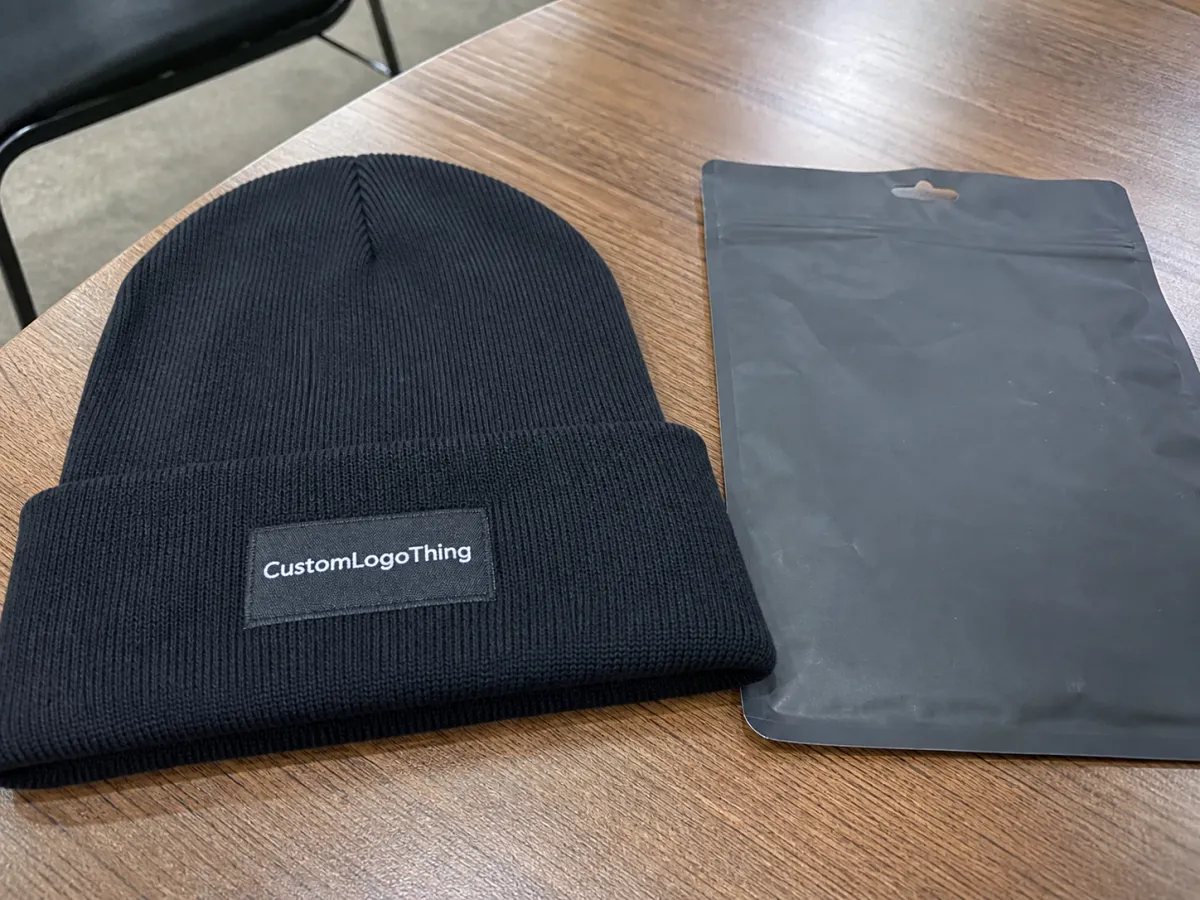
Shoppers judge a beanie from arm's length, sometimes closer. That is why texture, edge finish, and placement carry more weight than people assume. A label that sits level on the cuff changes perceived value immediately. A crooked one does the opposite. There is not much nuance there, which is precisely the point.
The shelf test is simple: does the beanie look intentional? A plain knit cap can become a retail product with a small woven label, but only if the branding is legible and the finish fits the garment. If the weave is too loose, the logo softens into noise. If the thread colors are off, the brand reads generic. If the label is oversized, it starts to look like a patch that lost the argument.
Woven labels generally outperform other methods in a few practical ways:
- Direct print is usually the cheapest for some runs, but ink sits flat on knit and can look less premium.
- Embroidered patches create dimension, though they can feel bulky on cuffed styles.
- Rubber badges are bold and sporty, but they are not always the best fit for a softer retail aesthetic.
- Woven labels preserve small type, edge definition, and logo detail without adding much bulk.
That is why a retail Woven Label Beanies quote is useful before the order is locked. It ties the decoration method to the actual beanie body, not a mockup that hides production limits. Boutique winter accessories, private-label basics, promotional programs, and gift sets often look better with woven branding because it carries structure without overwhelming the knit.
If the item is meant to sit next to apparel with strict retail expectations, woven labels help it feel finished rather than improvised. That visual consistency is worth more than many buyers budget for at the start.
Beanie Styles, Label Placements, and Finish Options
Not every beanie body behaves the same way. A cuffed rib knit gives you a stable panel for a label. A slouch style drapes differently and can distort placement if the label is too rigid. Fisherman beanies are shorter and demand tighter proportions. Oversized styles offer more room, but that does not mean the label should use all of it. Bigger is not automatically better.
The yarn matters too. Acrylic blends usually hold shape well and are common in bulk programs. Wool blends feel more premium and can support a higher retail price, but they are less forgiving when the knit is dense or springy. A label that works on one body can pucker or tilt on another if the stretch, seam allowance, or cuff height changes.
Common placement options include:
- Front cuff for the most visible retail presentation.
- Side seam when the brand mark should stay quieter.
- Back cuff for minimalist branding or licensed programs.
- Woven tab for a small, premium accent.
- Interior tag for care, origin, or secondary branding.
Finish choices matter just as much as placement. Sewn-on labels are standard for bulk. Center folds work well when the label wraps over the cuff edge. End folds make the label sit flatter on some knit structures. A merrow border can give a neat edge on certain patches, while satin backing and soft-edge construction improve hand feel where skin contact is likely.
Retail channel changes the decision too. A store shelf needs a label that reads cleanly from a distance. Ecommerce needs a beanie that photographs well under harsh light and does not flash glare on the tag. Gift packaging asks for the whole set to feel intentional, which means the label should coordinate with hang tags, tissue, or a belly band. The same beanie body can serve all three, but the branding spec should not be copied without checking the use case.
| Label Style | Best Use | Typical Cost Impact | Notes |
|---|---|---|---|
| Flat woven label | Front cuff branding | Lowest | Good for simple logos and a clean retail presentation |
| Folded woven label | Side or seam placement | Low to moderate | Works well when you want a neat edge and better structure |
| Woven tab | Minimal branding | Moderate | Small, premium feel; useful on higher-end retail programs |
| Label plus care tag | Retail compliance | Moderate to higher | Useful when you need size, fiber content, or washing instructions |
Label Specs That Affect Hand Feel and Shelf Life
The practical size range for cuff labels usually lands around 20-40 mm wide, though some retail programs go larger if the logo needs more room. Interior tags can be taller when they carry care instructions, fiber content, or sizing. Proportion matters more than raw size. A label that overwhelms a beanie makes the whole product feel miscast.
Weave density affects how much detail survives. Fine logos, tiny type, and thin strokes need a tighter weave to stay readable. That also raises production cost because the loom has to work harder to reproduce the art. If the design asks for too much detail, the label starts losing the very thing it is supposed to protect: clarity.
Color count is another real driver. 2-6 colors is common for woven labels, and that range usually gives enough contrast for retail branding without making setup painful. Once a design pushes beyond that, thread matching becomes more delicate, proofing takes longer, and unit cost climbs. If exact PMS matching matters, say so early. “Close enough” sounds harmless until the first production run lands and the colors fight the beanie body.
For longer shelf life, the useful checks are practical:
- Does the label resist fraying at the edges?
- Will the stitching hold after repeated wear and wash cycles?
- Does the yarn feel scratchy against the forehead or cuff?
- Can the artwork stay readable after folding and packing?
If your program includes paper hang tags or outer cartons, the material choice there matters too. Buyers who care about sourcing usually want a recognized benchmark, and FSC remains the easiest mainstream reference point for paper stock. For broader packaging and presentation guidance, Packaging Association resources can help frame how finish, structure, and print affect retail perception.
For shipping durability, transport standards matter more than most accessory buyers expect. If the order is moving in cartons that will be stacked, transferred, and handled several times before arrival, references such as ISTA are useful for understanding why crushed cartons, bent inserts, and scuffed labels happen in the real world. Those failures are rarely dramatic. They are usually small, cumulative, and expensive.
Retail Woven Label Beanies Quote: Cost, MOQ, and Unit Price
The main price drivers are not mysterious. They are usually the same five things: label size, color count, fold style, sewing complexity, and whether the order needs custom packaging or hang tags. If the quote separates those pieces cleanly, you can compare suppliers with some confidence. If it does not, you are comparing half-truths.
MOQ is where many buyers get surprised. Many programs start around 100-300 pieces per design, but better pricing usually opens up at 500, 1,000, and 3,000+ units. The reason is simple: setup costs, proofing, and sewing time spread over more units. A run of 200 can be perfectly workable. It just will not price like a run of 2,000.
Here is the most useful way to think about unit economics for a retail Woven Label Beanies quote:
| Order Size | Typical Pricing Behavior | Best For | Buyer Risk |
|---|---|---|---|
| 100-300 pcs | Highest per-unit cost | Small drops, pilot runs, local retail tests | Little room for error if sell-through is slow |
| 500 pcs | Moderate per-unit cost | Seasonal retail, boutique wholesale | Still need confidence in color and style mix |
| 1,000 pcs | Usually better value | Private label, regional launches | Inventory needs more planning |
| 3,000+ pcs | Lowest unit cost | Chain retail, national promotions | Higher carrying cost if demand misses |
For budgeting, a simple woven label on a standard cuffed beanie may add only a modest amount to the base product, while a more detailed label plus custom packaging can move the landed cost meaningfully. In practice, the gap between a plain bulk cap and a branded retail beanie can decide whether a line clears wholesale or sits around until markdown season.
The better pricing question is not “What is your best price?” It is “What is the full landed cost for this exact spec?” Ask for decoration, sewing, packaging, freight, and duties as separate lines. A quote that hides those pieces turns margin planning into guesswork. A quote that spells them out lets a buyer compare apples to apples.
There is a tradeoff worth saying plainly: a slightly larger MOQ can lower the unit price enough to justify the extra inventory, but only if the color, size, and seasonality support that volume. If the beanie is tied to a short winter campaign, overbuying to save a few cents can create a warehouse problem later. Cheap units are not cheap if they do not sell.
Proofs, Samples, and Turnaround: What Happens After Approval
Once the artwork arrives, the approval path is usually straightforward. First comes the art review. Then a digital proof. Then one correction round if needed. If the file is vectorized and the colors are clearly labeled, a clean proof cycle often lands in 24-48 hours. If the design is blurry or the color callouts are vague, the timeline stretches. That is not the supplier being difficult. That is the file being underprepared.
Samples are worth the wait. Woven label samples often take about 5-10 business days, depending on construction and complexity. Bulk production generally starts after the proof or sample is approved, not before. Anyone promising to skip that step entirely is either taking a risk or asking the buyer to absorb it.
A typical production sequence looks like this:
- Label weaving and cutting
- Folding or edge finishing
- Placement and sewing on the beanie
- In-line quality check
- Carton packing and dispatch
Fast programs can ship in 10-20 business days after approval. Add more time for peak season, extra colors, multiple placements, or custom packaging. If the order must clear customs or move by ocean freight, build in more cushion. Launch calendars that ignore transit time usually fail in the same predictable way: the product is ready after the moment that mattered.
One practical note: if your beanies need both branding and compliance details, decide early whether those details live on the woven label, an interior care tag, or a hang tag. Rework becomes expensive when the sewing is already approved and someone decides the contents need to change. A small wording update can force a new label run, new proof, and a new schedule.
How a Reliable Beanie Supplier Prevents Color Drift and Rework
Reliable execution shows up in boring ways, which is exactly why it matters. The approved label shade matches the repeat order. The stitching sits straight. The cuff placement stays consistent across the run. The cartons count out correctly. None of that is glamorous, and none of it is optional if the product is going into retail.
Color drift is one of the most common issues on repeat programs. It usually happens when the supplier does not save clear specs, or when the second order is treated like a new job instead of a repeat. Good documentation fixes a lot of that. Saved artwork, approved thread references, label dimensions, fold notes, and placement records reduce the odds of a rework spiral later on.
What should buyers care about? Three things:
- Responsive quoting so options can be compared before the season closes.
- Clean proofing so the artwork is correct before anything is sewn.
- Honest timelines so launch plans are built on reality, not optimism.
Quality control matters more than most people want to budget for. Pre-production checks catch the wrong thread colors. In-line inspection catches crooked placement before hundreds of units are finished. Final carton counts protect margin because missing pieces do not fix themselves later. That sounds basic because it is basic, and basic is good when the order has to sell.
For a brand buyer, the supplier's job is not just to make labels. It is to keep the branding consistent from first sample to repeat order. That consistency is what makes a retail line feel dependable instead of improvised. A beanie program can survive a lot, but it usually cannot survive sloppy repeat production.
What to Send Before You Request a Quote
If you want a useful quote, send the spec sheet. Not a vague “best price” email. Not a screenshot with the logo floating somewhere in a rectangle. The more exact the input, the less chance of surprises later. Buyers do not save time by guessing, and suppliers do not save time by interpreting guesses.
Send these basics first:
- Quantity by color or style
- Beanie body type
- Label size and placement
- Fold type or edge finish
- Artwork file in vector format, if possible
- Target delivery date
- Shipping destination
- Packaging preferences
If you already have a sample, a previous production run, or an approved spec from another supplier, include that too. It shortens proofing and cuts down on mistakes. If the order needs care labeling, size labeling, or retail hang tags, say so before the quote is issued. Those details change labor, pack-out, and landed cost.
Decide early whether every unit is identical or whether the run is split across variants. A mixed order with multiple colors or placements can still be efficient, but the quote has to reflect the actual setup. That is why a retail Woven Label Beanies quote is most useful after the spec is locked. If the order is still fluid, the number will be fluid too.
For a clean production path, the sequence is simple: finish the spec, review the proof carefully, approve the sample, then move into bulk production. That order saves money and reduces the number of late-stage corrections that tend to eat margins.
Bottom line: if the goal is a retail-ready beanie that holds up in the hand and on the shelf, the quote works best once placement, size, fold, quantity, and compliance details are settled. That is how you get pricing you can trust instead of a number that changes the moment production starts.
What affects a woven-label beanie quote the most?
Quantity is the biggest lever because setup costs spread out as the run gets larger. Label complexity comes next: more colors, larger sizes, special folds, and extra sewing steps all raise the price. Shipping, packaging, and rush timing can matter just as much as decoration if you need a true landed cost rather than a factory-only number.
What MOQ should I expect for retail beanies with woven labels?
A common starting point is 100-300 pieces per design, but the exact MOQ depends on the factory and label construction. Better pricing usually appears at 500, 1,000, and 3,000+ units because the setup cost gets diluted. If you need multiple colors, check whether the MOQ applies per color or across the total run.
How long does a custom woven-label beanie order take?
Digital proofs can move fast, often within 24-48 hours if the artwork is clean and vector-based. Samples often take 5-10 business days, and bulk production commonly runs 10-20 business days after approval. Add time for peak season, shipping distance, and any extra packaging or labeling steps.
Can I put one label design on different beanie styles?
Usually yes, but placement and label size may need to change so the branding sits cleanly on each body style. Cuffed, slouch, and fisherman beanies do not all present the same sewing surface, so one spec rarely fits all without adjustments. A quick placement mockup for each style is worth the extra time.
What files do you need to price and proof the label correctly?
Send vector artwork whenever possible, plus the exact dimensions, color references, and any text that must appear on the label. Include the beanie style, placement preference, quantity, and delivery deadline so the quote reflects the real job. If you already have a sample or previous order, include that too; it shortens proofing and reduces mistakes.


