Logo Patches Supplier Quote for Book Merch Brands: Pricing, Specs, and Production Checks
Request a Logo Patches Supplier Quote for book merch brands with clear MOQ, materials, sample timing, backing choices, and pricing that avoids surprise charges on small runs.
Book merch does not wait politely for a slow sourcing desk. A Logo Patches Supplier Quote for book merch brands needs to arrive quickly, with the right numbers attached, because a preorder campaign, author signing, subscription box, or limited retail bundle can lose useful selling time in a few days.
Patches occupy a practical middle ground. They have more dimension than a flat print, require less commitment than building a full apparel line, and can move across caps, totes, jackets, pouches, reader gifts, and premium packaging inserts. The risk sits in the quote. A loose “about $1 each” estimate can turn a low-risk merch idea into a margin problem once sampling, backing, freight, and packing are added.
Why Book Merch Drops Need Faster Patch Quotes
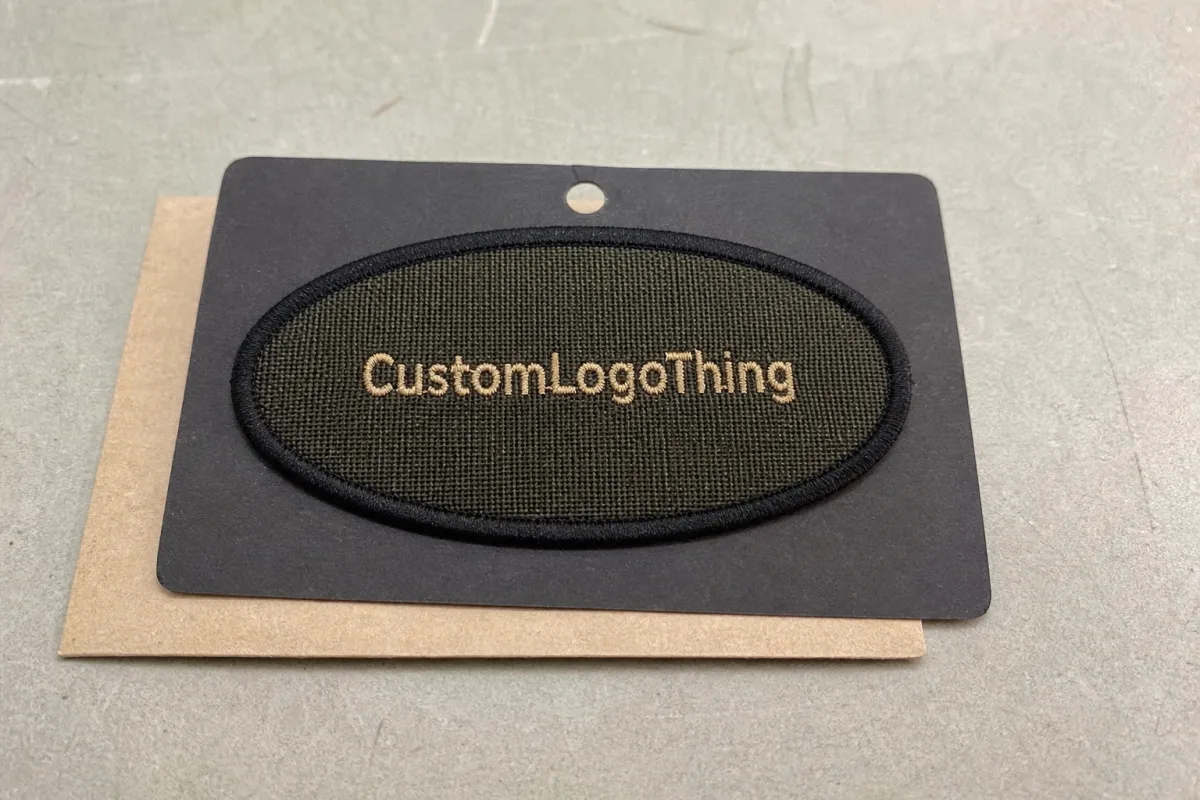
Book launches work on compressed selling windows. A traditional apparel brand may test one design across a season, then reorder by colorway. A book merch team often has a narrower job: match a publication date, support a store exclusive, fill a subscription box slot, or prepare inventory for a signing weekend. If quoting takes a week and the proof cycle takes another week, the campaign has already lost momentum.
That pressure explains the appeal of patches. A 2.5-inch woven patch on a canvas tote can give a title, author mark, imprint logo, or fictional-world emblem a retail finish without requiring custom fabric, new bag construction, or complex garment decoration. On hats, a merrowed-edge embroidered patch often reads better than direct embroidery when the artwork has small lettering or a shaped badge. On denim jackets, chenille or embroidered patches can turn a basic garment into tour merch with higher perceived value.
The quote should not be a single number dropped into an email. It should function as a buying document. It needs quantity breaks, material assumptions, backing type, sample timing, production timing, packing method, and freight terms. A merch manager comparing three suppliers should be able to see whether a $1.42 patch includes heat-seal backing, whether the sample fee is credited to bulk production, and whether the MOQ changes if the patch moves from embroidered to woven.
Practical rule: if the quote cannot explain why 500 pieces cost more per unit than 2,000 pieces, it is not ready for approval.
Custom Logo Things supports buyers who need that level of quote clarity: artwork requirements, realistic lead times, and options that match the sales plan rather than a generic catalog item.
Patch Formats That Fit Author Merch, Retail Bundles, and Inserts
Patch format controls appearance, cost, and readability. It also decides whether a mark stays legible at 1.75 inches or turns into thread noise. That matters for book merch, where logos often include fine typography, illustrated symbols, tiny stars, crests, character icons, or publisher marks.
| Patch Type | Best Use Case | Typical Strength | Buyer Watch-Out |
|---|---|---|---|
| Embroidered patch | Caps, denim jackets, canvas totes, author tour apparel | Textured, familiar, premium feel | Very small lettering may fill in; dense stitch areas can raise cost |
| Woven patch | Book club badges, small logos, detailed artwork, sleeve marks | Sharper detail than embroidery | Flatter hand feel; less raised texture |
| PVC patch | Outdoor-themed merch, bags, reusable kits, genre boxes | Durable, washable, bold color blocks | Custom molds can increase MOQ and setup cost |
| Chenille patch | Varsity-style author merch, collector jackets, larger initials | High-impact fuzzy texture | Not ideal for small details or thin type |
| Printed patch | Illustrated inserts, art-heavy designs, short-run campaigns | Handles gradients and complex art | Lower tactile value than stitched options |
Embroidered patches usually win for classic merch because customers understand the value instantly. A 3-inch embroidered badge on a tote feels more permanent than a screen print placed in the same corner. Woven patches work better for small author logos, series icons, and designs with thin lines. PVC patches suit darker, bolder, utility-driven merch, especially if the item will be handled heavily.
Placement changes the decision. A hat-front patch may need a compact shape, often between 2 and 2.75 inches wide. A tote corner can accept 2.5 to 3.5 inches, depending on seam position and pocket layout. A sleeve mark may need to stay under 2 inches so it does not look like a uniform badge. Flat packaging applications, such as an adhesive patch on a belly band or collector card, need strong contrast and a backing that will not curl during packing.
One common mistake: choosing the patch style before confirming viewing distance. A patch meant to sell in a product photo needs bolder contrast than one handled up close at a signing table. That single decision can shift the supplier recommendation from embroidered to woven, or from woven to printed.
Materials, Backings, and Stitch Specs Buyers Should Confirm
A strong Logo Patches Supplier Quote for book merch brands starts with specifications, not decoration language. “Premium patch” means little unless the quote identifies size, edge, thread or print method, backing, and intended use.
Send the finished patch size in inches, not just a logo file. A 2-inch patch and a 3.5-inch patch can use the same artwork but price very differently because stitch count, base fabric, edge length, and packing weight all change. Confirm whether the edge is merrowed, heat-cut, laser-cut, or satin-stitched. Merrowed borders are common for round, oval, square, and shield shapes. Heat-cut or laser-cut edges are cleaner for irregular shapes and internal angles.
- Size: common merch sizes range from 1.5 to 4 inches, with 2.5 to 3 inches working for many totes and jackets.
- Border: merrowed for classic raised edges; heat-cut or laser-cut for complex silhouettes.
- Thread or print method: embroidery for texture, woven for detail, printed for gradients or artwork-heavy designs.
- Attachment: sew-on, iron-on, Velcro, adhesive, or combination backing.
- Packing: bulk packed, individually polybagged, carded, or packed by SKU for fulfillment.
Backing choice should follow the product. Sew-on is the most durable choice for jackets, bags, and items expected to survive repeated wear. Iron-on is useful for simple application on cotton and cotton-blend fabrics, though heat settings and fabric compatibility need confirmation. Velcro works for reusable kits, tactical-style bags, and collector systems where the patch may be swapped. Adhesive backing is better for short-run packaging, display cards, inserts, or temporary use; it should not be sold as a permanent apparel solution.
There is also a packaging angle. If a patch is being inserted into a book box, individual packaging may matter more than wash durability. If it is attached to a tote before fulfillment, application consistency matters more than retail carding. If paper-based display cards are part of the plan, ask about FSC-certified stock options and sourcing claims that can be documented; the Forest Stewardship Council is the reference many buyers recognize for responsible fiber sourcing.
For stitched goods, buyers should also ask how the supplier handles tolerance. Slight variation is normal in textile production, especially along borders and curved shapes. The problem is not variation itself; the problem is a quote that never defines what is acceptable. For many patch projects, buyers should confirm acceptable size tolerance, thread color variance, border alignment, and the inspection method before production begins.
Logo Patches Supplier Quote for Book Merch Brands: Pricing, MOQ, and Unit Cost
A useful logo patches supplier quote for book merch brands separates four cost buckets: setup, sample, unit price, and freight. If those lines are blended, the buyer cannot compare suppliers cleanly. One quote may look cheaper because freight is missing. Another may hide a mold charge. Another may price the bulk run but leave the pre-production sample as “TBD.” That is how small campaigns lose margin.
For a basic 2.5-inch embroidered patch, many small to mid-volume orders may land around $0.80 to $1.80 per unit at 1,000 to 3,000 pieces, depending on stitch coverage, thread colors, edge type, and backing. Woven patches may run in a similar or slightly lower band for detailed flat designs. Printed patches can be cost-efficient for art-heavy campaigns, sometimes around $0.55 to $1.35 per unit at moderate quantities. PVC and chenille can rise higher, especially if custom molds, layered effects, or larger sizes are involved.
These are working ranges, not guarantees. Quotes depend on artwork, finish, size, packing, and destination. A 4-inch chenille letter patch is not competing with a 1.75-inch woven sleeve patch. They are different products.
| Quantity | Typical Buyer Scenario | Expected Pricing Behavior | Quote Detail to Check |
|---|---|---|---|
| 100-300 pcs | Author signing, test drop, niche book club | Higher unit cost because setup is spread across fewer units | Sample fee, rush fee, minimum charge |
| 500-1,000 pcs | Subscription box, indie store exclusive, preorder gift | Better unit cost; still sensitive to backing and packing | Quantity break at 1,000 pcs and freight method |
| 2,000-5,000 pcs | Retail bundle, convention drop, online store release | Unit cost usually improves if specs are stable | Carton count, lead time, reorder pricing |
| 10,000+ pcs | Large campaign, multi-retailer program, national fulfillment | Best economies, but stricter QC and packing plans required | AQL checks, carton labeling, delivery split |
MOQ varies by type. Woven and printed patches can often support lower minimums because setup is less burdensome than custom molded PVC or complex chenille. Dense embroidery may need higher minimums if the stitch file is complex or production time per patch is high. A serious quote should show pricing at several breaks, such as 300, 500, 1,000, 2,500, and 5,000 units.
The best quote also shows what happens if the campaign scales. If a preorder gift begins at 500 units but may become a 3,000-unit store release, ask for both prices before launch. That protects the buyer from approving a design that only works financially at the small quantity. It also gives the supplier a clearer production path if the reorder lands quickly.
For campaign planning, Custom Logo Things can quote sample, bulk, and reorder scenarios together. If the spec is ready, send the file through Contact Us and ask for quantity breaks instead of a single price.
Sampling, Process, and Production Timeline
The production clock does not start when someone says, “Looks good.” It starts when the supplier has final artwork, size, quantity, backing, packing instructions, and written approval of the proof. That distinction matters.
A typical workflow looks like this:
- Inquiry review: supplier checks artwork, dimensions, patch type, quantity, and deadline; often 1 business day if the request is complete.
- Digital proof: layout shows size, colors, border, and backing; often 1-3 business days.
- Physical sample: stitched, woven, printed, or molded sample is made for approval; often 5-10 business days, longer for molded PVC or chenille.
- Bulk production: mass production after sample approval; often 10-20 business days depending on volume and complexity.
- Packing and shipping: bulk pack, individual pack, carton label, or fulfillment prep; time depends on freight method and destination.
Rush work is possible in some cases, but it has limits. Vector artwork can save a day. A Pantone reference can reduce color debate. A final quantity avoids requoting. One decision maker speeds approval more than any production trick. Six people commenting on thread color can erase a week.
Color matching deserves a sober view. Thread, woven yarn, PVC compound, and printed ink do not behave the same way. A deep foil-like metallic mark from a book cover may need to be translated into a flat thread color or simulated with metallic embroidery thread. The result may be attractive, but it will not always match the book cover effect exactly. Better to resolve that during proofing than during bulk inspection.
Inspection should be discussed before the order reaches production. For small runs, buyers may rely on sample approval and production photos. For larger programs, especially those feeding retail bundles or subscription fulfillment, ask how defects are sorted and how cartons are labeled. Useful checks include patch count per carton, random pulls for border consistency, backing adhesion checks for iron-on or adhesive patches, and a comparison against the approved sample.
If patches are being packed with books or shipped through fulfillment networks, ask about carton strength, labeling, and handling. For distribution testing concepts, the International Safe Transit Association is a useful reference point, especially for packaged goods moving through parcel and mixed-load systems.
What a Reliable Supplier Should Prove Before You Order
A reliable supplier proves the quote with evidence. Not charm. Not a gallery of unrelated samples. Evidence means spec sheets, consistent photos, clear tolerances, and a willingness to quote the same job twice without changing the commercial terms unless the spec changed.
For book merch brands, narrow margins make communication unusually valuable. A $0.22 difference per patch may sound small, but on 5,000 units it is $1,100 before freight. Add individual carding at $0.08 to $0.18 per unit, then split shipping by SKU, and the budget changes again. The supplier should explain these tradeoffs before the buyer approves the sample.
Ask for these trust signals before placing the order:
- Repeatable color matching: thread charts, Pantone approximations, or material color references.
- Tolerance control: size tolerance, border consistency, and acceptable variation for stitched goods.
- Photo sample quality: front, back, edge, and close-up shots under neutral lighting.
- Packing options: bulk, individual bag, retail card, barcode label, or carton sort by title/SKU.
- Reorder file control: saved artwork, stitch file, mold file, or print file for future runs.
A quote should also make reorders easier. If the first run sells out after a convention or subscription box reveal, the buyer should not need to rebuild the file. Reorder pricing may differ if quantity changes, but the design file, material assumptions, and backing should remain documented.
Custom Logo Things shows related production examples through its Case Studies, which can help buyers think through use cases before locking the spec. The point is not to copy another project. It is to understand how size, backing, and packing choices affect the final buying decision.
Ordering Mistakes That Raise Patch Cost and Delay Approval
Most patch delays are not mysterious. They come from preventable changes: revising the size after pricing, sending a low-resolution JPG, asking for multiple color swaps after the proof, delaying the backing decision, or requesting individual packaging after the unit price is approved.
Size changes are especially expensive because they alter stitch count, edge length, base material yield, packing volume, and sometimes the readability of the design. A 2-inch patch enlarged to 3 inches is not a small adjustment; area increases dramatically. The quote should be recalculated.
Low-resolution art creates another problem. A supplier can sometimes redraw simple artwork, but redraw time may cost $25 to $100 or more depending on complexity. More importantly, someone must approve the interpretation. If the author’s crest, fictional insignia, or publisher mark has legal or brand rules attached, guessing is risky.
Unclear quantities distort everything. A buyer may say, “We need around 800,” while internally planning 300 for a first drop, 250 for a bookstore exclusive, and 250 for a convention restock. Those may need different packing, delivery dates, and labels. One unit price cannot cover every distribution plan unless the supplier knows the split.
Another mistake is forcing one patch to serve every product. A jacket patch needs durability and a comfortable edge. A tote patch needs strong attachment and abrasion resistance. A flat insert patch may need adhesive backing and clean presentation more than wash performance. One design can become two or three specifications. That is not overcomplication; it is proper merchandising.
If your team is comparing suppliers, ask each one to quote the same locked spec. Same size. Same backing. Same quantity. Same packing. A logo patches supplier quote for book merch brands only becomes meaningful when every bidder is pricing the same object.
Next Steps for a Faster, More Accurate Quote
The fastest quote request is boring in the best way. It has no missing pieces. Send the logo file, finished size, preferred patch type, backing choice, target quantity, deadline, and exact use case. If the patch will go on a tote, say tote. If it will be inserted into a hardcover collector box, say insert. If it must survive garment washing, say that too.
For artwork, vector files are best: AI, EPS, or editable PDF. High-resolution PNG can help for reference, but it should not be the only production file if the design has small type or brand-critical shapes. Include color references if available. Pantone numbers are useful, though buyers should remember that thread and PVC may only approximate certain colors.
Ask the supplier to separate:
- Sample pricing: physical sample cost, digital proof cost if any, and whether fees are credited to bulk.
- Bulk pricing: unit prices at practical quantity breaks, with backing and packing included or excluded clearly.
- Reorder pricing: expected cost if the same artwork is ordered again at 500, 1,000, or 3,000 units.
- Freight: estimated shipping method, carton count if known, and duties or import charges if applicable.
Then lock the specification before requesting a revised quote. Confirm proof approval, production start date, and delivery window in writing. The process sounds procedural because it is. Good merchandise operations run on written details, not memory.
For a faster response from Custom Logo Things, prepare your artwork and specs, then send the request through Contact Us. Include the patch type, size, backing, quantity breaks, packing needs, and deadline in the first message so the quote can be priced against the real job.
Frequently Asked Questions
What should a logo patch supplier quote for book merch brands include?
It should show patch size, material, backing, quantity breaks, setup fees, sample fees, and production timing. It should also separate shipping from unit cost so the buyer can compare suppliers cleanly. A good logo patches supplier quote for book merch brands notes any limits on stitch detail, color matching, backing choice, or approval timing before production starts.
What MOQ is typical for book merch patch orders?
MOQ depends on patch type. Some woven or printed patch jobs can start lower than dense embroidered, chenille, or molded PVC styles because setup demands are different. Higher detail, custom finishes, and special packing usually increase the minimum. Ask for quantity breaks at 300, 500, 1,000, 2,500, and 5,000 units so you can see where the unit price improves.
Which patch backing works best for merch items sold with books?
Sew-on is the safest choice for long-wear apparel and bags. Iron-on can work for compatible fabrics and simple application, although heat settings should be checked before bulk use. Adhesive or Velcro backings are better for temporary packaging, display, collector cards, or reusable merch kits where permanent garment attachment is not the goal.
How long does the quote and production process usually take?
A digital proof is often the fastest step if the artwork and specs are complete, usually within 1-3 business days. Physical sampling may take 5-10 business days for many stitched or woven patches, with longer timing for molded or specialty formats. Bulk production often runs 10-20 business days after approval, depending on quantity, complexity, and packing.
How can I get a more accurate custom patch quote on the first request?
Send vector artwork, final dimensions, preferred patch type, target quantity, backing choice, and deadline. Include the merch use case so the supplier can recommend the right durability level and attachment method. State whether you need a sample, rush timing, individual packing, or reorder pricing. That is the cleanest path to a quote that holds up after review.


