Skincare brands Kraft Paper Bags small batch order runs look simple until you try to spec them properly. Then every little choice starts mattering: handle type, paper weight, gusset depth, logo placement, and whether the bag is carrying one cream jar or a whole launch kit. That is the difference between packaging that works and packaging that just exists.
The appeal is straightforward. Kraft bags give a skincare brand a presentable, lower-risk format for launches, seasonal sets, sampling programs, and boutique retail. They are easier to test than full carton programs, less expensive to rework, and less annoying to reorder when the line changes. For smaller brands, that flexibility is not a bonus. It is the whole point.
Why small-batch kraft bags can outperform glossy cartons
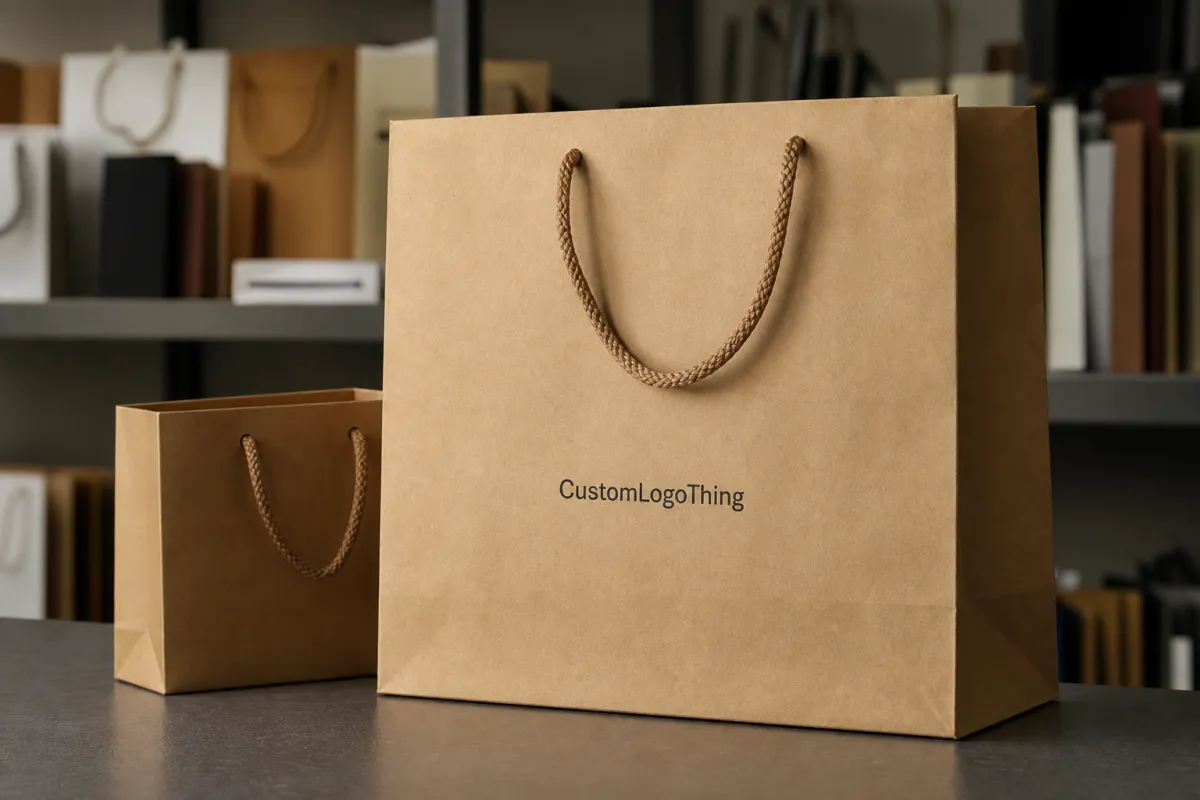
Glossy packaging gets attention. Kraft gets trust. That sounds too neat, but it keeps showing up in buyer behavior. A clean kraft bag with a restrained print often reads as more intentional than a crowded carton with too many finishes fighting for space. The bag does not need to shout. It needs to make the product feel cared for.
That matters especially for newer skincare lines. A launch run usually has more uncertainty than the spreadsheet admits. You may still be testing size variants, bundling options, or shelf placement. A small batch kraft bag order lets you move without committing to a giant quantity of custom cartons that only fit one exact version of the line. If the hero product changes from a 30ml jar to a 50ml jar, the bag can often adapt. A rigid carton usually cannot.
There is also a practical side buyers do not talk about enough. Kraft bags are faster to pack, easier to display at a counter, and less likely to look overdesigned when the brand is still proving itself. A polished one-color logo on good kraft stock can look more credible than a flashy print job that tries too hard. That is not a theory. It is what happens when the package matches the stage of the brand.
Good packaging rarely wins because it is loud. It wins because it is proportionate. The customer should feel that the product inside was handled with restraint and care, not that the budget was spent making the bag feel expensive.
One thing to watch: kraft is honest material. It exposes weak artwork fast. Thin lines, muddy gradients, and badly chosen contrast all look worse on brown stock than they do on a white mockup. That is useful. It forces discipline.
Bag styles that fit creams, serums, masks, and minis
Not every skincare item belongs in the same bag format. A sample set, a two-piece bundle, and a premium holiday kit each put different demands on the structure. If the bag style is off, the whole pack looks improvised.
Flat-handle kraft bags are usually the most economical choice. They work for lightweight bundles, minis, and sample packs where the product load is modest. Twisted-handle bags are the workhorse option for retail use because they hold up better and usually look cleaner in repeated handling. Rope-handle bags cost more, but they can make sense for gift sets or premium launches where the handfeel is part of the sale. Side-gusset formats help when the contents are tall and narrow, like a bottle plus insert card or a pair of jars that need extra width without looking bloated.
For skincare, footprint matters more than people expect. A single glass dropper bottle can be easy to underestimate because it is light, but it still needs bottom support and enough depth to sit squarely in the bag. A cream jar with a spatula, tissue wrap, and an insert card may need a wider gusset than the jar size suggests. If you are bundling multiple items, add the real packed dimensions, not the product dimensions on the box.
| Bag style | Best use | Typical look | Cost impact |
|---|---|---|---|
| Flat-handle kraft | Samples, minis, light bundles | Simple, practical | Lowest |
| Twisted-handle kraft | Retail sets, everyday carry | Clean and sturdy | Moderate |
| Rope-handle kraft | Gift sets, premium launches | More polished | Higher |
| Side-gusset kraft | Tall or narrow products | Compact, structured | Moderate |
Print choice should match the bag style instead of competing with it. One-color logos are usually the safest and most efficient route for a small batch run. Two-color work can still look sharp if the artwork is disciplined. Full-bleed graphics are possible, but they need a strong brand system or they start to look busy on kraft. Foil can work too, though it should earn its place. If the order is meant to support a launch run, not act like a luxury gift box, the finish should stay restrained.
Useful add-ons should stay functional. Tissue paper reduces the bare-pack feel. Sticker seals keep the opening neat. Insert cards explain ingredients or usage steps. QR cards can point buyers to routines, refill notes, or a short product guide. That sort of detail matters more than decorative extras that add cost without improving the customer experience.
Size, paper, and print specs to confirm before quoting
The fastest way to create waste is to guess at the size. Measure the packed product, not just the product. Include the box, insert, tissue, or protective wrap. A 50ml jar sounds small until it sits inside a folded kit with a card and suddenly needs more width than expected. Small batch orders do not forgive bad sizing. There is no volume cushion to hide a mistake.
Paper weight should follow the load. That sounds obvious, but it gets ignored constantly. For light sample packs and minis, kraft stock in the 120gsm to 140gsm range can be enough. For heavier retail bundles, 150gsm to 170gsm is a safer starting point, and some jobs need reinforced bases or stronger handles rather than just thicker sheet stock. If the bag is meant to carry glass, stacked jars, or multiple products, check the load path at the handle attachment and bottom fold. Those are the failure points that matter.
Ask whether the paper is FSC certified if the brand wants documented sourcing. FSC is not just a label for the deck. It tells you the chain of custody and paper sourcing are traceable under a real standard. For brands that care about recycled content or sourcing claims, that documentation matters. You can reference the framework directly through FSC.
Moisture and surface treatment are worth asking about too. Some skincare packaging lives near sinks, testers, or refrigerated displays. Kraft paper does not need to be coated for every use case, but if the bag is going to face humidity, oil contact, or cold condensation, a protective finish can keep it from looking tired before the product even leaves the store. A clean matte coating or light lining may be the difference between a bag that holds up and one that wrinkles on arrival.
Artwork prep needs to be clean before quoting. Send vector files, confirmed dimensions, and color references if exact matching matters. Include bleed and safe zones. Thin-line logos can look elegant on screen and disappear on kraft if the print method is too coarse. That is not the supplier being difficult. That is the material speaking back.
Print registration is another small detail with a big effect. If the logo sits too close to the fold, it can distort when the bag is filled. If a multi-color mark is not aligned tightly, it looks sloppy even when the artwork itself is fine. Ask for a proof that shows the final print area, not a vague mockup pasted onto a stock photo.
If the supplier offers transit testing or load checks, ask what they actually test. Packaging standards groups such as ISTA focus on real-world shipping abuse, and that mindset is useful even for hand-carried bags. The question is simple: will the bag survive normal use without looking soft, warped, or cheap?
Pricing, MOQ, and unit cost for limited runs
Pricing on a small batch kraft bag order is driven by a few variables, and none of them are mysterious: quantity, size, handle type, paper weight, print colors, and finish. Once you add embossing, foil, lamination, or unusual construction, the price climbs quickly. That is not a problem by itself. The problem is pretending every upgrade is necessary for launch.
For standard custom-printed kraft bags, MOQs often start around 500 to 1,000 pieces. Some suppliers can go lower if the size is standard and the print is simple, but once you ask for custom dimensions or unusual finishing, the minimum usually rises. For skincare brands Kraft Paper Bags small batch order runs, the best pricing usually comes from staying close to standard structures and avoiding decorative extras that do not help the pack function.
Unit cost is where people get lulled into bad decisions. A small run may sit around $0.45 to $1.20 per bag depending on size and decoration. Larger quantities can reduce that number sharply. Still, a slightly higher unit cost on a clean, usable bag is often better than a cheaper price for a design that fails the launch. Overly fancy packaging is a common way to burn margin before the product has earned it.
Ask for the full math, not just the headline rate:
- Setup charge: print prep, plates, tooling, or dieline work
- Sample cost: digital proof or physical pre-production sample
- Unit price: bag cost at the requested quantity
- Freight: shipping to your warehouse or fulfillment point
- Add-ons: inserts, tissue, stickers, custom packing, split shipments
Those extra line items are where budgets get distorted. The quoted bag price may look fine, then freight lands, then the proof takes longer than expected, then the launch shifts and forces a split delivery. That is how a simple packaging project starts behaving like a distraction. Ask for itemized pricing upfront. It is not glamorous. It works.
Also check whether the MOQ is tied to your exact spec or to a standard size that already exists. A quote can look friendly until the supplier quietly swaps in a different handle, a different stock weight, or a less precise print method. That is where small-batch buyers get surprised. Not by the number. By the details hiding behind the number.
Production steps, approvals, and lead time
The normal sequence is boring, and that is a good sign: inquiry, quote, mockup, proof, production, quality check, packing, shipping. Each step removes a little risk. Skip one and the job gets shaky fast.
For a small order, quoting and proofing may take a few days if the spec is clear. Production often lands in the one-to-three-week range after final approval. Add time if the job needs new tooling, custom colors, special finishes, or a revised dieline. Rush service can happen on simple specs, but if someone promises an ultra-fast turnaround on a complicated setup, they are either guessing or hoping nobody asks questions later.
Final approval should cover the things that actually break orders: dimensions, print version, color reference, handle spec, carton pack-out, and sample alignment. Carton pack-out sounds boring because it is boring. It also matters because it affects how the bags survive transit. A neat bag crushed in a loose master carton is still a failed order.
Sampling deserves a real review, not a quick glance. Digital mockups are helpful for layout. They are not enough for texture, color on kraft, or structural feel. Physical samples show whether the handle sits right, whether the bag holds its shape when loaded, and whether the artwork remains clear once the paper absorbs ink. That is usually the moment buyers realize the launch version needs one more correction.
Sustainability claims should be documented instead of implied. If the stock is recycled, ask for the percentage and the source. If the paper is FSC certified, ask for the documentation. If a supplier talks about eco-friendly materials but cannot explain the paper or the print method, treat that as a warning sign. EPA recycling guidance is a useful reference point for keeping those claims grounded: EPA recycling resources.
Lead time also includes response time, and that part gets ignored. A supplier that answers clearly on file format, proofing, and revision limits is usually easier to work with on reorders. A supplier that stays vague at the quote stage tends to stay vague after deposit too. Funny how that pattern repeats.
What to compare when choosing a packaging supplier
Start with samples. Real samples. Not a polished mockup with perfect lighting. Look at print registration, color consistency on kraft, handle attachment, and whether the bag sits flat when loaded. If the sample looks weak before production, the final order will not magically fix itself.
Repeat-order consistency is a big deal for skincare brands. Most lines do not stay static. They launch with one kit, then add a serum bundle, then a seasonal set, then a refill pack. If the supplier cannot match a reorder closely, the brand ends up with mismatched inventory and shelf inconsistency. That is the kind of mess that annoys retail buyers for months.
File support matters more than people expect. The best suppliers tell you which artwork details are risky on kraft, where the bleed should sit, and whether the logo needs simplification to print cleanly. They should also be able to tell you whether the standard size is worth using as-is or whether a custom dieline is justified. Clear answers save money. Vague answers create rework.
| What to compare | Good sign | Red flag |
|---|---|---|
| Sample quality | Clean print, strong handles, true sizing | Blurry logo, weak structure, warped base |
| Repeat orders | Consistent color and dimensions | Every reorder looks different |
| Artwork support | Clear proof notes and file checklist | Unclear instructions and surprise charges |
| Sourcing claims | Documented FSC or recycled stock details | Green claims with no proof |
The cheapest quote is not a win if the bags arrive late, look off-color, or need a reprint. That kind of savings disappears fast. A supplier that handles small batch work with discipline is worth more than one that only looks cheap on the first page of the estimate.
Also pay attention to how the supplier talks about constraints. A serious packaging partner will tell you when a desired print effect is unrealistic on kraft, when the paper weight is too light for the contents, or when the order quantity is too low for a certain finish. That honesty saves time and usually saves the launch.
Common mistakes that drive up cost or delay delivery
The first mistake is locking artwork before the bag dimensions are final. That is how logos end up too high, too low, or partly swallowed by the fold. It sounds basic because it is basic. Yet it still happens, and small batch orders make the error more expensive because there is less volume to absorb the loss.
The second mistake is asking for every finish at once. Foil, embossing, soft-touch lamination, metallic ink, and multi-pass printing all sound attractive in a presentation. They are much harder to justify on launch stock. A better approach is to get the structure and branding right first, then add upgrades later if the product proves the need. Let sales decide, not mood boards.
The third mistake is ignoring load and exposure. A single mini set does not need the same bag as a bundle with two jars and a bottle. If the package will be handled near damp counters, testers, or cold display cases, the surface finish matters. If the product includes glass, the bottom and handle points matter even more. A bag that looks fine empty can fail once it is actually used.
The fourth mistake is treating launch packaging like it will never repeat. That is a bad habit. Build for reorder from day one. Choose dimensions and print placement that can survive a second batch, a holiday version, or a name change. Leave enough room in the design system that the bag still works when the assortment grows.
The fifth mistake is vague communication. “Small batch” is not a specification. Neither is “premium look.” Give the supplier the actual size, packed weight, print method, and timeline. Otherwise you get a quote for someone else’s idea of your packaging, which is a great way to waste a week.
The simple buyer rule is still the best one: keep the bag simple enough to reorder, strong enough to carry the product, and branded enough to look deliberate. That combination usually beats the louder option. It also tends to survive the real world.
Next steps to place the order without surprises
Start with three inputs: final bag size, quantity target, and artwork files. If the size is still undecided, measure the packed product first. If the artwork is rough, convert the logo to vector format before asking for pricing. A supplier can quote faster and cleaner when the basics are fixed, and skincare brands Kraft Paper Bags small batch order planning gets easier the moment everyone is working from the same sheet.
Then ask for a quote that breaks down the actual numbers: unit price, setup charges, sample cost, freight, and any add-ons. Check whether the MOQ applies to the exact spec or only to a standard size. That distinction is easy to miss and expensive to ignore. A quote can look fine until the paper weight changes or the handle style gets downgraded to make the minimum work.
Approve a mockup or physical sample before production. For a new skincare line, that sample is the last chance to correct scale, color density, and structure before the full order is printed. It is not an extra. It is the cheapest place to catch a problem.
Practical order checklist:
- Confirm size from the packed product footprint
- Choose handle type and paper weight
- Send vector artwork with color references
- Request proofing and lead time in writing
- Check freight, carton pack-out, and reorder terms
Once those pieces are locked, the order stops being abstract. You know what is being made, how it will look, what it will cost, and when it should arrive. That is enough. For a launch run, the smart packaging choice is the one that supports the product, protects margin, and can be ordered again without drama.
If you are placing a skincare brands Kraft Paper Bags small batch order, the best version is the one you can repeat. Not the fantasy version that only works in a mockup.
What is the usual MOQ for skincare brands kraft paper bags?
Standard custom printed runs usually start around 500 to 1,000 pieces, while some stock sizes can go lower if the print and construction stay simple. MOQ depends on size, handle type, finish, and whether the supplier already has a base structure that fits your spec.
Can I order kraft paper bags for a small skincare launch without full-color printing?
Yes. One-color or two-color printing is often the better move for a small launch because it keeps setup simpler and the result usually looks cleaner on kraft. A restrained logo and good spacing can look more premium than a crowded full-color layout.
Which specs work best for serum bottles, jars, and skincare kits?
Choose the bag size from the packed footprint, then confirm gusset depth and bottom support for heavier jars or mixed bundles. If the contents include glass or multiple items, ask for a sturdier paper weight and a handle style rated for the load.
How long does a small batch order usually take?
A typical small batch takes a few days for quoting and proofing, then about 1 to 3 weeks for production after final approval. Custom colors, artwork revisions, and special finishes are the most common reasons lead times stretch.
What do you need from me to quote custom skincare paper bags?
Send the target size, quantity, print colors, handle preference, and artwork files in vector format. Include your delivery location and launch date so the quote covers realistic freight and timing rather than guesswork.


