A skincare launch can run on tight timing, and a cap only helps if it arrives in the right quantity, with the right embroidery, before the campaign window closes. That is why skincare embroidered baseball caps Bulk Order Planning should be treated like any other production item: define the spec, price it on landed cost, and lock the schedule before approvals start to drift.
From a buyer’s point of view, caps are useful because they are wearable, visible, and easy to warehouse. They also expose weak planning fast. If the artwork is too detailed, the MOQ is too high, or the delivery date is vague, the order becomes expensive before production even starts. The most reliable programs are the ones that decide quantity, decoration, and packaging early.
For skincare brands, the cap is usually doing more than one job. It may support retail staff, event teams, creator kits, or clinic partners. The spec should therefore reflect where it will be worn, how often it will be photographed, and whether it needs to stay consistent for future reorders.
Why skincare embroidered baseball caps bulk order planning matters for skincare launches
A cap has more staying power than most promo items. An insert is read once. A sample card may be tossed. A hat can be worn repeatedly, so one purchase can keep showing up in stores, on commutes, and in content. That makes skincare embroidered baseball caps Bulk Order Planning worth the same discipline as cartons and inserts.
Common use cases are straightforward:
- Retail teams: a single cap style can create a consistent staff look without sizing complexity.
- Event kits: caps add perceived value without adding much carton weight.
- Influencer mailers: a wearable item extends the campaign visually.
- Reorders: a locked spec can be repeated with minimal setup changes.
The main planning risk is inventory mismatch. Order too many caps and the extras sit. Order too few and you pay for a rush reorder, sample revisions, or duplicate setup. For launch work, the safer quantity is often tied to confirmed recipients, then padded for damage, size swaps, and media requests.
“A visible brand surface should be managed like a production asset, not an afterthought.”
That is the simplest way to think about the purchase. Decide who needs the caps, when they need them, and how long the stock needs to remain usable. Once those answers are clear, the rest becomes a controlled sourcing exercise.
Logo placement and embroidery choices that change the final look
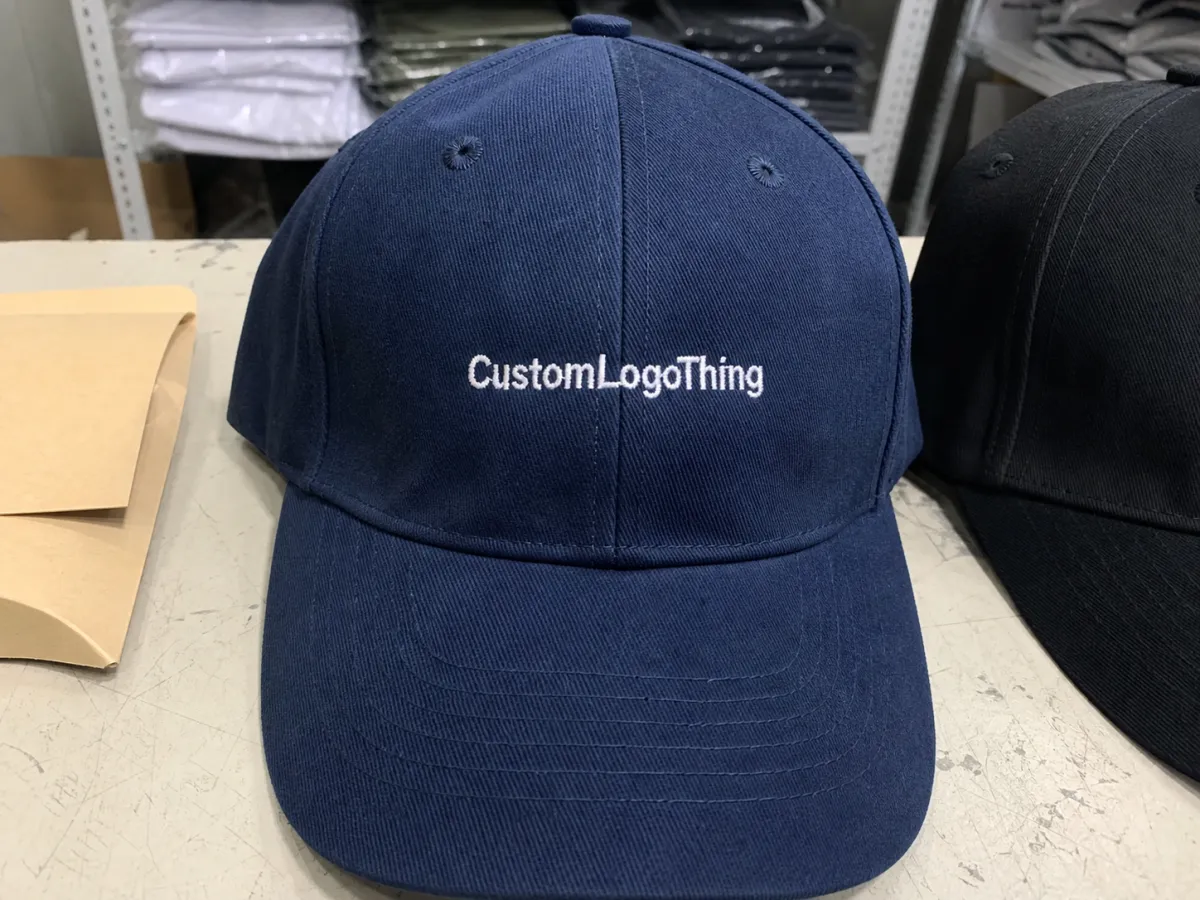
Placement sets the tone. Front-center embroidery creates the strongest brand read. Side embroidery feels more restrained and can suit clinical or premium positioning. Rear placement works well for staff uniforms when the mark should not dominate photos.
Thread detail matters just as much as location. Small scripts, thin icons, and stacked taglines often look cleaner in vector form than they do in thread. If the logo depends on delicate lines, simplify it before digitizing. One or two thread colors usually produces a sharper result than a crowded palette.
Thread color also changes the mood. High contrast is easier to read at a distance. Tonal embroidery feels quieter and more premium. For skincare brands, the right choice depends on whether the product line reads as clinical, playful, minimal, or fashion-led.
Ask the supplier how they handle curved panels, small text, and dense fills. A proof can look fine on screen and still fail on a cap if the crown shape distorts the logo. A sample, or at least a close pre-production mockup, is worth the time.
Practical note: if the logo includes thin type, ask for a stitch count estimate before approval. Standard front embroidery often lands around 4,000-8,000 stitches, but size, density, thread direction, and color count can move that number quickly.
If the cap goes inside a skincare kit, test the whole composition. A bold cap can overpower a minimal box; a quiet one can disappear beside a busy insert stack. The best packaging programs keep the visual hierarchy intentional from outer carton to final reveal.
Material, panel, and fit specs buyers should lock before quoting
Accurate quotes start with structure. A structured cap holds shape and reads more retail-ready. An unstructured cap is softer and more casual. Low-profile caps sit closer to the head, while mid-profile caps have more crown height and a more classic baseball shape.
Fabric affects both feel and cost. Cotton twill is the safest baseline. Washed cotton looks more relaxed. Brushed chino can feel smoother. Polyester blends can help with consistency, but they change the surface texture, so the look should still match the brand.
Panel count also matters. A 6-panel cap is the most common. A 5-panel cap gives a wider front area, which can help with larger logos or centered text. The brim should be specified too: flat, slightly curved, or fully curved. These choices affect both fit and how the cap reads in photos.
Closures should be confirmed before quoting. Snapback, strapback, Velcro, and metal buckle options all change the look and price. A metal buckle feels more premium. Velcro can be practical for staff programs. If the audience is mixed, one adjustable size with a generous range is usually the safest route.
When requesting pricing, include the basics in writing:
- Cap style: structured or unstructured.
- Profile: low or mid.
- Fabric: cotton twill, washed cotton, chino, or blend.
- Closure: snapback, strapback, buckle, or Velcro.
- Panel count and brim shape.
- Target quantity and delivery date.
One detail buyers often skip is the sweatband. If the cap will be worn for long shifts or on camera, an uncomfortable inner band can ruin an otherwise polished product. Ask what the sweatband is made of, especially on larger runs where the outside may look right but the inside still feels cheap.
Pricing, MOQ, and unit cost: what drives your per-cap number
Cap pricing is usually a mix of stitch count, embroidery color count, cap construction, closure hardware, labels, and packaging. Add rush handling or special bagging, and the unit cost moves again. For skincare Embroidered Baseball Caps Bulk Order Planning, the better question is not “What is the cheapest quote?” but “What is the landed cost at the right quantity?”
MOQ is where many projects get mispriced. A lower minimum looks attractive, but the real test is whether the inventory will move. A launch test may justify a smaller run with a slightly higher unit cost. A recurring staff program or membership kit may justify a larger order if replenishment is likely.
| Ordering route | Typical MOQ | Common unit cost range | Best fit | Main watch-out |
|---|---|---|---|---|
| Factory-direct embroidered cap | 100-300 pcs | $4.20-$7.50 | Launch kits, staff wear, repeat runs | Sample timing and shipping assumptions |
| Blank cap plus local embroidery | 50-200 pcs for blanks, embroidery often separate | $5.50-$9.00 | Small runs, fast domestic turnaround | Two vendors, two lead times, two chances for mismatch |
| Higher-volume factory order with custom labels or packaging | 500-1,000+ pcs | $3.60-$6.80 | Campaigns with clear demand and repeat replenishment | Setup fees and inventory risk if the forecast is wrong |
Use tiered quantities when you ask for quotes. A minimum, a middle tier, and a larger run show the breakpoints clearly. That makes it easier to choose a quantity that balances savings against stock risk.
Hidden costs to ask about: digitizing fees, thread changes, logo placement changes, special bagging, carton labeling, and rush freight. A quote can look tidy until those items are added. If the artwork is not supplied in clean vector format, even a simple logo can pick up extra charges.
Process and turnaround: from artwork approval to carton pack-out
The production path should be clear before sign-off. A straightforward order usually moves through art intake, digitizing, digital mockup, sample approval, bulk production, quality control, packing, and shipment. If any step is vague, the schedule becomes fragile.
Approvals are the usual delay point. A late change to logo size, thread color, placement, or cap color can reset the queue. If the cap is part of a larger skincare kit, the timing also has to align with carton printing, insert packing, and warehouse receipt.
Ask for milestone dates instead of a general promise. A workable schedule often looks like this:
- Artwork acknowledgment within 1-2 business days.
- Digitizing or mockup review within 2-4 business days.
- Sample approval before bulk production begins.
- Bulk production in roughly 10-15 business days for straightforward runs.
- Shipping quoted separately from factory completion.
That timeline is not fixed, and complex decoration will take longer. The main point is to make lead time visible early so the buyer can protect the calendar with buffers instead of hoping the ship date holds.
For launch programs with multiple drop dates, ask whether split shipment is possible. It can help when retail staff need caps before an event team, or when a warehouse wants the first cartons before the full kit is packed. That option should be discussed before production starts.
Quality control should be built into the schedule, not left to a final glance. A useful checklist includes thread tension, logo placement, panel symmetry, brim shape, closure function, and carton count. If the supplier cannot describe what they inspect, the risk moves to the buyer after the goods land.
Count backward from delivery, not from production start. That small shift exposes weak spots earlier, especially when the cap must arrive with other printed packaging components.
Supplier checks that prevent rework, delays, and inconsistent embroidery
Price alone does not tell you which supplier is safer. Ask for photos of recent embroidery on similar caps, not blank-stock images. You want to see stitch alignment, panel behavior, thread density, and logo clarity on actual headwear.
Then ask how sample revisions are handled. One revision is normal. Two may still be fine. But the process should say who pays for changes, what happens if the logo must be re-digitized, and how defects are replaced. If those terms are unclear, small issues can become budget disputes.
Communication speed matters too. A supplier that answers quickly and catches art problems early is often more reliable than a cheaper source with slow follow-through. That matters for skincare launches, where packaging timing usually depends on several vendors working at once.
For repeat runs, consistency is the real test. The second order should match the first in thread sheen, logo size, and cap finish. A clear spec sheet helps, but only if the supplier follows it and does not substitute materials midstream.
Inspect the sample with a few practical questions in mind:
- Does the logo sit centered on the panel, or drift toward the seam?
- Does the thread cover the fabric evenly?
- Does the cap hold shape after embroidery?
- Does the closure feel secure across more than one unit?
- Does the color match the approved reference under indoor light?
If the caps are part of a wider kit, the packaging should still survive transit. Outer cartons, mailers, and inserts may need testing as a system. For that, standards such as ISTA provide useful transit-testing guidance, and FSC matters if the outer packaging uses certified paperboard or paper.
“A safer quote is usually the one that shows repeatable embroidery, answers artwork questions quickly, and defines replacements in writing.”
One simple visual check is to stack five finished caps and look at them from arm’s length. If the crowns vary too much or the thread sheen changes from unit to unit, the run is not truly consistent, even if each hat looks acceptable on its own.
Next steps for a clean bulk order and repeat reorders
Start with a complete brief: logo file, target quantity, preferred cap style, color references, packaging needs, and the delivery date that actually matters. If the cap is for a launch, say so. If it is for evergreen retail use, say that too. The order changes depending on the business case.
Next, choose the quantity split before asking for quotes. One number hides the breakpoints. Tiered pricing shows whether 250, 500, or 1,000 units is the smarter buy and keeps the budget aligned with real demand.
Approve either a mockup or a physical sample before locking production. Then document the final spec: cap body, thread colors, placement, closure, and packaging. That document becomes the reference for the next order and keeps reorders from drifting.
- Step 1: gather artwork and delivery requirements.
- Step 2: request tiered pricing and MOQ.
- Step 3: approve the mockup or sample.
- Step 4: lock the production calendar and shipping method.
- Step 5: save the final spec for future launches and replenishment.
Archive approved sample photos with the spec sheet. Teams forget details faster than they expect, especially when a seasonal launch turns into a six-month replenishment cycle. A visual record prevents “close enough” decisions that quietly change the product.
Handled this way, the cap becomes a controlled purchase: the right quantity, the right stitch detail, the right timing, and a finished item that still looks aligned with the brand after the campaign has moved on.
FAQs
What is the typical MOQ for skincare embroidered baseball caps?
MOQ depends on cap style, embroidery complexity, and whether the supplier is customizing the cap body or only decorating a stocked style. A smaller, simpler run may start around 100-300 pieces, while more customized programs often sit higher. Ask for tiered pricing so you can compare the minimum run against a larger order and decide whether the unit savings are worth the extra inventory.
How long does production usually take for embroidered baseball caps in bulk?
A straightforward run can often move through art approval, sample sign-off, and production in about 10-15 business days once the proof is approved, but that varies by supplier, stitch complexity, and packaging work. The real schedule risk is usually approvals, not machine time. Shipping should be added separately so the final delivery date is realistic.
What artwork works best for skincare cap embroidery?
Bold, simplified logos usually stitch cleaner than thin scripts, gradients, or tiny type. One or two thread colors often gives the sharpest result and keeps the order easier to produce. Vector files are the safest starting point because they make digitizing simpler and reduce revision loops.
Can I mix cap colors or sizes in one bulk order?
Sometimes yes, but it depends on stock availability, supplier policy, and whether the mix creates extra setup costs. Mixed colors or closures can change MOQ and pricing, so confirm the math before you commit. If the caps are for a launch or event, ask whether mixed assortments will slow production or pack-out.
What should I send to get an accurate quote for skincare embroidered baseball caps?
Send the logo file, desired cap style, quantity breakdown, thread color preference, and any packaging or labeling needs. Include your target delivery date so the supplier can tell you if the schedule is realistic. The more precise the brief, the easier it is to compare pricing, MOQ, and turnaround across suppliers.