Basic poly bags are inexpensive, but they can also make a product look unfinished, seal inconsistently, and create avoidable complaints when dust, moisture, or messy folding shows up on the customer’s doorstep. That is why a Slider Lock Clothing Bags wholesale supplier guide matters: it helps buyers separate bags that genuinely improve presentation and handling from bags that only look acceptable in a sample photo.
For apparel brands, uniform programs, accessory kits, e-commerce shipments, and bundled sets, slider-lock bags often make more sense than plain open-top poly. The closure is reusable, the package looks cleaner, and the garment is easier to inspect and reclose after opening. That does not mean every item needs the upgrade. If the product is low-margin and disposable by nature, the extra cost may not return much. If the product depends on retail presentation, though, the difference is obvious the moment the box is opened.
This Slider Lock Clothing Bags wholesale supplier guide focuses on buying realities: materials, size control, price ranges, minimums, lead times, inspection points, and the small details that separate a dependable supplier from one that only knows how to quote quickly.
Why slider-lock clothing bags outperform basic poly bags for retail packaging
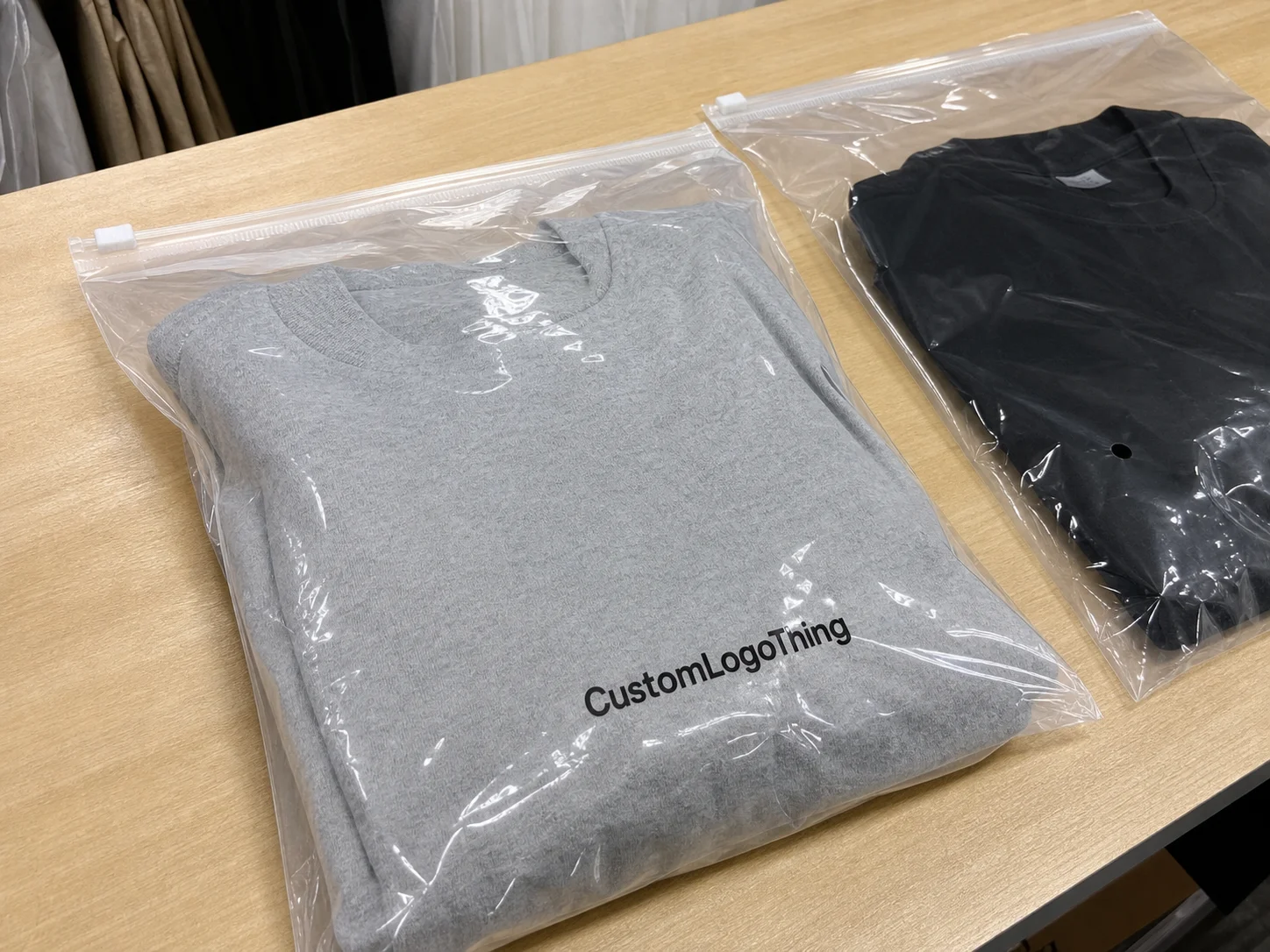
Poly bags still have a place. They are cheap, light, and useful for bulk packing jobs where presentation does not matter much. Once a garment is moving through retail, direct-to-consumer shipping, or wholesale distribution with brand standards, plain bags start to feel more like a compromise than a solution.
Slider-Lock Clothing Bags solve three packaging problems at once. They protect the product better than open-top packaging, they give the customer a closure that opens and closes cleanly, and they make folded apparel look organized instead of rushed. For brands that receive repeated handling, the reusable closure also helps the bag hold up after the first opening, which matters more than many buyers expect.
They are a strong fit for folded T-shirts, hoodies, leggings, socks, lingerie, baby clothes, uniforms, and multi-piece sets. They also work well for seasonally packed apparel and return-ready packaging, especially when the customer may want to reclose the package after trying the item on.
The upgrade makes sense when the packaging supports the value of the product. If the garment sells on image, presentation, or repeat handling, slider-lock bags earn their place. If the item is a bargain basic with little need for protection or display, the higher unit cost can be hard to justify.
Cheapest packaging often looks fine until the product arrives dusty, scuffed, or folded so loosely that the customer notices the problem before they even touch the garment.
From a buyer’s perspective, the value is not only visual. Cleaner packing reduces rework, improves consistency across cartons, and gives warehouse teams a package that behaves the same way from one order to the next.
What a quality slider-lock clothing bag should include
A good slider-lock bag is more than a plastic pouch with a closure track. The slider must move smoothly, the seal has to close evenly, and the bag should survive repeated opening without snagging or splitting. If the track drifts out of alignment or the seal line warps, the package stops doing its job very quickly.
Common formats include clear bags for visibility, frosted bags for a softer premium look, printed bags for branding, flat bags for standard folded garments, and gusseted bags for bulkier hoodies or bundled sets. Some buyers also request handle features or display-friendly cuts, but those options usually add cost and more tooling complexity.
Typical apparel uses
- T-shirts and polo shirts: flat or lightly gusseted bags with clean visibility.
- Hoodies and sweatshirts: thicker LDPE with more depth and a stronger track.
- Socks and accessories: smaller bags, sometimes with writable panels.
- Lingerie and baby clothes: a cleaner appearance, softer finish, and reliable closure control.
- Uniforms and set bundles: larger sizes with dependable reclosure.
Optional features matter more than many first-time buyers think. A hang hole helps retail display. A different pull style can make the closure easier to operate. Vent holes may be useful for certain folded items. Anti-slip texture reduces the slick, overly shiny feel that some low-grade film has. Writable panels help with stock rotation or set labeling. None of these features is mandatory, but each one changes how the bag behaves in real use.
The difference between a decent supplier and a sloppy one usually shows up in details that are easy to miss until the carton opens: clean cut edges, consistent seal alignment, flat stacks, and no strong chemical odor that makes the whole shipment unpleasant to handle. Consistency matters more than a polished sample photo.
Specifications that affect fit, appearance, and shipping performance
Size is the first place buyers get burned. Ask for internal usable dimensions, not only the outer dimensions printed on a quotation. A bag can look large enough on paper and still be too short once the garment is folded the way your warehouse actually packs it. If the folding method changes, the bag size should change too.
Thickness is usually listed in mil or micron. For apparel, many buyers end up somewhere in the 1.5-4 mil range, depending on product weight, clarity requirements, and whether the package will ship individually. Thinner film costs less and weighs less. Thicker film feels more substantial and resists splitting better, but it adds cost and bulk.
Material choice matters as well. LDPE is common because it is soft, flexible, and easy to close. Resin grade affects clarity, softness, and noise. Recycled-content or recyclable versions may be available, but “recyclable” is not a complete specification by itself. Acceptance depends on local recycling systems, resin structure, and labeling. If sustainability is part of the buying requirement, ask for the exact material spec and documentation instead of relying on a sales claim.
Print specs can change the entire quote. A one-color logo on a clear bag is usually simpler than full coverage print or opaque panels. Exterior print is common, but some buyers prefer interior print for abrasion resistance and a cleaner outside surface. Ask which print method is used, whether the artwork is centered by machine or by hand, and what tolerance is allowed for placement. Misaligned logos look careless, and customers do notice.
Performance checks should include tear resistance, odor level, and how the bag behaves under heat. That matters if products sit near warm packing stations or spend time in a hot trailer. If recycled content is part of the requirement, confirm whether the bag still needs to meet packing and shipping expectations, not just a sustainability checkbox.
For broader context on packaging and waste reduction, the EPA has useful material on recycling and waste management: EPA recycling guidance.
The most practical spec sheet is the one that answers the questions a warehouse manager would ask: Will it fit? Will it close cleanly? Will the print stay centered? Will the carton survive transit without the bags warping or clinging together?
Cost, pricing, MOQ, and quote factors buyers should compare
Price is driven by a handful of variables: bag size, thickness, print coverage, resin grade, slider hardware quality, and how the bags are packed for shipment. A small clear bag with no print is a very different product from a large frosted printed bag with a premium slider. Comparing quotes line by line is tedious, but it is the only reliable way to avoid false savings.
| Order profile | Typical unit price range | MOQ behavior | Best for |
|---|---|---|---|
| Stock-style clear bag, no print | $0.08-$0.18 | Often lower | Fast replenishment, basic garment packing |
| Custom size, clear or frosted | $0.14-$0.28 | Moderate | Private label apparel and standard retail use |
| Printed logo, 1-2 colors | $0.18-$0.38 | Usually higher | Brand presentation and repeat sales |
| Thicker, oversized, specialty finish | $0.30-$0.65+ | Higher still | Premium lines, heavy garments, bundled sets |
Those ranges are not fixed. They move with order volume, resin cost, tooling, and freight. A 5,000-piece run can price very differently from a 20,000-piece run, even when the spec is the same. On many custom jobs, lower quantities push the unit price up sharply because setup cost is spread over fewer bags. That is why a supplier may quote $0.24 at 5,000 pieces and $0.16 at 20,000 pieces for the same item.
MOQ is where buyers need to think carefully. Lower MOQ usually means one or more tradeoffs: higher unit cost, fewer size options, fewer print colors, or stock material only. If you need a unique size and full branding at low quantity, expect to pay for it. The factory is absorbing setup time, print prep, and machine adjustment on a smaller run.
Always confirm what is included in the quote:
- Tooling or plate charges
- Sample fees
- Freight terms and whether shipping is EXW, FOB, or delivered
- Tax or duty responsibility
- Payment terms, deposit amount, and balance timing
- Reorder consistency if the same spec will be repeated later
The lowest quote often hides the expensive parts. The thickness may be lower than promised. The bags may be packed loosely and arrive warped. Freight may be excluded. Compare landed cost, not just factory unit price. That single habit prevents a lot of regret.
If you are building a packaging program across multiple product lines, it helps to review broader buying options through Wholesale Programs so bag specification, artwork, and replenishment terms stay aligned.
Production steps, lead time, and shipping timeline from approval to delivery
A clean order usually follows a predictable path: inquiry, spec confirmation, artwork review, sample approval, production, inspection, packing, and shipment. If any step is rushed or vague, the schedule starts to drift. Buyers who send half-finished artwork and then ask why the date moved are usually the ones who lose time later.
For stock-style orders, lead time is often shorter because the supplier already has the size and material on hand. Custom printed orders take longer because artwork setup, print prep, and sample sign-off add time. In practice, custom runs commonly land around 12-20 business days after proof approval, while simple stock replenishment can move faster. Freight time is separate and depends on the shipping method.
Delays usually happen in a few predictable places:
- Artwork revisions that keep changing the layout
- Slow sample approvals
- Peak factory load during seasonal buying periods
- Freight booking delays or space shortages
- Missing approval on final carton count or labeling
Shipping and packing options also matter. Bulk-packed bags are cheaper to move but can be harder to handle at the warehouse. Carton-packed options improve organization. Palletized freight helps protect large orders. Courier samples are useful for sign-off, but they are not a substitute for a production sample if the order is custom.
For quality-focused buyers, it is reasonable to ask how the supplier checks dimensional tolerance, seal integrity, and print placement before shipment. If the order is going into a branded retail program, ask whether the factory follows a documented inspection process and whether any test method is used to confirm pack-out and transit performance. For packaging and transport benchmarks, ISTA resources are useful: ISTA testing resources.
One practical warning: the fastest timeline on a quotation is not always the real timeline. A supplier can move quickly on stock bags, but custom colors, revised artwork, or tighter tolerances can add days without anyone intending to mislead. Buyers who build a small cushion into the schedule usually avoid panic later.
How to judge a wholesale supplier before you place the order
Do not judge a supplier by the prettiest PDF. Judge them by whether they can make the same bag the same way more than once. That is the real job.
Start with capability. Can they produce the size you need? Can they handle the print method you want? Can they hold the same thickness and seal quality across the full order? If the answer shifts every time you ask, move on.
Ask for proof, not promises. Useful items include recent product photos, a spec sheet, sample images, and examples of comparable jobs. If the supplier cannot show anything close to your bag format, that is a warning sign. Not always a deal-breaker, but definitely a reason to slow down.
Quality-control questions should be direct:
- Do they check incoming resin or film?
- Do they test seal strength and closure function?
- Do they measure dimensions against a tolerance range?
- Do they inspect print placement and color consistency?
- Do they run any drop or compression checks for packed cartons if relevant?
Communication speed matters more than many buyers want to admit. A supplier that answers slowly, changes specs casually, or gives vague pricing usually creates problems later. Good suppliers are usually clear about what is included, what is not, and what could move the price. That kind of honesty is worth money.
Before committing, request these items:
- Dieline or bag drawing
- Sample set with clear labeling
- Specification sheet listing material, size, thickness, and closure type
- Tolerance range for dimensions
- Production photos or pre-shipment check photos
A useful supplier will also tell you where the job is most likely to move in price. That may be print coverage, gauge, closure style, carton count, or freight mode. If they hide those variables, the quote is less useful than it looks.
If you want a sustainability reference point, FSC is useful for understanding responsible sourcing in packaging ecosystems, even though it is more paper-focused than plastic-focused: FSC standards overview.
Next steps to request samples, compare quotes, and place a clean order
If you want a useful quote, send real information. Not “need bags for shirts.” That is not a spec. Give the supplier the folded garment dimensions, bag type, thickness preference, quantity, print needs, target ship date, and destination. The cleaner the input, the cleaner the price.
Ask for two sample types if possible: a stock sample that shows the general material feel, and a custom spec sample that matches your size and print intent. The stock sample tells you about handling and closure quality. The custom sample tells you whether the finished package actually fits the product.
Use this quote checklist:
- Unit price by quantity tier
- MOQ and whether it changes by size or artwork color count
- Lead time from proof approval
- Freight terms and estimated shipping cost
- Payment terms
- Reorder consistency and storage options
Before production starts, confirm final artwork, carton count, and delivery address. Small mistakes here become expensive once cartons are printed and packed. If the supplier offers a production photo check before shipment, use it. A short review of photos can prevent weeks of complaints.
The practical buying sequence is straightforward: identify garment dimensions, choose the closure style, request a sample, compare landed pricing, confirm QC details, and release the order only after the proof is right. That is the cleanest way to buy custom packaging without paying for avoidable corrections. A careful Slider Lock Clothing Bags wholesale supplier guide should make the process feel less mysterious and more measurable, and that is usually what saves the budget.
What is the best size for slider lock clothing bags wholesale orders?
Match the bag to the folded garment dimensions, not the hanger size. Leave enough room for easy insertion and closure without creating too much empty space. Ask the supplier for internal usable dimensions and the tolerance range, because outer dimensions alone can be misleading.
How much do slider lock clothing bags cost at wholesale quantity?
Pricing usually depends on size, thickness, print coverage, and order volume. Higher MOQ often lowers unit cost, while custom printing and specialty materials raise the price. Always compare landed cost, not just factory unit price, because freight and setup charges can change the real total quickly.
What MOQ should I expect from a slider lock clothing bags wholesale supplier?
MOQ varies by custom size, print setup, and whether the bag is stock or fully custom. Simple clear bags may allow lower MOQs than printed or specialty versions. Ask whether the MOQ changes by size or artwork color count so you do not get surprised later.
How long does production usually take for custom slider lock clothing bags?
Stock-style orders usually move faster than custom printed runs. Artwork approval and sample sign-off are often the biggest timing variables. Shipping method also matters; air freight is much faster than ocean freight, but it costs more.
What should I check before choosing a slider lock clothing bags wholesale supplier?
Confirm material, thickness, size tolerance, print method, and seal quality. Ask for samples, carton details, and a clear production timeline. Also check whether the supplier can repeat the same spec consistently on reorders, because that is where a lot of otherwise decent suppliers fall short.


