slider lock clothing Bags Unit Cost Breakdown is not really about the slider. The closure matters, sure, but bag size, film gauge, print coverage, and packing method usually move the number more. That is especially true for apparel packaging, where a bag may need to look retail-ready, survive handling, and still reopen cleanly for returns or repacking.
Most buyers learn that lesson after the first quote comes back. The headline price looks fine. Then the lines underneath start adding up: resin, converting, slider sourcing, print setup, labor, cartons, and freight. Once those parts are separated, the unit cost stops looking mysterious and starts looking negotiable.
If you are comparing suppliers, the useful question is not "who is cheapest?" It is "what exactly is included in this price, and what changes if the spec changes?" That is the difference between a quote you can work with and a quote that only looks simple.
Slider Lock Clothing Bags Unit Cost Breakdown: What Drives It
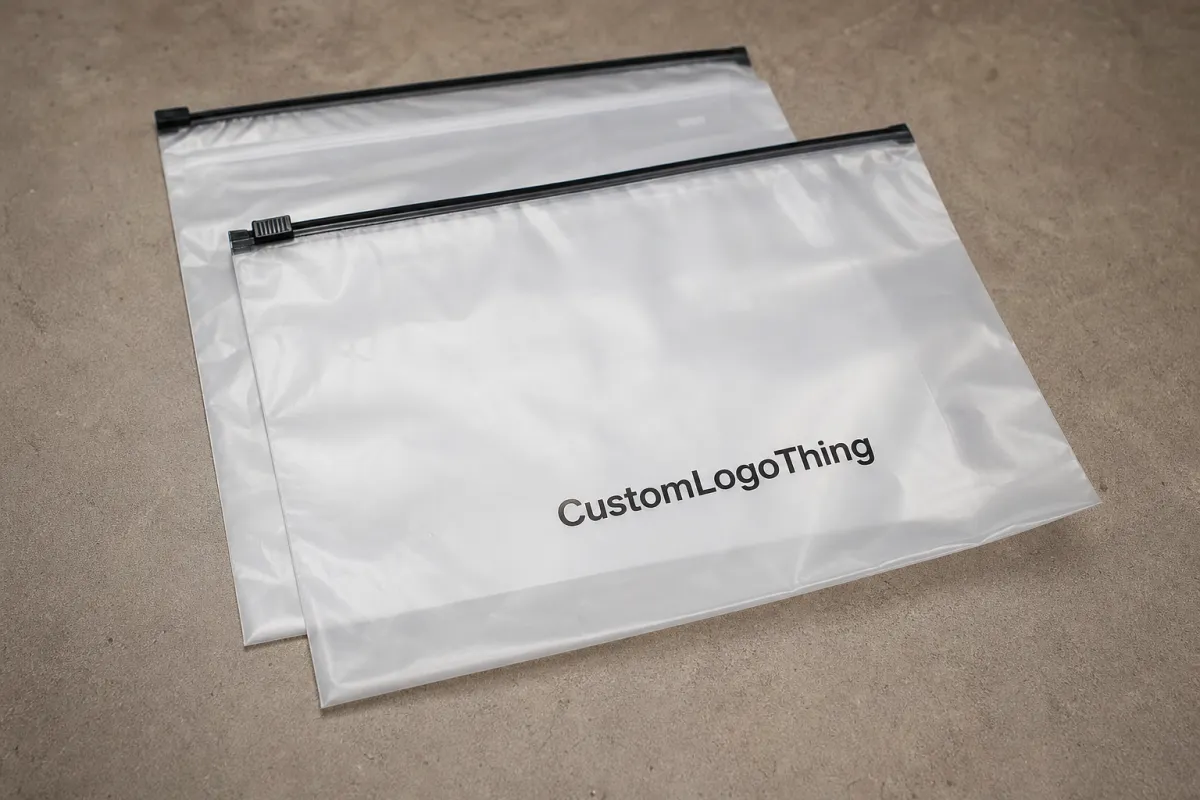
The cleanest way to read a slider lock clothing Bags Unit Cost Breakdown is to split it into five parts: material, converting, closure, print, and logistics. Material covers the resin and film thickness. Converting covers extrusion, sealing, cutting, punching, and the labor needed to turn film into a usable bag. The slider is only one piece of the stack, not the stack itself.
Two variables usually do most of the damage to price: bag dimensions and film gauge. A larger bag uses more material immediately. A thicker film does the same, but it also changes stiffness, seal strength, and how the bag feels in hand. That is why a 3 mil bag for a folded tee and a 4 mil bag for a heavyweight hoodie rarely land in the same cost band, even before decoration is added.
Printing is the other quiet cost driver. A small logo on one side is one thing. Full-coverage artwork, tight registration, or print on both sides is another. Add a frosted finish, hang holes, vent holes, or a custom track and the quote starts reflecting process complexity, not just plastic weight. Buyers often blame the slider because it is visible, but the bigger swings usually come from the bag spec around it.
- Resin and film: thickness, clarity, and blend quality change the base cost.
- Converting: sealing, cutting, punching, and QC labor add real time.
- Closure hardware: standard reusable sliders cost less than custom or specialty parts.
- Printing: color count, coverage, and setup charges can move the quote fast.
- Packing and freight: carton count, palletization, and destination shape the landed price.
If a factory gives you one blended number, ask for a split. A useful quote should show where the fixed costs sit, what changes with volume, and which line items are being absorbed into the per-piece price. Without that, you are not comparing unit cost. You are comparing guesses.
From a buyer's point of view, the clearest quote is the one that separates material, converting, print, closure, packing, and freight. If those are buried together, the true unit cost is hard to trust.
Bag Specs That Move the Quote Faster Than the Closure
Apparel buyers often focus on the closure because it is the feature they touch first. That is understandable. It is also a little misleading. Bag width, height, flat profile versus gusset, opening style, and track design usually have a bigger effect on the final price than the slider itself.
Film choice matters just as much. LDPE is common for flexible bags and a soft hand feel. LLDPE blends can improve tear resistance and sealing behavior. Higher-clarity films can look cleaner on shelf, but they do not always seal the same way, and they are not always the cheapest route. If a brand wants a cleaner presentation, a better film may be worth the extra spend. If the bag is only going into cartons or fulfillment, paying for premium clarity may be wasted money.
Small feature requests add up quickly. Vent holes for bulky garments. Hang holes for display. Frosted or crystal-clear film. One-sided or two-sided print. Tighter dimensional tolerances. None of these sound dramatic on a spec sheet, but each one adds handling, setup, or inspection time. In apparel packaging, consistency is not a luxury. It is part of the cost structure.
The use case should drive the spec. Storage bags can usually tolerate simpler film and fewer finishes. Shelf-facing bags need better clarity and a cleaner edge. Fulfillment bags need easier insertion and a reliable reclosure, which may justify a stronger track or smoother slider action. Same category, different economics.
That is why two bags that look almost identical can come back with very different quotes. The closure might only explain a small slice of the difference. The rest is usually hidden in film grade, bag geometry, print setup, and the extra handling needed to keep the run consistent.
Pricing, MOQ, and Unit Cost Scenarios for Different Runs
Pricing almost always drops as quantity rises, but not in a neat straight line. Small runs carry setup charges, artwork prep, and machine changeovers more heavily. Larger runs spread those fixed costs across more bags, so the per-piece number gets better. That is the basic shape of the Slider Lock Clothing Bags unit cost breakdown most buyers need before they sign off on an order.
| Order Size | Typical Spec | Indicative Unit Cost | What Usually Happens |
|---|---|---|---|
| 2,500 pieces | Clear 2.5-3 mil, light print, standard slider | $0.32-$0.58 | Setup burden is highest; MOQ pressure is strongest here |
| 5,000 pieces | Clear or frosted, one-side print, standard retail finish | $0.22-$0.40 | Common test run; better balance between price and flexibility |
| 10,000 pieces | Heavier film, tighter print control, optional vent or hang holes | $0.16-$0.30 | Fixed costs spread out; more room to negotiate packaging terms |
| 20,000+ pieces | Seasonal buy or replenishment program | $0.11-$0.22 | Best leverage on resin and labor efficiency, before freight |
Those numbers are directional, not a promise. Final cost depends on print coverage, slider style, film gauge, and where the order is shipping. A domestic replenishment run will price differently from an overseas order that needs export cartons, pallet wrap, ocean freight, or air freight. Freight can distort the landed cost quickly, especially on smaller orders.
MOQ is usually tied to material procurement and line efficiency, not just supplier preference. If a factory has to buy a minimum resin lot, source a specific slider component, and run a print setup for your artwork, the MOQ is doing real work. Multiple sizes or colors may each carry their own threshold. That is where orders get more expensive than the first quote suggests.
To compare offers fairly, separate factory price from landed cost. Ask what is included in the carton count, whether the slider is packed in the bag or inserted separately, and whether freight is based on a full container, mixed carton load, or courier. A low unit price can disappear fast once shipment terms are real.
Production Steps and Lead Time From Approval to Shipment
The path from RFQ to shipment is pretty predictable when the spec is complete. Quote review comes first, then spec confirmation, artwork prep, sample or mockup approval, production, in-line QC, final inspection, and shipment booking. Miss one of those steps and the schedule starts slipping. Not dramatically at first. Then all at once.
For simple slider bags, a realistic lead time is often 12-15 business days after proof approval. Custom film, specialty sliders, or more complex printing can push that longer. If the factory is waiting on missing dimensions or a late color decision, the schedule stretches without warning. That is one reason rushed approvals often become expensive approvals.
The usual delay points are boring, which is exactly why they keep happening: unclear print files, inconsistent measurements, last-minute copy edits, and slow sign-off on the pre-production sample. None of that shows up in the purchase order line, but each one can add days. One decision maker on the brand side helps a lot. Five people "finalizing" a proof does not.
For packaging that will move through a harder supply chain, buyers should also think about transit performance. The ISTA test methods are useful if you want to understand how packaging behaves in shipping, and the Institute of Packaging Professionals offers practical packaging context and testing language. Neither replaces a spec sheet, but both help keep the conversation grounded.
To shorten turnaround, front-load the technical details:
- Send exact dimensions instead of estimates.
- State film preference, thickness, and finish clearly.
- Provide print artwork in the right file format.
- Confirm whether the slider is reusable or single-use.
- Assign one person to approve the sample.
That discipline does more than save time. It protects the unit cost. Fewer revisions after quoting means fewer surprises from tool changes, color changes, rescheduling, or rework. Those costs are never exciting, but they are very real.
Manufacturer Checks That Prevent Requotes and Delays
Supplier selection should be based on evidence, not polished sales language. Ask whether the factory handles in-house converting, print capability, QC documentation, and export packing. If those functions sit in different places, the chance of inconsistency goes up. When one team manages material sourcing through final packing, the quote is usually easier to trust.
The warning signs are usually obvious once you know them: vague spec language, no sample approval step, missing freight assumptions, and no tolerance statement. A quote that avoids those basics often turns into a better-looking number that changes later. Buyers do not need a perfect supplier. They need a supplier that can explain the process without hand-waving.
Ask for recent similar runs, material test data, and photos of packed cartons. If the supplier can show how the bags are packed, how the sliders are protected, and how the cartons are labeled, the production risk drops. It also helps to see whether they can document thickness, seal strength, or other relevant quality checks in a simple format the buying team can review.
A lower unit price is not a better deal if it hides extra setup, weaker film, or a freight assumption that falls apart in real shipment conditions.
Compare at least three things side by side:
- Spec accuracy: dimensions, film gauge, closure style, and print coverage.
- Process control: sample approval, QC checks, and tolerance range.
- Commercial clarity: MOQ, setup charges, packing method, and freight basis.
This is where many apparel buyers make the same mistake. They chase the lowest factory number, then discover the order needs a second quote because the first one did not include the right packing method or a realistic slider component. A better comparison starts with the same exact spec on both sides. Only then does the price gap mean something.
Next Steps to Lock Specs, Samples, and a Firm Quote
If you want a usable quote, send one complete request instead of a long back-and-forth thread. Include dimensions, material preference, thickness, print file, target quantity, shipping destination, and any Retail Packing Requirements. That gives the supplier enough information to quote the job as it will actually run, not as a guess based on a partial brief.
Ask for at least two options. A value spec may use lighter film and simpler print. A premium spec may add clarity, stronger feel, or smoother slider action. That comparison is useful because it shows how much the finish costs and whether the brand gain is worth the increase in cost per piece.
For buyers who need shelf presence or DTC fulfillment, request a sample or pre-production proof before purchase order approval. A sample reveals more than a quote ever can. It shows zipper feel, opening speed, print clarity, and whether the bag folds the way the team expects. That is a cheap problem to catch early and an annoying one to fix after 10,000 pieces are already moving through packing.
The best way to use a Slider Lock Clothing Bags unit cost breakdown is as a decision tool, not a headline number. Once specs, MOQ, and freight basis are visible, the right bag usually becomes obvious. And if it is still not obvious, the comparison work is doing its job.
What affects slider lock clothing bag unit cost the most?
Film thickness and bag size usually move the number most because they determine how much material each bag uses. Print coverage, slider type, and pack-out can add cost quickly when the order needs retail-ready presentation.
How low can MOQ go for custom slider lock apparel bags?
MOQ depends on material availability, print setup, and line efficiency, so smaller test runs are possible but the unit cost is higher. If you need multiple sizes or colors, each variation may have its own threshold.
Do clear and frosted slider lock clothing bags price the same?
No. Clear and frosted films often come from different resin blends and processing steps, which changes both appearance and price. Clarity, stiffness, and scratch resistance should be compared alongside unit cost, not after the order is placed.
What should be included in a quote request for slider lock bags?
Include exact dimensions, thickness, material preference, print artwork, quantity, shipment destination, and carton requirements. Ask for sample approval timing and lead time so the quote reflects the real production path.
How do I compare two slider lock clothing bag quotes fairly?
Compare the same spec line by line: material, thickness, print method, slider type, carton count, and freight assumptions. The lower unit price is not better if it hides extra setup charges, longer lead time, or weaker film.
What is the smartest way to judge a quote?
Use the slider lock clothing Bags Unit Cost Breakdown to compare material, labor, closure, and freight as separate items. That keeps the discussion on facts instead of headline price.

