Snapback Caps Wholesale Supplier for Skincare Launch Buyers
Choosing a snapback Caps Wholesale Supplier for skincare launch buyers is less about chasing the lowest quote and more about whether the cap arrives looking polished, stays structured in transit, and fits the campaign without creating extra work for the team. In a skincare launch, that usually matters more than novelty. The cap has to look intentional in a PR box, work for staff, and still make sense if you reorder it later.
Most packaging buyers are balancing a lot at once: tight timelines, limited inventory, and pressure to make every add-on feel premium. A snapback works because it is simple to size, straightforward to decorate, and easier to repeat than more complex apparel. That makes it useful for launch kits, retail drops, creator mailers, and event staff uniforms.
The right supplier should be able to keep the same quality across 100 units or 5,000 units. The front panel should photograph cleanly, the brim should not warp, and the closure should not feel flimsy. If the cap looks like a promo giveaway instead of a finished branded item, the spec is too loose. If you are comparing suppliers, start with the basics in Wholesale Programs and ask how they handle sampling, proofing, and pack-out requirements.
Product Details That Make Launch Caps Feel Retail-Ready
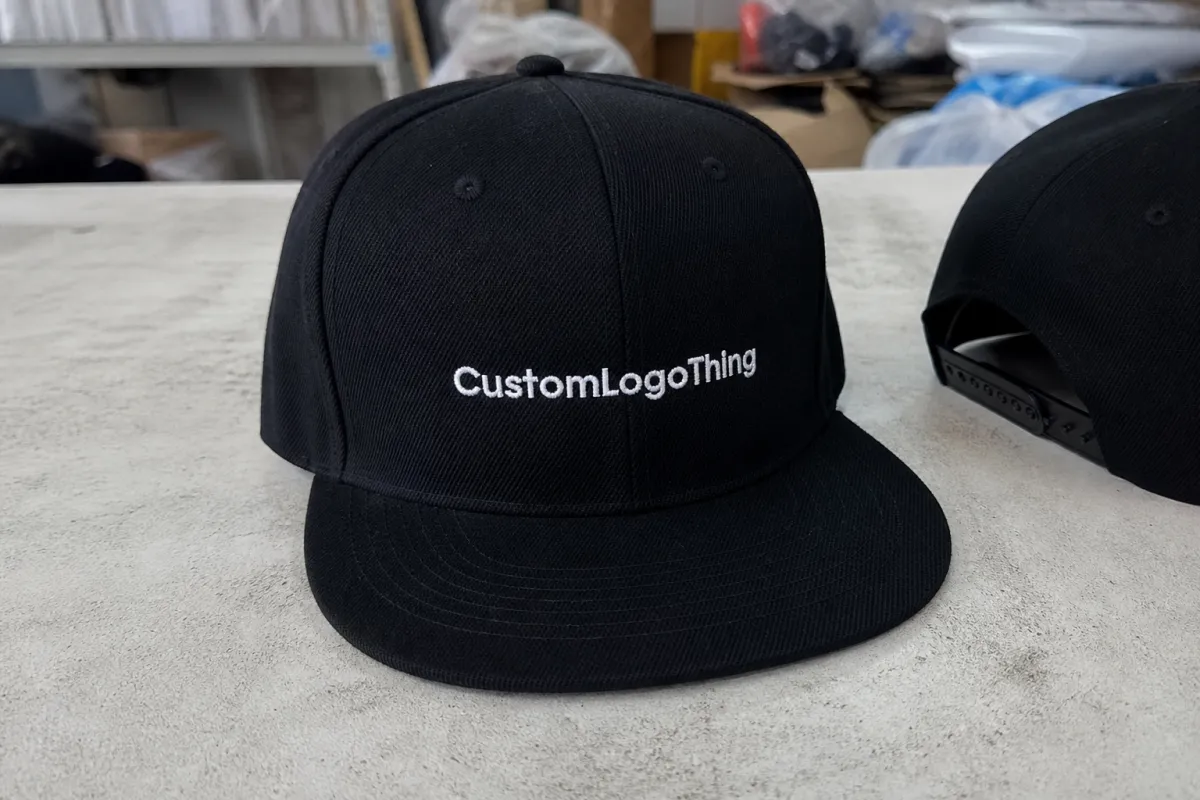
A cap reads retail-ready when the build is consistent. The standard setup is a structured crown, a curved or flat brim, an adjustable plastic snap closure, and usually six panels. Five-panel styles are also common, but six-panel caps tend to hold embroidery better and present more like a finished branded product. For skincare kits, that usually photographs better and feels less like an afterthought.
Fabric changes the impression quickly. Cotton twill gives a clean, familiar look. Brushed cotton feels softer, though it can show lint sooner. Polyester blends are practical when the cap needs color stability and wrinkle resistance inside a packed kit. If the order will travel with glass jars, folded cartons, or paper inserts, a firmer fabric and a medium crown usually survive transit better than soft slouchy styles.
Details carry more weight than most buyers expect. Stitch density affects how sharp the logo looks. Brim shape affects how premium the cap feels in hand. Sweatband quality affects comfort for retail teams or event staff who wear the cap all day. If the front panel collapses under embroidery, the item will look cheap no matter how good the artwork is.
A useful test is simple: if you would hesitate to hand the cap to a press contact without explaining it, the spec is not ready. That usually means the build needs better materials, tighter stitching, or a cleaner decoration plan.
Specs That Prevent Fit, Stitching, and Color Problems
Snapbacks are forgiving, but they only stay easy when the spec is clear. Before artwork starts, lock down crown height, panel count, brim length, closure range, and embroidery placement limits. Those five items prevent most production surprises.
Fit matters even with an adjustable cap. A medium crown and a standard plastic snap adjuster usually work across mixed audiences, but the wrong profile can still feel off. A crown that is too tall can look boxy, while one that is too shallow can fold awkwardly during wear. If the cap will be used by staff, creators, and media contacts, ask for a fit sample before final approval.
Color matching is where many orders drift. PMS-style requests can be possible, but not every fabric behaves the same. Heathered materials soften the color, and dark bases can make embroidery look muted if the thread contrast is weak. White thread on black fabric usually reads clearly. Beige on olive tends to work better than a near-match that disappears under store lighting. If the supplier has a thread chart, use it. Screens are not a reliable color reference.
Packaging and transit need the same attention. If the brim bends easily or the crown crushes in a tight shipper, ask how the cap is packed and whether the carton layout was tested. Industry guidance from organizations like ISTA is useful here even for smaller orders, because a cap that arrives bent still fails the job.
Cost, Pricing, and MOQ for Small and Mid-Size Launches
Cap pricing is mostly driven by setup cost, decoration complexity, and quantity. A blank snapback can sit in a low range, but once you add embroidery, woven labels, custom packaging, or multiple branding locations, the unit cost rises. The real issue is not the increase itself; it is not seeing where it comes from until the quote is already too high.
For small and mid-size skincare launches, a simple blank cap will usually price lower than an embroidered one, while mixed decoration or custom packaging pushes the order higher. A practical benchmark for custom embroidered snapbacks is often around $2.80-$6.50 per unit at moderate volume, depending on fabric, stitch count, and pack-out details. Lower quantities usually land above that range. If a quote comes in far below it, check what is missing.
MOQ matters just as much. Straightforward orders may start around 100-300 pieces, while more detailed builds can move to 500 or more. If you need multiple colors, multiple logo placements, or special trims, the MOQ often climbs because the factory has to split materials and setup time. That is a production constraint, not a sales tactic.
| Option | Typical MOQ | Usual Unit Range | Best For |
|---|---|---|---|
| Blank snapback | 50-100 | $1.20-$2.20 | Fast event giveaways and internal use |
| One-location embroidery | 100-300 | $2.80-$6.50 | PR kits, retail drops, staff uniforms |
| Patch + embroidery | 300-500 | $4.20-$8.50 | Premium launches that need texture |
| Custom packaging included | 300+ | $5.00-$10.00+ | High-visibility gift sets and influencer mailers |
The tradeoff is simple: lower MOQ usually means a higher unit price, while higher MOQ lowers the piece price but raises cash exposure. If the drop is a test, a smaller run is usually smarter than paying for extra stock that will not move. If the design is locked and a second drop is already planned, the larger run may make more sense.
Watch for hidden costs as well. A low unit price can still hide setup fees, sample churn, or repack charges. Ask for the landed cost, not just the factory price. That is the number that tells you whether the order actually fits the budget.
Process, Timeline, and Lead Time From Quote to Delivery
The order path should be straightforward: brief, artwork check, proof approval, production, quality review, shipment. A supplier should be able to explain that sequence clearly. If the process sounds vague at the quoting stage, expect delays later.
Fast jobs usually come from clean vector art, confirmed colors, final quantities, and one person who can approve proofs quickly. Clean files save days. Vague files add days. That is usually the difference between a smooth order and a stressful one.
Typical lead times are often 2-5 weeks after artwork approval, depending on quantity and decoration complexity. Simple blanks move faster. Embroidered caps take longer because setup and proof approval are part of getting the logo right. If you add hang tags, carton labels, or individual polybags, plan for more time. Those details are easy to underestimate.
Packaging can slow the timeline too. If the cap has to survive courier handling, ask for a transit-tested packing approach instead of assuming the box will be fine. The same logic used in PMMI guidance applies here: the cap is only delivered correctly if it arrives undamaged and in the right configuration.
Branding Options That Fit PR Kits, Retail Drops, and Staff Uniforms
Embroidery is usually the safest premium choice for skincare launches. It holds up in shipping, looks structured on camera, and gives the cap a finished retail feel. A single front logo is often enough. Too many marks can make the cap feel busy, which usually lowers the perceived value.
Woven patches are a good option if you want texture or a more fashion-forward finish. They work well when the brand wants lifestyle energy without turning the cap into loud merch. Print can still work, but it is better for simple graphics and needs a fabric surface that will not fight the ink.
For PR kits, one strong placement is usually better than multiple competing marks. For retail drops, a logo plus a small side label can add depth without clutter. For staff uniforms, readability matters more than decoration tricks. The cap should identify the wearer clearly, not compete with the rest of the branding.
- Embroidery: best for premium look, durability, and repeat orders.
- Woven patch: best for texture and a more elevated finish.
- Print: best for simple graphics and lower visual weight.
- Mixed branding: best when the launch needs stronger shelf presence without overdoing it.
Packaging details still matter. Polybagging keeps caps clean in transit. Size stickers help warehouse teams move stock faster. Insert cards can explain the brand story if the cap ships as part of a skincare set. If the outer carton is weak, the presentation gets downgraded before the customer opens the box.
Why Launch Teams Keep Reordering the Same Cap Line
Repeat orders save money because the hard decisions are already settled. The color is approved, the stitch count is known, the closure feels right, and the supplier has a reference sample instead of guessing from a screenshot. That kind of consistency is not flashy, but it keeps budgets under control.
Launch teams usually reorder the same cap line when the supplier makes the second order easy. Clear proofs, quick revision handling, and honest answers on delays matter more than polished sales language. If a supplier sends five different answers to one question, they are creating admin work instead of reducing it.
Repeatability also protects brand presentation. If the first batch used a deep navy crown with white thread, the second batch should not drift to a duller navy because the dye lot changed. If the embroidery height shifts, the logo can look wrong in photos. If the carton size changes, the pack-out may no longer fit correctly. Small changes become expensive fast.
This is where a snapback Caps Wholesale Supplier for skincare launch buyers earns trust: stable stock, predictable turnaround, and proofing that does not create drama. That is what makes an order worth repeating.
What to Send Before You Request a Quote
If you want a quote that is actually useful, send the supplier the basics up front: logo files, preferred cap color, target quantity, decoration method, and required delivery date. Without those, the quote is only an estimate dressed up like a number.
For better accuracy, include one or two reference images showing the style you want. A mood board helps if the launch needs a luxury, clinical, or Gen Z retail feel. That is not about making the cap trendy. It is about preventing the supplier from guessing the wrong direction. A matte black cap with tonal embroidery communicates something very different from a beige cap with contrast stitching.
If the launch includes packaging, mention that too. A cap shipped loose is one job. A cap packed with card inserts, tissue wrap, and a carton label is another. The supplier needs the real use case before quoting, or the final cost will surprise everyone except the person who left out the details.
Use this brief: quantity, logo file, preferred color, decoration method, pack-out needs, and deadline. If those six items are clear, the quote will be more accurate and the revisions will be fewer.
For teams comparing options, the smartest move is to balance quality, MOQ, and Lead Time before the campaign locks. That is how a snapback caps Wholesale Supplier for Skincare launch buyers becomes a workable part of the launch instead of another source of friction.
What should skincare launch buyers ask a snapback cap wholesaler first?
Ask for MOQ, unit price by tier, decoration options, and the earliest realistic ship date. Confirm whether the supplier can match your brand color, packaging style, and target quality level. Get proof approval rules in writing so revisions do not slow the order down.
What MOQ is normal for custom snapback caps in a skincare launch?
Small runs often start around 100 to 300 pieces, but the real number depends on decoration method and fabric choice. Lower MOQ usually means higher unit cost, so compare the total landed cost instead of just the headline price. If you need multiple colors or multiple logo placements, expect the MOQ to rise.
How long is the usual lead time for wholesale snapback caps?
Simple blanks can move faster, but Custom Embroidered Caps usually need proofing plus production time. A realistic planning window is often 2 to 5 weeks after artwork approval, depending on order size and complexity. Rush orders are sometimes possible, but they usually come with higher cost and less flexibility.
Which decoration method works best on snapback caps for skincare kits?
Embroidery usually looks the most premium and holds up well in shipping and wear. Patches can add texture and a more fashion-forward finish if the brand wants a stronger retail feel. Print can work for simpler graphics, but it should be checked against fabric texture and color contrast first.
How do you keep snapback cap pricing under control without cutting quality?
Limit the number of decoration locations and stick to one strong logo application. Use a clear spec sheet before quoting so you do not pay for avoidable revisions or sample churn. Balance MOQ against unit cost, because very small runs almost always cost more per cap.