Soap Cuffed Knit Beanies Material sample guide buyers usually learn the hard way that a beanie can look right in a render and still fail the moment it is handled. The cuff may relax too quickly, the knit can feel thinner than expected, or the logo can distort once the fabric stretches across a head.
This soap cuffed knit Beanies Material Sample guide is about reducing that risk. A sample is not a display item. It is a short, expensive, very practical test of yarn behavior, cuff recovery, decoration stability, and overall fit. If the sample tells the truth, it can save a run. If it does not, the bulk order becomes a guessing game with a freight bill attached.
Why One Sample Tells You More Than Ten Photos
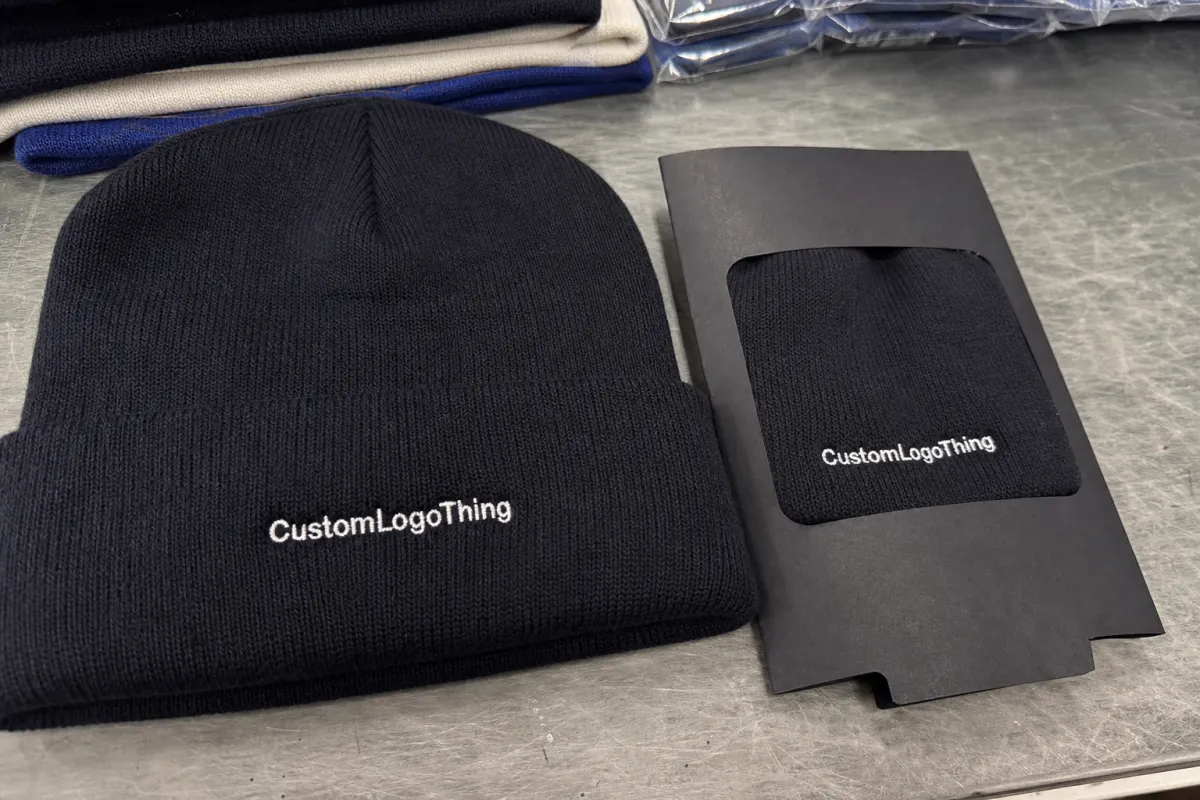
Photos are useful, but they are not neutral. Lighting softens texture, lens choice changes scale, and a well-styled prop can make a midweight knit look denser than it really is. That matters because a beanie is judged by touch as much as by appearance. A product that feels dry, loose, or strangely rigid in hand often gets rejected before it ever reaches a shelf.
The sample answers questions that images cannot. Does the cuff spring back after stretching? Does the knit surface look clean under office light, warehouse light, and daylight? Does the logo remain legible after the fabric is pulled? Those are operational questions, not aesthetic ones. Buyers who separate the two usually make better decisions.
Most problems fall into predictable categories. A soft yarn may feel pleasant for the first five seconds, then pill faster than expected. A tall cuff can create a stronger retail profile while fitting poorly on smaller heads. Embroidery can look sharp on a flat sample and then pucker as soon as the beanie is worn. None of those issues are minor. They define the product.
"If a sample passes in hand, not just in a photo, the order is already in better shape."
That is the part many teams miss. They review the design, then approve the sample based on whether it matches the mockup. A better question is whether it can survive repeated wear, folding, shipping, and unpacking without looking tired. A beanie that succeeds on a desk and fails on a head has not succeeded at all.
How the soap cuffed knit beanies material sample guide is built
A proper sample starts with the yarn, then moves through knit construction, cuff formation, finishing, and decoration. Each stage shifts the result. A 100% acrylic beanie feels different from a wool blend. A tighter gauge creates a cleaner surface and better logo definition, while a looser knit often feels softer but less controlled. The cuff is not just a fold. It changes warmth, height, branding space, and how the cap sits on the head.
Sampling should answer technical questions before anyone starts talking about look and feel. Does the fabric recover after being stretched? Do the seams sit flat? Does the cuff roll after wear? Does the decoration buckle the knit? A good sample makes these questions visible while there is still time to adjust the build.
Color is less predictable than many buyers expect. Fiber type, dye lot, machine tension, washing, and drying all affect final appearance. Recycled yarn can be especially inconsistent if the feedstock varies from lot to lot. That does not automatically make it inferior, but it does mean the sample should be treated as the reference, not the catalog photo. Swatches and spec sheets help, yet the finished knit still decides the truth.
Material details also shape how the beanie sits in packaging. A structured knit can hold its form in a box or mailer. A softer construction may collapse, crease, or show edge curl if it is packed too tightly. If the order needs recycled packaging, kraft paper wraps, or FSC certified inserts, say so early. Otherwise the factory usually defaults to the cheapest acceptable option, which may not align with the brand standard or the environmental brief.
For teams tracking packaging claims, the FSC certification system is relevant for paper-based packaging, while the EPA recycling guidance is a practical reference for waste reduction and material handling. Those resources do not choose the right beanie for you, but they help keep the packaging conversation grounded in something clearer than marketing language.
Material factors that change fit, handfeel, and decoration
Fiber choice drives most of the result. Acrylic is still the default for many programs because it is predictable, relatively low-cost, and available in a wide color range. It usually accepts embroidery and woven labels well if the knit is stable. Wool blends feel warmer and more premium, but they can raise cost and require more attention to itchiness, shrinkage, and washing behavior. Cotton blends are softer and cooler, although they give up some stretch recovery and insulation. Recycled yarns can work very well, yet they need closer inspection for texture consistency and color variation.
Gauge changes the whole conversation. A finer gauge generally gives a cleaner surface, tighter stitch definition, and better logo edges. Chunkier gauges can look richer and more casual, but they may blur small graphic details and make certain patches sit awkwardly. For many retail programs, a sample around 7-12 gauge equivalent gives a useful middle ground. That range is not a rule, just a practical zone where the knit is usually stable enough for branding without looking stiff.
The cuff matters more than the brief often suggests. A short cuff reads lighter and more athletic. A taller cuff creates a stronger frame for embroidery or a woven label, but it also adds bulk and can overwhelm smaller heads. The difference between a cuff that looks intentional and one that feels heavy is often less than a centimeter. On paper that sounds small. On a head, it is obvious.
Lining adds another layer of tradeoff. It can improve warmth and reduce itch, but it also changes stretch, drying time, and cost. A lined sample should be tested with the same scrutiny as the outer knit because the lining can pull on the seam or change how the cuff sits. Buyers often discover that a comfortable outer shell becomes too tight once the lining is added. That is exactly the kind of thing the sample is supposed to reveal.
Decoration compatibility is where a lot of orders go sideways. Some yarns handle direct embroidery cleanly. Others need a woven patch or sewn label to avoid puckering. Detailed logos usually behave better on a tighter, more stable knit. Bold, simple artwork can tolerate a looser surface. The sample should tell you which method the fabric prefers, rather than forcing the fabric to accommodate a design that was never built for it.
| Material choice | Typical sample feel | Decoration fit | Common tradeoff |
|---|---|---|---|
| Acrylic | Soft, springy, consistent | Good for embroidery and labels | Lower cost, less natural handfeel |
| Wool blend | Warm, textured, premium | Good if the knit is stable | Higher price, potential itch factor |
| Cotton blend | Breathable, softer, lighter | Better with simple branding | Less warmth, less stretch recovery |
| Recycled yarn | Eco-friendly, sometimes less uniform | Needs careful testing | Texture and dye consistency can vary |
One more practical point: decoration should be checked in both flat and worn states. A logo that looks centered on a table can drift when the cuff is folded, especially if the knit has a lot of stretch. Buyers sometimes approve a sample because the branding is neat in a photo, then discover the placement shifts once the beanie is pulled on. That is not a production mystery. It is a sampling miss.
Material sample pricing, MOQ, and quote basics
Sample pricing depends on fiber cost, knit complexity, decoration setup, and whether color matching is involved. A plain acrylic sample with standard cuff construction often falls around $20-$45 before shipping. A more customized wool blend, a recycled yarn request, or a sample with patches and multiple colors can move into the $50-$120 range. Rush timing can add another 10% to 30% if the factory has to reorder yarn or rerun the knit.
Bulk pricing is a separate calculation. A sample may look expensive because the setup cost is concentrated in one piece. In production, that same cost gets spread across the run, so unit price drops. Some suppliers credit the sample fee against the order if the project moves forward. Others do not. Ask directly. Assumptions here are expensive and completely avoidable.
MOQ follows the same logic. Lower minimums usually mean a narrower material list, fewer color options, and less room for customization. A simple stock-style beanie can sometimes start around 50-100 pieces, while a fully custom yarn, special cuff height, or detailed decoration program may push the MOQ toward 200-500 units or more. The exact number changes by factory, but the pattern does not: the more variables you add, the more volume the supplier wants to justify the setup.
A useful quote request should include quantity, size range, yarn blend, knit style, branding method, artwork files, packaging needs, and target delivery date. Leave those details out and you will get placeholder pricing that looks tidy but tells you very little. Give the supplier enough information to calculate the actual work, not a rough guess.
For beanie programs with recycled materials or paper-based packaging, mention that early as well. If the order needs FSC certified inserts, kraft paper wraps, corrugated cardboard cartons, or biodegradable packaging, those requirements affect not only cost but also lead time and assembly steps. Packaging is rarely the biggest expense, but it is one of the easiest places to create a delay if it is introduced late.
Sampling process, lead time, and approval checkpoints
The cleanest sampling process is simple: brief the supplier, confirm materials, knit the first version, review it, request changes if needed, and sign off only after the final sample matches the target. In practice, the projects that move fastest are usually the ones with one clear decision-maker and a written spec that leaves little room for interpretation. The slow ones often have five reviewers, ten comments, and one vague instruction about making it feel more premium. That sort of feedback is hard to produce from and impossible to price cleanly.
Lead time depends on what is already in stock. A basic sample can take 5-10 business days once materials are available. If the order needs custom yarn sourcing, dye matching, or specialized branding, 12-20 business days is more realistic. Revision rounds extend the timeline quickly. A single round of changes is manageable; two rounds are normal in more complex programs; three usually means the brief needs work.
Approval should cover more than appearance. Check softness, stretch recovery, seam finish, cuff height, and logo placement. Test the sample on more than one head shape if the beanie is one-size. A style that fits one person well can feel tight on another, especially if the cuff is tall or the knit is dense. Try it on seated and standing, folded and unfolded, because small changes in shape show up once the fabric is worn.
Wash behavior matters if the product is going into retail or will be worn often. Ask how the yarn handles washing, drying, and repeated folding. If a sample is likely to bag out, pill, or lose its cuff memory after a few cycles, that needs to be visible before production starts. A sample that only looks good once is a weak sample.
Packaging should be reviewed with the same discipline. A sample shipped in a rigid box says one thing; a sample in a crushed mailer says another. Neither one fixes the beanie itself, but they do tell you how the supplier handles presentation and whether the item is being protected properly in transit. If your brand is reducing waste, confirm post-consumer waste content, recycled cardboard, or biodegradable packaging early rather than trying to retrofit the plan after approval.
Speed helps, but clarity saves more time. The fastest sample approvals usually come from briefs that list measurements, decoration position, yarn type, and acceptable tolerances in plain language. That reduces back-and-forth and keeps the factory from filling in blanks with its own assumptions. The result is not just a faster order. It is a more predictable one.
Common mistakes buyers make during sample review
The first mistake is judging the sample from photos alone. A camera can hide a weak cuff, flatten texture, and make two very different yarns look nearly identical. Buyers who skip the physical review usually discover the problem only after the goods arrive, which is the most expensive time to learn it.
The second mistake is approving without testing on real people. One-size knit beanies behave differently depending on head shape, hair volume, and how much stretch a wearer tolerates. A sample that feels perfect on one person may ride up, pinch at the forehead, or roll at the cuff on another. Trying the sample on at least three heads gives a much better read than a single fit check.
The third mistake is vague feedback. "Make it better" is not usable. "Cuff is too loose by about 1 cm," "logo is too small above the fold," or "the forehead feels scratchy after 10 minutes" can be acted on. Good sample review is specific, measurable, and tied to the intended use.
The fourth mistake is ignoring small defects because the sample already looks close enough. Loose threads, uneven label placement, small color drift, and seam bulk can all become complaints later. These issues may seem minor in isolation, but they affect how the finished piece is perceived. A retail buyer notices them. So do customers. The difference between acceptable and sloppy is often made in details nobody wanted to review twice.
"A sample that passes the eye test but fails the wear test becomes a return, not a reference."
The easiest way to avoid those mistakes is to use a checklist instead of a mood board. That is the practical purpose of a soap cuffed knit Beanies Material Sample guide: to turn a subjective sample review into a repeatable approval process before bulk production starts.
Expert tips for tighter sample decisions
Use a scorecard. Rate softness, stretch, warmth, logo clarity, and perceived quality on a 1-5 scale. It sounds plain, but it helps when merchandising, marketing, and operations all have opinions. A written scorecard gives each person a common reference and makes the final choice easier to defend later if the result is questioned.
Ask for side-by-side comparisons whenever you are choosing between yarns or knit densities. Two samples can look similar in a photo and feel wildly different in hand. One may hold shape better. Another may carry embroidery more cleanly. Put them next to each other and the differences usually appear within seconds.
Keep a labeled golden sample after approval. That physical reference becomes the production target for the next run. Without it, "same as last time" can drift surprisingly fast. A golden sample is especially useful when team members change or when the original approval notes were too brief to settle a dispute over cuff height or logo placement.
Match the sample to the real use case. A retail beanie needs stronger finishing and a cleaner knit than a free giveaway. Team merch may prioritize comfort and warmth over logo precision. Event stock often needs a lower unit cost and broad fit, while resale programs care more about shelf appeal and consistency. The best material is the one that supports the actual job, not the one that sounds nicest in a pitch deck.
Check the sample under conditions that resemble the real environment. Indoor showroom light, a cold warehouse, a bright counter, and a mirror can each expose a different problem. The cuff might look neat in one setting and sloppy in another. If the brand uses recycled materials or FSC certified packaging, review that presentation under the same conditions so the packaging does not undermine the product.
Next steps after the sample passes your tests
Once the sample passes, turn it into a written production spec. Include yarn blend, gauge, cuff dimensions, branding method, color references, packaging details, and any tolerance notes that came out of the review. If a detail is not written down, it will drift. That is not pessimism. It is how production lines behave.
Confirm price, MOQ, and lead time again before issuing the purchase order. A sample approval does not freeze the quote. Change the yarn, modify the packaging, or revise the decoration, and the numbers can move immediately. Catching that before the order is released is much easier than explaining it after the invoice changes.
Send the final notes to every stakeholder who can slow the order later. Marketing, procurement, operations, and sales should all be looking at the same approved version. If one team thinks the cuff is 2 inches and another thinks it is 3, the factory is not going to resolve the disagreement for you. The paper trail has to do that work.
Lock the approved sample, spec sheet, and purchase order together as one record. That gives you a cleaner basis for reorders and a fallback if the bulk run drifts from the approved piece. The sample has done its job once it becomes a reliable reference point rather than an object on someone’s desk.
Used properly, the soap Cuffed Knit Beanies material sample guide becomes less about choosing a look and more about controlling a process. That is usually where the better orders come from: not from luck, and not from prettier photos, but from a sample that was tested hard enough to tell the truth.
What should a soap cuffed knit beanie sample include?
A real sample should show the final yarn, cuff height, stitch density, seam finish, and decoration method. It should be close to the production version, not a loose prototype that hides fit or material issues.
How many sample rounds are normal before approval?
One round is ideal, and two rounds is common when color matching or branding needs adjustment. More than two usually means the spec was too vague or the approval criteria were not set clearly at the start.
What affects soap cuffed knit beanie sample cost the most?
Custom yarn sourcing, decoration setup, and complex knit structures usually raise the sample price the fastest. Rush timing and multiple revision rounds can also add cost, especially if the factory has to restart knitting or rework branding.
How long does a custom knit beanie sample usually take?
A simple sample can move quickly, while custom yarns, color matching, or special branding take longer. The fastest timeline depends on how complete your spec sheet is and whether the factory already has matching materials in stock.
What should I check first when the sample arrives?
Check fit, cuff structure, softness, and logo placement before you get distracted by minor presentation details. Then test it on a real person, because beanies are worn on heads, not judged like a flat swatch.


